
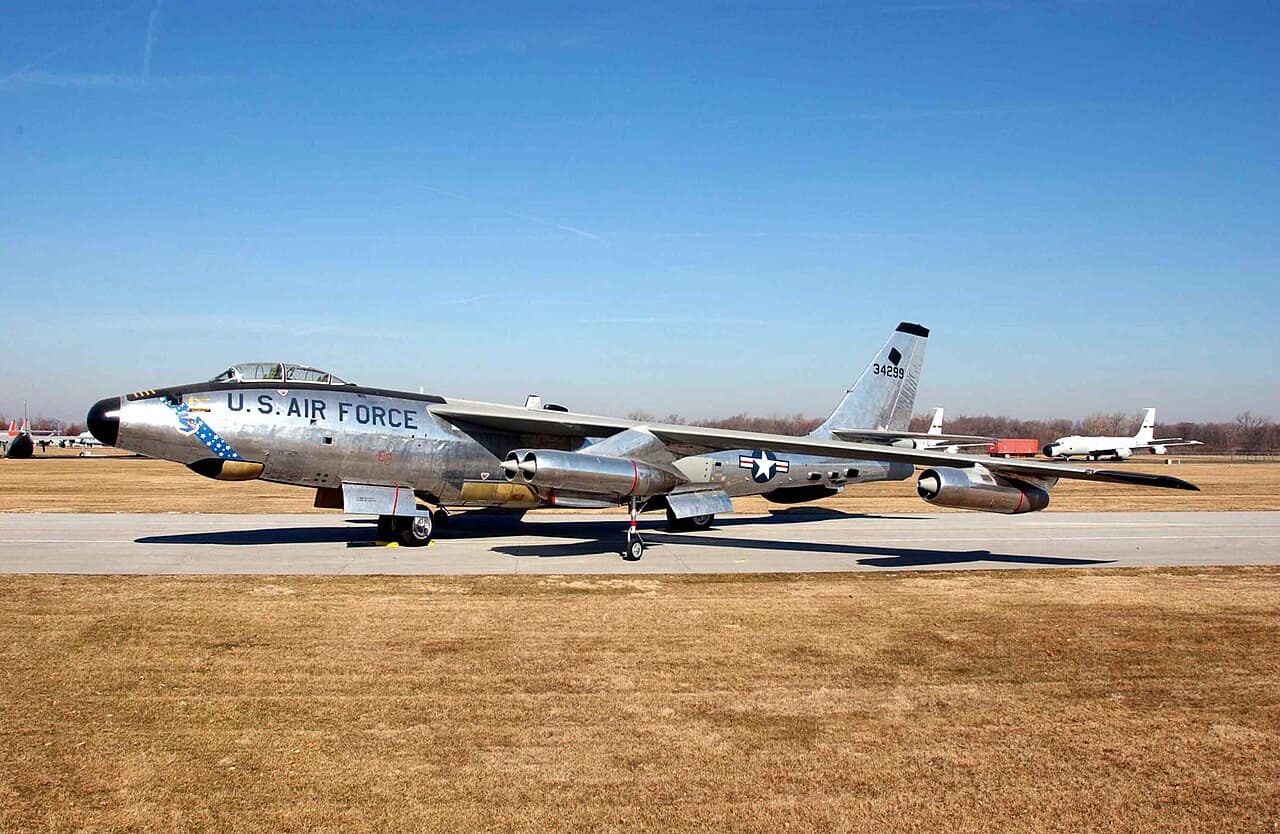
Two months after a Soviet missile knocked Gary Powers and his U-2 out of the sky, another American aircraft was hunting the edges of the same empire. On 1 July 1960, a Boeing RB-47H was flying a lonely electronic-reconnaissance mission high over the Barents Sea, off the Arctic coast of the Soviet Union. Six men were aboard. By nightfall four were dead, and two were beginning an ordeal that would last seven months.
The world would fixate on Powers. The story of the RB-47 — and the two young captains who vanished into Moscow’s most feared prison — slipped quietly into the footnotes. It deserves better.
Datos rápidos
- Fecha: 1 July 1960
- Aeronave: Boeing RB-47H, 55th Strategic Reconnaissance Wing
- Salido: RAF Brize Norton, England
- Shot down by: a Soviet MiG-19 over the Barents Sea
- Crew of six: four killed, two survived
- Sobrevivientes: Capt. John McKone and Capt. Bruce Olmstead, held in Lubyanka prison until January 1961
A ferret over the Arctic
The RB-47H was a reconnaissance version of Boeing’s swept-wing B-47 Stratojet, built to prowl the frontiers of Soviet airspace and vacuum up the signals of its radar and air-defence networks. Missions like these were called “ferret” flights, and they were dangerous by design: the whole point was to fly close enough to make the Soviets switch their radars on.
This particular aircraft, serial 53-4281, was nicknamed The Little Toy Dog after a small toy mascot the aircraft commander, Major Willard Palm, carried for luck. It launched from RAF Brize Norton in England with a crew of six: Palm, co-pilot Captain Bruce Olmstead and navigator Captain John McKone up front, and three electronic-warfare officers — Eugene Posa, Dean Phillips and Oscar Goforth — working in a windowless compartment where the bomb bay would normally be.
A 1952 U.S. Air Force familiarisation film introducing the B-47 Stratojet, the bomber from which the RB-47H was derived.
One hundred and eleven rounds
Hours into the flight, a MiG-19 of the Soviet Air Defence Forces slid alongside, flown by Captain Vasily Polyakov. He rocked his wings — the signal to follow him down. The Americans, convinced they were over international waters more than 50 kilometres from the coast, held course. Polyakov opened fire, making two firing passes and loosing 111 cannon rounds. The RB-47’s tail guns failed to answer.
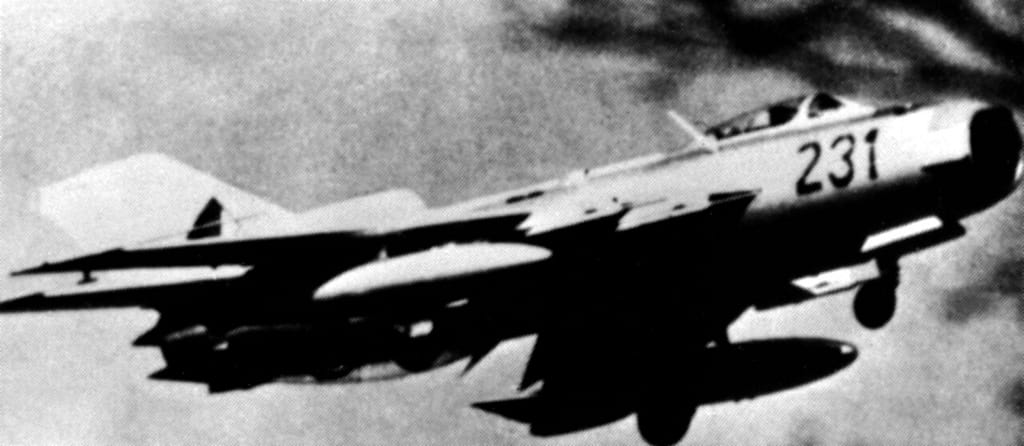
The crippled jet went down into the freezing sea. Major Palm and the three electronic-warfare officers were killed; Palm’s body was later recovered and returned home. Only Olmstead and McKone managed to eject and were hauled aboard a Soviet fishing trawler — alive, and now firmly in the hands of the KGB.
Lubyanka
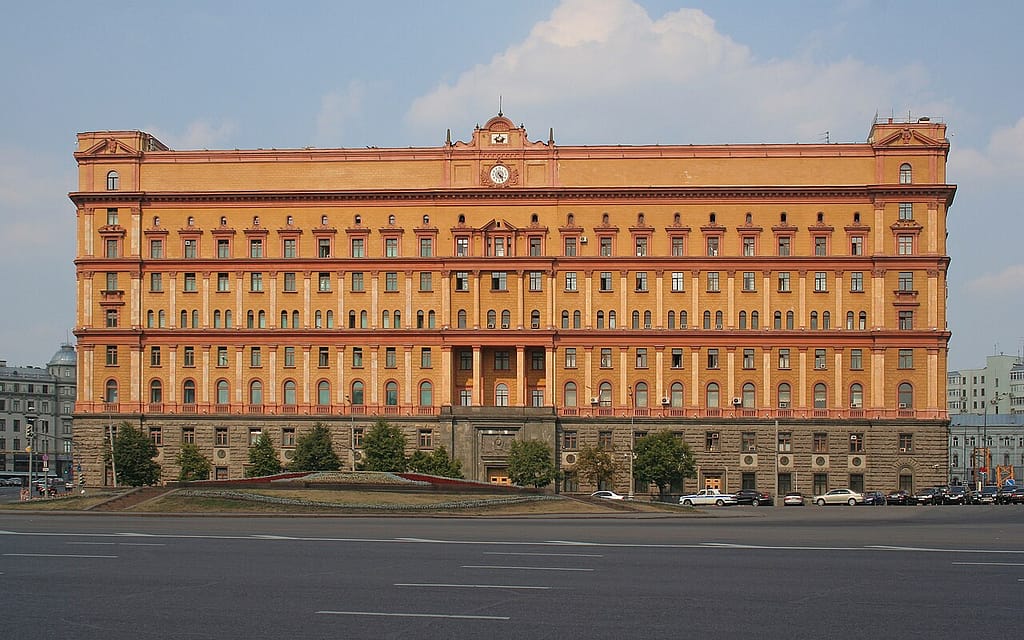
The two captains were taken to Moscow and locked in the Lubyanka, the KGB’s headquarters and prison. There they endured months of interrogation, held in isolation on meagre rations. The Soviets weighed putting them on trial for espionage. Behind the scenes, Nikita Khrushchev treated the shootdown almost with satisfaction — a lesson taught to the Americans.
The pilot who shot them down, Captain Polyakov, was not punished for firing on a foreign aircraft over disputed waters. He was decorated with the Order of the Red Banner at the Kremlin.
A goodwill gesture
Then the politics shifted. With a new American president just sworn in, the Soviets decided the airmen were worth more as a gift than as prisoners. On 24 January 1961 — four days after John F. Kennedy’s inauguration — Olmstead and McKone were handed to US diplomats and flown home by way of Amsterdam. At his very first press conference, Kennedy announced the news to the nation.
President Kennedy’s first televised news conference, 25 January 1961, where he opened by announcing the fliers’ release.
The two flew home to their families and, briefly, to the cover of Tiempo magazine. Recognition for what they had endured came slowly: both men received Prisoner of War Medals decades later, along with the Silver Star and the Distinguished Flying Cross. Four of their crewmates never came back at all.
The U-2 affair reshaped a superpower summit and made Gary Powers a household name. The RB-47, flown by men every bit as brave, remains one of the Cold War’s quietest stories — a reminder that the espionage war in the sky was fought, and paid for, long after the headlines moved on.
Restored archival film of the Boeing B-47 Stratojet, backbone of Strategic Air Command in the early Cold War.
Sources: 1960 RB-47 shootdown incident (Wikipedia); The Aviation Geek Club; Krzysztof Dabrowski, Defending Rodinu Vol.1 (Helion & Co.); The American Presidency Project (JFK news conference, 25 Jan 1961); National Museum of the U.S. Air Force.
0 Comentarios