
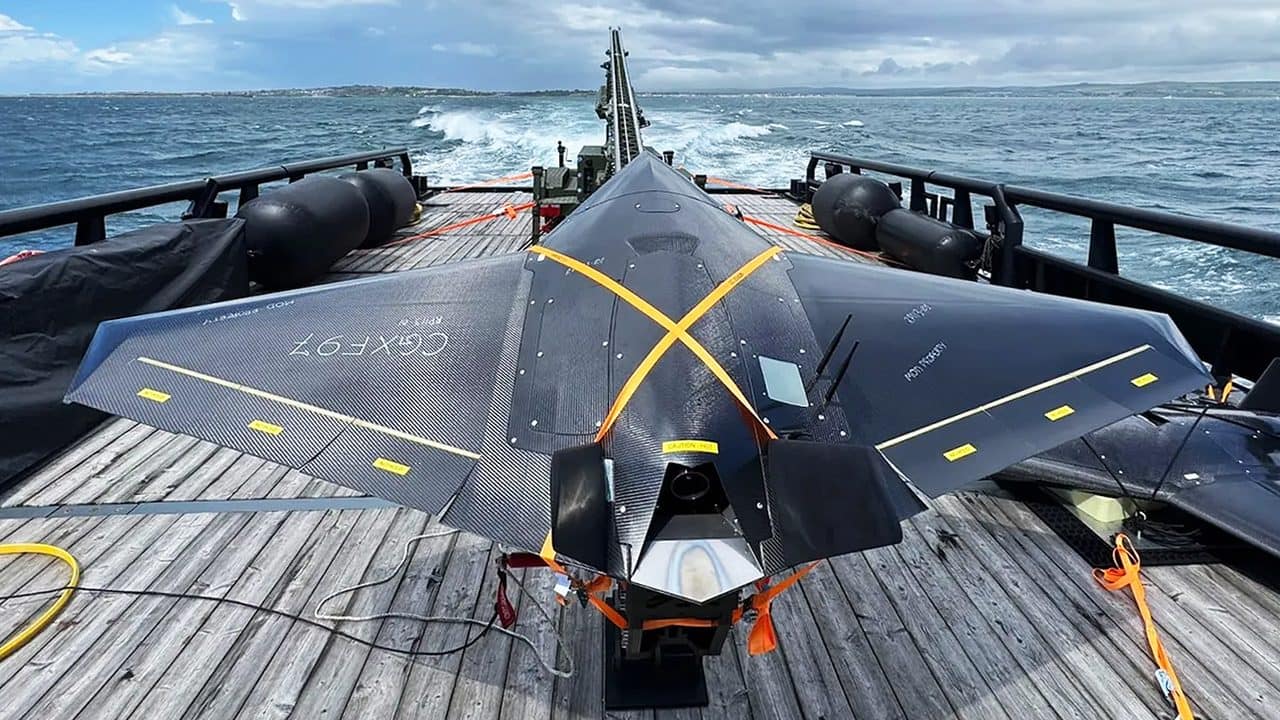
Off the south coast of England, a small black flying wing shot off a catapult rail bolted to the deck of a moving Royal Navy ship, climbed away on a whining turbojet, and flew itself to a target. No pilot, no recovery, no second chances — the Nyan is designed to fly one way. And with that single launch, the Royal Navy stepped into the age of the expendable strike drone.
The trial, revealed on July 3 and reported by The War Zone and The Aviationist, is Britain’s clearest statement yet of where its fleet is going: a “hybrid navy” where crewed warships carry magazines full of cheap, disposable aircraft.
Datos rápidos: Efector unidireccional Nyan
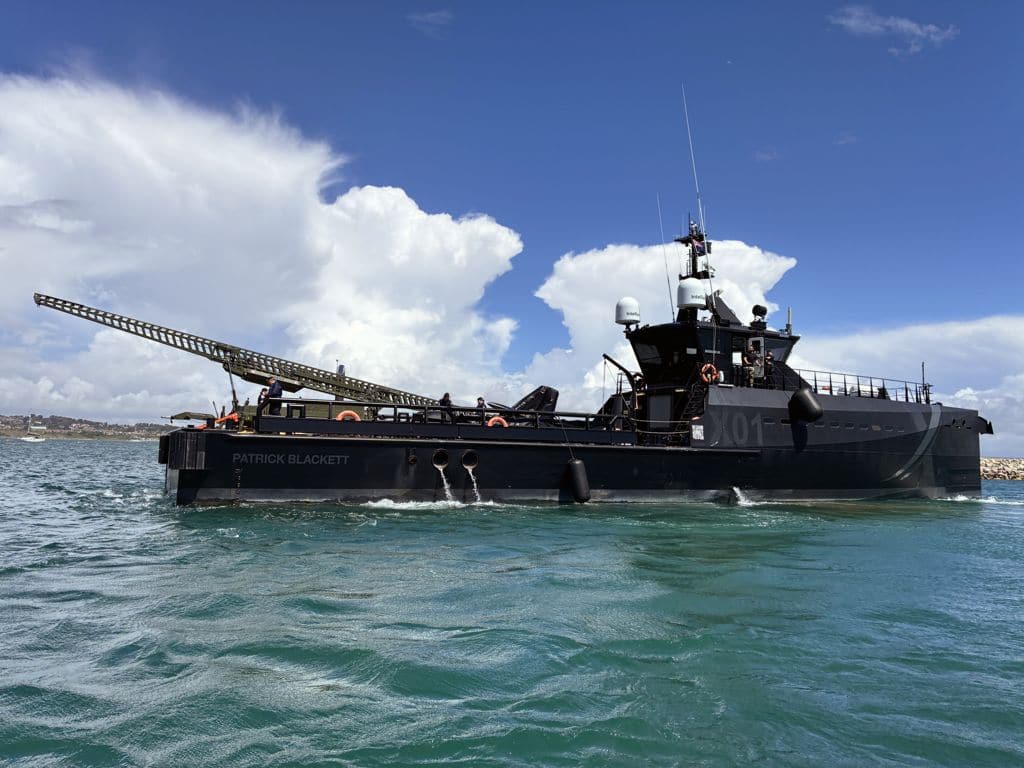
| Qué pasó | Primer lanzamiento en alta mar del dron de ataque Nyan por la Royal Navy, desde el buque de experimentación XV Patrick Blackett. |
| El juicio | Exercise Neptune Reach — Royal Navy 744 NAS, British Army 26 Royal Artillery and RAF personnel |
| El dron | Ala volante de fibra de carbono, propulsada por turborreactor, envergadura de aproximadamente 2,9 metros, alcance superior a 150 km. |
| Costo | Under £100,000 ($132,000) per unit; more than 1,000 built so far |
| Genealogía | Fabricado por Callen-Lenz (una filial de BAE Systems); debut en combate en manos ucranianas. |
Una catapulta en la cubierta de popa
The launch platform was XV Patrick Blackett, the Royal Navy’s dedicated experimentation ship — essentially a floating laboratory for technologies the fleet wants to adopt quickly. For Exercise Neptune Reach, engineers simply installed the Nyan’s catapult launcher on deck. Operators programmed a target, the ship kept sailing, and the drone flew the strike profile autonomously.
La clave reside en la naturaleza conjunta de la prueba: la Artillería Real del Ejército Británico ya opera el Nyan en tierra, y fueron artilleros del 26.º Batallón de Artillería Real, en colaboración con el 744.º Escuadrón Aéreo Naval de la Armada, quienes lo pusieron en servicio en el mar. En el marco del Proyecto Vantage, una iniciativa conjunta de las tres ramas de las Fuerzas Armadas, la Marina Real busca integrar efectores unidireccionales en toda la flota.
Barato, sigiloso, desechable
The Nyan itself is a study in ruthless economics. Designed and built since 2022 by Callen-Lenz, a BAE Systems subsidiary, it is a carbon-fibre flying wing with a wingspan of roughly 9.5 feet, a small turbojet, and a reported range of more than 150 kilometres — farther than the Harpoon anti-ship missile the Royal Navy is retiring. The design even nods to stealth, with a shielded exhaust nozzle to frustrate air defences.
The price is the headline: under £100,000 per drone. That is not a typo — it is roughly one-tenth the cost of a single modern anti-ship missile. More than 1,000 have already been built, and the type has been proven the hard way: before the Royal Artillery adopted it, the Nyan made its combat debut in Ukrainian hands.
La flota híbrida toma forma
The timing was no accident. The trial surfaced days after the UK’s Defence Investment Plan bet billions on autonomous systems — including, controversially, sacrificing a future destroyer programme to pay for drones. A frigate that can lob swarms of £100,000 strike drones from beyond missile range is a different kind of warship, and a different kind of budget line.
The Royal Navy says the Patrick Blackett trials pave the way for wider experimentation and potential deployment across the fleet. Ukraine demonstrated what cheap one-way drones do to a stronger navy; Britain, evidently, was taking notes. The next Royal Navy air wing may not have pilots at all — just crates, catapults, and coordinates.
Fuentes: The War Zone (TWZ), The Aviationist, Ministerio de Defensa del Reino Unido, Marina Real.
Preguntas relacionadas
¿Qué es el dron Nyan?
El Nyan es un dron de ataque unidireccional británico: un ala volante de fibra de carbono propulsada por un turborreactor, diseñado para ser lanzado, volar de forma autónoma hasta un objetivo y ser destruido en el ataque, sin piloto ni posibilidad de recuperación. Fabricado desde 2022 por Callen-Lenz, filial de BAE Systems, forma parte de una oleada de drones baratos y desechables. drones de ataque no tripulados.
¿Qué es un efector unidireccional?
Un efector unidireccional es un dron militar diseñado para realizar un único vuelo de ida hacia su objetivo, destruyéndose en el ataque en lugar de regresar. Al ser desechable, puede producirse a bajo costo y utilizarse en grandes cantidades. El Nyan de la Marina Real Británica es un efector unidireccional, y la institución desea integrar este tipo de armamento en toda su flota.
¿Qué es una munición merodeadora o un dron kamikaze?
Una munición merodeadora, a veces llamada dron kamikaze, es una aeronave no tripulada que vuela a un área objetivo y luego ataca estrellándose contra el objetivo con una ojiva a bordo. Desdibuja la línea entre dron y misil. Diseños baratos y desechables como estos están transformando la guerra, a menudo desplegados en grandes enjambres coordinados.
¿Qué armada lanzó un dron de ataque desde un barco en alta mar?
La Marina Real Británica realizó el primer lanzamiento en alta mar del dron de ataque Nyan, disparándolo desde una catapulta instalada en la cubierta del buque experimental XV Patrick Blackett. Presentado el 3 de julio de 2026 durante el ejercicio Neptune Reach, este ensayo marcó la entrada de Gran Bretaña en el despliegue de drones de ataque desechables directamente desde buques de guerra.
¿Quién fabrica el dron Nyan?
El Nyan está diseñado y construido por Callen-Lenz, una filial de BAE Systems, que lo desarrolla desde 2022. Se trata de un ala volante de fibra de carbono propulsada por un motor turborreactor, diseñada en torno a una economía implacable para que perder una en un ataque sea asequible, a diferencia de un avión de combate convencional y reutilizable.
¿Qué es Project Vantage?
El Proyecto Vantage es una iniciativa conjunta de las tres ramas de las Fuerzas Armadas británicas, mediante la cual la Marina Real busca integrar drones de ataque desechables en toda la flota. El ensayo Nyan reunió a personal de la Marina Real, el Ejército Británico y la Real Fuerza Aérea, reflejando un esfuerzo conjunto hacia una armada híbrida donde los buques de guerra tripulados transportan depósitos repletos de aeronaves desechables de bajo costo.
¿Por qué las armadas están adoptando drones de ataque desechables?
Las armadas están recurriendo a drones de ataque desechables porque son baratos, se pueden transportar en grandes cantidades y permiten que un buque de guerra tripulado proyecte su poder de ataque sin arriesgar a la tripulación aérea. Los funcionarios de defensa británicos lo presentan como una aceleración de la transición hacia una flota híbrida, que les permite mantenerse a la vanguardia de sus adversarios combinando buques tradicionales con drones desechables de producción masiva.


0 Comentarios