
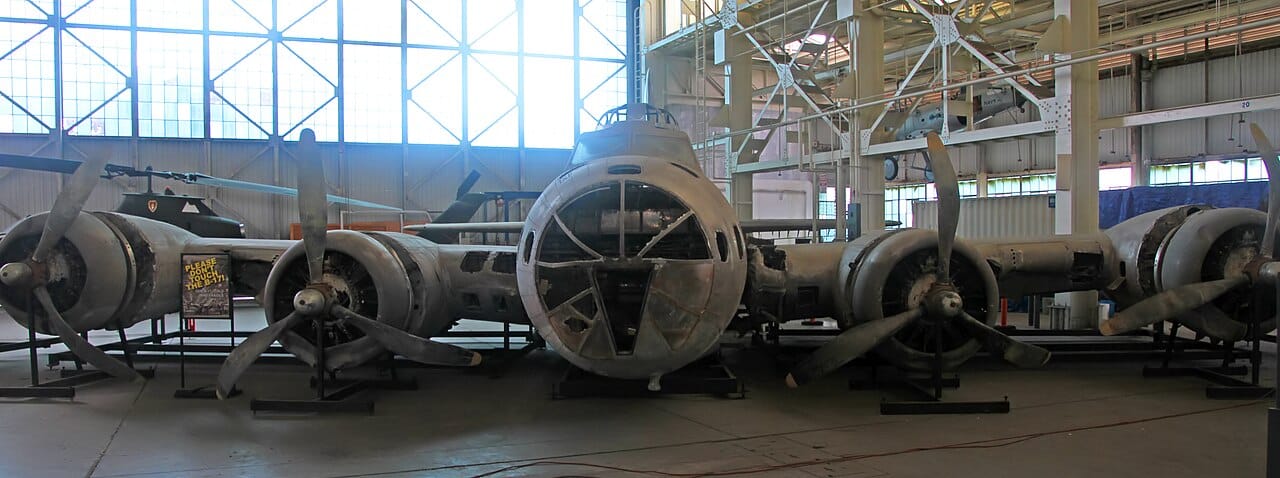
On its very first combat mission, a brand-new B-17 bomber bellied into a swamp in Papua New Guinea. The crew walked away, trekked six weeks through the jungle, and survived. The aircraft did not move again for sixty-four years — and when people finally came back for it, they found it almost perfectly preserved. They called it the Swamp Ghost.
It is the most famous aircraft wreck of the Pacific war, and one of the strangest survival stories in aviation.
Datos rápidos
- Aeronave: Boeing B-17E Flying Fortress, serial 41-2446
- Down: Agaiambo Swamp, Papua New Guinea, February 23, 1942
- Piloto: Captain Frederick “Fred” Eaton — all nine crew survived
- In the swamp: 64 years, largely intact
- Recovered: 2006, by Aero Archaeology
- Now: Pearl Harbor Aviation Museum, Ford Island, Hawaii
A wheat field that wasn’t
Boeing B-17E serial 41-2446 was delivered to the Army just one day before Pearl Harbor. On February 23, 1942, flown by Captain Fred Eaton, she took part in one of the first American heavy-bomber raids of the war, an attack on Japanese shipping at Rabaul. Flak punched a hole through the starboard wing, fuel streamed away, and it became clear the bomber would never make it back to Port Moresby.
Eaton picked out what he took to be a flat wheat field and set the big bomber down, wheels up, in a near-perfect landing. It was not a wheat field. It was the Agaiambo Swamp — five feet of water and towering kunai grass, reportedly with crocodiles for company. The landing was so gentle that all nine men simply climbed out onto the wing, unhurt.
Six weeks to safety
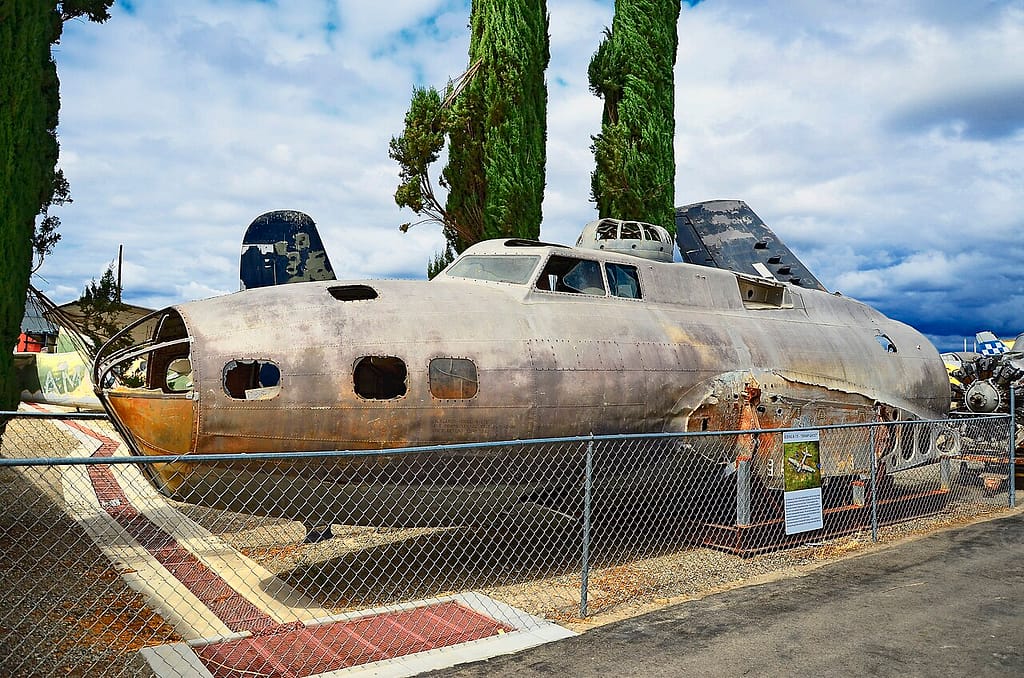
Getting out was the hard part. The crew waded and hacked their way through swamp and jungle for roughly six weeks, sick with malaria, before reaching help with the aid of local villagers. Every one of them made it home. The bomber, sitting upright and intact in the middle of an impassable swamp, was written off — there was simply no way to retrieve it.
And so it sat. The swamp that trapped it also protected it, holding the airframe in water and grass while the rest of the Pacific’s wartime wreckage rusted away in the open. In 1972 an Australian air force crew spotted it from the air, and the legend of the Swamp Ghost began to spread among aviation archaeologists.
The holy grail
To warbird hunters, an intact, original, combat-veteran B-17E — a rare early model with the small tail — frozen in a swamp was almost mythical. One man determined to bring it out put it plainly.
What made it so haunting was how little had changed. Guns, ammunition, personal kit — much of it was still aboard, exactly where the crew had left it in 1942.
Out of the swamp, into a storm
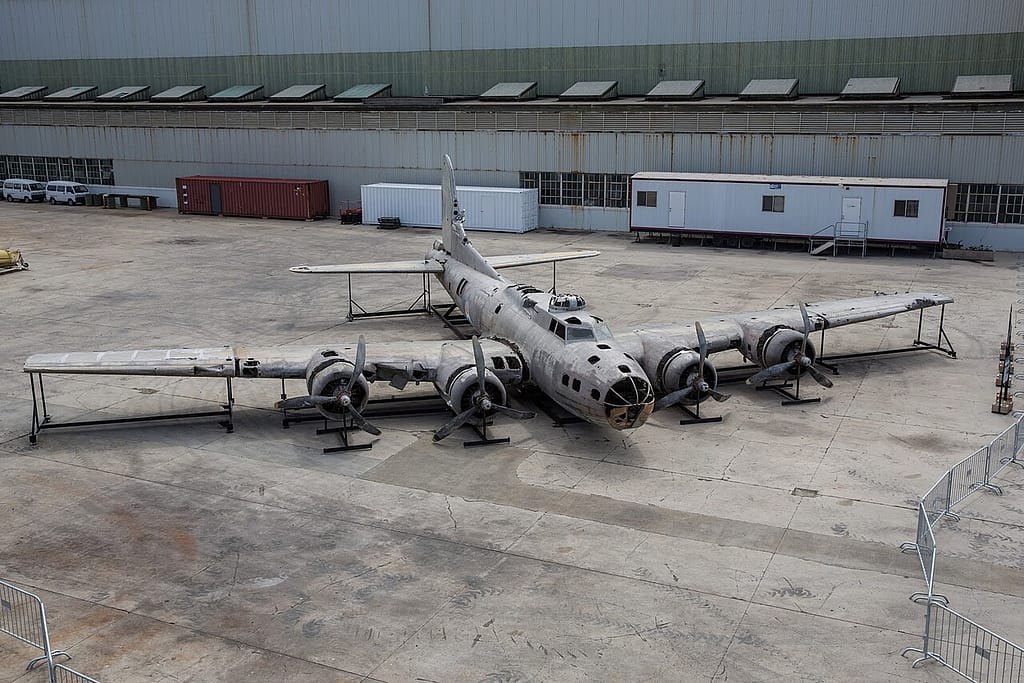
The recovery, in 2006, was an epic in itself: a 43-strong team, a specialist towing outfit, helicopters, and an export permit bought from Papua New Guinea’s national museum. It was also deeply controversial — many in PNG felt a piece of their history was being carried off, and the aircraft spent time impounded on a wharf while the dispute played out.
Eventually the Swamp Ghost made it to Hawaii. Today it stands at the Pearl Harbor Aviation Museum on Ford Island — deliberately left unrestored, battle damage and swamp scars intact, the only surviving combat-veteran B-17E in the world. It is not a gleaming showpiece like the Memphis Belle. It is something rarer: a genuine relic, exactly as the war and the swamp left it.
Sources: Wikipedia; Pacific Wrecks; Smithsonian Magazine; Pearl Harbor Aviation Museum; Aero Archaeology.
0 Comentarios