
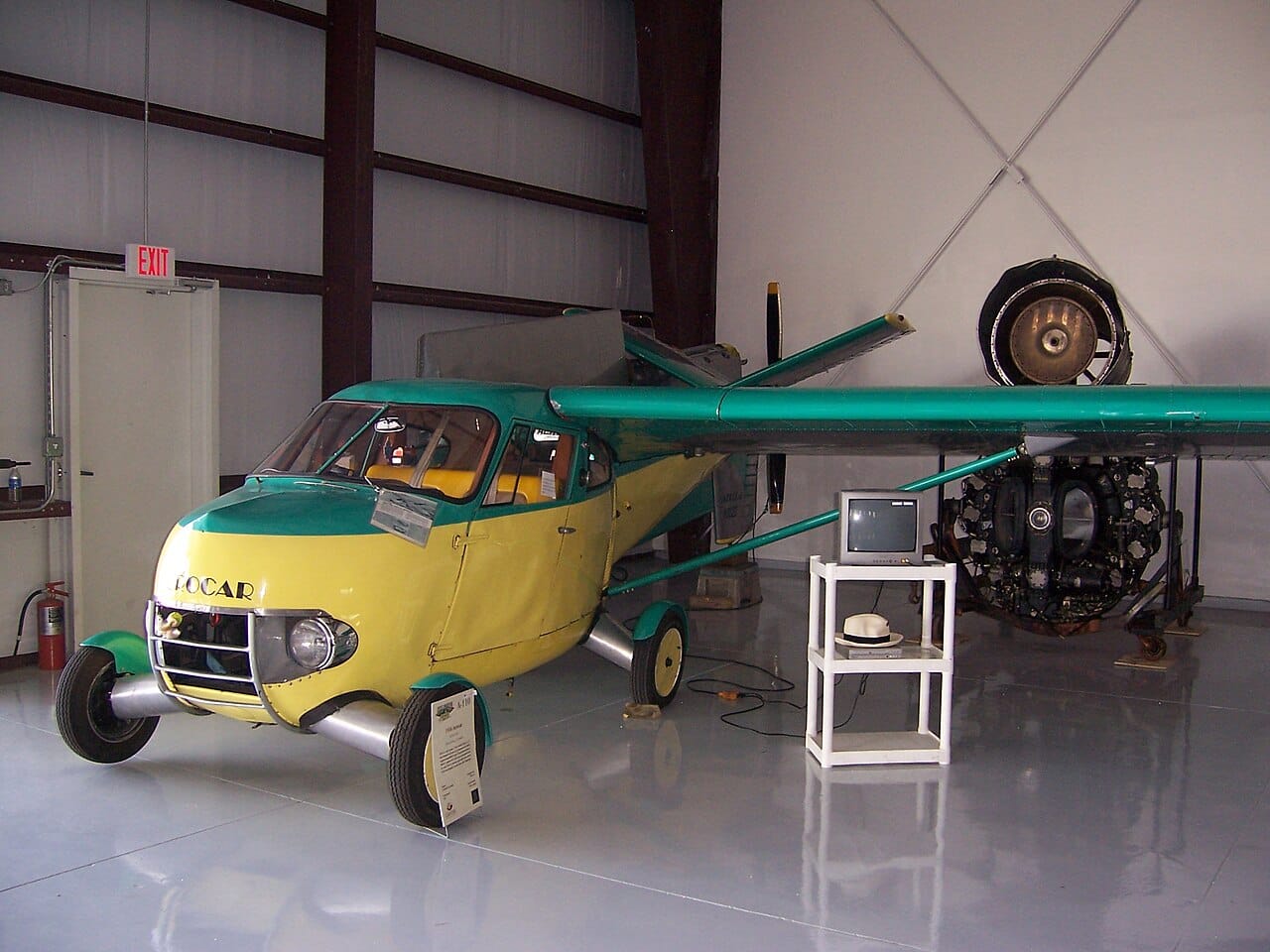
For as long as there have been cars and aeroplanes, people have wanted to combine them. Almost everyone who tried, failed. But one man actually did it: he built a flying car that flew, that drove, that carried passengers, and that a government safety board certified as airworthy. You could, in theory, have bought one. His name was Molt Taylor, and his machine was the Aerocar.
It is the flying car we were all promised — and for a few tantalising years in the middle of the twentieth century, it very nearly arrived.
Datos rápidos
- Vehicle: the Taylor Aerocar — a genuine roadable aircraft, or “flying car”
- Inventor: Moulton “Molt” Taylor, of Longview, Washington
- First public flight: 8 December 1949
- Cómo funcionaba: a small car that bolted onto a detachable wing-and-tail unit, driven by a pusher propeller
- Actuación: about 100 mph in the air, roughly 60 mph on the road, powered by a Lycoming engine
- Certification: approved by the Civil Aeronautics Administration in December 1956 — one of the very few flying cars ever certified
- Construido: only six
- Destino: Ford showed interest, but it was never mass-produced; survivors sit in museums, some still airworthy
One man’s flying-car dream
Moulton B. Taylor — “Molt” to everyone — was an aeronautical engineer from Longview, Washington who had trained as a Navy pilot and worked on guided missiles during the war. Afterward, he set up Aerocar International with a single obsession: to build a machine you could drive to the airport, fly to your destination, and then drive away from at the other end.
A 1949 newsreel introduces Molt Taylor’s Aerocar to a curious public.
Drive to the airport, bolt on the wings, fly home
The genius of the Aerocar was in how it split apart. On the road it was a compact little car, with a stubby nose and a propeller folded away at the back. When its owner reached the airfield, a detachable unit carrying the wings and tail — which could be towed behind the car like a trailer — was bolted on, a driveshaft engaged the pusher propeller, and in a matter of minutes the car became an aeroplane.
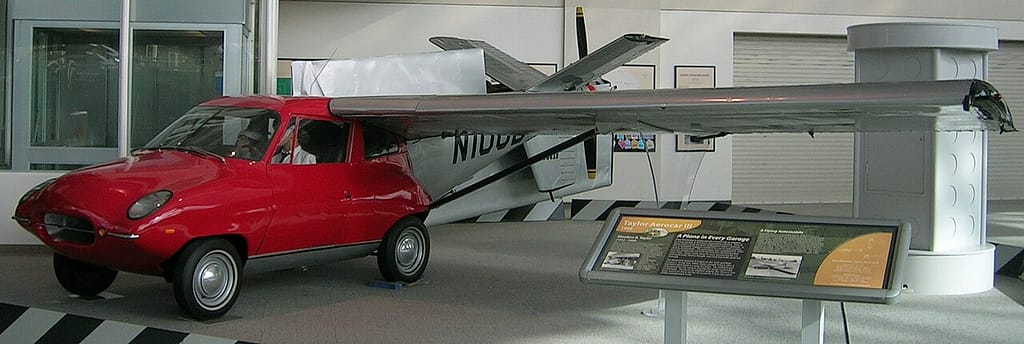
Powered by a roughly 150-horsepower Lycoming engine, the Aerocar cruised at about 100 mph in the air and pottered along at around 60 mph on the road. When it was time to come home, the wings came off, and the pilot simply drove out of the airport gate.
The flying car that actually got certified
Plenty of people have sketched flying cars. What sets the Aerocar apart is that it was real enough to satisfy the regulators. After the prototype first flew in 1949, Taylor spent years refining it — and in December 1956, after some $750,000 and hundreds of hours of testing, the Civil Aeronautics Administration certified the Aerocar as airworthy. Almost no flying car before or since has cleared that bar.
Molt Taylor demonstrates the Aerocar — converting it from car to aircraft and back.
The engineering worked. The problem, as ever, was the business. Building a machine that had to satisfy both aircraft regulators and the motor-vehicle laws of every state was ruinously expensive, and in the end only six Aerocars were ever completed.
So close to your driveway
For a while, it looked like it might just happen. The Ford Motor Company took an interest, and Taylor is said to have gathered hundreds of tentative orders — conditional on finding a major manufacturer to build the thing at scale. That backer never materialised. The Aerocar became a celebrity curiosity instead: the television host Bob Cummings owned one and flew it, and Taylor demonstrated his creation on 1950s TV shows to delighted audiences.
Why we still don’t have one
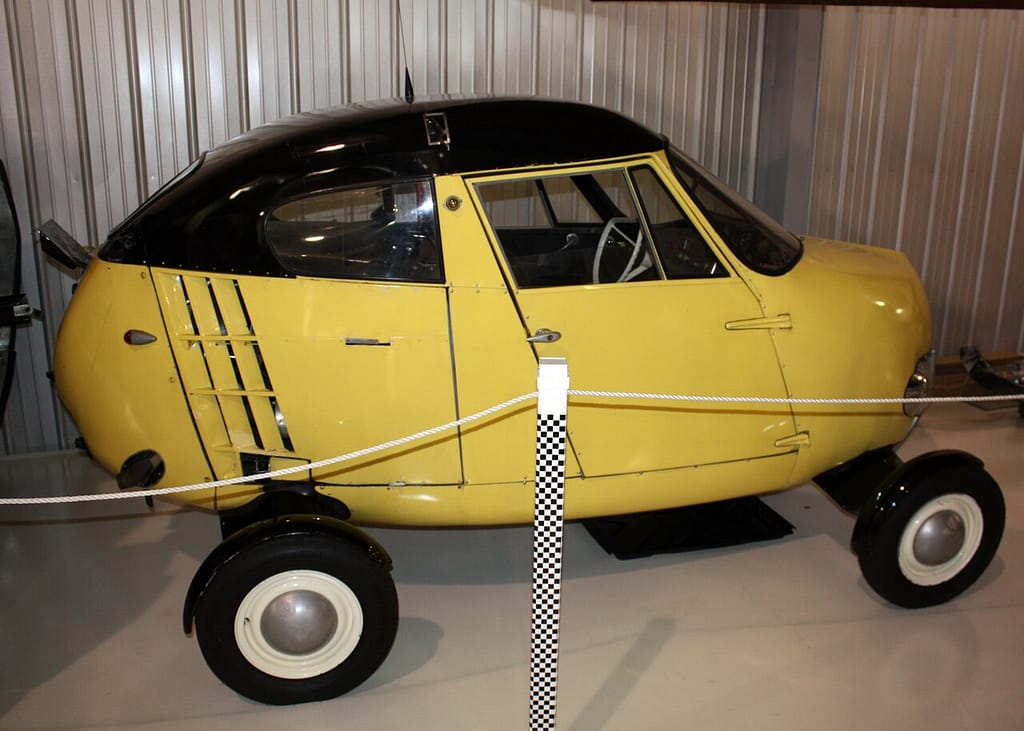
Molt Taylor was convinced the sky would one day fill with flying cars. He was, so far, wrong — the safety, cost and regulatory hurdles that stopped the Aerocar have stopped nearly everyone since, and today’s crop of electric air-taxis are still fighting the same battles he did seventy years ago.
But he was also, uniquely, right about one thing: it could be done. His little car really did fold out its wings, take off, fly, land, and drive home — six times over, and legally. The flying car was not a fantasy. It was parked in a hangar in Longview, Washington, waiting for a world that never quite came to collect it.
The Taylor Aerocar: technically successful, commercially doomed.
Sources: HistoryLink.org; MotorCities National Heritage Area (Robert Tate); EAA Aviation Museum; The Museum of Flight; Air Facts Journal.
Publicaciones relacionadas


0 Comentarios