
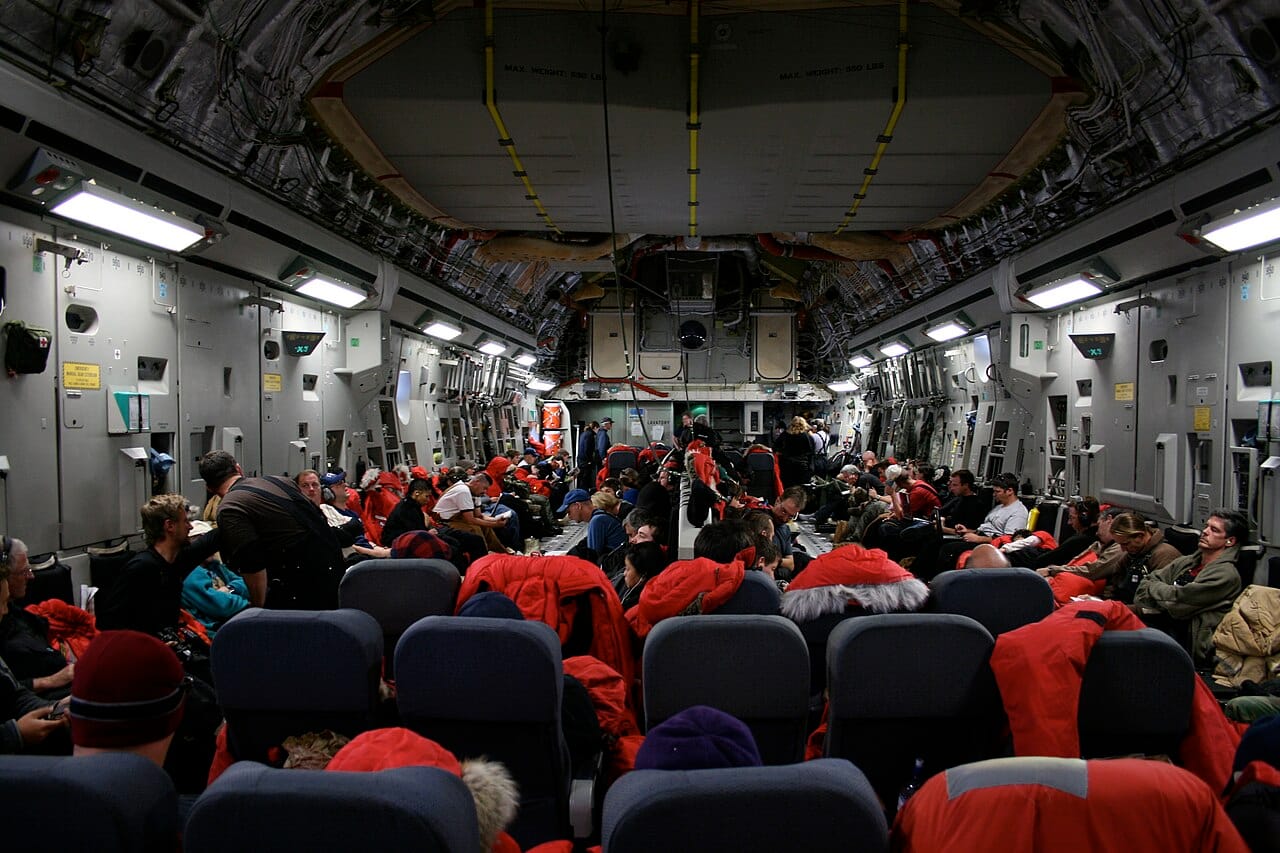
A U.S. Air Force transport took off from New Zealand on Tuesday morning bound for Antarctica, flew south for more than an hour, and then did something aircrews almost never do on that route: it turned around and went home. The reason was not weather, and it was not a mechanical fault. It was a warning about a Russian rocket, thousands of kilometres away.
The C-17 Globemaster III, using the call sign ICE28, was part of Operation Deep Freeze, the long-running U.S. military airlift that keeps America’s Antarctic research stations supplied. Instead of landing on the ice, it flew a long loop over the Southern Ocean and returned to Christchurch.
Datos rápidos
Aeronave: U.S. Air Force C-17 Globemaster III (call sign ICE28)
Misión: Operation Deep Freeze airlift, Christchurch to McMurdo Station, Antarctica
Qué pasó: departed ~9am, turned back over the Southern Ocean, landed 11:29am (about 2h27m airborne)
Por qué: a NOTAM warning of “potentially hazardous” space activity
Source of the warning: Russia’s state air-traffic agency notified a planned missile launch
Contexto: the annual WINFLY period, reopening flights to Antarctica before the research season
The Flight That Turned Around
The C-17 left Christchurch Airport at about 9am local time on 18 August, heading south for McMurdo Station. Somewhere over the Southern Ocean it reversed course, touching back down in Christchurch at 11:29am after roughly two and a half hours in the air. New Zealand’s Civil Aviation Authority confirmed the flight had returned after an official aviation notice warned of “potentially hazardous” space activity in the region.
For a Deep Freeze crew, aborting mid-ocean is a serious call. The route to McMurdo crosses some of the emptiest airspace on Earth, with few diversion options, so a hazard notice along the corridor is not something to fly through and find out.
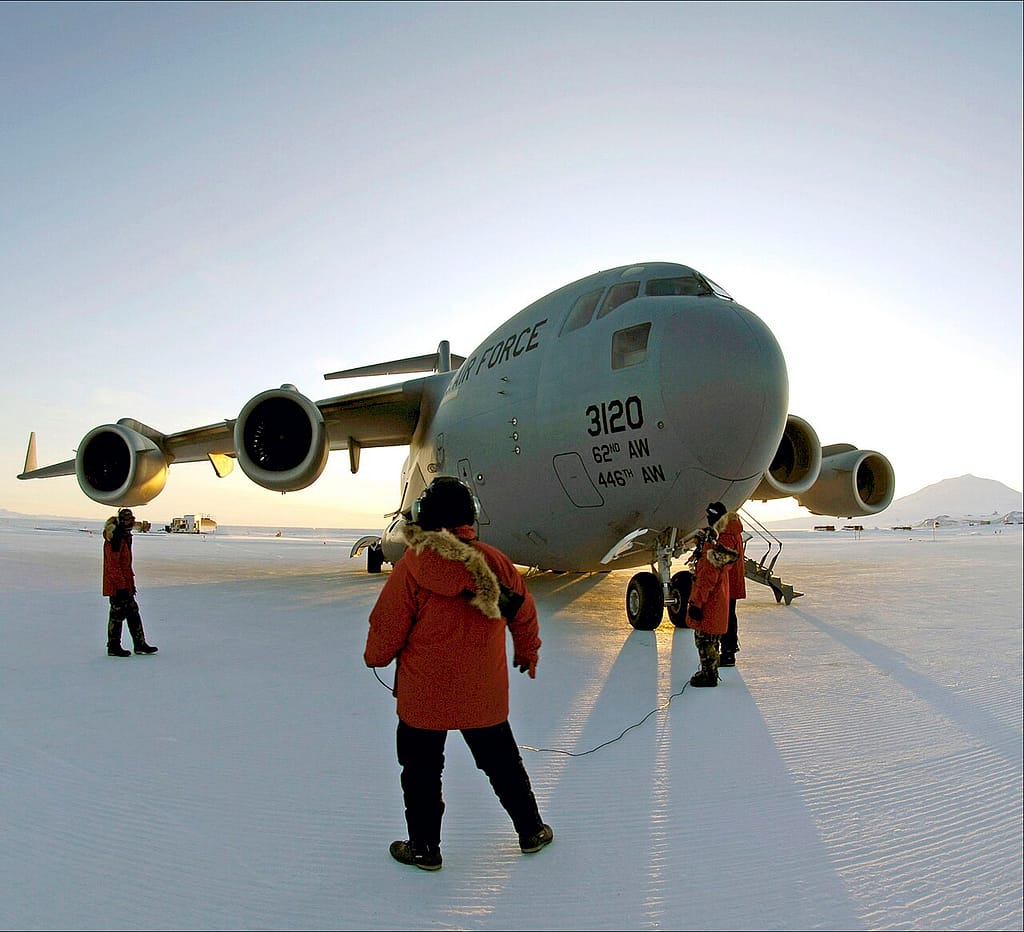
A C-17 Globemaster III operating on an Antarctic ice runway — the kind of flight ICE28 was attempting.
A Russian Rocket, an Ocean Away
The warning did not come from Antarctica. According to the Civil Aviation Authority, it was notified by Russia’s state air-traffic management corporation of a planned missile launch and the hazard it could pose to international airspace inside New Zealand’s vast Oceanic Flight Information Region — the slice of sky New Zealand is responsible for managing, stretching far out over the Southern Ocean.
That a Russian launch notice could reach out and turn back a U.S. Air Force flight over the bottom of the world says a lot about how interconnected — and how contested — modern airspace has become. New Zealand’s foreign minister, Winston Peters, has since said he is seeking answers from Moscow about the warning.
Why the Air Force Flies to the Ice
Operation Deep Freeze is the U.S. military’s support to the National Science Foundation’s Antarctic programme, and it leans heavily on the C-17. Air Mobility Command jets fly from Christchurch down to McMurdo, landing on runways of compacted snow and metres-thick sea ice, while ski-equipped LC-130 Hercules work forward from the continent itself. This week’s flight was part of WINFLY, the late-winter fly-in that reopens the air bridge and ferries staff and supplies to McMurdo Station and New Zealand’s neighbouring Scott Base ahead of the summer science season.
ICE28 will try again. But its aborted run is a small, strange reminder that even the loneliest supply line on the planet still depends on clear skies — and that clear skies, these days, are not guaranteed by geography alone.
Sources: CNN; New Zealand Civil Aviation Authority; NZ Herald; Newstalk ZB; U.S. Air Force.
0 Comentarios