

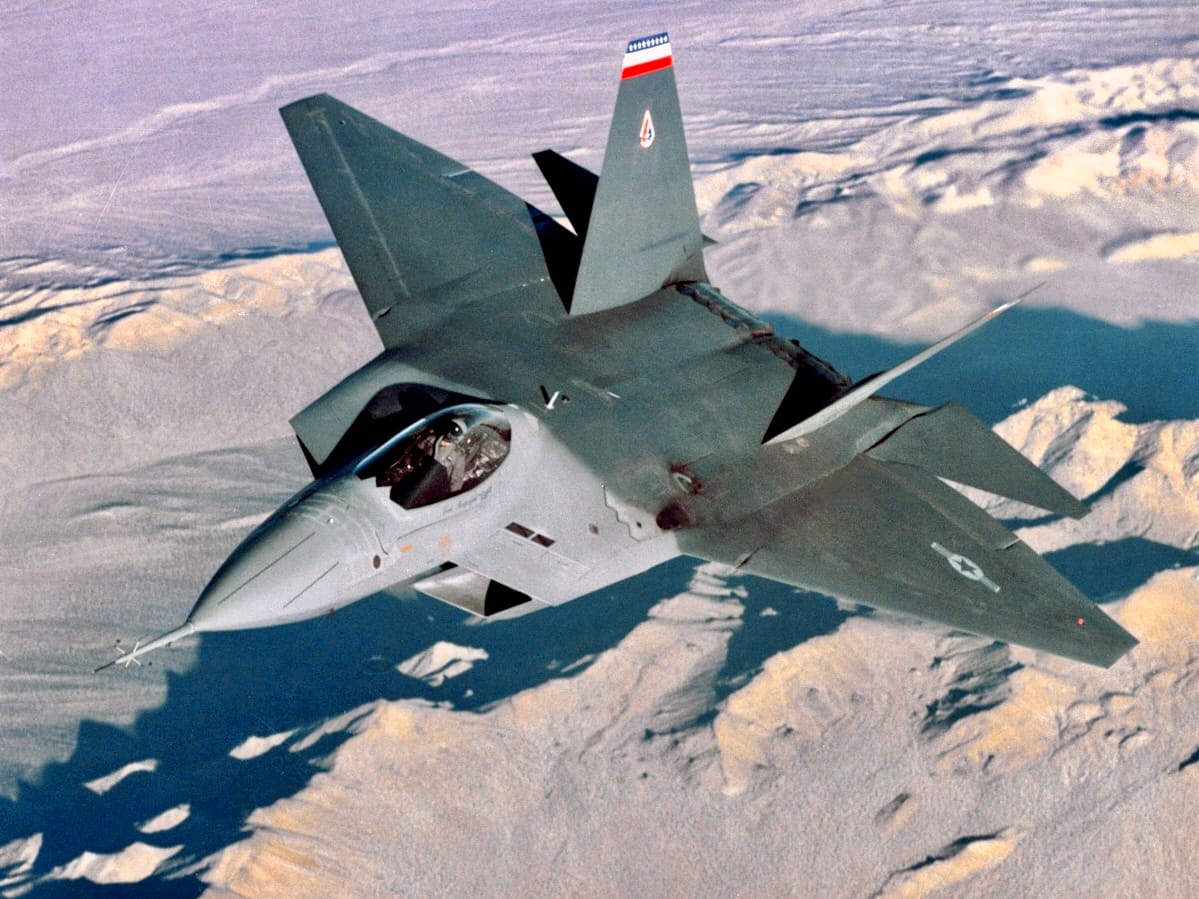
El aire del desierto aún estaba fresco en la base aérea Edwards la mañana del 27 de agosto de 1990 cuando el piloto de pruebas jefe de Northrop, Paul Metz, salió a la pista en una máquina que no se parecía a ninguna otra en la Tierra. De color gris carbón, con alas en forma de diamante y sus dos colas inclinadas hacia afuera como las aletas de un dardo, el avión parecía provenir de una década que aún no había llegado. Metz lo elevó de la pista y lo voló durante 50 minutos.
La aeronave era el prototipo YF-23, y existía con un único propósito: vencer al Lockheed YF-22 en la competición de cazas tácticos avanzados. Dos equipos, cuatro prototipos, un contrato... y el ganador definiría la superioridad aérea estadounidense hasta bien entrado el siglo XXI.
Ocho meses después, Lockheed ganó. Pilotos, ingenieros y analistas de sillón no han dejado de debatir sobre ello desde entonces. El YF-23 “Black Widow II” podría ser el mejor caza que nunca llegó a existir.
Datos clave: YF-23 vs YF-22
| Competencia | Demostración/validación del Advanced Tactical Fighter (ATF), 1986-1991 |
| Contendientes | Northrop/McDonnell Douglas YF-23 frente a Lockheed/Boeing/General Dynamics YF-22 |
| Primer vuelo del YF-23 | 27 de agosto de 1990 — Paul Metz, Base de la Fuerza Aérea Edwards |
| Primer vuelo del YF-22 | 29 de septiembre de 1990 — Dave Ferguson, Base de la Fuerza Aérea Edwards |
| borde YF-23 | Sigilo, velocidad supercrucero, alcance |
| borde YF-22 | Agilidad, vectorización de empuje, disparos de misiles reales |
| Decisión | 23 de abril de 1991 — El secretario de la Fuerza Aérea, Donald Rice, elige al F-22 y P&W F119 |
| Los prototipos de hoy | PAV-1: Museo Nacional de la USAF, Dayton · PAV-2: Museo de Vuelo del Oeste, Torrance |
Diseñado para vencer a los flanqueadores
La ATF fue concebida a principios de la década de 1980 como la respuesta a una nueva generación de combatientes soviéticos, la Su-27 y MiG-29. La Fuerza Aérea de los Estados Unidos quería un avión que combinara la invisibilidad de la F-117 con la velocidad y agilidad de un F-15 — y quería la capacidad de volar a velocidad supersónica sin postcombustión, una maniobra llamada supercrucero que ningún caza operativo podía mantener.
El 31 de octubre de 1986, la Fuerza Aérea seleccionó a dos equipos para la fase de demostración y validación: Lockheed, liderando a Boeing y General Dynamics, y Northrop, en colaboración con McDonnell Douglas. Cada equipo construiría dos prototipos voladores, uno para cada uno de los motores en competencia: el Pratt & Whitney YF119 y el General Electric YF120.
Lo que estaba en juego era enorme. La Fuerza Aérea planeaba inicialmente comprar 750 aviones de combate aéreos (ATF); la Revisión de Aeronaves Principales de 1990 del Secretario de Defensa Dick Cheney redujo la cifra a 650 antes incluso de que se tomara una sola decisión. Para el equipo perdedor, podría significar no tener trabajo en aviones de combate durante toda una generación.
Dos maneras de construir un fantasma
La respuesta de Northrop fue radical. El YF-23 no tenía estabilizadores verticales en el sentido convencional, solo dos grandes superficies móviles inclinadas a 50 grados, y sus motores expulsaban los gases a través de compartimentos protegidos térmicamente en la parte superior del fuselaje para ocultar su brillo infrarrojo. No hizo concesiones en agilidad para exhibiciones aéreas: sin vectorización de empuje, solo un diseño limpio, velocidad pura y sigilo. El PAV-1, propulsado por motores Pratt & Whitney, demostró supercrucero a Mach 1,43, y se dice que el segundo avión, propulsado por motores GE, fue aún más rápido.
El YF-22 de Lockheed era el más extrovertido. Sus toberas bidimensionales de empuje vectorial le permitían inclinar el morro hasta ángulos de ataque extremos, y durante el vuelo de prueba, Lockheed se aseguró de que todos lo vieran: pasadas a alto ángulo de ataque, un misil AIM-9 Sidewinder disparado en vivo en noviembre de 1990 y un misil AIM-120 AMRAAM disparado en diciembre. Northrop no disparó ningún misil; el objetivo era demostrar que la capacidad podía existir, no realizar una demostración en vivo.
Ambos equipos finalizaron sus vuelos a finales de diciembre de 1990. La Fuerza Aérea confirmó posteriormente que ambas aeronaves cumplían con los requisitos. Entonces comenzó la espera.
Metz y su compañero, el piloto de YF-23 Jim Sandberg, también argumentaron que los enormes alerones de cola del avión eran tan potentes que anulaban en gran medida la célebre ventaja de vectorización de empuje del YF-22. Es un punto que nunca llegó a esclarecerse.

El anuncio
El 23 de abril de 1991, el secretario de la Fuerza Aérea, Donald Rice, compareció ante la prensa en el Pentágono y puso fin a la incertidumbre: el F-22 del equipo Lockheed, propulsado por el motor F119 de Pratt & Whitney, sería el próximo caza de superioridad aérea de Estados Unidos. Rice afirmó que la decisión se basaba en la confianza en que el equipo Lockheed y Pratt & Whitney podrían entregar la aeronave y el motor a los costos previstos, y se negó rotundamente a declarar a uno u otro prototipo como el mejor, negando que uno hubiera sido significativamente más maniobrable o sigiloso que el otro.
El 2 de agosto de 1991, la Fuerza Aérea firmó un contrato de desarrollo de ingeniería y fabricación por valor de 9.550 millones de dólares. Lockheed se dedicó a la fabricación de aviones de combate durante el siguiente medio siglo. Northrop, en la práctica, quedó fuera de ese sector.
El director del programa de Lockheed, Sherm Mullin, luchó por ese resultado con brutal franqueza. En 1985, aún colaborando a tiempo parcial en la propuesta, le dijo al presidente de Lockheed California que el equipo iba a perder "porque este programa está contaminado con gente a tiempo parcial, incluyéndonos a usted y a mí". Al día siguiente, Mullin era el director del programa.
Por qué Lockheed realmente ganó
La razón oficial fue la confianza de la gerencia y el realismo de los costos. Las razones no oficiales han llenado libros. La reputación de Northrop en Washington se vio dañada por los sobrecostos y los problemas legales relacionados con el B-2 El programa, y el bombardero furtivo A-12 de la Armada —cancelado ese enero en uno de los mayores desastres de adquisiciones— habían minado la confianza en las promesas sobre el papel en toda la industria. Apostar 650 cazas al equipo considerado como el gestor más estable era, en 1991, un argumento fácil de defender.
El propio Metz, poco dado al resentimiento, apunta a algo más sutil: la perspicacia comercial. Los brillantes ingenieros de Northrop hablaban en términos técnicos. Lockheed comprendía que la selección de proveedores la deciden las personas, y llenaba sus demostraciones de vuelo de imágenes vívidas y duraderas: piruetas con empuje vectorial y lanzamientos de misiles reales que contaban una historia que cualquiera podía comprender.
Y la Armada planeaba sobre todo ello. Su requisito para la Fuerza Aérea Naval (NATF, por sus siglas en inglés) seguía vigente, al menos en teoría, en abril de 1991, y Lockheed había propuesto una variante de su diseño apta para portaaviones. Los historiadores aún debaten sobre la importancia que tuvo dicho requisito; de todos modos, la NATF desapareció discretamente en cuestión de meses.
El culto de la viuda negra
La derrota convirtió al YF-23 en inmortal. Liberado de las limitaciones de la producción, sigue siendo el avión de aspecto más rápido que nunca entró en servicio, y cada pocos años su fantasma resurge; el caso más famoso se produjo a mediados de la década de 2000, cuando, según se informa, Northrop desempolvó el diseño como base para una propuesta de bombardero regional FB-23.
Los dos prototipos sobrevivieron. El PAV-1, el "Fantasma Gris", exhibe su ala en forma de diamante en la galería de investigación y desarrollo del Museo Nacional de la Fuerza Aérea de los Estados Unidos en Dayton, Ohio. El PAV-2 se encuentra en el Museo de Vuelo del Oeste en el aeródromo Zamperini en Torrance, California, donde Metz y Sandberg han regresado para contar su historia.
En cuanto a Metz, cambió de insignia. El 7 de septiembre de 1997 realizó el primer vuelo del F-22 Raptor de producción, convirtiéndose así en el único piloto en llevar por primera vez al aire a ambas líneas de aviones de la ATF. La Fuerza Aérea obtuvo su Raptor. La Viuda Negra alcanzó la inmortalidad.
Fuentes: Wikipedia (Northrop YF-23, Lockheed YF-22), The War Zone (conferencia de Paul Metz y Jim Sandberg, 2019), Aerospace America / AIAA (entrevista a Sherm Mullin, 2023), Air Force Historical Foundation, GlobalSecurity.org, Museo Nacional de la USAF, Western Museum of the Flight
Preguntas relacionadas
¿Qué era el YF-23?
El YF-23 fue un prototipo de caza furtivo construido por Northrop y McDonnell Douglas para el concurso Advanced Tactical Fighter (ATF) de la Fuerza Aérea de los Estados Unidos a finales de la década de 1980. Apodado "Black Widow II", realizó su primer vuelo el 27 de agosto de 1990 y compitió contra el Lockheed YF-22. Se construyeron dos prototipos antes de que la Fuerza Aérea eligiera el diseño rival en abril de 1991.
¿Por qué el YF-23 perdió contra el YF-22?
La Fuerza Aérea de los Estados Unidos seleccionó el Lockheed YF-22 el 23 de abril de 1991, citando una mayor confianza de la dirección y un realismo en los costos. Los analistas también señalan que la reputación de Northrop se vio dañada por los sobrecostos del B-2, y a las vívidas demostraciones de vuelo de Lockheed, incluyendo lanzamientos de misiles reales, durante uno de los grandes competiciones de vuelo de aeronaves militares. Podría decirse que el YF-23 era más sigiloso y rápido, pero fracasó debido al riesgo percibido del programa.
¿Cuál es la diferencia entre el YF-23 y el YF-22?
El YF-23 priorizaba el sigilo, la velocidad supercrucero y el alcance, utilizando colas móviles inclinadas y conductos de escape con protección térmica, pero sin vectorización de empuje. El Lockheed YF-22, por su parte, priorizaba la agilidad, empleando toberas bidimensionales de vectorización de empuje para maniobras con ángulos de ataque extremadamente altos, y disparó misiles AIM-9 y AIM-120 reales durante la prueba de vuelo. La Fuerza Aérea se decantó por el YF-22, que posteriormente se denominó F-22 Raptor.
¿Qué tan rápido era el YF-23?
El prototipo YF-23, propulsado por un motor Pratt & Whitney, demostró un vuelo supersónico sostenido sin postcombustión a Mach 1,43, y se dice que el segundo avión, con motor General Electric, fue aún más rápido. Su diseño priorizaba la aerodinámica pura y la velocidad bruta por encima de la agilidad para exhibiciones aéreas, razón por la cual los entusiastas aún lo consideran el caza de aspecto más rápido que nunca entró en servicio.
¿Quién construyó el YF-23?
El YF-23 fue construido por Northrop en asociación con McDonnell Douglas. Se fabricaron dos prototipos: el PAV-1, el “Gray Ghost”, propulsado por motores Pratt & Whitney F119, y el PAV-2, propulsado por motores General Electric. El trabajo posterior de Northrop en sistemas avanzados y diseños de cazas de sexta generación remonta parte de su linaje a este avión.
¿Cuándo realizó su primer vuelo el YF-23?
El YF-23 realizó su primer vuelo el 27 de agosto de 1990, pilotado por el jefe de pilotos de pruebas de Northrop, Paul Metz, en la base aérea Edwards, en un vuelo de 50 minutos. El Lockheed YF-22, su rival, voló por primera vez aproximadamente un mes después, el 29 de septiembre de 1990, y la decisión sobre el Advanced Tactical Fighter se tomó el 23 de abril de 1991.
¿Dónde se encuentran hoy los dos prototipos del YF-23?
Ambos prototipos del YF-23 se conservan en museos. El PAV-1, el “Fantasma Gris”, se exhibe en el Museo Nacional de la Fuerza Aérea de los Estados Unidos en Dayton, Ohio, mientras que el PAV-2 se encuentra en el Museo de Vuelo del Oeste en Torrance, California. Al no haber entrado nunca en producción, el YF-23 evitó las limitaciones propias de una carrera militar y mantuvo intacta su reputación futurista.
¿Qué era el programa Advanced Tactical Fighter (ATF)?
El ATF fue un programa de la Fuerza Aérea de los Estados Unidos lanzado a principios de la década de 1980 para construir un caza de superioridad aérea supersónico y furtivo que contrarrestara los nuevos modelos soviéticos como el Su-27 y el MiG-29. Enfrentó al Northrop YF-23 contra el Lockheed YF-22, y el diseño de Lockheed ganó en 1991 para entrar en servicio como el F-22 Raptor, una de las competiciones de cazas más trascendentales de la historia.
0 Comentarios