
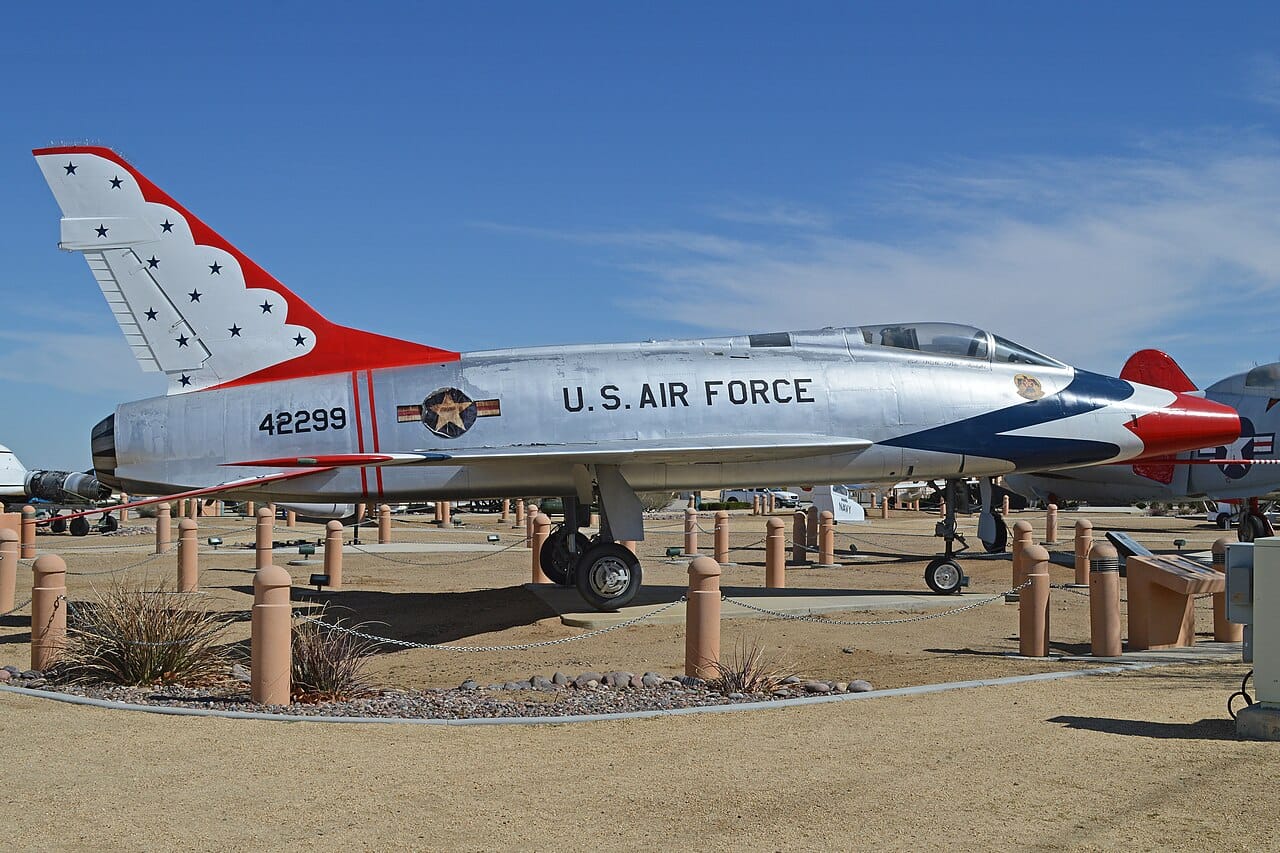
In March 2026, a silver jet with a wickedly swept wing thundered down a runway near Houston and hauled itself into the Texas sky. It was a North American F-100 Super Sabre — one of only two left flying anywhere on earth — and its return is a good excuse to remember an aircraft that was every bit as dangerous to the men who flew it as to the enemy.
They called it “the Hun.” It was America’s first supersonic fighter, and it earned its reputation the hard way.
| Aircraft | North American F-100 Super Sabre (“the Hun”) |
| First flight | 25 May 1953 — supersonic on its maiden flight |
| Claim to fame | First USAF fighter capable of level supersonic flight |
| Dark reputation | The deadly low-speed “Sabre Dance” |
| Flying again | Collings Foundation F-100F, March 2026 |
The first to break the sound barrier in level flight
When the YF-100A prototype lifted off on 25 May 1953, it went supersonic on that very first flight — a startling debut. The Super Sabre became the first fighter in U.S. Air Force service able to fly faster than sound in level flight, the opening act of the legendary “Century Series” of jets numbered from the F-100 to the F-106. Pilots nicknamed it the Hun, short for “Hundred,” and it descended directly from the F-86 Sabre that had duelled MiGs over Korea.
But going supersonic in the mid-1950s meant sailing into aerodynamic territory nobody fully understood, and the Hun bit back.
The Sabre Dance
The F-100’s most feared trait had a strangely pretty name: the Sabre Dance. Pull the nose up too high at low speed — on takeoff or, worse, on final approach — and the swept wingtips would stall first. The centre of lift shifted forward, the nose pitched higher still, and the stall deepened into a slow, unrecoverable wallow. A 1956 crash at Palmdale, California was captured on film and became a grim training reel for generations of pilots. Early inertia-coupling problems added to the toll; the test pilot George Welch was killed in 1954 when his F-100A broke apart in a dive.
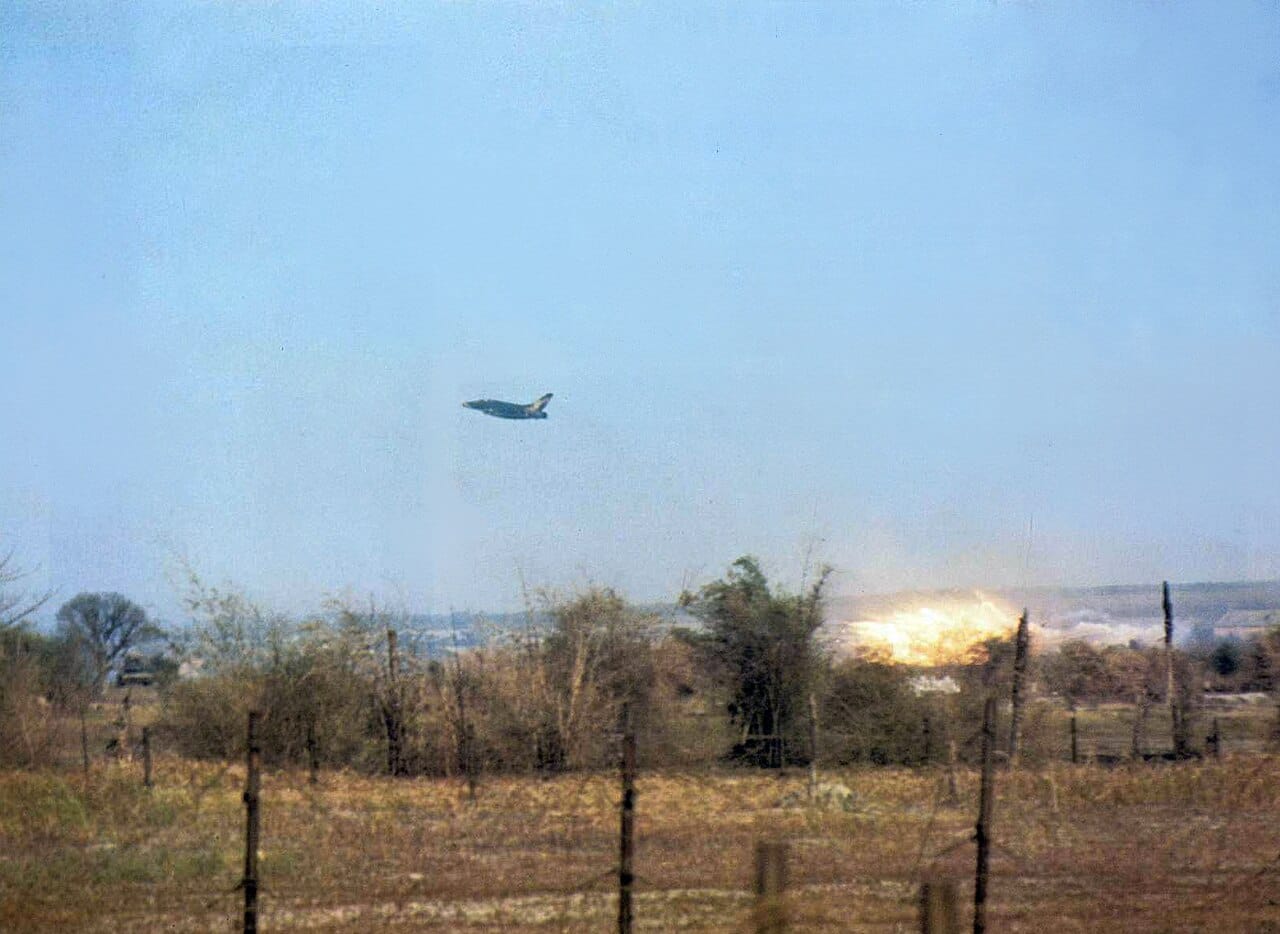
For all that, the aircraft matured into a superb workhorse. Over Vietnam the Super Sabre flew countless close-air-support and strike sorties, and the two-seat F-100F took on one of the war’s most demanding jobs: the “Misty” Fast Forward Air Controllers, racing low over hostile jungle to mark targets for other strike aircraft.
Back in the air, seventy years on
Which brings us back to that Houston runway. The aircraft that flew in March 2026 is a Collings Foundation F-100F, operated by the Vietnam War Flight Museum — one of only two airworthy Super Sabres in existence, flown by Rick Sharpe, who holds the distinction of being the only active F-100 pilot in the world. The plan is to bring the Hun back to the airshow circuit, including a dissimilar-formation routine alongside a MiG-17 that recreates the look of Vietnam-era air combat.
More than seventy years after it first outran its own sound, the aircraft that taught the U.S. Air Force how to live at supersonic speed is airborne again — noisy, demanding, and magnificent.
Sources: Vintage Aviation News; Super Sabre Society; National Museum of the U.S. Air Force.
Related Questions
What was the F-100 Super Sabre?
The North American F-100 Super Sabre was America's first supersonic jet fighter, entering U.S. Air Force service in the mid-1950s. Nicknamed 'the Hun,' it was the first USAF fighter able to fly faster than sound in level flight. It later became a hard-working ground-attack aircraft, flying countless strike sorties during the Vietnam War.
Why was the F-100 called 'the Hun'?
'The Hun' was a shortening of 'one hundred,' from the aircraft's F-100 designation, and the nickname stuck throughout the Super Sabre's career. It reflected both affection and wary respect for a demanding machine that was, in the words of its pilots, as dangerous to fly as it was formidable in combat.
What was the Sabre Dance?
The Sabre Dance was the F-100's notorious tendency to become uncontrollable at low speed and high angle of attack, typically on approach to landing. As the nose rose, drag climbed sharply and the aircraft could settle into an unrecoverable wallow. A 1956 crash at Palmdale, California, was filmed and became a grim training aid for generations of pilots.
When did the F-100 Super Sabre first fly?
The YF-100A prototype first flew on 25 May 1953 and went supersonic on that very first flight, a startling debut. The Super Sabre went on to become the first fighter in U.S. Air Force service capable of sustained supersonic speed in level flight, ushering the service into the supersonic age.
What role did the F-100 play in Vietnam?
Over Vietnam the F-100 matured into one of the war's hardest-working strike aircraft, flying vast numbers of close-air-support and interdiction sorties. The two-seat F-100F took on the demanding 'Misty' Fast FAC mission, racing low over hostile territory to mark targets for other aircraft, part of the air campaign chronicled in the bloody air war over Hanoi.
How many F-100 Super Sabres are still flying?
Only two airworthy F-100 Super Sabres remain in the world. One is a Collings Foundation F-100F operated by the Vietnam War Flight Museum, which returned to flight near Houston in March 2026. It is flown by Rick Sharpe, who holds the distinction of being the only active F-100 pilot in the world, with plans to bring it back to the airshow circuit.
Who was George Welch?
George Welch was an American test pilot and World War II fighter ace who helped develop the F-100. He was killed in October 1954 when his F-100A broke apart during a high-speed dive, a victim of the inertia-coupling problems that troubled early supersonic aircraft. His death underscored how little was then understood about flight beyond the sound barrier.
What made early supersonic fighters so dangerous?
Early supersonic fighters exposed pilots to phenomena engineers barely understood, from inertia coupling, which destroyed George Welch's F-100 in 1954, to vicious low-speed handling like the F-100's Sabre Dance. Contemporaries such as the carrier-based F-8 Crusader shared the era's steep learning curve, as designers pushed airframes faster than the science of the day could safely support.
0 Comments