Finland wants the legal authority to host nuclear weapons on its soil. Three years after joining NATO, Helsinki has submitted a proposal that would allow the import and storage of nuclear warheads — a radical departure for a country that spent seven decades as a neutral buffer state between East and West.
The proposal, submitted in April 2026, would amend Finnish law to permit the transit, import, and storage of nuclear weapons by allied forces. It does not mean Finland is seeking its own nuclear arsenal. It means Finland is opening its territory to NATO’s nuclear deterrent — should the alliance ever need to deploy it there.
For a nation that shares 1,340 kilometres of border with Russia, the decision is as strategic as it gets.
Quick Facts
Proposal: Legal framework to allow nuclear weapons import and storage on Finnish soil
NATO membership: Since April 2023
Border with Russia: 1,340 km — NATO’s longest Russian land border
Current nuclear status: Non-nuclear weapon state (NPT signatory)
Key context: France simultaneously rehearsing nuclear strikes over the Baltic
From Neutrality to Nuclear Hosting
Finland’s transformation has been breathtaking in speed. In 2021, the country was constitutionally committed to military non-alignment. By April 2023, it was a NATO member. By 2026, it is legislating for nuclear weapons on its territory. A geopolitical journey that took Germany forty years took Finland three.
The driver is geography. Finland’s eastern border is the longest continuous land boundary between NATO and Russia. It runs from the Arctic to the Gulf of Finland, passing within 170 kilometres of St. Petersburg. In a conflict scenario, Finnish territory would be critical for both NATO defensive operations and any potential nuclear posture.
Until now, Finland maintained an informal assurance — sometimes described as a political understanding rather than a legal commitment — that nuclear weapons would not be stationed on Finnish soil in peacetime. The new proposal does not necessarily change that peacetime posture. What it does is remove the legal barrier, ensuring that if the security situation demands it, nuclear weapons can be deployed without requiring emergency legislation.
The Nordic Nuclear Shift
Finland’s move is part of a broader shift across the Nordic region. Norway and Denmark, both founding NATO members, have long maintained policies against hosting nuclear weapons on their territory in peacetime. Those policies remain in place, but the debate has reopened in both countries.
Sweden, which joined NATO in 2024, has not addressed the nuclear hosting question publicly. But Sweden’s geographic position — controlling the approaches to the Baltic Sea and sitting between Finland and Norway — makes it strategically relevant to any NATO nuclear deployment in the region.
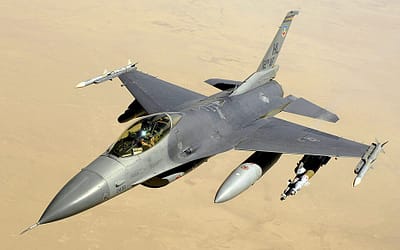
The parallel with France’s nuclear exercises over the Baltic is striking. President Macron is simultaneously offering to extend France’s nuclear umbrella to European allies and rehearsing nuclear strike missions with Polish F-16s. Finland’s legislative proposal fits into this broader pattern: Europe is thinking about nuclear deterrence in ways it has not done since the 1980s.
Moscow’s Red Line — or Is It?
Russia has repeatedly warned that NATO expansion into Finland would have consequences, and that nuclear deployments near its borders would be met with countermeasures. Moscow has already reinforced its Western Military District, deployed Iskander missiles to Kaliningrad, and increased aerial patrols along the Finnish border.
But Russia’s leverage over Finnish decisions has effectively evaporated. Helsinki joined NATO precisely because it concluded that Russian threats were no longer theoretical. The 2022 invasion of Ukraine demolished the assumption that good-faith neutrality could protect a small country sharing a border with an aggressive neighbour.
Finland’s calculation is straightforward: if Russia views nuclear weapons near its border as a provocation, then the most effective response to Russian aggression is to make that provocation legally possible. Deterrence works because the threat is credible. Removing legal barriers makes it more credible.
A Legal Framework, Not a Deployment
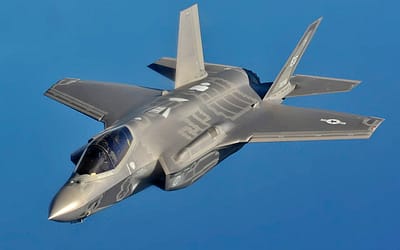
It is worth emphasising what Finland has not done. It has not requested nuclear weapons. It has not entered a nuclear sharing arrangement like Germany, Italy, Belgium, the Netherlands, and Turkey — countries that host American B61 gravity bombs at their air bases. It has not announced plans to certify Finnish F-35s for nuclear delivery.
What Finland has done is create the legal architecture for any of those things to happen if circumstances require it. The proposal is a permission structure, not a deployment order. It converts a political assurance into a legal option — and in security policy, options are everything.
Whether nuclear weapons ever arrive on Finnish soil depends on factors far beyond Helsinki’s control: the trajectory of the Russia-Ukraine war, the durability of the Iran ceasefire, and the evolution of NATO’s overall nuclear posture. But when the day comes — if it comes — Finland will be ready. The law will already be in place.
Sources: Defense News, Reuters, Finnish government proposal (April 2026)



 English
0 Comments