
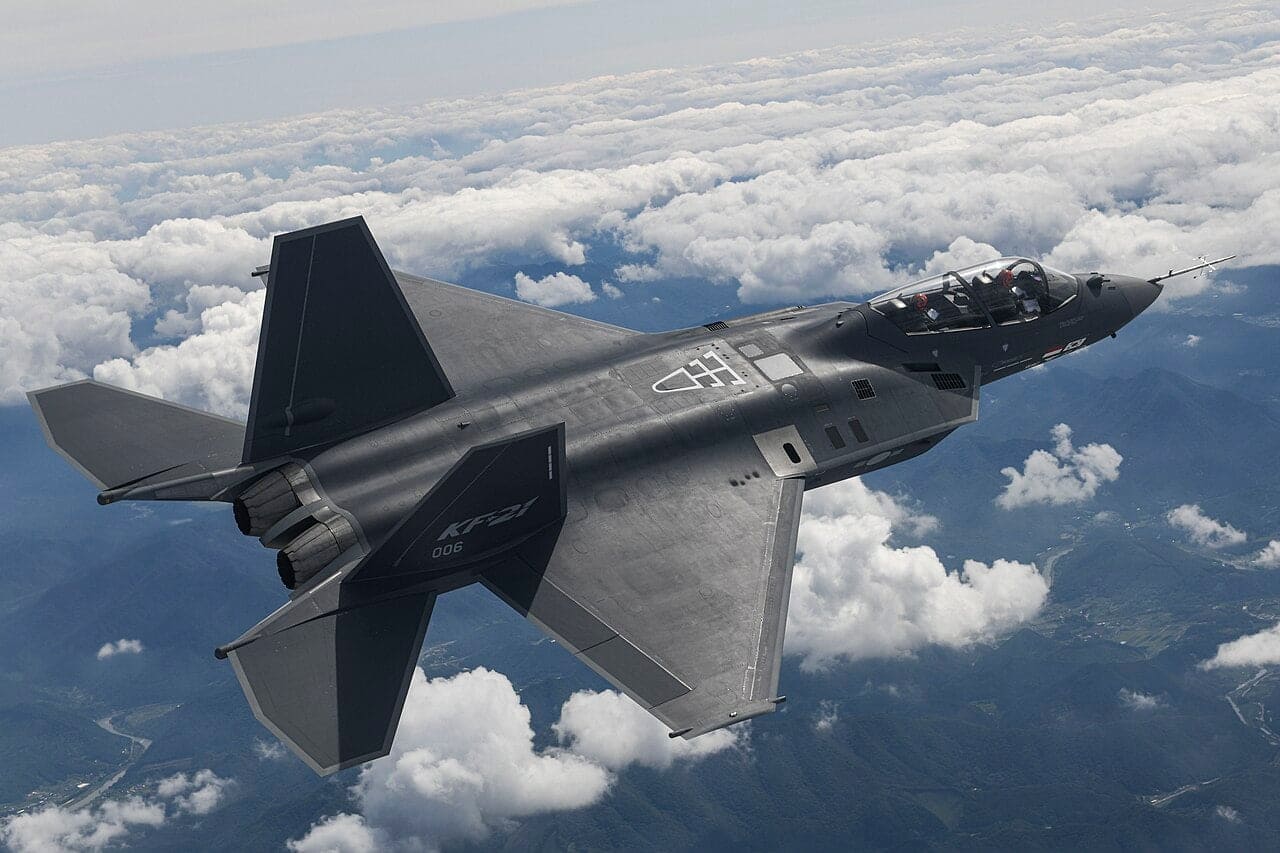
South Korea has built its own stealth-shaped fighter. Now it wants its own long reach to go with it. On August 12, Korea Aerospace Industries and Hyundai Rotem signed a memorandum of understanding at KAI’s Sacheon headquarters to jointly develop a domestic long-range air-to-air missile for the KF-21 Boramae — a weapon aimed squarely at the class defined by Europe’s MBDA Meteor.
The target specification is precise: a solid-fuel ducted ramjet missile reaching roughly 200 kilometres (124 miles) and a terminal speed near Mach 4 — with, its backers say, an AESA radar seeker the Meteor does not have. If it works, Seoul would join the very short list of nations able to build a ramjet-powered beyond-visual-range missile at all.
• Signé : MoU, KAI + Hyundai Rotem, Sacheon, August 12, 2026
• But: domestic long-range air-to-air missile (LRAAM) for the KF-21 Boramae
• Propulsion: solid-fuel ducted ramjet (throttleable, sustained high speed)
• Target performance: ~200 km range, ~Mach 4 terminal, AESA seeker
• Benchmark: MBDA Meteor (European ramjet BVR missile)
• Programme: part of Agency for Defense Development LRAAM effort, 2026–2033
• Statut: teaming MoU / bid — not an awarded contract
Why a ramjet, not a rocket
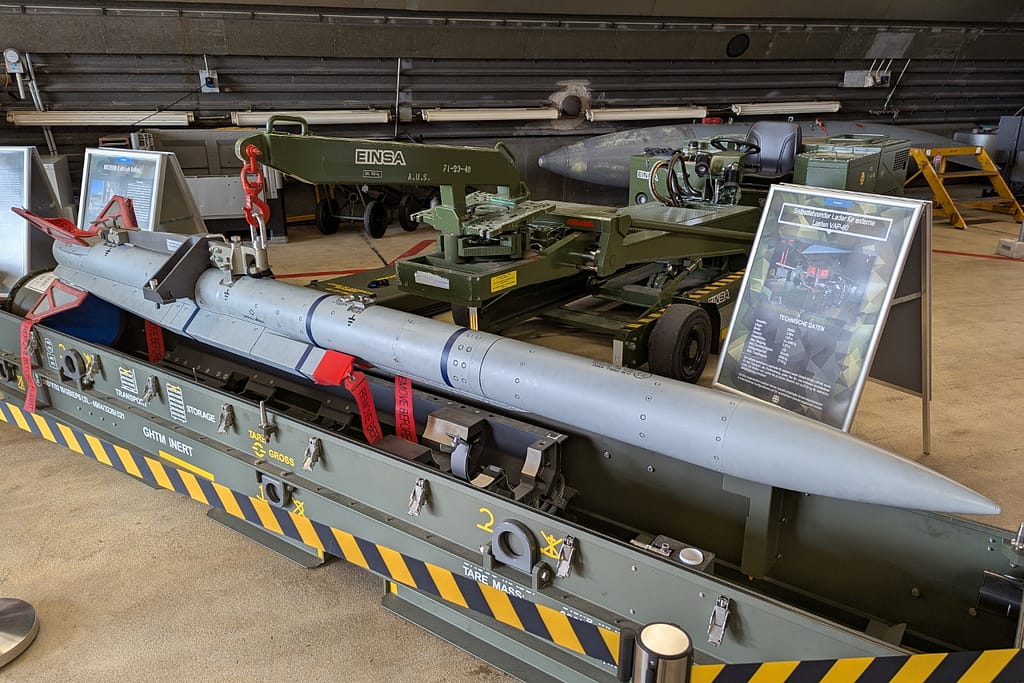
Most air-to-air missiles are rocket-powered: they burn hard for a few seconds, then coast. By the time they reach a distant target they are slowing down, and their “no-escape zone” — the envelope from which a target cannot simply outrun the shot — has shrunk. A ducted ramjet keeps burning. It draws in air and sustains thrust across the flight, so the missile is still accelerating when a rocket motor would be dead.
That is the Meteor’s whole reason for existing, and it is what Korea is trying to match. The engineering is genuinely hard, which is why so few countries have fielded a ramjet BVR missile. Getting the intake, the throttleable gas generator and the seeker to work together is the difficult part — not the marketing brochure.
The independence motive
The strategic logic is straightforward. The KF-21 was designed to carry the Meteor, but relying on a foreign missile leaves Seoul dependent on European supply chains and export approvals — an awkward position for a country that wants to sell the KF-21 abroad as a complete, sovereign package. A home-built LRAAM removes that dependency and makes the fighter easier to export without third-party veto.
A bid, not a done deal
One important caveat: this MoU does not award anything. South Korea’s long-range missile effort is run by the Agency for Defense Development on a timeline stretching from 2026 to 2033, and the KAI–Hyundai Rotem pairing is one of at least three industry groupings manoeuvring for a role — LIG Nex1 and others are pushing competing packages. What was signed in Sacheon is an intent to combine forces and bid, not a signed production programme.
Still, the direction is unmistakable. Having proven it can design a modern fighter, South Korea now intends to arm it with weapons of its own — and to stop asking anyone’s permission to sell the result.
Sources: The Korea Times; Aerotime; Airforce Technology; Defence Security Asia; Seoul Economic Daily.


0 commentaire