
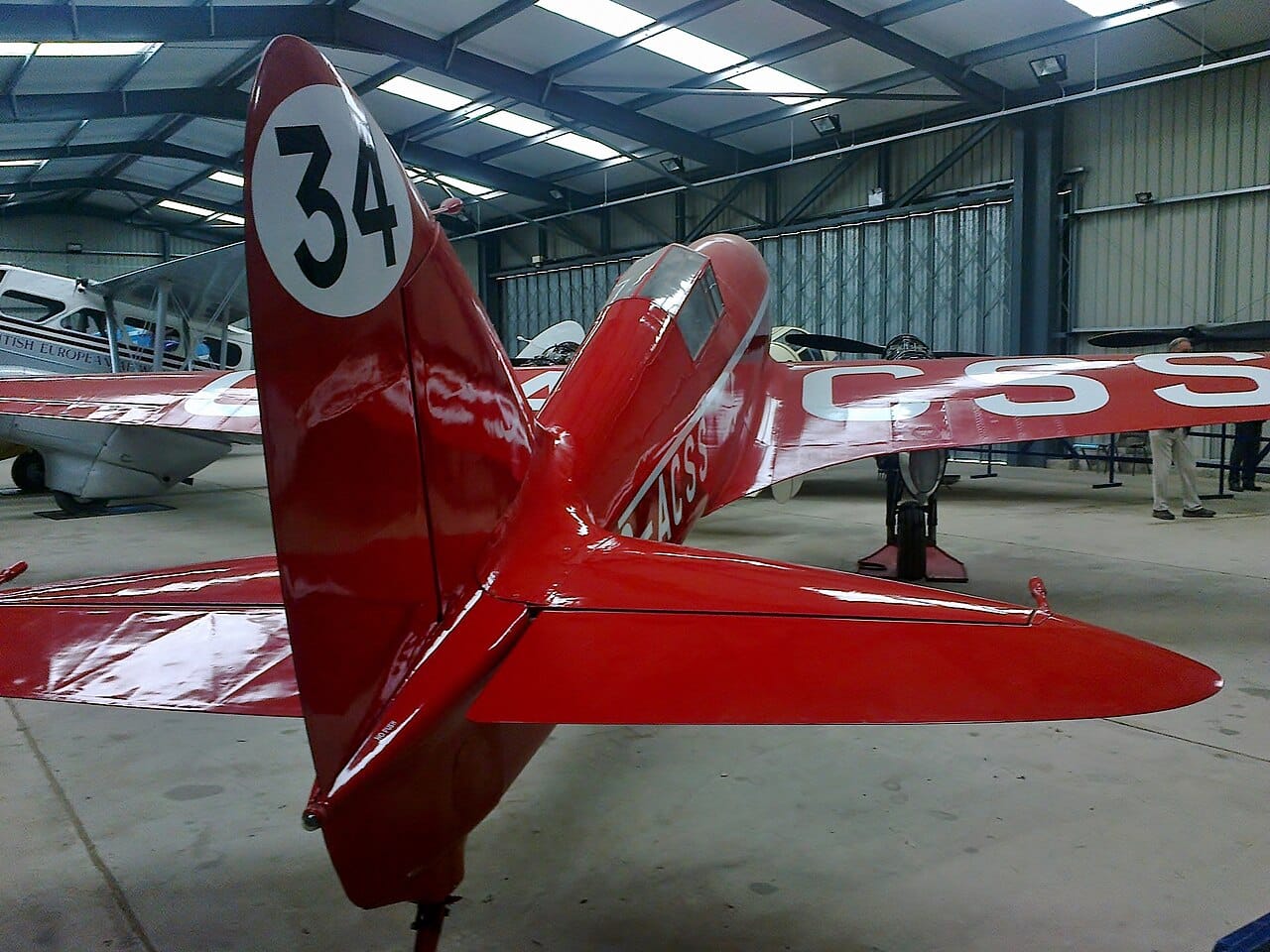
For the crowd gathered at Old Warden on the evening of 15 August, it was meant to be the gentlest of spectacles: vintage aeroplanes flying to a live orchestra as the light softened, the Shuttleworth Collection’s famous “Flying Proms”. Then one of the most precious racing aircraft on Earth bounced, went around, came back — and ended the night on its back.
The aeroplane was G-ACSS Grosvenor House, a de Havilland DH.88 Comet. Not a replica. The actual scarlet racer that won the 1934 England-to-Australia air race, still flying more than ninety years later. On its final approach it touched down hard, bounced, and its pilot wisely broke off the landing. The second attempt went wrong: the Comet overran, nosed over, and flipped, shearing off its tail.
- Aéronef: de Havilland DH.88 Comet, G-ACSS Grosvenor House
- Fait d'armes : winner of the 1934 MacRobertson England–Australia Air Race
- Incident: nose-over on landing, ~19:20 BST, 15 August 2026
- Où: the Flying Proms, Old Warden aerodrome (Shuttleworth), Bedfordshire
- Équipage: pilot hospitalised; no one else injured
- Moteurs : two de Havilland Gipsy Six R (wooden airframe)
The aeroplane that beat the world to Australia
The DH.88 was built for one purpose: to win the 1934 race from Mildenhall to Melbourne. De Havilland produced just three, slender wooden machines with two Gipsy Six engines and a then-radical clean design. Grosvenor House, flown by Charles Scott and Tom Campbell Black, crossed the finish in Melbourne in under three days and took the prize.
That pedigree is exactly why the sight of it upside down on the grass stings. The aircraft was donated to the Shuttleworth Collection in 1965 and painstakingly restored, flying again in 1987 after 49 years on the ground. Since then it has been one of the rarest airworthy machines in the world — a genuine 1930s record-breaker that still takes to the air.
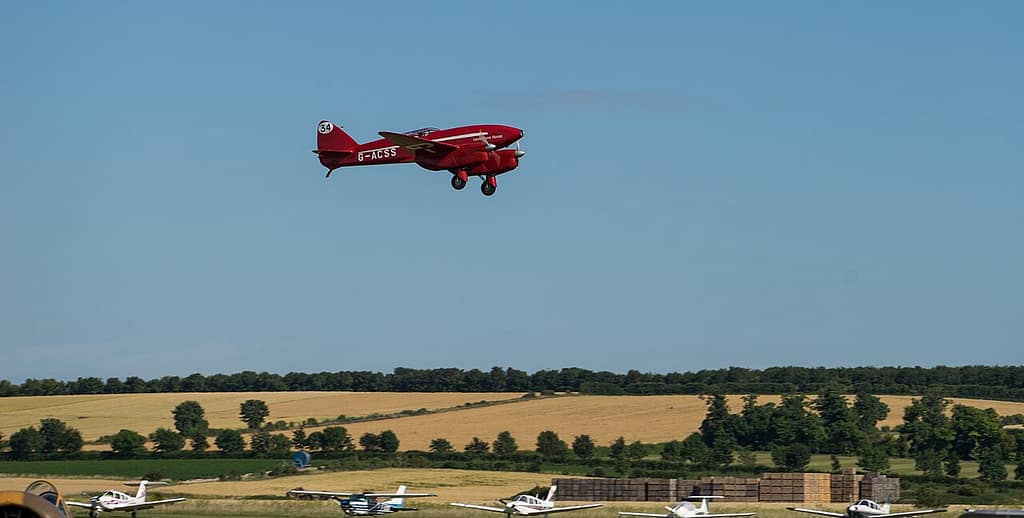
A hard landing, not a catastrophe
For all the drama, the human cost appears mercifully small. The Shuttleworth Trust said the pilot was pulled clear, was responsive at the scene, and was taken to hospital for assessment. No one else was hurt, and — in a very British touch — the second half of the orchestral programme carried on.
The aircraft is another matter. A sheared tail and a nose-over are serious damage to a wooden airframe, and any repair will be a long, delicate job for a machine whose every part is effectively irreplaceable. Vintage aviation has been here before, though; the Comet has already come back from decades of stillness once. If any aeroplane has earned a second resurrection, it is this one.
Sources: The Shuttleworth Trust; Aviation News; European Airshows; aviation-safety.net.


0 commentaire