

| Quick Facts | |
| Official Name | Flight Data Recorder (FDR) and Cockpit Voice Recorder (CVR) |
| Colour | Bright orange (not black — the name is a misnomer) |
| Inventor | David Warren, Australian Research Laboratories (1953) |
| Impact Survival | Rated to withstand 3,400 G |
| Fire Survival | 1,100°C for 30 minutes, then 260°C for 10 hours |
| Water Depth | Rated to 6,000 metres (20,000 feet) for 30 days |
| FDR Parameters | Records 88+ parameters: altitude, airspeed, heading, control inputs, engine data |
| CVR Duration | Last 2 hours of cockpit audio (loops continuously) |
| Locator Beacon | Underwater acoustic pinger, 30-day battery, detectable to 4 km |
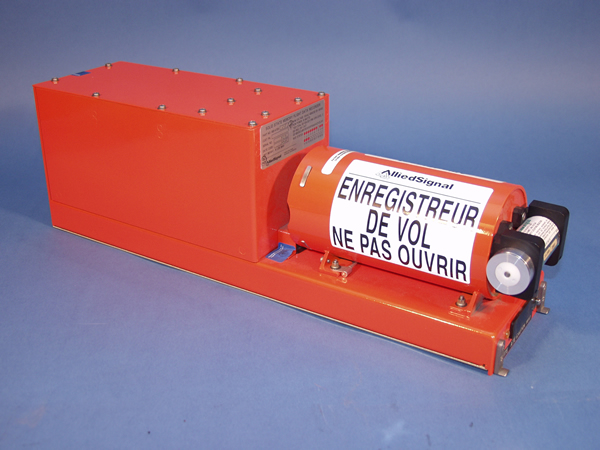
They're not black. They're bright international orange, painted that way for the most practical reason imaginable: so someone can find them in a field of charred wreckage or on the floor of an ocean. They're called "black boxes" because no one remembers why, and the name stuck because it sounds more dramatic than "flight recorder." What they actually are is the toughest piece of engineering on any aircraft — and the only part designed to survive when nothing else does.
Every commercial aircraft carries two: a Flight Data Recorder (FDR) and a Cockpit Voice Recorder (CVR). Together, they provide crash investigators with what happened and what the crew said about it. In an industry where understanding failure is the entire basis of safety improvement, these boxes are the most important objects on the plane.
They were invented by a man who'd never experienced a crash. David Warren was an Australian research scientist whose father died in one of Australia's earliest air disasters in 1934. Decades later, Warren realised that if the aircraft had carried a recording device, investigators might have understood what went wrong. In 1953, he built the first prototype. The aviation establishment ignored him for years.
Built to Survive the Unsurvivable
The engineering specifications for a modern flight recorder read like a torture test. The crash-survivable memory unit — the armoured core that holds the actual data — must withstand an impact force of 3,400 G. That's the equivalent of a 230-kilogram weight dropped from three metres onto a surface the size of a coin. It must survive 1,100°C for thirty minutes — hotter than a jet fuel fire — and then endure 260°C for ten more hours. It must function after being submerged in saltwater at 6,000 metres for thirty days.
The housing is typically stainless steel or titanium, wrapped in layers of thermal insulation. Older models used magnetic tape; modern recorders use solid-state memory chips — the same basic technology as a USB drive, but enclosed in a casing that could survive a building collapse. There are no moving parts to jam, no tape to melt, no heads to misalign.
Attached to the housing is an Underwater Locator Beacon — a small acoustic pinger that activates on contact with water. It emits a pulse once per second at 37.5 kHz, detectable by sonar at distances up to four kilometres. The battery lasts 30 days. After that, finding the box becomes exponentially harder. The search for Malaysia Airlines Flight 370's recorders — if they are ever found — will be one of the longest in aviation history.
What They Record
The FDR captures at least 88 parameters: altitude, airspeed, heading, vertical acceleration, control surface positions, engine thrust, flap settings, autopilot mode, and dozens more. Modern recorders track over 1,000 parameters on wide-body aircraft. The data is recorded continuously throughout the flight, overwriting the oldest data in a 25-hour loop.
The CVR records the last two hours of cockpit audio — every word spoken by the crew, every radio transmission, every alarm and warning tone. It also picks up ambient sounds: engine noise, clicks, thumps, and the subtle changes in sound that tell investigators whether a switch was flipped or a circuit breaker popped. In several crash investigations, the CVR captured sounds — a thud, a bang, a hiss — that identified the failure mode before the FDR data was even decoded.
The Box That Changed Aviation
Almost every safety improvement in modern aviation traces back to something a black box revealed. The understanding of wind shear that led to predictive windshear radar, the recognition of crew resource management failures, the identification of icing conditions that led to anti-ice system redesigns — all of it began with data pulled from orange boxes found in wreckage.
David Warren died in 2010. He lived long enough to see his invention become mandatory on every commercial aircraft in the world and credited with saving an estimated number of lives that no one can accurately count — because the crashes his boxes helped prevent never happened. The toughest object on any aircraft is also, quietly, the one that's saved the most people who were never on it.
Sources: Australian Transport Safety Bureau, FAA Technical Standard Orders, Smithsonian Air & Space
Related Questions
What is an aircraft black box?
A 'black box' is actually two bright-orange devices: the Flight Data Recorder (FDR) and the Cockpit Voice Recorder (CVR). The FDR logs flight parameters while the CVR captures cockpit audio. They are painted international orange, not black, so investigators can find them in wreckage; the nickname stuck for other reasons.
Why are black boxes orange and not black?
They are painted bright international orange for one practical reason: so searchers can spot them in a field of charred debris or on the ocean floor. The 'black box' nickname is a misnomer whose origins are debated — but no recorder is actually black, because a dark box would be nearly impossible to locate after a crash.
Who invented the black box flight recorder?
Australian scientist David Warren invented the modern flight recorder in 1953 while working at the Aeronautical Research Laboratories. After investigating crashes, he reasoned that a device capturing cockpit voices and instrument data could reveal what went wrong — the idea behind every recorder fitted to airliners today.
How much damage can a black box survive?
Flight recorders are built to extreme tolerances: rated to withstand an impact of 3,400 G, fire at 1,100°C for 30 minutes followed by 260°C for 10 hours, and immersion to 6,000 metres of water for 30 days. An underwater locator beacon pings for about 30 days and is detectable up to four kilometres away.
What data does a flight recorder capture?
A modern FDR records 88 or more parameters — including altitude, airspeed, heading, control inputs and engine data — while the CVR continuously loops the last two hours of cockpit audio. Together they let investigators reconstruct exactly what an aircraft and its crew did, even in survivable emergencies like the Gimli Glider.
Why are black boxes so important after a crash?
Recorders provide the objective record that turns speculation into fact, revealing mechanical faults, crew actions and warning sounds. That evidence drives the safety changes that make flying safer — from fuel-management lessons after fuel-exhaustion glides such as Air Transat Flight 236 to redesigned systems and procedures across the industry.
0 commentaire