

On the flight line at Hindustan Aeronautics in Nashik and Bengaluru sit some of the most modern fighter jets India has ever built: brand-new Tejas Mk1A light fighters in Indian Air Force grey, radars fitted, flight-test boxes ticked. There is just one problem. Not a single one has been formally handed to the Air Force.
By mid-2026 HAL had assembled, flown and tested roughly thirty Mk1A airframes. The jets are, by the company’s own account, essentially finished. What they are missing is the one component HAL cannot build itself — the engine.
It is one of the strangest bottlenecks in modern military aviation: a fleet of combat aircraft, complete in almost every respect, grounded for want of a turbofan that has to cross an ocean to reach them.
Built & flight-tested: around 30
Formally delivered to the IAF: zero
Moteur: General Electric F404-IN20 (about 84 kN with afterburner)
On order: 83 (2021) plus 97 more cleared in 2025
The bottleneck: late F404 engine deliveries from GE — and, in HAL’s words, “no Plan B”
Thirty Jets, Nowhere to Go
The Mk1A is the upgraded version of India’s home-grown Tejas — better radar, electronic warfare suite, beyond-visual-range missiles and a faster turnaround between sorties. The Air Force ordered 83 of them in 2021 in a deal worth around ₹48,000 crore, and in 2025 the government cleared a follow-on batch of 97 more, taking the total on order to roughly 180 aircraft.
The airframes have not been the problem. HAL says five jets are fully built to the contracted standard and ready to hand over, with around thirty manufactured and tested in total. The aircraft fly. They simply cannot be delivered, because delivery means a complete, engine-fitted jet — and the engines keep arriving late.

An Engine Problem, Not an Airframe Problem
The Tejas Mk1A is a single-engine fighter, and that engine is the General Electric F404-IN20, producing roughly 84 kilonewtons of thrust in afterburner. India does not yet build it. Every Mk1A engine is manufactured by GE in the United States and shipped to HAL for integration — which means the entire Indian programme moves at the speed of one American production line.
That line has not kept pace. GE’s F404 deliveries, contracted years ago, slipped repeatedly; a batch expected by the end of March 2026 came and went without the engines arriving. HAL has so far received only the first handful, which are being mated to waiting airframes. Frustrated by the delays, HAL confirmed it had imposed liquidated damages — financial penalties — on GE for missing its timelines.
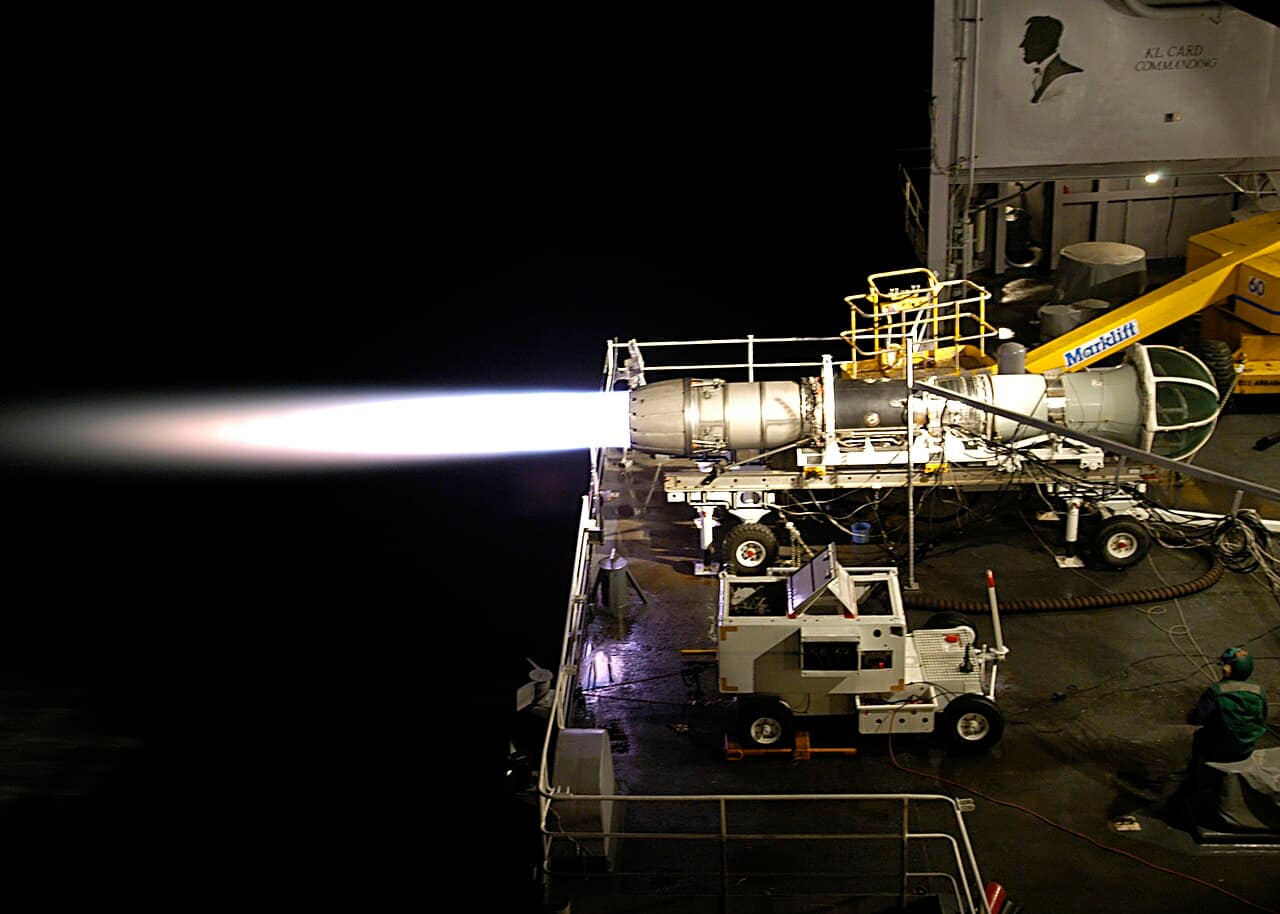
HAL’s chairman has tried to project confidence that the worst is over, pointing to GE’s new tooling and a promised ramp-up: 24 engines in financial year 2026-27, climbing to about 30 a year after that.
Why a Late Engine Is a Strategic Problem
The delay lands at an awkward moment. The Indian Air Force has been sliding well below its sanctioned strength of 42 fighter squadrons — it now fields around 30 — even as it retires the last of its Soviet-era MiG-21s. The Mk1A was meant to be the jet that filled that gap. Every month the engines are late is a month the squadron numbers stay thin, with both China and Pakistan on India’s mind.
To break the dependence, India is doubling down rather than backing away. In late 2025 HAL signed a fresh deal with GE — reported at around one billion dollars — for 113 more F404 engines to be delivered between 2027 and 2032, enough to cover the Mk1A fleet with a buffer. Longer term, the heavier Tejas Mk2 and the stealthy AMCA are meant to move India toward engines it has a real stake in building.
For now, though, the picture is unique in its quiet absurdity: one of the world’s largest air forces has dozens of brand-new fighters it has built, flown and proven — and still cannot fly into service, because the one part it cannot make itself is stuck in a queue half a world away.
Sources: Hindustan Aeronautics Limited statements; Business Standard; Defence.in; Indian Defence Research Wing; Swarajya; FlightGlobal.
Questions connexes
Why can't India fly its new Tejas Mk1A fighters?
India has flight-tested around 30 HAL Tejas Mk1A jets but formally delivered zero to the Air Force, because of late deliveries of the General Electric F404-IN20 engine. HAL says there is no Plan B for the engine. The airframes are largely ready; the missing American-built powerplants are the bottleneck holding up the whole programme.
What is the HAL Tejas Mk1A?
The HAL Tejas Mk1A is the upgraded version of India's home-grown single-engine light fighter, with improved radar, an electronic warfare suite, beyond-visual-range missiles and faster sortie turnaround. India ordered 83 in 2021 and cleared 97 more in 2025, for roughly 180 on order. A larger successor, the Tejas Mk2, is also in development.
What engine powers the Tejas Mk1A?
The Tejas Mk1A uses a single General Electric F404-IN20 turbofan producing about 84 kN with afterburner. Reliance on the imported engine has become the programme's weak point, as delayed GE deliveries stalled handovers. Engine dependency is a recurring theme worldwide — even Turkey is racing to build its own F-35-class engine for the KAAN.
How many Tejas fighters has India ordered?
India ordered 83 Tejas Mk1A jets in 2021 in a deal worth around ₹48,000 crore, and in 2025 the government cleared a follow-on batch of 97 more — taking the total to roughly 180 aircraft. Despite the large orders, deliveries have been held up by engine supply problems rather than airframe production.
Who builds the Tejas fighter?
The Tejas is built by Hindustan Aeronautics Limited (HAL), India's state-owned aerospace manufacturer, as the centrepiece of the country's drive for self-reliant defence production. While HAL produces the airframe domestically, the jet still depends on an imported GE engine — the gap that has left dozens of completed aircraft unable to enter service.
0 commentaire