
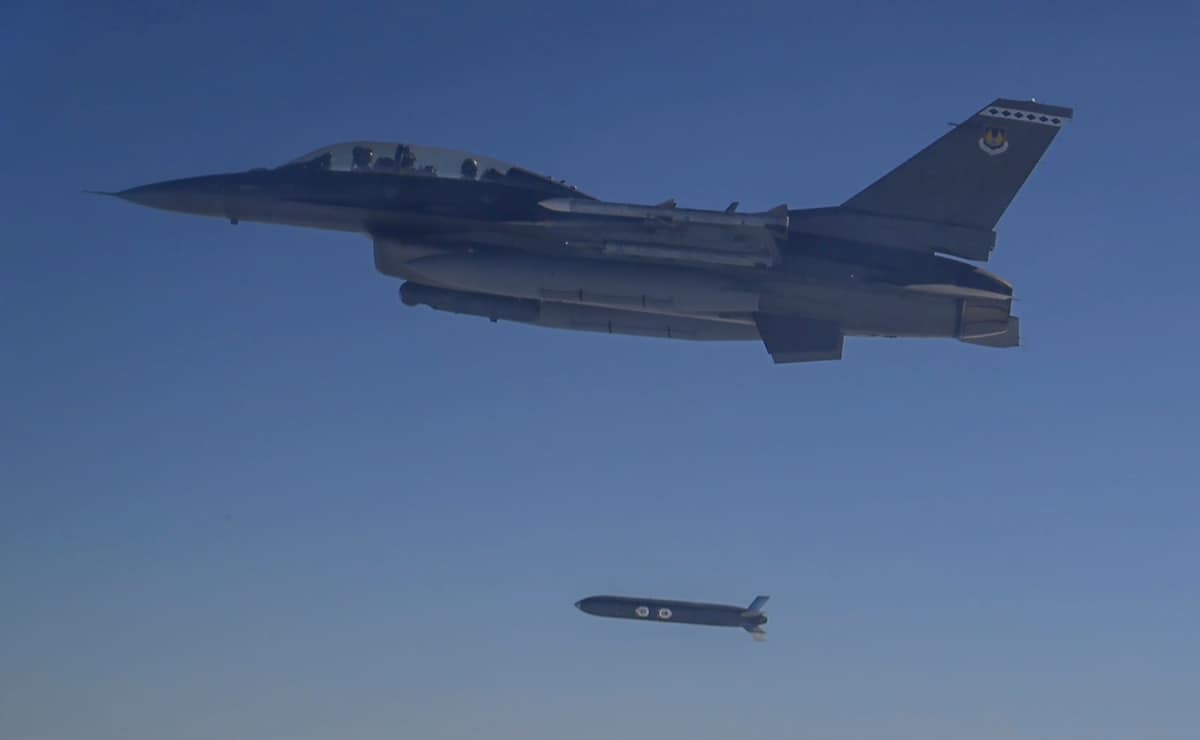
For decades, America built cruise missiles like fine watches: exquisite, devastating, and so expensive you could only afford a handful. The Rusty Dagger is the opposite philosophy bolted under a wing — cheap, simple, turbojet-powered, and meant to be fired by the thousand. And the US Air Force has now shown that an ordinary F-16 can carry it.
Formally the AGM-188A, the Rusty Dagger is part of the Air Force’s Extended Range Attack Munition program. Built by Zone 5 Technologies, it is a roughly 500-pound-class stand-off weapon designed to fly subsonically to a target at least 287 miles away — and to cost little enough that running out of them stops being the planner’s nightmare it is today.
FAITS RAPIDES
| Arme | AGM-188A “Rusty Dagger”, part of the Extended Range Attack Munition (ERAM) effort |
| Fabricant | Zone 5 Technologies |
| Taper | Low-cost, turbojet-powered, subsonic stand-off cruise missile |
| Classe | 500-pound-class; stand-off range of at least ~287 miles (250 nm) |
| Tested on | An F-16D at Eglin AFB; separation trial over the Gulf |
| Built largely for | Ukraine — the US approved selling up to 3,350 ERAMs |
Affordable mass
The thinking behind the Rusty Dagger is a doctrine the Pentagon calls “affordable mass.” In a war with a peer like China, analysts estimate the US might need to strike well over 100,000 targets. You cannot do that with million-dollar missiles bought in batches of a few hundred. You need weapons cheap enough to spend, not hoard.
What makes ERAM remarkable is the speed of its development. The Air Force’s weapons-buying chief, Brig. Gen. Robert P. Lyons III, told Congress the program went from contract to flying prototypes in four to seven months, and into production barely over a year after the first award — a pace almost unheard of in modern defence acquisition.
Built for Ukraine
The Rusty Dagger was developed with one customer especially in mind: Ukraine. In August 2025 the United States approved the sale of up to 3,350 ERAMs to Kyiv, and integrating the weapon onto the F-16 matters precisely because Ukraine now flies F-16s. For an air force fighting a far larger enemy, a cheap long-range missile it can launch from its own fighters is exactly the capability it has lacked.
Reporting has suggested that a first test batch has already reached Ukraine, with some rounds field-tested in combat — claims that remain unconfirmed but fit the weapon’s purpose. The first large delivery of ERAMs to Ukraine is expected later in 2026.
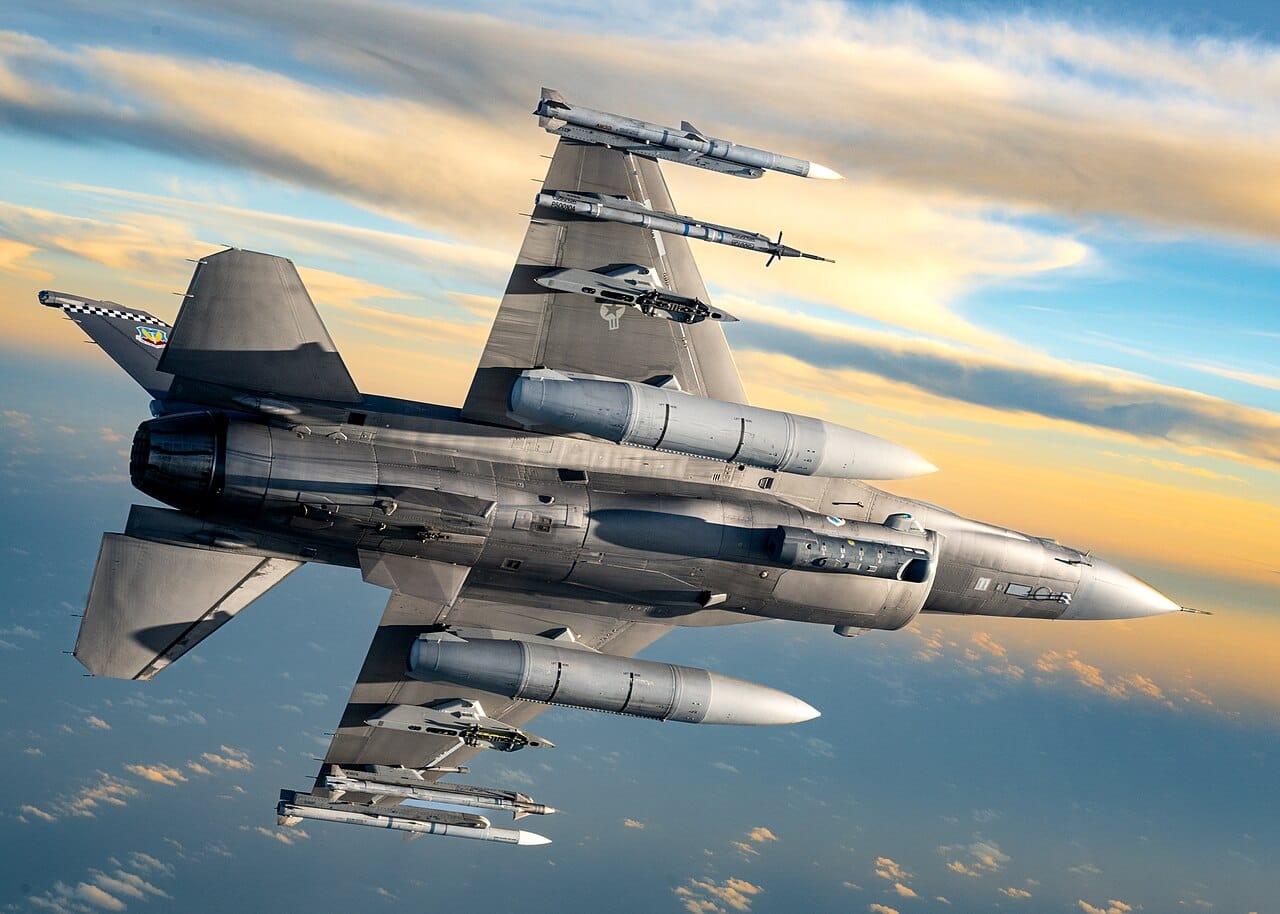
The speed of relevance
The F-16 trial at Eglin Air Force Base was deliberately undramatic: fit checks, loading procedures, captive carry, and finally a clean separation of the weapon over the Gulf. But it was the last box to tick before a cheap, long-range cruise missile becomes a real option on a frontline fighter.
A million-dollar cruise missile is a precious thing, the kind you count and protect. A cheap one is something you can spend. The Rusty Dagger is a bet that in the next big war, quantity will be a quality all its own — and that the side with the deeper magazine, not just the smarter weapon, will be the one still striking when the shooting drags on.
Sources: Air & Space Forces Magazine; Eglin AFB / U.S. Air Force; Defense Express; Wikipedia.
Questions connexes
What is the Rusty Dagger missile?
The AGM-188A “Rusty Dagger” is a low-cost, air-launched cruise missile built by Zone 5 Technologies under the US Air Force’s Extended Range Attack Munition (ERAM) program. It is a roughly 500-pound-class, turbojet-powered, subsonic weapon designed to strike targets from stand-off range at a fraction of the cost of traditional cruise missiles.
What is the ERAM program?
ERAM, the Extended Range Attack Munition, is a US Air Force effort to field cheap, mass-producible stand-off weapons quickly. It is part of a broader push toward “affordable mass” — fielding large numbers of low-cost munitions rather than small numbers of expensive ones. The Rusty Dagger is one of the ERAM designs.
How far can the Rusty Dagger fly?
Official US requirements describe ERAM as a 500-pound-class weapon with a stand-off range of at least about 287 miles (roughly 250 nautical miles), flying subsonically on a small turbojet. Some reports suggest the fielded weapon may reach considerably further, but the published requirement is the figure that can be confirmed.
Who makes the Rusty Dagger?
The Rusty Dagger is built by Zone 5 Technologies, one of the companies selected under the Air Force’s ERAM program. A second firm, CoAspire, is developing a separate ERAM design called RAACM, reflecting the Air Force’s strategy of buying low-cost missiles from multiple suppliers.
Is the Rusty Dagger for Ukraine?
Largely, yes. ERAM was developed with Ukraine in mind, and in August 2025 the US approved the sale of up to 3,350 ERAMs to Kyiv. Integrating the missile onto the F-16 matters because Ukraine operates F-16s, giving its air force a long-range strike weapon it previously lacked.
What aircraft can carry the Rusty Dagger?
The Air Force has demonstrated the Rusty Dagger on the F-16, completing fit checks, captive-carry and a separation trial over the Gulf. The weapon has also been tested in pylon and palletized configurations, pointing to a future where cheap cruise missiles can be launched from a range of aircraft.



0 commentaire