
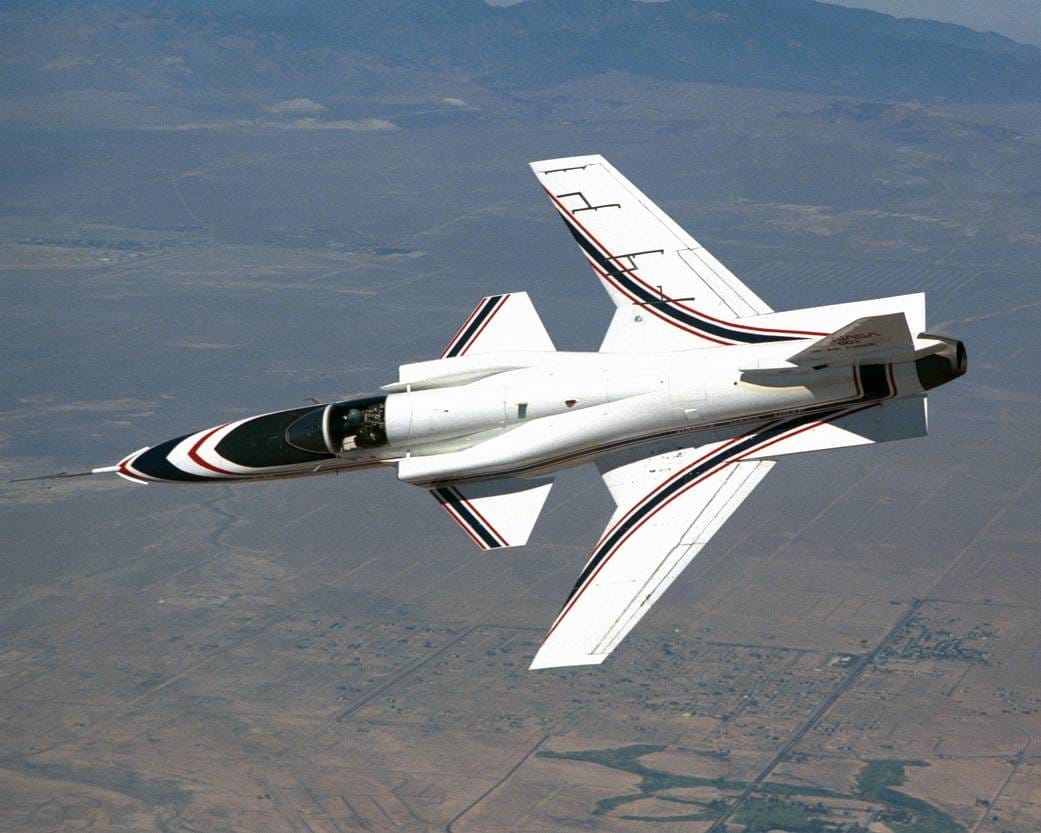
Retournez le X-29 sur le dos et les ailes semblent anormales. Il n'est ni endommagé, ni plié pour le rangement — juste… en arrière. Alors que tous les autres avions à réaction sur le tarmac replient leurs ailes vers l'arrière comme une pointe de flèche, le X-29 les déploie. avant, Les extrémités des ailes s'avancent devant les racines, comme si l'avion volait vers l'avenir en traînant son passé derrière lui. C'est l'une des formes les plus étranges jamais vues décoller de la base aérienne d'Edwards.
Et voici ce qui devrait vous donner des frissons : sans ordinateur, un tel appareil ne pourrait pas voler. Livré aux seules lois de la physique, le X-29 s’écraserait en une fraction de seconde. S’il a pu voler, c’est uniquement grâce à trois ordinateurs de contrôle de vol qui réécrivaient les lois de sa propre instabilité jusqu’à quarante fois par seconde – une vitesse imperceptible pour un être humain, et encore plus imperceptible à corriger.
Alors pourquoi la construire ? Les ailes à flèche inversée promettent des avantages alléchants : une agilité exceptionnelle, un comportement stable à basse vitesse et une maîtrise qui se maintient longtemps après qu'un avion de chasse classique ait décroché et quitté le sol. Le hic, c'est qu'elles ont aussi une fâcheuse tendance à se désintégrer. Pendant la majeure partie de l'histoire de l'aviation, ce compromis était une impasse. Puis sont arrivés les matériaux composites et les commandes de vol numériques – et la NASA, la DARPA et l'US Air Force ont décidé de découvrir, une fois pour toutes, si cette impasse cachait une issue.
Informations clés — Grumman X-29
- Taper: Démonstrateur technologique à aile en flèche inversée (avion X)
- Construit par : Grumman Corporation — deux avions, dans le cadre d'un contrat $87M attribué en décembre 1981
- Financé par : La DARPA, l'US Air Force et la NASA (programme conjoint)
- Premier vol : N° 1 le 14 décembre 1984 ; N° 2 le 23 mai 1989, tous deux depuis la base aérienne d’Edwards
- Étape supersonique : Premier avion à ailes en flèche inversée à voler à vitesse supersonique en palier, le 13 décembre 1985
- Aile: Balayé avant plus de 33°, construit en composite graphite-époxy avec une conception aéroélastique
- Stabilité: Aérodynamiquement instable — pilotable uniquement grâce à un système de commandes de vol électriques numériques à triple redondance effectuant jusqu'à 40 corrections par seconde
- Moteur: Un moteur General Electric F404-GE-400, poussée d'environ 7 257 kg (16 000 lb) ; vitesse maximale Mach 1,6
- Vols : 422 missions de recherche, 1984–1992
- Alpha élevé : Excellente maîtrise jusqu'à un angle d'attaque de 45° ; maîtrise limitée encore possible à 67°.
Pourquoi quelqu'un orienterait-il les ailes dans la mauvaise direction ?
Commençons par l'avantage, car il est véritablement séduisant. Sur une aile en flèche classique, l'air se répand vers l'extérieur L'air s'écoule vers les extrémités des ailes lorsque l'avion ralentit ou cabre. Les extrémités décrochent en premier, les ailerons perdent leur efficacité et l'avion peut perdre une aile ou sortir du vol contrôlé précisément au moment où le pilote a le plus besoin de précision. Une aile en flèche inversée inverse cette géométrie. intérieur, vers l'emplanture de l'aile. Les extrémités — et les surfaces de contrôle situées à l'extérieur — continuent de voler longtemps après qu'une aile normale ait cessé de voler.
L'avantage, en théorie, est un avion de chasse qui conserve sa précision et sa maniabilité même sous des angles d'attaque extrêmes, vire plus court et se comporte mieux à basse vitesse. La NASA explorait cette idée depuis des décennies ; son prédécesseur, la NACA, avait mené des études en soufflerie sur des ailes à flèche inversée dès 1931. L'Allemagne a même utilisé un bombardier à réaction à ailes à flèche inversée pendant la guerre, le Junkers Ju 287.
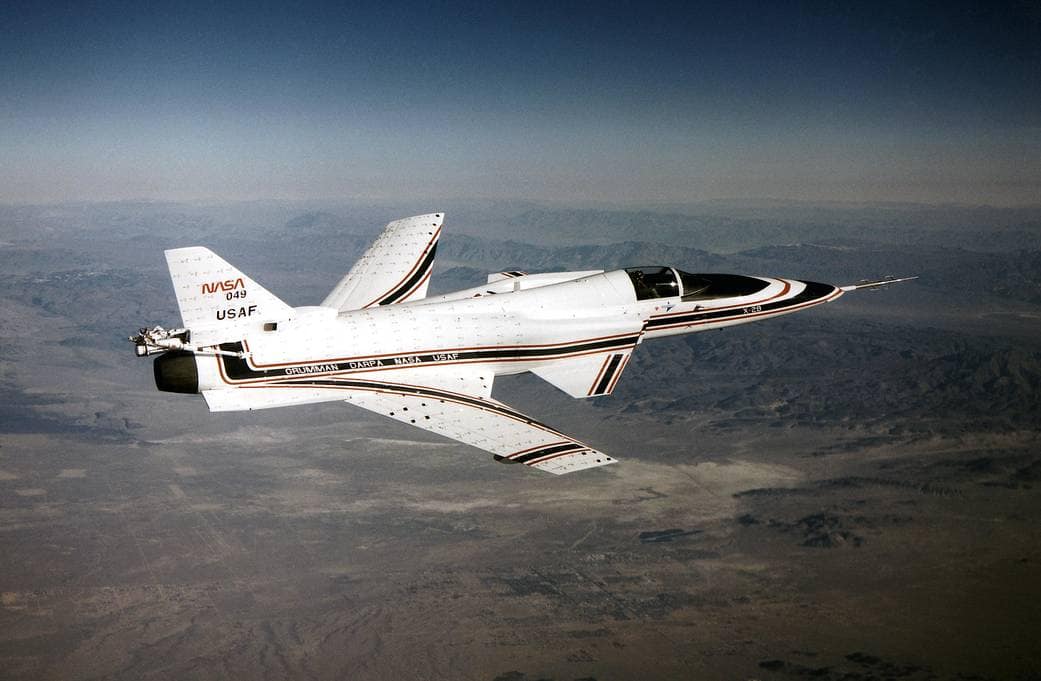
Alors, si cela fonctionnait si bien, pourquoi le Ju 287 et tous les projets qui ont suivi ont-ils échoué ? En un mot : la torsion. Une aile en flèche inversée tend à fléchir son bord d'attaque vers le haut sous l'effet de la charge, ce qui augmente son angle d'attaque, ce qui accroît la charge et accentue la torsion. Ce cercle vicieux est appelé divergence aéroélastique, et à haute vitesse, il peut arracher une aile en un clin d'œil. Pour y résister avec l'aluminium des années 1940, il fallait construire une aile si lourde qu'on perdait tout avantage, même minime. C'était l'impasse – pendant quarante ans.
L'aile qui refuse de se tordre
La porte au fond de l'impasse était une question de matériau, pas de forme. À la fin des années 1970, les composites graphite-époxy avaient atteint une maturité suffisante pour que les ingénieurs puissent réaliser ce que l'aluminium n'avait jamais permis : confection aéroélastique. En disposant les fibres de carbone selon des angles soigneusement choisis, Grumman a construit une aile qui se prêtait parfaitement à… plier mais refusa obstinément de torsion. La flexion est inoffensive ; la torsion est mortelle. La peau composite a discrètement annulé la divergence qui avait condamné toutes les tentatives précédentes, et ce, sans le handicap de poids paralysant.
En 1977, la DARPA et le Laboratoire de dynamique de vol de l'US Air Force lancèrent un appel d'offres pour un avion de recherche afin de tester concrètement le concept. Grumman remporta le contrat en décembre 1981 : 1 408,7 millions de dollars pour deux appareils qui allaient devenir les premiers avions de la série X depuis plus de dix ans. Ils fixèrent cette aile composite de pointe loin en arrière sur le fuselage, installèrent des plans canards rapprochés à l'avant pour partager la portance et contrôler le tangage, et la dotèrent d'un profil supercritique mince pour faciliter le franchissement du mur du son.
Le premier X-29 décolla d'Edwards le 14 décembre 1984, piloté par Chuck Sewell, pilote d'essai en chef chez Grumman. Presque exactement un an plus tard, le 13 décembre 1985, il devint le premier avion à aile en flèche inversée à franchir le mur du son en vol horizontal. Sa forme révolutionnaire dépassait désormais la vitesse du son.
Un ordinateur volant quarante fois par seconde
Voici le problème que personne n'a pu résoudre. Le positionnement des plans canards à l'avant et de l'aile très en arrière rendait l'appareil extrêmement instable en tangage, bien plus qu'un chasseur moderne. Un avion conventionnel, perturbé par une rafale, tend à se stabiliser de lui-même. Le X-29, lui, réagit à l'inverse : la moindre perturbation s'amplifie rapidement. Livré à lui-même, il deviendrait incontrôlable en moins d'une seconde.
La réponse était un Commandes de vol numériques à triple redondance Système de commandes de vol. Des capteurs transmettaient l'assiette et la vitesse de l'appareil à trois calculateurs de vol, qui ajustaient en permanence les plans canards, les flaperons et les volets de bord d'attaque – émettant jusqu'à 40 commandes par seconde pour maintenir en vol un avion que les lois de la physique semblaient vouloir éjecter. Chacun des trois calculateurs numériques disposait d'un système de secours analogique. Cette redondance était totale et délibérée : la NASA estimait que le risque d'une panne complète des systèmes du X-29 n'était pas supérieur à celui d'une panne mécanique sur un avion conventionnel.
“ X-29 : Expérience en vol ” — Le documentaire de la NASA sur le programme, avec des images de vol montrant l'aile à flèche inversée en action.
Ce que les pilotes découvrirent, une fois qu'ils eurent confiance dans les ordinateurs, fut remarquable. Le X-29 ne se contenta pas de survivre à son instabilité : il vola. magnifiquement. Les pilotes du projet ont rapporté une excellente réactivité des commandes jusqu'à un angle d'attaque de 45 degrés, bien au-delà du point où un chasseur comparable aurait rencontré des difficultés. L'appareil n° 2 a conservé une maniabilité exploitable jusqu'à un angle impressionnant de 67 degrés. Il a réalisé cette performance sans volets de bord d'attaque ni vectorisation de la poussée, uniquement grâce à cette aile particulière, ces plans canards et un logiciel qui réinventait les règles en temps réel.
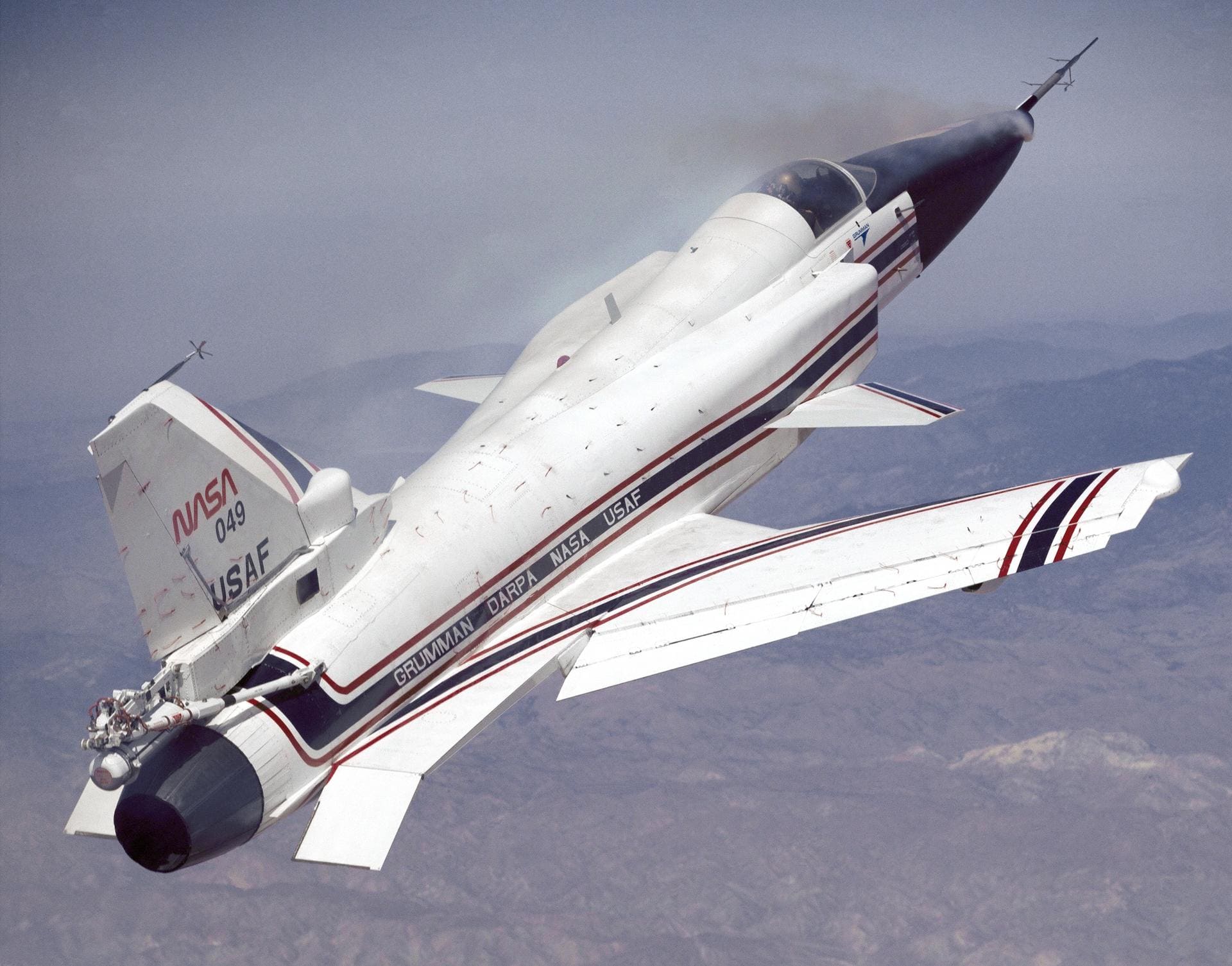
Alors pourquoi ne volons-nous pas tous à reculons ?
Entre 1984 et 1992, les deux X-29 ont effectué 422 missions de recherche : 242 lors de la première phase, 120 consacrées à l’étude du comportement en incidence élevée lors de la seconde, et 60 dernières, durant l’été 1992, pour tester un système expérimental de contrôle des écoulements tourbillonnaires. Le programme a apporté une réponse définitive à la question centrale : oui, une aile en flèche inversée peut être performante et offrir au pilote un contrôle exceptionnel à des angles extrêmes. Les techniques d’adaptation aéroélastique mises au point pour cette aile ont ensuite influencé la conception des matériaux composites dans l’ensemble de l’industrie.
Et pourtant, vous n'avez jamais volé à bord d'un avion de ligne à fuselage en flèche inversée, et aucune force aérienne ne possède de chasseur à fuselage en flèche inversée. Pourquoi ? En partie parce que le X-29 a discrètement démenti l'un de ses propres arguments de vente : il… pas Elle permet de réaliser la réduction significative de la traînée en croisière promise par les premières études. Sans cela, il reste une aile plus coûteuse à construire, nécessitant une structure composite sophistiquée pour éviter sa rupture, et offrant une maniabilité désormais assurée par les tuyères à poussée vectorielle, le tout sur une cellule bien moins chère et plus stable.
Le timing a été décisif. Alors même que le X-29 prouvait le potentiel de l'agilité, le Pentagone se passionnait pour un tout autre concept : la furtivité. L'avenir du combat aérien s'orientait vers l'invisibilité plutôt que vers la supériorité en virage, et une aile en flèche inversée, très visible au radar et structurellement complexe, n'était pas la solution à ce nouveau défi. Le X-29 n'a pas été un échec. Ce fut une expérience superbement menée qui a abouti à une conclusion sans équivoque : Fascinant, mais ça n'en vaut pas la peine..
Les deux appareils existent toujours. Le X-29 n° 1 est exposé au Musée national de l'US Air Force à Dayton, dans l'Ohio ; le n° 2 repose au centre Armstrong de la NASA, où il a volé. Devant l'un ou l'autre, les ailes semblent toujours aussi étranges – un rappel que parfois, la chose la plus précieuse qu'une expérience puisse démontrer est précisément pourquoi l'idée qui paraissait évidente a été abandonnée.
Sources : Fiche d’information du X-29 du centre de recherche en vol Armstrong (Dryden) de la NASA ; Wikipédia ; militaryfactory.com ; CNN ; New Atlas.
Questions connexes
Qu'était-ce que le Grumman X-29 ?
Le Grumman X-29 était un avion expérimental américain conçu pour tester les ailes à flèche inversée, les plans canards rapprochés et d'autres technologies de pointe. Deux exemplaires ont été construits dans le cadre d'un programme conjoint de la NASA, de la DARPA et de l'US Air Force, effectuant 422 missions de recherche entre 1984 et 1992 sur la base aérienne d'Edwards.
Pourquoi le X-29 avait-il des ailes en flèche inversée ?
Les ailes à flèche inversée dirigent l'air vers l'emplanture plutôt que vers l'extrémité. Ainsi, les extrémités des ailes et leurs gouvernes restent fortement inclinées, contrairement aux ailes à flèche inversée qui décrocheraient en premier. Il en résulte une agilité accrue et un meilleur contrôle à basse vitesse.
Pourquoi le X-29 était-il instable ?
Le montage des plans canards à l'avant et de l'aile très en arrière rendait le X-29 extrêmement instable en tangage. La moindre perturbation s'amplifiait rapidement et l'appareil devenait incontrôlable en moins d'une seconde. Un système de commandes de vol électriques à triple redondance numérique corrigeait ce problème en ajustant les commandes jusqu'à 40 fois par seconde.
Quand le X-29 a-t-il effectué son premier vol supersonique ?
Le premier X-29 effectua son vol inaugural le 14 décembre 1984 depuis la base aérienne d'Edwards. Le 13 décembre 1985, il devint le premier avion à ailes en flèche inversée à voler à vitesse supersonique en palier. Le second appareil effectua son premier vol le 23 mai 1989.
Pourquoi les ailes à flèche inversée sont-elles presque jamais utilisées ?
Le X-29 a prouvé l'efficacité des ailes à flèche inversée, mais n'a pas permis d'obtenir la réduction de traînée en croisière promise. De plus, elles sont plus coûteuses, nécessitent une structure composite sophistiquée pour résister à la torsion et offrent une agilité que la vectorisation de la poussée peut désormais assurer sur des cellules plus stables et moins onéreuses. Par ailleurs, l'armée s'est recentrée sur la furtivité.
Où se trouvent actuellement les avions X-29 ?
Les deux X-29 existent toujours. L'appareil n° 1 est exposé au Musée national de l'US Air Force à Dayton, dans l'Ohio. L'appareil n° 2 est conservé au Centre de recherche en vol Armstrong de la NASA, sur la base aérienne d'Edwards, en Californie, où il a effectué ses essais en vol.
0 commentaire