
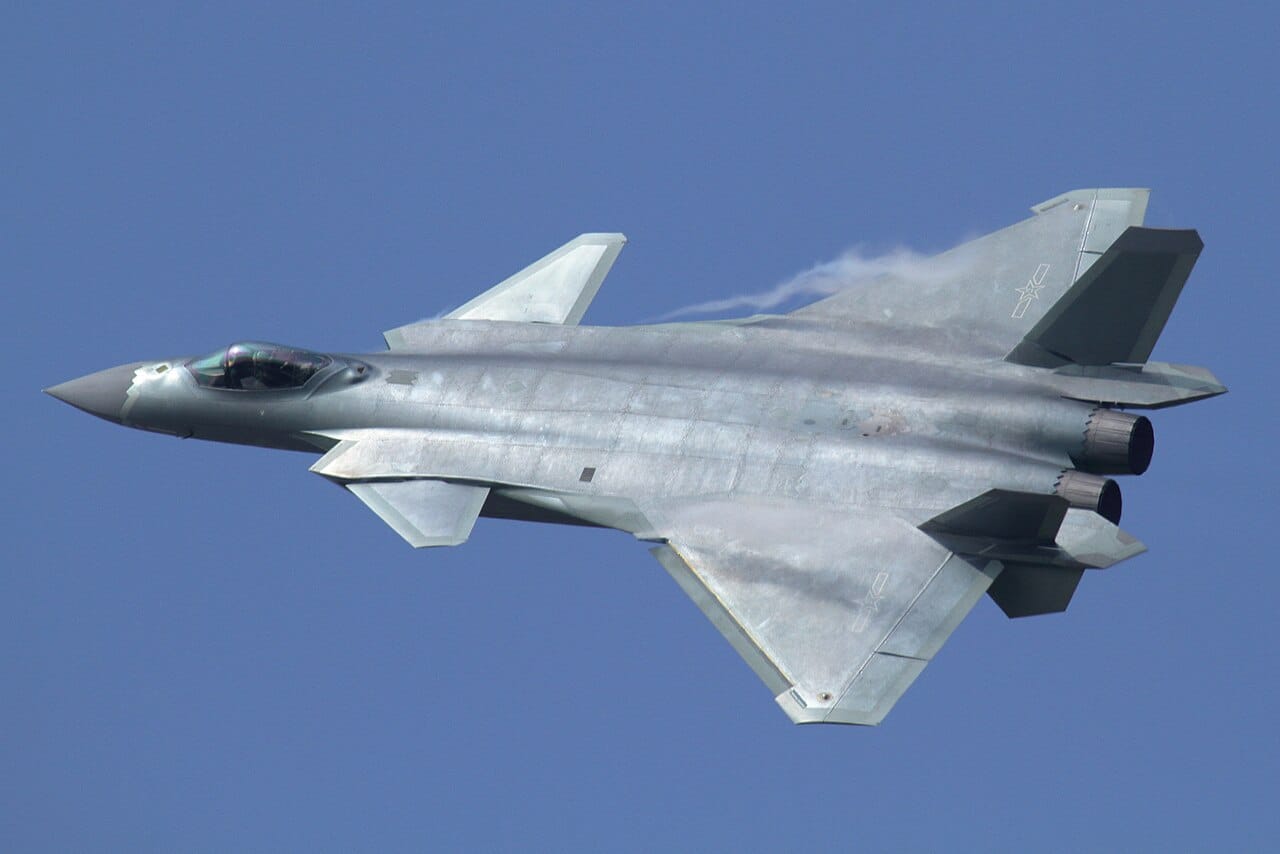
A number from a Chinese laboratory has been making the rounds, and it is a striking one: 95 percent. That, according to a computer simulation, is how often a Chengdu J-20 beat an American F-22 Raptor in a fight north of Taiwan.
Read a little closer, though, and the interesting figure is the other one. Strip the J-20 of its helpers and run the same battle, and its odds collapse to under 10 percent — the Raptor wins almost every time. The headline is not that China’s stealth fighter beats America’s. It is that a lone stealth fighter, whoever built it, is now the underdog.
The difference between winning nine times in ten and losing nine times in ten came down to one thing: drones.
| What | Chinese computer simulation: J-20 vs F-22, north of Taiwan |
| Who | Team led by Prof. Zhang Dong, Northwestern Polytechnical University |
| J-20 with 2–3 drones | Won ~95% of engagements |
| J-20 alone | Won under 10% — F-22 dominated |
| Catch | The F-22 was modelled with no drones of its own |
What the simulation actually did
The study came out of Northwestern Polytechnical University, one of China’s major aerospace-and-defence research institutions, from a team led by Professor Zhang Dong. It pitted a J-20 — in the two-seat J-20S configuration, the variant built partly to let a back-seater manage drones — against a single F-22 in simulated combat.
When the J-20 flew with two or three AI-controlled “loyal wingman” drones, it won almost every time. The drones fanned out ahead as sensors and decoys, soaked up the Raptor’s missiles, and attacked from angles the lone F-22 could not cover at once. Take the drones away, and the J-20 was outmatched by the older but ferociously capable American jet.
Read the fine print
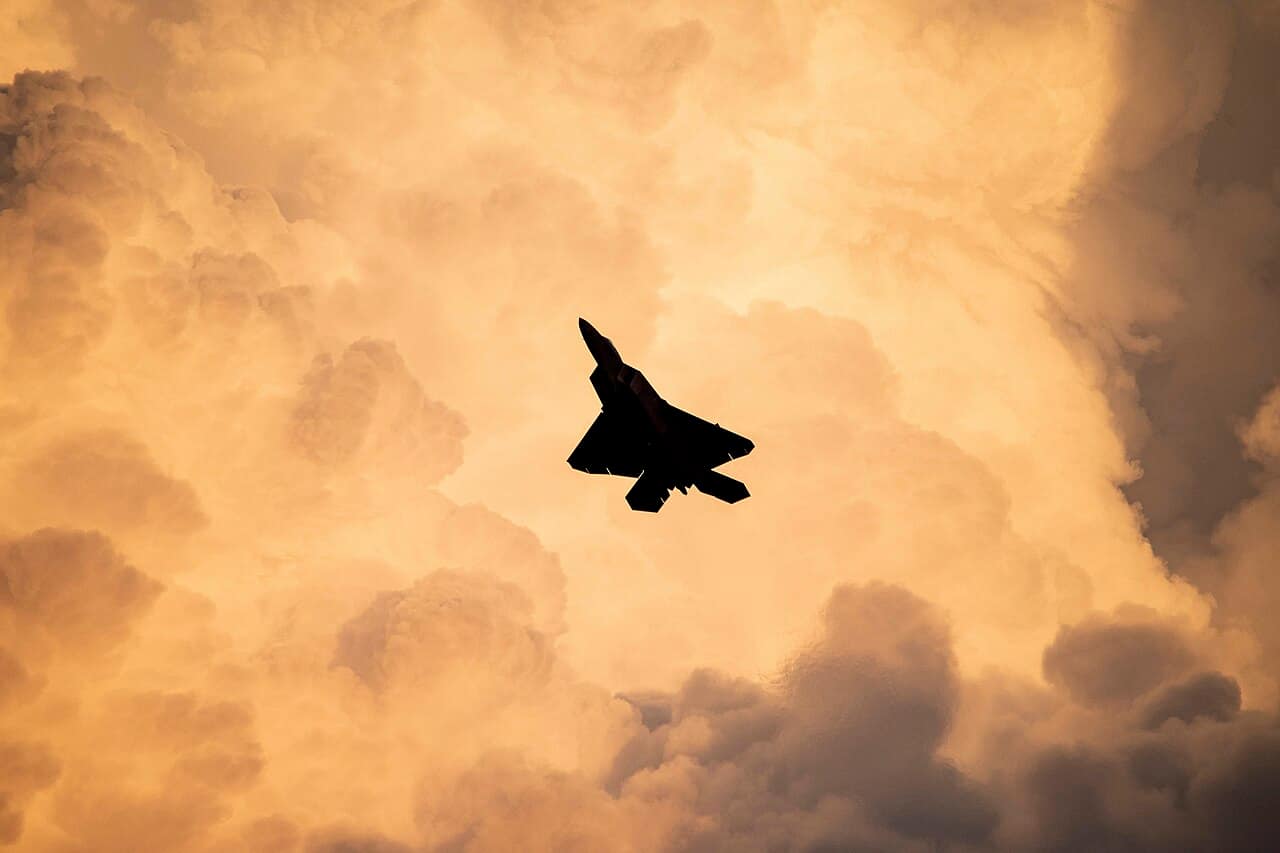
Before anyone declares the Raptor obsolete, the caveats matter — and they are large. This is a Chinese academic simulation, not a real dogfight, and simulations reward whatever assumptions you feed them. The most important assumption here is that the F-22 fought alone while the J-20 brought a robot entourage. That is not a fair fight; it is a demonstration of what teaming does.
The United States knows this perfectly well. It is racing to field its own Collaborative Combat Aircraft, and its fighters are meant to fly with exactly the kind of drone wingmen the F-22 was denied in this scenario. Europe is doing the same, as Airbus showed when it unveiled its Ravenstorm loyal wingman. A more honest version of the study would have given both sides their drones and seen who came out ahead.
Why the number still matters
Take the propaganda value out of it and a real lesson remains. The single most valuable fighter pilot in the sky is no longer the one with the best jet — it is the one with the best team of jets and drones. We have written before about how one pilot commanding a drone wingman changes the math, and this simulation is the same idea pushed to its logical end.
So forget the 95 percent. The figure worth remembering is the 90 percent the J-20 lost when it flew alone — the clearest sign yet that the age of the lone stealth ace is drawing to a close, for everyone.
Sources: 19FortyFive; National Security Journal; South China Morning Post.
Related Questions
Can the J-20 beat the F-22 Raptor?
It depends entirely on drones. In a Chinese computer simulation of combat north of Taiwan, a Chengdu J-20 supported by two or three drones beat a lone American F-22 Raptor about 95 percent of the time. But stripped of its drones, the same J-20 won under 10 percent. The real lesson is about teaming, not one jet's inherent superiority.
What did the Chinese J-20 vs F-22 simulation show?
The simulation, led by Professor Zhang Dong of Northwestern Polytechnical University, pitted a J-20 against an F-22 near Taiwan. With two or three drones acting as scouts and shields, the J-20 won roughly 95 percent of engagements. Alone, it won under 10 percent. Crucially, the F-22 was modelled fighting solo, with no drones of its own.
Why do drones matter so much in modern air combat?
Drones transform air combat by extending a fighter's eyes, absorbing enemy missiles, and attacking from angles a lone aircraft cannot cover at once. The Chinese J-20 simulation showed that a stealth fighter with drone teammates crushed one without, the difference between winning and losing nine times in ten. It reflects a wider shift also seen in China's massive stealth drone programme.
Are fighter jets still useful without drone support?
Increasingly, no. The simulation's key finding was that a lone stealth fighter, whoever built it, is now the underdog against one backed by drones. That is why air forces worldwide are racing to pair crewed jets with uncrewed wingmen. Raw numbers of stealth fighters still matter too, as argued in China's push to build the most stealth jets rather than the best.
What are Collaborative Combat Aircraft?
Collaborative Combat Aircraft (CCA) are uncrewed 'loyal wingman' drones designed to fly alongside crewed fighters, acting as scouts, missile carriers and decoys. The United States is racing to field them, and Europe is pursuing similar systems. They are meant to give aircraft like the F-22 exactly the kind of drone support the Chinese simulation denied it.
0 commentaire