
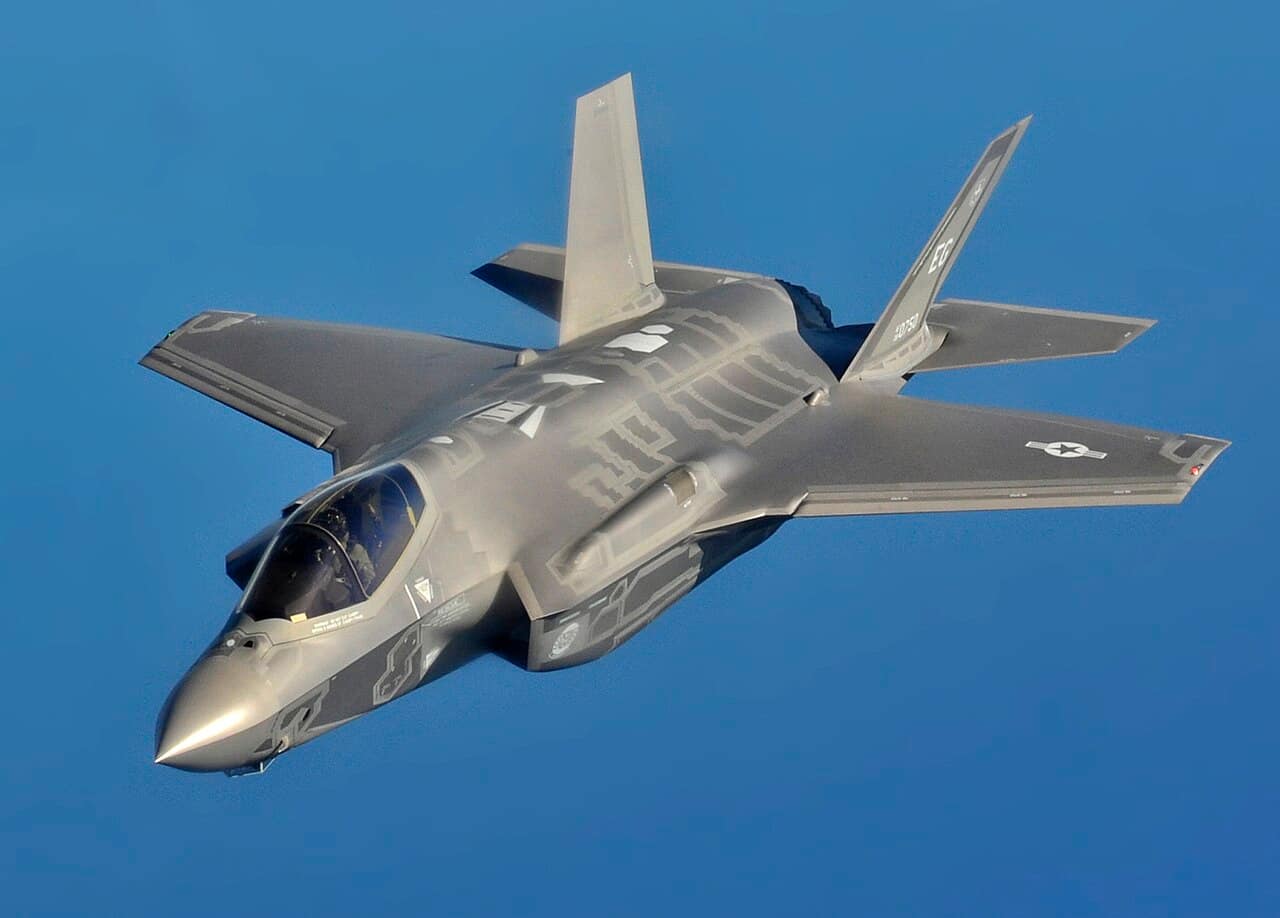
The F-35 you see on the flight line today is not the F-35 its makers keep promising. The one they keep promising — the one bristling with new sensors, electronic-warfare gear and more than a dozen additional weapons — lives inside a modernization program called Block 4. And Block 4 is late, over budget, and only half-built.
The upgrade is meant to be the difference between a fifth-generation fighter that dominates and one that slowly falls behind the air defenses being built to kill it. On paper it roughly doubles what the jet can do. In practice, the U.S. government’s own auditors keep filing reports that read like a very expensive shrug.
• What it is: Block 4 — new sensors, electronic warfare and weapons for the F-35
• Scope: originally ~55 new capabilities; about 22 fielded so far
• Depends on: Technology Refresh 3 (TR-3) hardware and software
• Delay: combat-capable TR-3 jets began arriving in 2026, about 3 years late
• Completion: reduced Block 4 now expected by 2031 at the earliest — ~5 years late
• Cost growth: at least US$6 billion over original estimates
The upgrade that makes the jet worth it
Here is the thing the brochures don’t dwell on: a stealth fighter is only as good as the software and sensors inside it. The airframe is the easy part. The magic — the sensor fusion, the electronic attack, the ability to see first and shoot first — is code and silicon, and it has to be refreshed constantly to stay ahead of the radars and missiles the other side keeps improving.
Block 4 is that refresh, scaled up. It was conceived as a sweeping package of roughly 55 upgrades: sharper sensors, a rebuilt electronic-warfare suite, and a long list of new weapons. Taken together, it was pitched as something close to doubling the F-35’s combat punch. To make it work, the jet first needs a hardware foundation called Technology Refresh 3 — new processors and displays without which none of the new tricks will run.
Late, then later
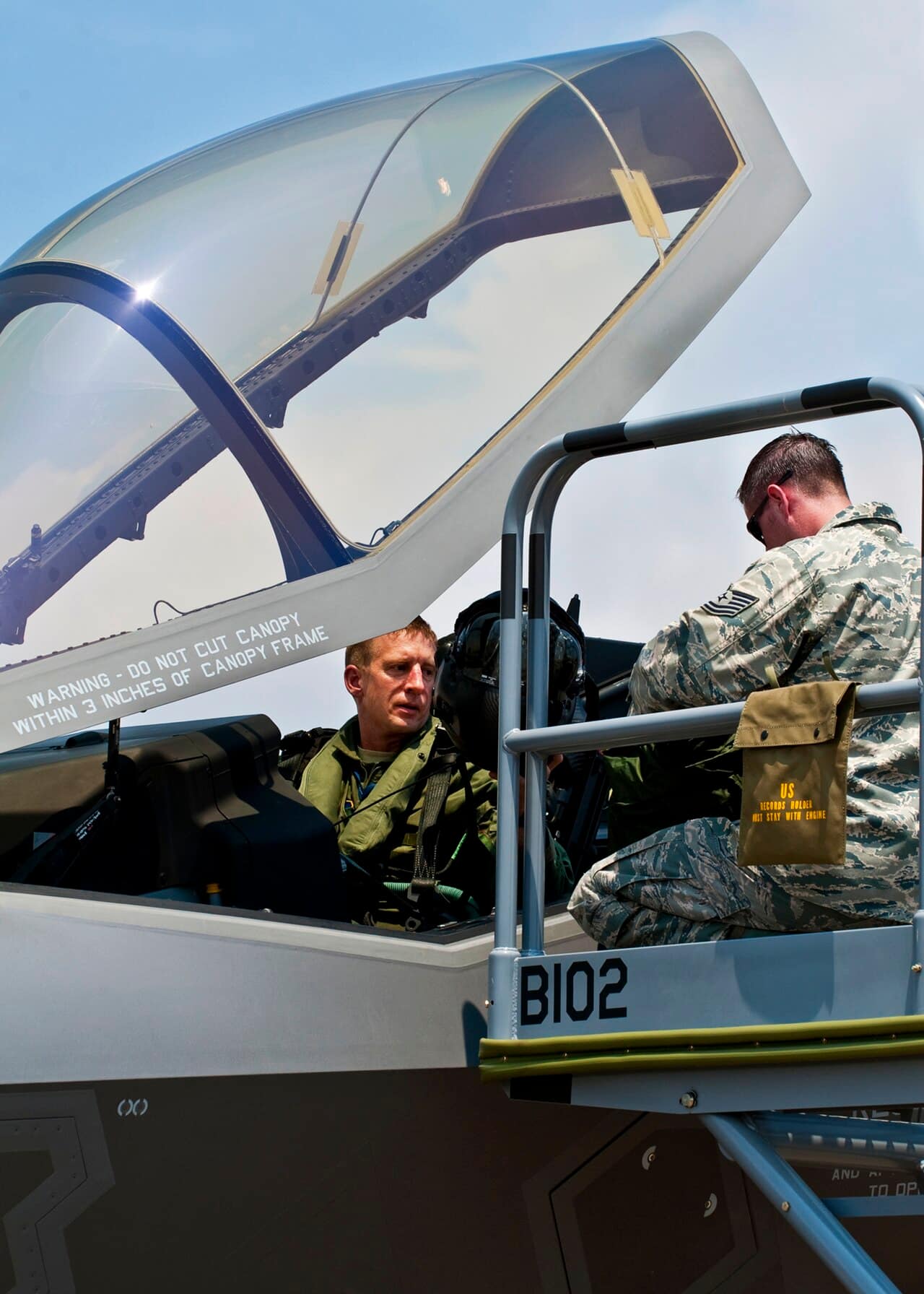
TR-3 was supposed to arrive years ago. Instead, hardware and software problems dragged it roughly three years behind schedule, forcing Lockheed Martin at one point to park newly built jets while the software caught up. Combat-capable TR-3 aircraft only began reaching squadrons in 2026.
Block 4 itself has been quietly shrinking to fit reality. Program officials now say they will limit the effort to the capabilities that can actually be delivered by 2031 — already five years later than the original plan — and have set aside the pieces that depend on unresolved engine and power-and-thermal-management upgrades. The bill has grown by at least six billion dollars. And of the roughly 55 capabilities once promised, only about 22 have been fielded.
Why Congress keeps circling back
This matters beyond the accounting. The F-35 is the backbone of American and allied air power for the next several decades — more than a dozen nations are betting their air forces on it. If the jet cannot be kept ahead of modern air defenses, that bet gets worse every year the upgrade slips.
Congress noticed. In late 2023 it ordered the Pentagon to manage Block 4 and TR-3 as a distinct major subprogram, with its own cost, schedule and performance metrics — bureaucratic language for “stop hiding the problem inside the bigger program.” Meanwhile the program’s own leadership has warned that the fleet has, in effect, outgrown the support system meant to keep it flying, with readiness rates stuck near record lows.
None of this means the F-35 is a bad aircraft; by most measures it remains the most capable fighter its pilots have ever flown. But the jet the world was sold is the fully-upgraded one, and that version keeps receding into the next decade. Block 4 was always the point of the F-35’s second act. Right now, the intermission is running long.
Sources: U.S. Government Accountability Office (GAO-25-107632); Air Force Times; Aviation Today; Congressional Research Service (Congress.gov).
Related Questions
What is the F-35 Block 4 upgrade?
Block 4 is a sweeping modernization package for the F-35, adding sharper sensors, a rebuilt electronic-warfare suite and more than a dozen new weapons. It was originally scoped at roughly 55 new capabilities, pitched as nearly doubling what the stealth fighter can do. Because it depends on software and silicon, the jet needs it to stay ahead of enemy radars and missiles.
Why is the F-35 Block 4 upgrade delayed?
Block 4 slipped mainly because it depends on a hardware foundation called Technology Refresh 3 (TR-3), which ran roughly three years behind schedule due to hardware and software problems. At one point Lockheed Martin parked newly built jets while the software caught up. Combat-capable TR-3 aircraft only began reaching squadrons in 2026.
What is Technology Refresh 3 (TR-3) on the F-35?
Technology Refresh 3 is the upgraded hardware foundation the F-35 needs before Block 4 can run: new processors and cockpit displays that power the new sensors and software. Without TR-3, none of the Block 4 capabilities function. TR-3 arrived about three years late, and combat-capable jets only began reaching squadrons in 2026.
How much has the F-35 Block 4 program gone over budget?
The F-35 Block 4 modernization has grown at least US$6 billion over its original cost estimates, according to U.S. government auditors. The overruns accompany major schedule slips, with the effort now shrinking to fit what can realistically be delivered. The airframe is the cheap part; the sensors, software and electronic-warfare gear drive the cost.
When will the F-35 Block 4 upgrade be finished?
A reduced version of Block 4 is now expected by 2031 at the earliest, roughly five years later than originally planned. Program officials have narrowed the effort to capabilities they can actually deliver by then, setting aside pieces that depend on unresolved engine and power-and-thermal-management upgrades.
How many F-35 Block 4 capabilities have been delivered so far?
Of the roughly 55 capabilities originally planned for Block 4, only about 22 have been fielded so far. The program has been quietly shrinking to match reality, limiting itself to upgrades that can be delivered by 2031 and deferring those that rely on engine and thermal-management improvements that are not yet ready.
Why does a stealth fighter depend so much on software?
A stealth fighter is only as good as the software and sensors inside it. The airframe is the easy part; the sensor fusion, electronic attack and the ability to see first and shoot first are code and silicon that must be refreshed constantly to stay ahead. That is why fifth-generation jets like the F-22 Raptor and F-35 need continual upgrades.
Why does the F-35 need constant upgrades to stay competitive?
Air defenses keep improving, so an F-35 that stands still slowly falls behind the radars and missiles built to kill it. Block 4 is the refresh meant to keep it dominant, adding new sensors, electronic warfare and weapons. The pressure is sharpened by rival next-generation fighters now emerging in China.
0 commentaire