
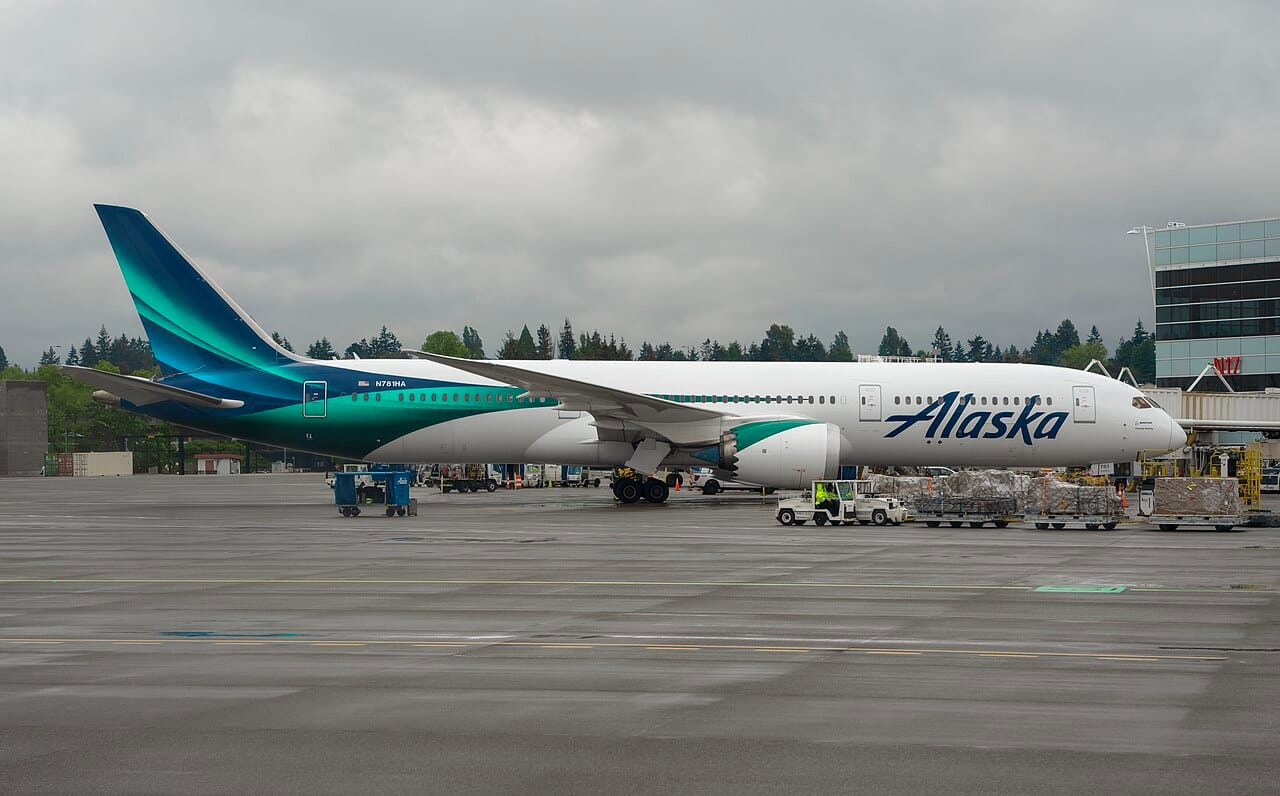
Two hours out of Rome, somewhere over the south-east of England, Alaska Airlines flight 181 turned around.
The Boeing 787-9 had left Fiumicino at 15:45 on Sunday afternoon bound for Seattle, climbed to 34,000 feet and headed north-west across France. Then the track on the flight-following websites bent through 180 degrees, the aircraft dropped 25,000 feet, and the transponder started squawking 7700 — the four digits that mean general emergency and clear everything else out of the way.
Five and a half hours after departure, it landed back where it started.
Informations clés
| Vol | Alaska Airlines AS181, Rome Fiumicino (FCO) to Seattle-Tacoma (SEA), Sunday 19 July 2026 |
| Aéronef | Boeing 787-9 Dreamliner, registration N780HA |
| Departure | 15:45 CEST, climbing to FL340 over French airspace |
| The turn | U-turn roughly two hours in, over south-east England, followed by a descent to 25,000 feet |
| Emergency | Crew set squawk 7700 as the aircraft crossed back over the Atlantic coast of France |
| Landing | Back at Fiumicino on runway 16R after 5 hours 30 minutes airborne, then a remote stand |
| Blessures | None. Alaska cancelled the flight after further evaluation |
| Reported cause | Engine vibration, according to AirLive. Alaska has described only “a mechanical issue” |
What squawk 7700 actually does
It is worth explaining, because it is the detail that turns a technical problem into a news story. A transponder code of 7700 flags the aircraft on every controller's screen within range. Traffic is moved. Priority handling is arranged. Emergency services are put on standby at the destination.
It does not mean the aircraft is in imminent danger. It means the crew wants the system's full attention and does not want to negotiate for it. Alaska's own statement made exactly this distinction.
One widely repeated detail is wrong and worth correcting: this did not happen in the middle of the Atlantic. The aircraft never began the ocean crossing. The turn came over England, and the emergency was declared as it came back across the French coast — which is precisely why the crew had the option of returning to a major European hub with a five-hour fuel load still aboard.
Why it took five and a half hours
Because a 787-9 that has just filled up for a ten-hour transatlantic sector is far too heavy to land. Maximum landing weight is well below maximum take-off weight, and the difference is fuel.
So the crew did what crews do: got rid of it. Passengers described seeing vapour streaming from the wings, and a flight attendant explaining that the fuel had to go over water rather than over land. The 787 does have jettison capability, and the track was consistent with a deliberate fuel-dumping pattern before the approach.
That accounts for most of the elapsed time. The emergency itself was, by the airline's own account, resolved on the ground rather than in the air.
The cause, and what we do not know
The engine-vibration explanation traces to AirLive, which reported it on Sunday evening and has been the source for essentially every subsequent account. Alaska has not confirmed it. Nobody has said an engine was shut down, and nothing in the public record supports the word “failure.”
Engine vibration on a twin is a condition, not a catastrophe. It is monitored continuously, it has defined limits, and exceeding those limits gives a crew a sound reason to stop pointing the aircraft at 4,000 miles of open ocean. The 787-9 flies with two GE GEnx-1B engines and is certified to cross that ocean on one of them — but ETOPS is a margin you preserve, not a margin you spend.
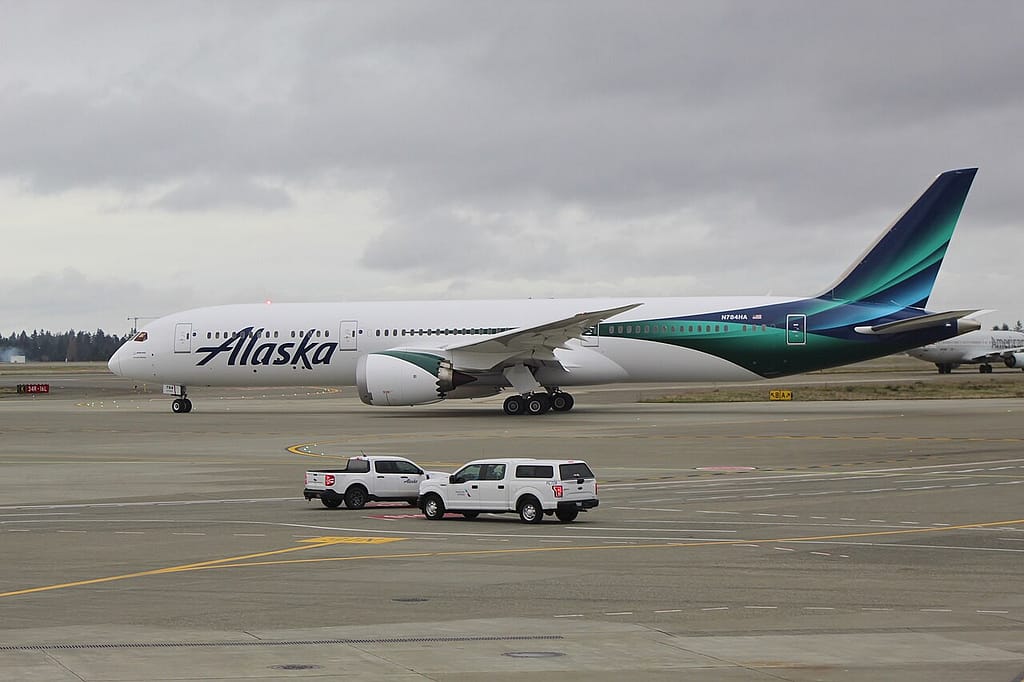
N780HA is one of only five 787-9s Alaska operates, all inherited from Hawaiian Airlines after the 2024 merger and repainted into Alaska's new Global livery. Rome–Seattle launched in April as a seasonal daily service running to late October. The aircraft is expected to undergo engineering inspections before returning to service.
Sources: AirLive, FOX 13 Seattle, IBTimes UK, Simple Flying.
0 commentaire