
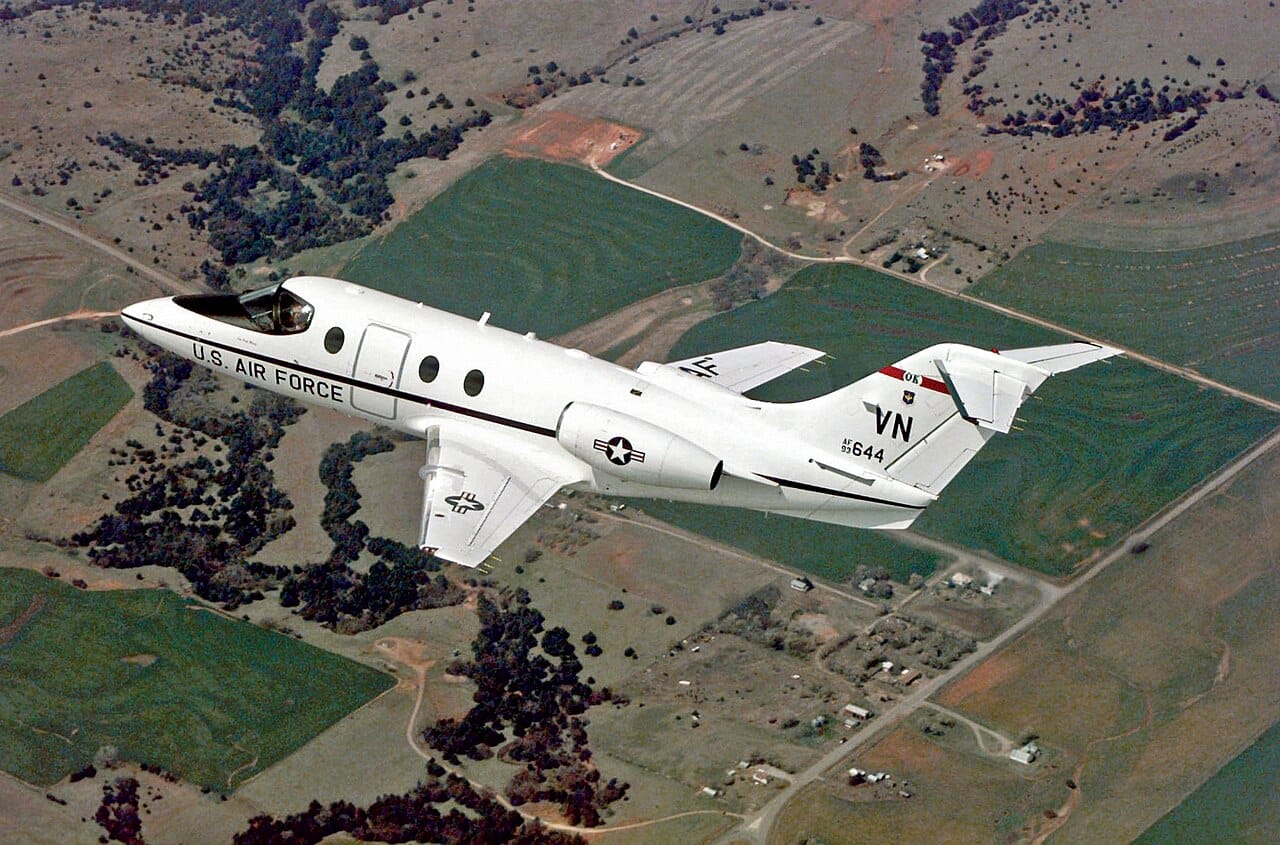
It was never glamorous. It never dropped a bomb, never dogfought, never broke the sound barrier. But for 32 years the T-1A Jayhawk did the quiet, essential job of turning student pilots into the people who fly America’s tankers and transports — and now it is bowing out.
On August 4, 2026, aviation photographers released a set of final air-to-air images of a Vance AFB Jayhawk, tail number 93-0654, shot on a late-afternoon sortie over Oklahoma. They are a send-off portrait: Vance, the last Air Force base to fly the type, retires its Jayhawks this month.
Informations clés
- Aéronef: Beechcraft/Raytheon T-1A Jayhawk (based on the Beechjet 400A)
- Rôle: Advanced trainer for the airlift and tanker (mobility) track
- Service: ~32 years, from 1992 until 2026
- News: Final air-to-air photos released Aug 4, 2026; Vance AFB retires the type this month
- Replacement: None direct — a simulator-heavy syllabus, with the T-7A Red Hawk still to come
- Where its graduates went: C-17, KC-135, KC-46, C-130, C-5 and more
The jet that built the airlift force
The T-1A is a militarised Beechjet 400A — a small, twin-engine business jet pressed into service in 1992 to teach the airlift and tanker track. If you have ever been carried across an ocean by a C-17, refuelled by a KC-135, or flown on a C-130, there is a good chance the pilots up front first learned the trade of big-jet flying in a Jayhawk.
Over three decades it trained thousands of mobility and tanker aviators. It was not built to thrill; it was built to teach crew coordination, instrument flying, and the unglamorous discipline of moving fuel and cargo safely. That made it one of the most quietly important aircraft in the inventory.
Retired to pay for the future
The Air Force is not replacing the Jayhawk with another aircraft. It is retiring the fleet to save money and pour it into the long-delayed T-7A Red Hawk, while restructuring pilot training around simulators. Mobility students will now do far more of their advanced work in the sim; the fighter and bomber track keeps flying the ancient T-38 Talon until enough T-7s arrive.
That is a gamble on synthetic training the service is betting can hold the line. The last active-duty T-1 student pilot, 2nd Lt. Camden Larsen, graduated at Vance — the final name on a very long list.
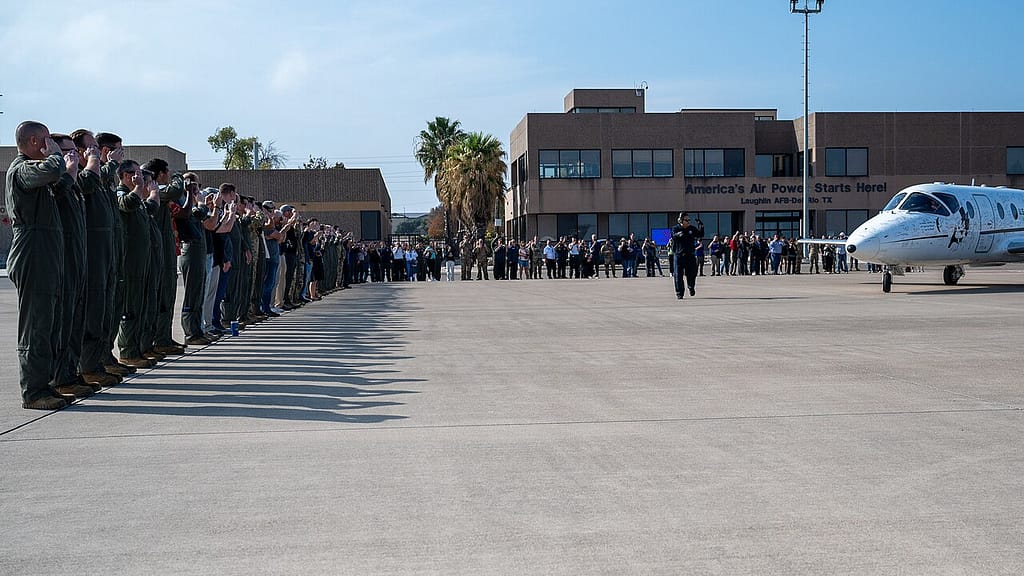
Bases have been letting go of the Jayhawk one by one — Columbus, Laughlin and Pensacola have all held their farewell flyovers, jets peeling off toward the boneyard at Davis-Monthan. Vance is the last to do it.
No airshow crowd will miss the T-1A. But a generation of transport and tanker pilots will remember it as the jet where they first felt what it was like to fly something big and fast for a living. As send-offs go, one last golden-hour photo is a fitting one.
Sources: The Aviationist; Air & Space Forces Magazine; Defense News; FlightGlobal; Air Education and Training Command.
0 commentaire