
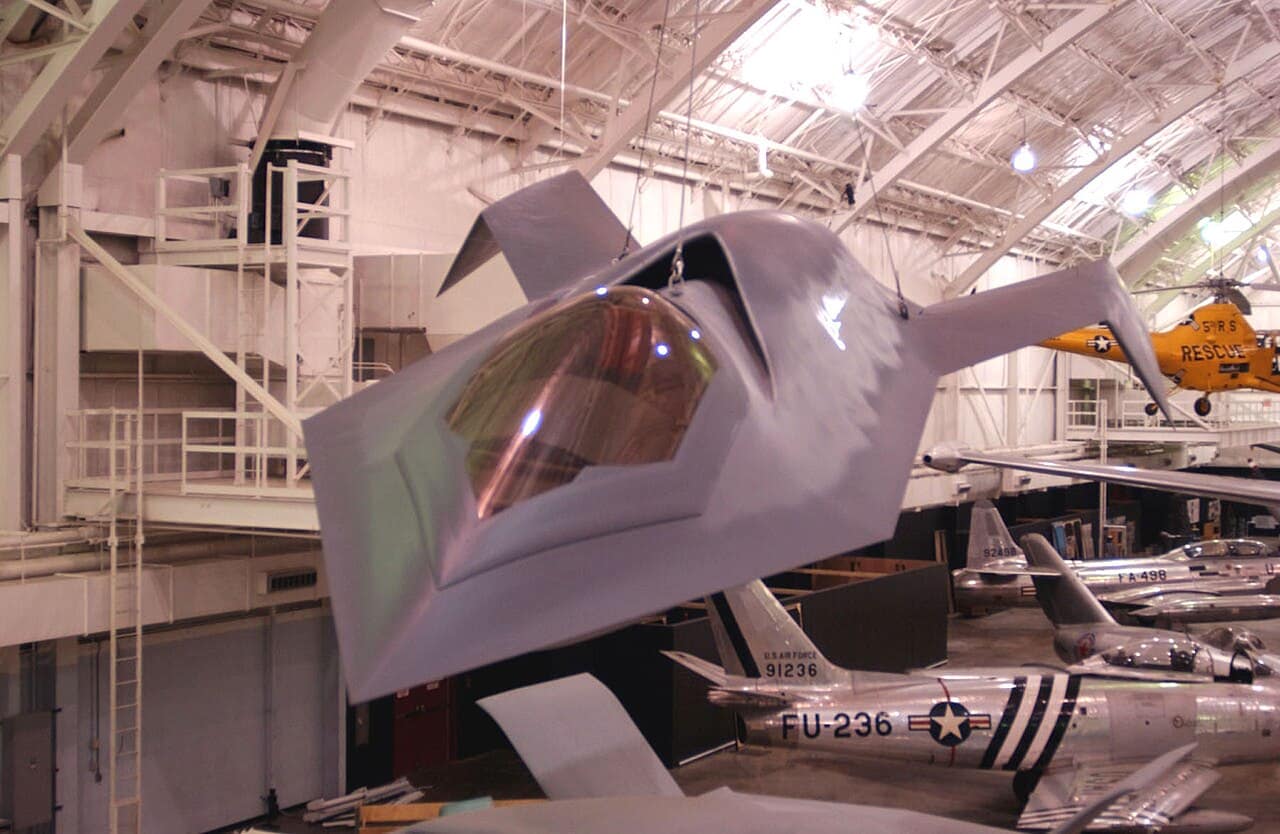
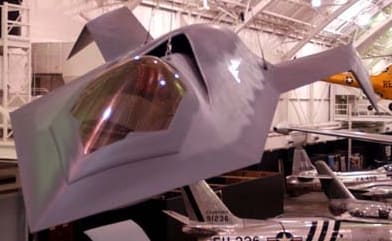
In the autumn of 1996, a jet took off from a secret airfield in the Nevada desert that looked less like an aircraft and more like a prop from a science-fiction film. Faceless, tailless, hunched, its single engine hidden inside its spine, it slipped through the sky in total secrecy. Its creators called it the Bird of Prey — after the Klingon warship from Star Trek.
For six years almost no one outside a small circle knew it existed. When Boeing finally revealed it in 2002, the strange black shape turned out to be one of the most influential aircraft the public had never heard of.
Informations clés
- Fabricant: McDonnell Douglas / Boeing Phantom Works
- Programme: 1992-1999, privately funded (about $67 million)
- Premier vol : autumn 1996; 38 test flights total
- Équipage: 1
- Moteur: one Pratt & Whitney Canada JT15D turbofan
- Performance: about 300 mph, ceiling ~20,000 ft
- Nom: after the Klingon "Bird-of-Prey" starship from Star Trek
- Revealed: 18 October 2002; now at the National Museum of the USAF
A black project with a Star Trek name
The Bird of Prey was born inside Phantom Works, the secretive advanced-projects arm McDonnell Douglas ran (and Boeing inherited after the two merged). It was a company demonstrator, funded privately to the tune of some $67 million — not a weapon, but a rolling laboratory for two ideas that would shape everything that came after.
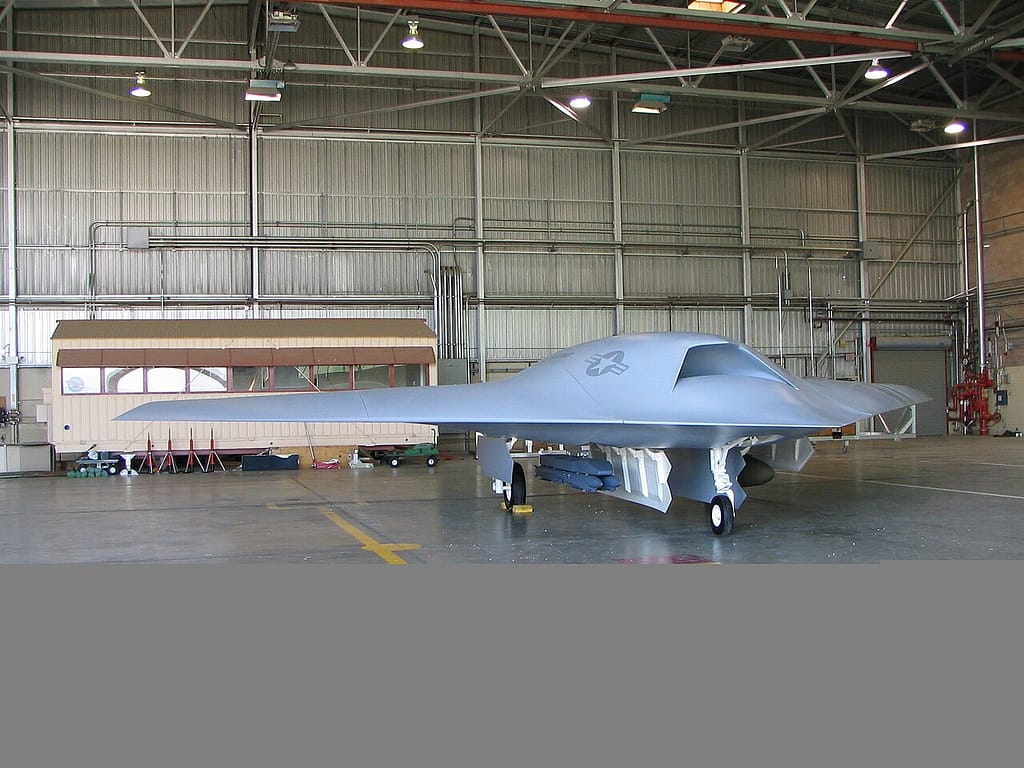
The first was stealth without the sharp facets of the F-117 Nighthawk: smooth, blended surfaces with no obvious gaps, and an engine intake tucked out of sight on top of the fuselage so no radar could see down the throat of the engine. The chined body echoed the lineage of the SR-71 Blackbird. The second idea was cheaper, faster ways to actually build aircraft.
To keep costs down, the team resisted the urge to gold-plate. The engine was an off-the-shelf business-jet turbofan. The controls were simple manual hydraulics — no fly-by-wire computers — because the shape was stable enough to fly without them. Even the landing gear was borrowed from a Beechcraft. This was a jet built to prove ideas, not to dogfight.
The real breakthrough wasn't stealth
Here is the twist: the Bird of Prey's lasting legacy wasn't its radar signature at all. It was how it was made. The programme pioneered large single-piece composite structures, cheap disposable tooling, and — remarkably for the 1990s — designing and rehearsing assembly inside a three-dimensional virtual-reality model before anyone cut metal. Those techniques are industry standard today.
The manufacturing tricks fed straight into Boeing's later demonstrators, including the X-32 that competed for the Joint Strike Fighter and the tailless X-45 combat drone. In shaping and philosophy, you can trace a line from this one quiet black jet to the stealthy uncrewed aircraft flying today.
Out of the shadows
By 2002 the methods it pioneered had spread across the industry, so the secrecy no longer mattered. Boeing rolled the Bird of Prey into the daylight, and eventually donated it to the National Museum of the U.S. Air Force, where it now hangs above an F-22 Raptor — a fitting perch for the odd little jet that helped teach a generation of aircraft how to be built.
Sources: Wikipedia; National Museum of the U.S. Air Force; Boeing press release, 18 October 2002; Jane's.
Articles similaires


0 commentaire