
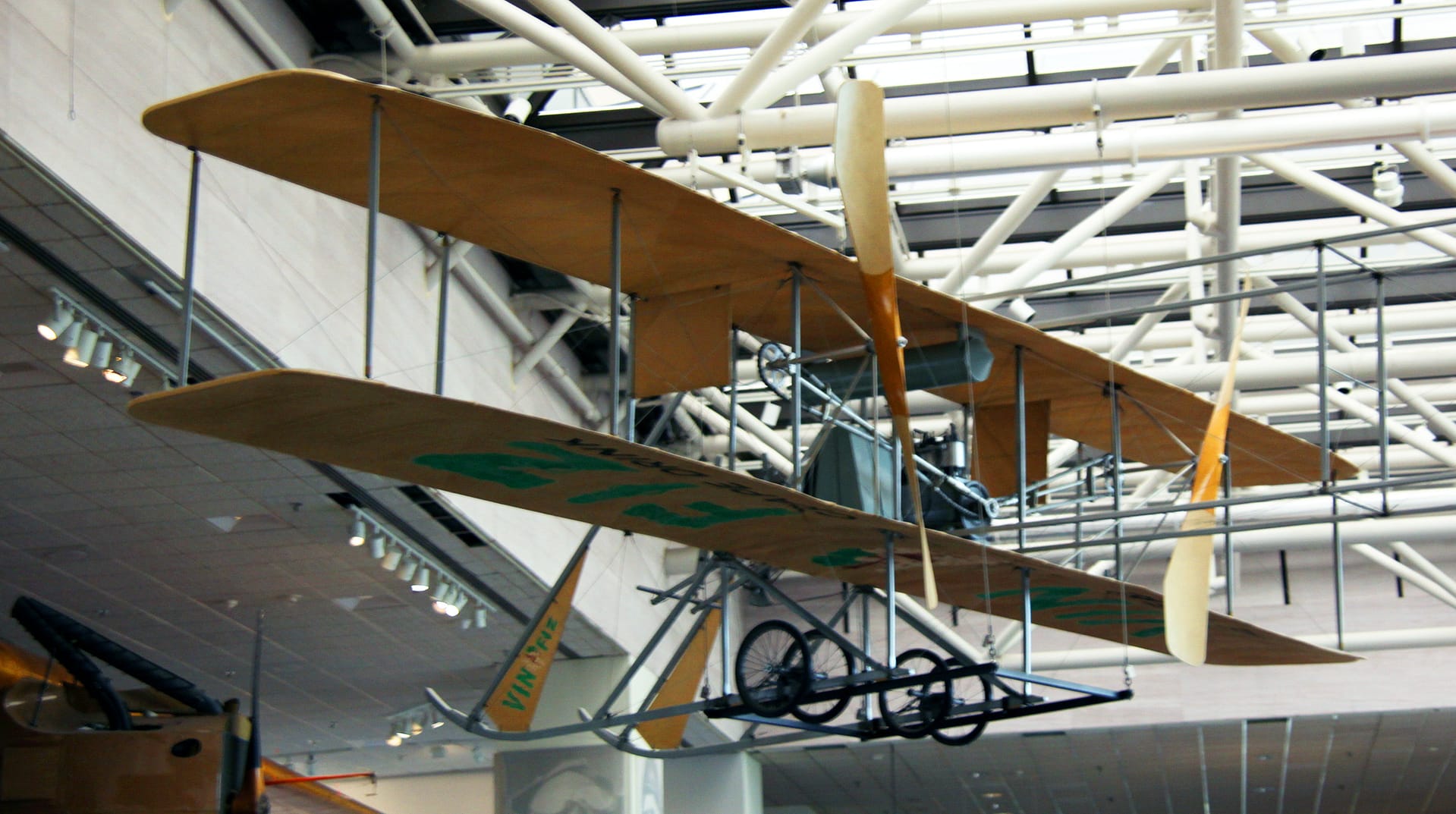
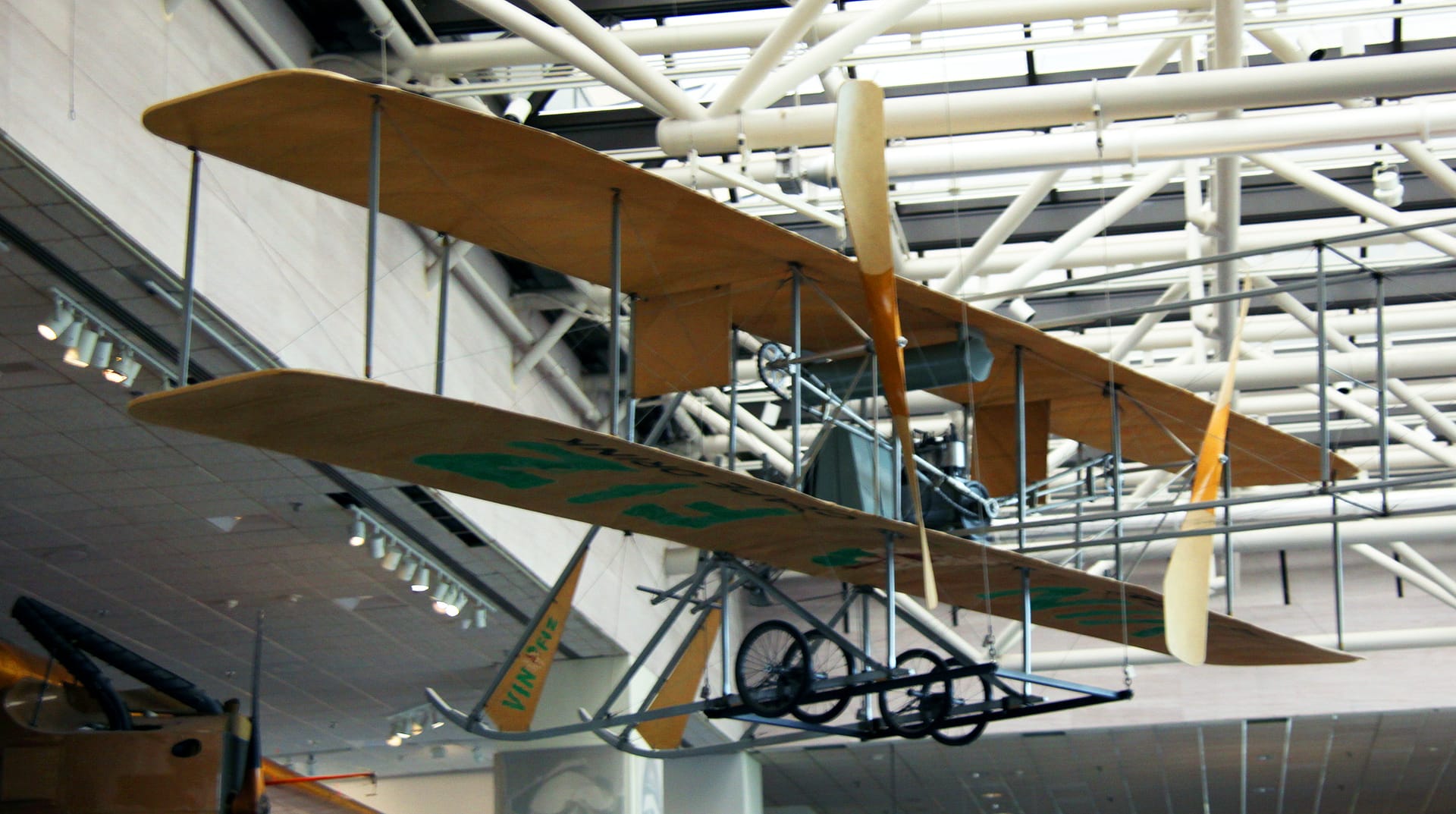
En 1911, traverser les États-Unis par avion était considéré comme impossible. Le magnat de la presse William Randolph Hearst paria néanmoins sur l'exploit, offrant 1 450 000 dollars au premier pilote qui traverserait le pays en moins de 30 jours. Les hommes les mieux préparés, voyant l'état de l'appareil, déclinèrent l'offre. Celui qui réussit cet exploit fut un amateur d'1,93 m, amateur de cigares, nommé Calbraith Perry Rodgers, qui avait appris à piloter à peine trois mois auparavant après une heure et demie de cours.
Il ne gagnerait pas le prix de Hearst. Il aurait des accidents à répétition, se casserait des os et mettrait 49 jours rien que pour atteindre la Californie. Mais lorsqu'il parvint enfin à rouler sur la carcasse déchirée Vin Fiz Cal Rodgers avait accompli, jusqu'aux vagues du Pacifique, ce que personne n'avait fait auparavant : traverser l'Amérique en avion.
Informations pratiques : Le vol Vin Fiz
- Pilote: Calbraith Perry Rodgers (1879–1912)
- Aéronef: Biplan Wright Model EX, nommé Vin Fiz après un soda au raisin
- Parrainer: Armour & Company, payant au kilomètre, avec un train d'assistance
- Itinéraire: Sheepshead Bay (New York) à Pasadena, puis Long Beach (Californie)
- Distance / temps : Environ 4 200 miles ; 49 jours jusqu’à Pasadena, arrivée dans le Pacifique le 10 décembre 1911
- Accidents : Huit atterrissages enregistrés dans son carnet de vol, plus de nombreux atterrissages forcés.
Un prix que les experts ne convoiteraient pas.
Hearst lança son défi en 1910 et donna un an aux pilotes. La liste des aviateurs qui se portèrent candidats ressemblait à un véritable bottin mondain de l'aviation pionnière : Roland Garros, Thomas Sopwith, Henri Farman. Finalement, presque aucun d'entre eux ne se lança. Même Wilbur Wright doutait de la capacité des machines à relever le défi.
“ L’homme qui y parviendra sera exceptionnel, physiquement et intellectuellement. Il aura besoin de tout le courage qui sommeille en lui. ”
Wilbur Wright — Pionnier de l'aviation, face au défi transcontinental
Rodgers ne tarissait pas d'efforts. Devenu sourd à cause d'une scarlatine contractée dans son enfance et privé de la carrière navale que sa famille espérait, il s'était tourné vers la course automobile, la moto et le yachting avant que l'aviation ne le passionne définitivement. Il a convaincu le géant de l'industrie de la viande de Chicago, Armour, de le sponsoriser pour faire la publicité de son nouveau soda au raisin., Vin Fiz, il a peint le nom sous les ailes et s'est envolé.
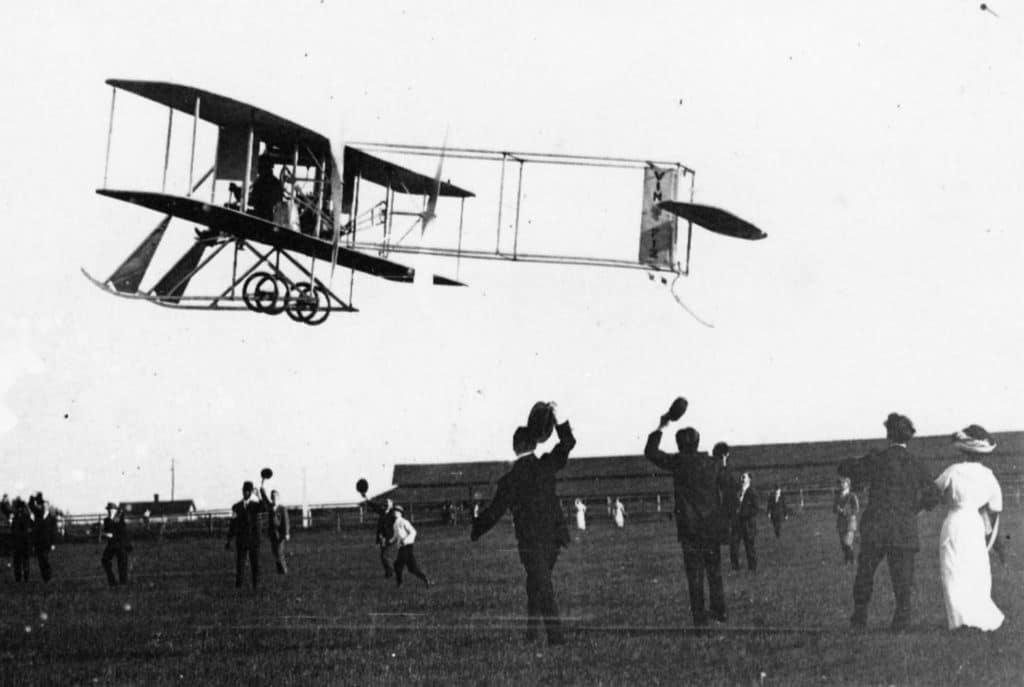
Quarante-neuf jours et un avion reconstruit
Rodgers se déplaçait en suivant les voies ferrées, le train d'assistance étant peint en blanc pour qu'il puisse le repérer depuis les airs. Heureusement qu'il avait un wagon-hangar rempli de pièces de rechange : il eut un accident dès le deuxième jour, et les accidents s'enchaînèrent. Il percuta un arbre, une clôture de barbelés, ses cylindres explosèrent, il tomba en panne d'essence au milieu des champs de coton et dut reconstruire sa machine à plusieurs reprises au bord de la voie. Il dépassa largement le délai de 30 jours fixé par Hearst avant même d'avoir parcouru la moitié du trajet.
Le Musée national de l'air et de l'espace du Smithsonian, qui conserve le Vin Fiz, parle de Cal Rodgers et de son vol.
Lorsqu'il atteignit Pasadena le 5 novembre – après avoir parcouru 6 814 kilomètres en 49 jours selon ses calculs – une foule de 20 000 personnes envahit le terrain. Interrogé sur son ressenti, Rodgers, connu pour son caractère monosyllabique, minimisa l'épreuve tout en mettant en doute les affirmations de Hearst.
Il n'en avait pas fini. Il insista pour voler jusqu'à l'océan. Quelques jours plus tard, près de Compton, le moteur s'arrêta et le Vin Fiz s'écrasa au sol, laissant Rodgers avec une commotion cérébrale et une cheville cassée. Depuis son lit d'hôpital, cigare à la main, il refusa d'abandonner.
“ Oh, je vais terminer ce vol, sans problème. ”
Cal Rodgers — Depuis son lit d'hôpital après l'accident de Compton, en 1911
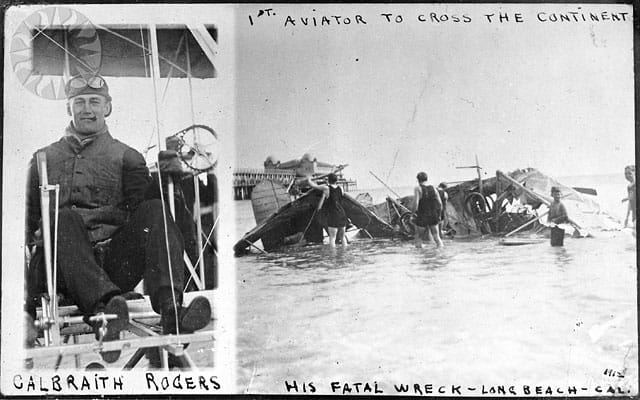
Le 10 décembre 1911, il fit exactement cela, décollant sur un appareil réparé et atterrissant sur le sable de Long Beach — où la foule poussa l'avion dans les vagues — puis s'éloignant en boitant sur les béquilles qu'il avait attachées au châssis.
Le récit d'un conteur sur le premier vol audacieux de Cal Rodgers à travers les États-Unis.
Un triomphe éphémère
Rodgers eut peu de temps pour profiter de sa gloire. Le 3 avril 1912, lors d'une démonstration aérienne à Long Beach à bord d'un Wright Model B, il percuta une nuée de goélands ; l'un d'eux bloqua ses gouvernes et l'appareil piqua dans les vagues, le tuant sur le coup. Il avait 33 ans. L'avion, largement réparé, Vin Fiz Elle lui a survécu et est aujourd'hui exposée au Smithsonian, un monument patchwork à l'obstination pure.
Une reconstitution en simulateur de vol retrace une partie du parcours de Vin Fiz à travers le cœur des États-Unis.
Sources : HistoryNet / Histoire de l'aviation; Musée national de l'air et de l'espace du Smithsonian ; articles de presse de l'époque. Cet article aborde les accidents mortels et se présente comme un document d'histoire de l'aviation.
0 commentaire