
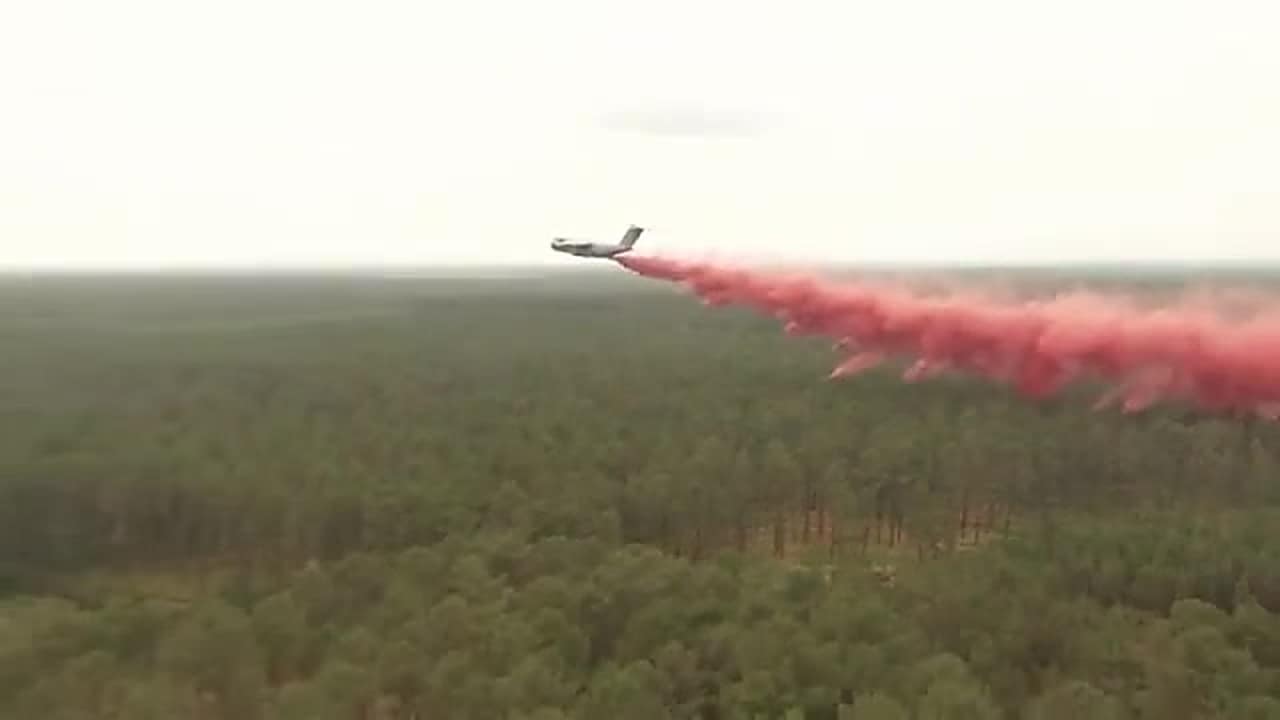
Over the pine forests of the Gironde, a shape far too large to be a water bomber banks low, opens its rear cargo ramp, and lets a red cascade of retardant fall across the treetops. This is no yellow Canadair. It is an Airbus A400M Atlas, the biggest tactical airlifter the French Air and Space Force owns, and on 25 July 2026 it flew France's first-ever operational firefighting mission.
For once, the giant carried neither paratroopers nor armoured vehicles. Bolted into its hold was a removable tank that emptied roughly 20,000 litres of retardant in under ten seconds — a single pass worth around three Canadair loads. The drop fell near Lacanau, toward Sainte-Hélène, as flames pushed north through the Gironde toward Bordeaux.
It is a genuine world first, and it was improvised in barely a fortnight while the forest burned.
Informations clés
| Aéronef | Airbus A400M Atlas |
| Opérateur | French Air and Space Force |
| Firefighting kit | Removable roll-on/roll-off (RO-RO) Mk2 module |
| Capacity | ~20,000 litres / ~20 tonnes, released in under 10 seconds |
| Equivalent | Roughly three Canadair CL-415 loads per pass |
| First operational drop | 25 July 2026, near Lacanau (Gironde) |
| Rôle | Laying retardant lines ahead of the fire, not scooping water |
A giant pressed into the fire line
France is enduring one of its harshest wildfire seasons in memory, with tens of thousands of hectares already lost and the Gironde fires alone scorching some 30,000 hectares by late July. With the national fleet of Canadair CL-415 and Dash 8 water bombers stretched thin, Prime Minister Sébastien Lecornu ordered the A400M into action ahead of schedule.
The decision rested on an agreement signed on 17 July between the Ministry of the Interior, the Ministry of the Armed Forces, and Airbus Defence and Space. Crew qualification and flight testing began around 20 July, with a validation drop near Air Base 123 Orléans-Bricy before the aircraft was cleared for real operations. From handshake to first fire mission took roughly two weeks.
A tank on wheels, not a new aircraft
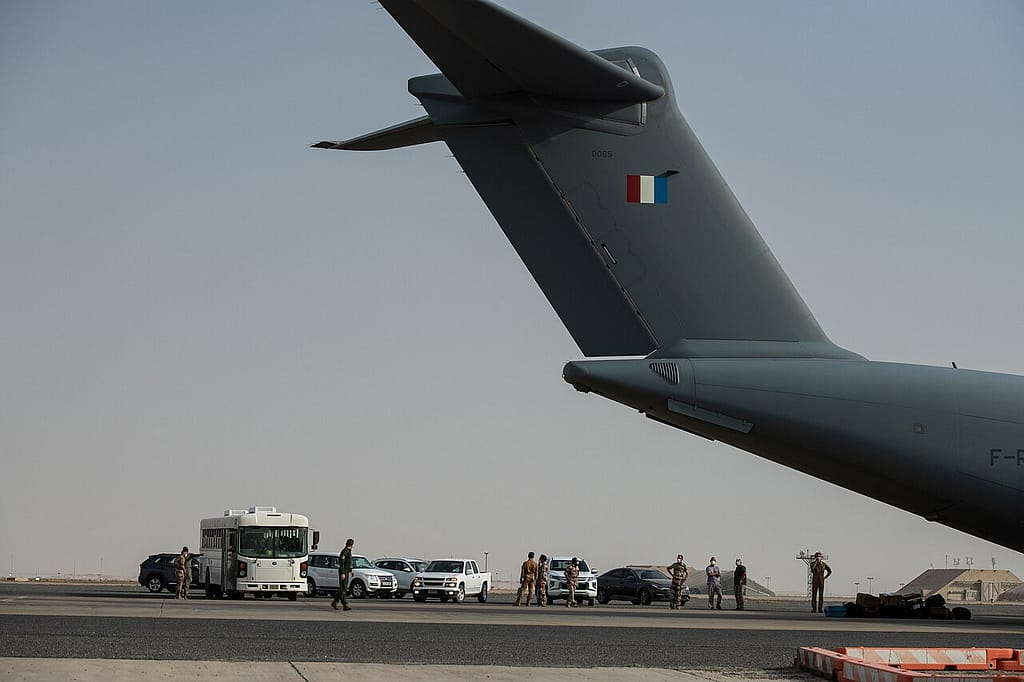
The clever part is that nothing about the aircraft is permanently changed. The Mk2 roll-on/roll-off module is wheeled up the rear ramp and secured inside the standard cargo hold. It needs no structural modification: once the fire season ends, the tank comes out and the A400M goes back to hauling troops and freight.
When the ramp opens over a fire, the module can dump its full load — around 20 tonnes — in less than ten seconds, laying down a long, dense line of retardant in a single pass.
Not a Canadair replacement
The A400M does not do what a Canadair does best. It cannot skim a lake or the sea to refill on the move; once its tank is empty it must return to an airfield to reload. And rather than attacking flames head-on, it is meant to work ahead of a fire, drawing long retardant lines around threatened villages and forests to slow the advance and buy ground crews time.
In other words, it complements the specialised water bombers rather than replacing them — adding sheer volume and reach that the smaller aircraft cannot match. It is also a neat piece of European dual-use engineering: a warplane whose wings are built in Britain and whose fuselage is assembled in Spain, turned, for a summer, into a guardian of the forest.
Whether the experiment becomes a permanent capability will depend on how the Mk2 kit performs across a full, brutal fire season. For now, the message from the Gironde is simple: when the Canadairs are not enough, France has found a way to send its biggest airlifter to the front line.
Sources: FlightGlobal; The Aviationist; Aerotime; Army Recognition; CTIF; AFP.
0 commentaire