
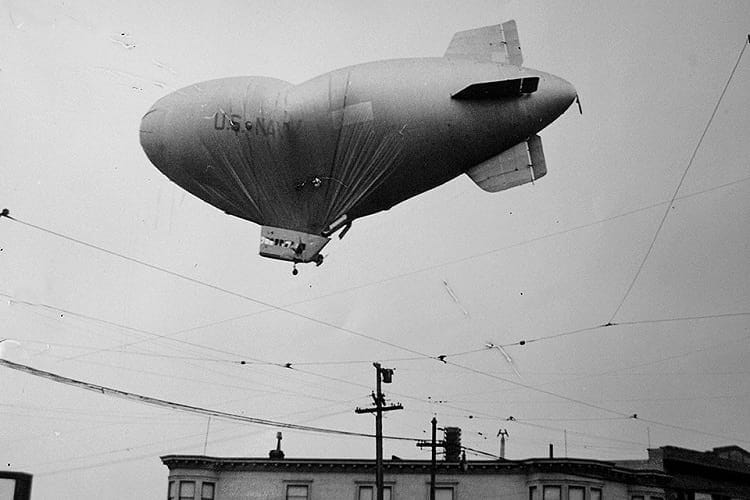
Peu après 11 heures du matin, le 16 août 1942, un dirigeable de l'US Navy, à moitié dégonflé et affaissé, survola les toits de Daly City, en Californie, s'accrochant aux fils téléphoniques tandis qu'une foule le poursuivait dans les rues. Il finit par s'écraser sur le trottoir devant une maison de banlieue. Pompiers et policiers se précipitèrent vers la nacelle, s'attendant à en extraire des aviateurs blessés.
La nacelle de pilotage était vide. Sa porte était restée ouverte. La radio fonctionnait encore, les moteurs avaient tourné, les parachutes et le radeau de sauvetage étaient intacts. Deux pilotes de la Marine expérimentés se trouvaient à bord ce matin-là. On ne les a jamais revus. Plus de quatre-vingts ans plus tard, leur sort reste un mystère.
Informations clés
- Aéronef: dirigeable de l'US Navy L-8, Escadron de patrouille aérienne 32
- Date: 16 août 1942
- Équipage: Le lieutenant Ernest Cody et l'enseigne Charles Adams
- Mission: patrouille anti-sous-marine au large de San Francisco
- Dernier contact : enquête sur une nappe de pétrole près des îles Farallon
- Résultat: Un dirigeable a atterri sans équipage à Daly City ; les hommes n'ont jamais été retrouvés.
Une guerre de dirigeables sur la côte
En 1942, la guerre semblait imminente en Californie. Les sous-marins japonais avaient bombardé la côte, coulé des navires et semé la terreur sur toute la côte ouest. Pour repérer les sous-marins, la Marine américaine opta pour le dirigeable : lent, patient, capable de patrouiller des heures durant à basse altitude par un temps qui clouait les avions au sol. Elle réquisitionna les petits dirigeables publicitaires de Goodyear, les baptisa classe L et les affecta à la patrouille côtière.
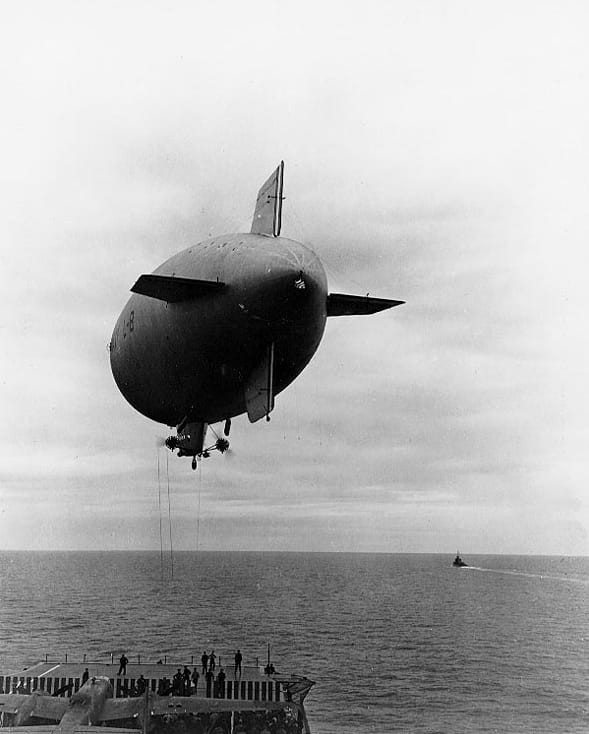
Une reconstitution documentaire du mystère L-8.
Le dernier message
Le 16 août à 6h03, L-8 Le dirigeable décolla de Treasure Island, dans la baie de San Francisco. À son bord se trouvaient le lieutenant Ernest Cody, 27 ans, et l'enseigne de vaisseau Charles Adams, un vétéran des airs d'une trentaine d'années qui avait survécu au naufrage du porte-avions volant USS Macon Des années auparavant. Un troisième homme, James Riley Hill, aide-mécanicien, avait reçu l'ordre de quitter le navire juste avant le départ ; Cody s'inquiétait du poids supplémentaire. Cela lui a sauvé la vie.
Peu avant huit heures, l'équipage signala par radio avoir repéré une nappe de pétrole à quelques kilomètres des îles Farallon et s'apprêtait à enquêter – il pourrait s'agir d'un sous-marin. Un Liberty ship et un bateau de pêche observèrent le dirigeable descendre à une dizaine de mètres de la surface et survoler la nappe. Ce furent les dernières nouvelles de Cody et Adams. La radio se tut.
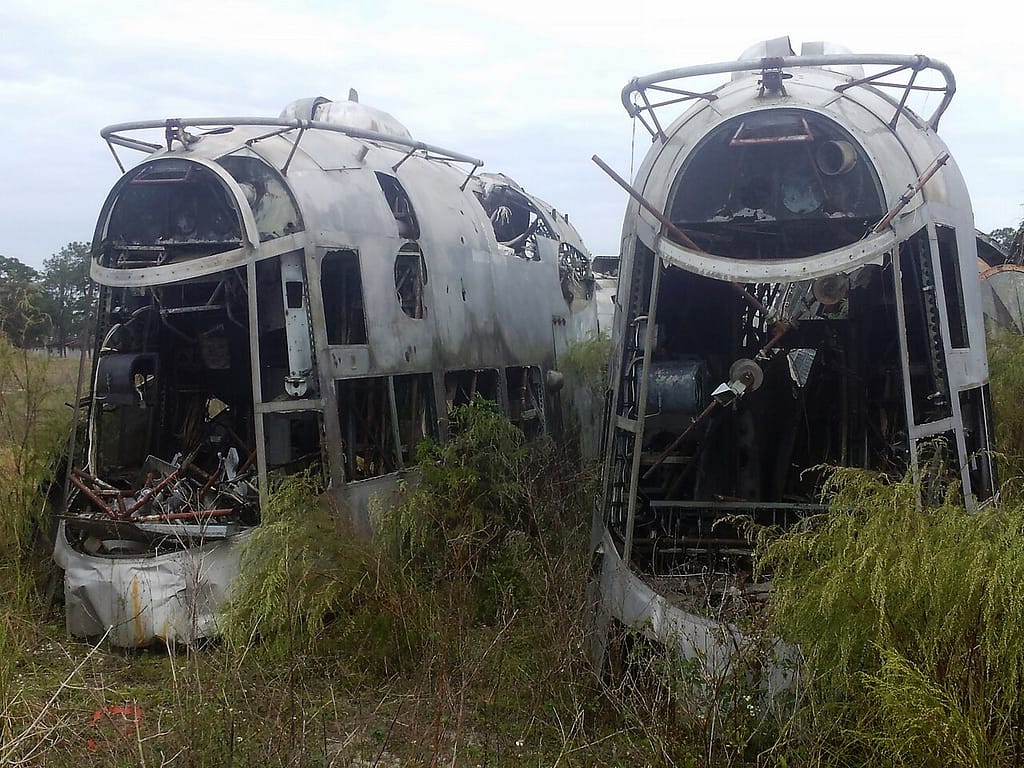
La gondole vide
Au lieu de poursuivre sa patrouille, le dirigeable largua du ballast, prit de l'altitude et fit demi-tour vers la ville, dans la mauvaise direction. Vers 11 heures, il réapparut au-dessus d'Ocean Beach. Deux pêcheurs à la ligne s'agrippèrent à ses amarres, jetèrent un coup d'œil dans la nacelle et n'y trouvèrent personne. Il se détacha brusquement, heurta une falaise, largua une charge de profondeur sur un terrain de golf et dériva jusqu'à s'écraser à Daly City.
Tout dans cette scène ne faisait qu'épaissir le mystère. Le crash avait été suffisamment doux pour que les hommes s'en soient sortis indemnes. Leurs parachutes et le radeau de sauvetage étaient toujours à bord. La radio fonctionnait et aucun appel de détresse n'avait été émis. Seules deux choses manquaient à l'appel : Cody, Adams et leurs gilets de sauvetage, qu'ils portaient.
Le dirigeable fantôme de 1942 et ses membres d'équipage disparus.
Quatre-vingts ans de théories
La Marine supposait officiellement qu'un homme s'était penché hors de l'écoutille pour larguer un fumigène au-dessus de la nappe d'hydrocarbures, avait glissé et entraîné l'autre dans sa chute lorsque celui-ci avait tenté de lui porter secours ; la perte soudaine de poids aurait alors provoqué l'ascension du dirigeable. Mais la commission d'enquête admit que tout cela n'était que pure conjecture. Le reste était laissé à l'imagination du public : capture par un sous-marin japonais, défection, passager clandestin meurtrier, dispute amoureuse, voire enlèvement extraterrestre.
Rien de tout cela ne peut être prouvé, et rien ne peut être réfuté. L-8’La nacelle a survécu, a repris du service pour Goodyear après la guerre, et se trouve aujourd'hui au Musée national de l'aviation navale de Pensacola — une simple boîte en aluminium qui a transporté deux hommes au-dessus du Pacifique et n'a ramené que le mystère de leur destination.
Plus d'informations sur l'énigme persistante du L-8.
Sources : L-8 (Wikipedia) ; Greg Daugherty, “ Le mystère de 80 ans du dirigeable fantôme de la marine américaine ”, Smithsonian Magazine ; Actes de l'Institut naval américain (1970) ; San Francisco Chronicle ; Musée national de l'aviation navale.
0 commentaire