
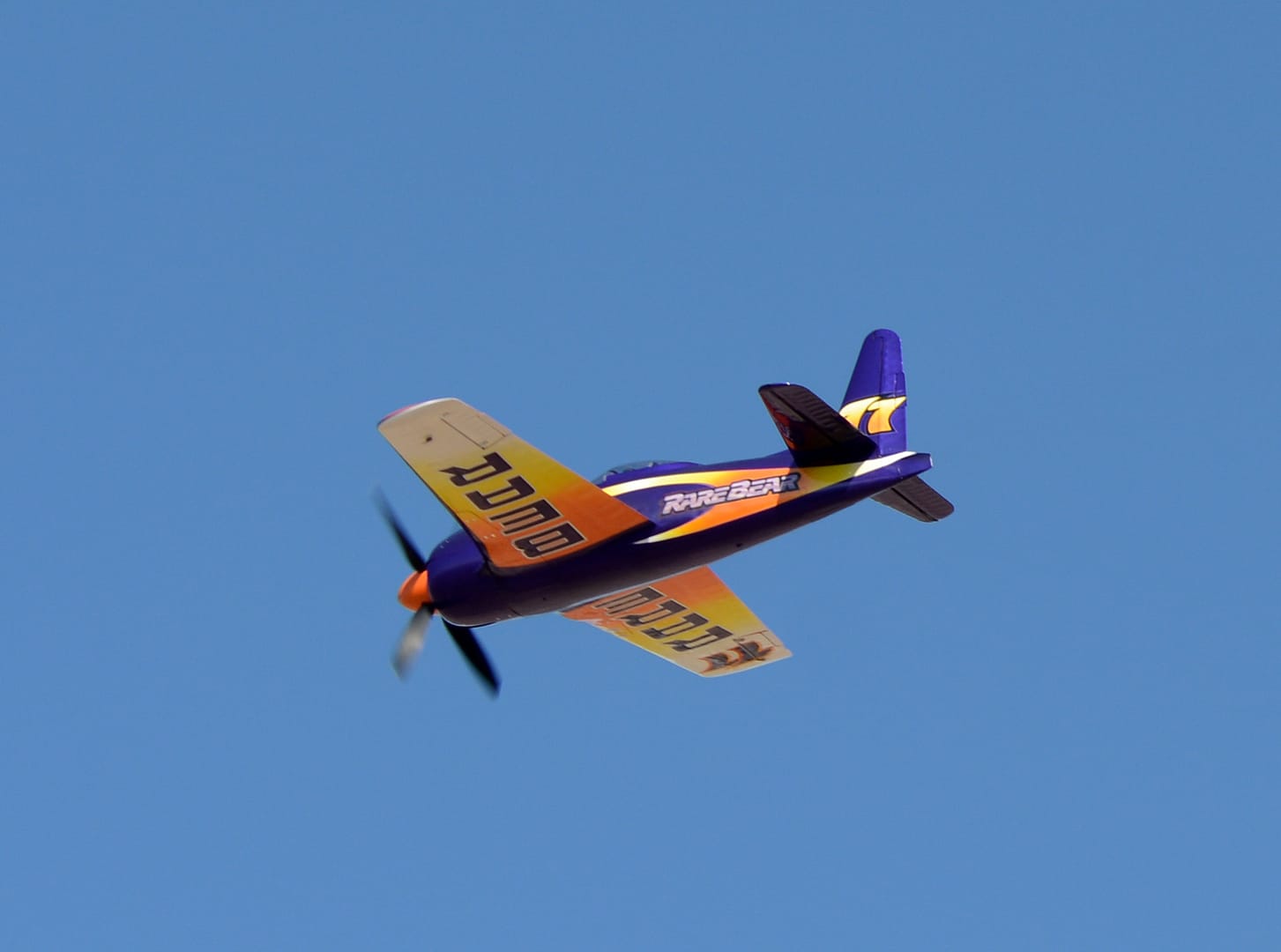
Grumman a construit le F8F Bearcat L'idée maîtresse était de prendre le plus gros moteur américain et de l'intégrer à l'avion le plus petit possible. Le résultat était moins un chasseur qu'un moteur en selle : un 18 cylindres en étoile propulsant une cellule ultralégère dans les airs à une vitesse inégalée par l'ère des moteurs à pistons.
Il est né de dures leçons. En 1942, des vétérans du Pacifique ont fait part à Grumman de leurs principales attentes concernant un chasseur : une bonne capacité de montée. Le Bearcat a répondu à cette exigence de façon si parfaite qu’il pouvait décoller d’un porte-avions en quelques dizaines de mètres et atteindre une vitesse ascensionnelle de près de 1 460 mètres par minute.
Mais l'histoire en décida autrement. Lorsqu'il rejoignit la flotte en 1945, la guerre pour laquelle il avait été conçu touchait à sa fin et l'ère du jet commençait. Le Bearcat ne tira jamais ses canons entre les mains des Américains. Sa postérité s'imposa plus tard, sur les pylônes de Reno.
Informations clés
| Taper | Chasseur monomoteur et monoplace embarqué — le dernier chasseur à pistons de Grumman |
| Moteur | Pratt & Whitney R-2800 Double Wasp radial |
| Premier vol | 21 août 1944 |
| Entrée de service | 1945 — trop tard pour les combats de la Seconde Guerre mondiale |
| Objectif de conception | Cellule la plus petite et la plus légère autour du plus gros moteur, pour des montées fulgurantes |
| utilisation au combat | L'Indochine française, puis le Sud-Vietnam, n'ont jamais été sous contrôle américain. |
| Construit | 1 265 (1945–1949) |
| Consigner l'au-delà | “ Rare Bear ” a établi un record de vitesse sur 3 km pour un véhicule à pistons, atteignant environ 528 mph en 1989. |
Un moteur avec une selle
La capacité de franchissement dépend du rapport poids/puissance, et Grumman l'a recherchée sans relâche. Le Bearcat était 1,5 mètre plus court que le F6F Hellcat, Il mesurait sept pieds de moins en envergure et n'emportait que quatre canons et une modeste quantité de carburant. Il était doté d'une verrière en forme de bulle, une première pour un chasseur de l'US Navy.
Comparé au Hellcat, il était environ un cinquième plus léger, grimpait environ 30 % mieux et volait nettement plus vite avec le même type de moteur. Grumman l'avait même doté d'ailettes détachables conçues pour se rompre net en cas de charge extrême.
Trop tard pour sa propre guerre
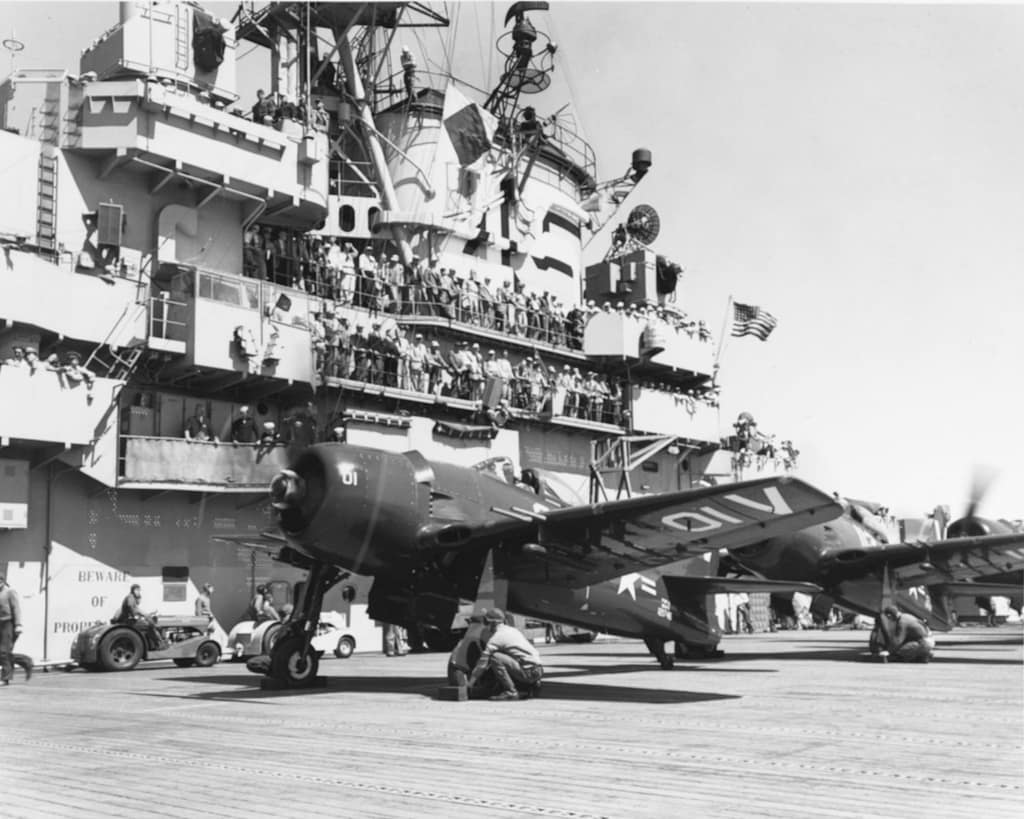
Commandé en 1943, le prototype effectua son premier vol le 21 août 1944 et les livraisons commencèrent en mai 1945. La première escadre aérienne de Bearcat atteignit le Pacifique quelques jours seulement après la capitulation du Japon. Aucun Bearcat n'a jamais effectué la mission de combat aérien pour laquelle il avait été conçu au sein de l'armée de l'air américaine ; il demeure l'un des grands “ et si ” de l'histoire de l'aviation.”
Un ours rare sur les pylônes de Reno.
L'ascension qui a forgé les légendes
Les performances verticales du Bearcat ont stupéfié tout le monde. En 1946, un exemplaire non modifié établit un record de vitesse ascensionnelle : 3 048 mètres (10 000 pieds) en 94 secondes après une course de décollage d'à peine plus de trente mètres (une trentaine de pieds) – un record qui tint près de dix ans. Les Blue Angels de l'US Navy volèrent sur Bearcat à la fin des années 1940, et le jeune Neil Armstrong, qui s'entraîna sur cet appareil, le déclara plus tard son avion préféré.
La seule guerre qu'elle ait menée
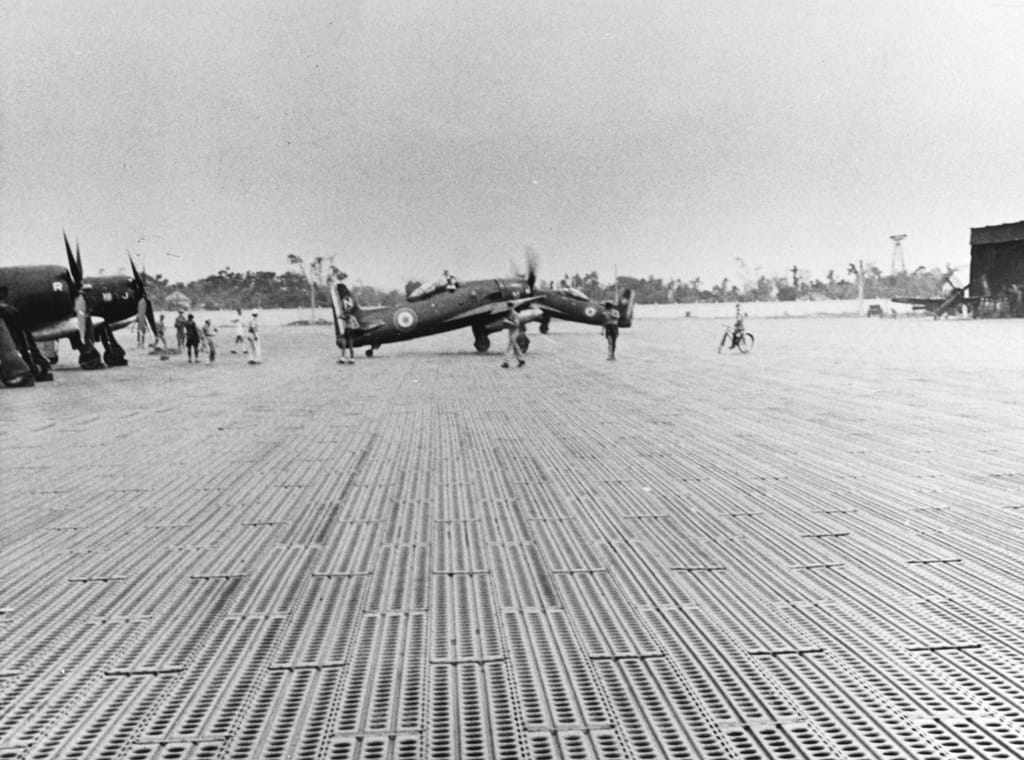
Le Bearcat ne connut d'engagement au combat qu'aux mains des Français. Près de deux cents exemplaires furent livrés aux forces françaises en Indochine à partir de 1951 pour des attaques terrestres contre le Viet Minh. Après le retrait des Français, les survivants furent transférés à l'armée de l'air sud-vietnamienne. Ceux qui n'eurent pas combattu dans le Pacifique trouvèrent leur utilité dans les rizières d'Asie du Sud-Est.
Des coureurs en nombre illimité, dont Rare Bear, à Reno.
Rare Bear et les livres de records
Un Bearcat, retrouvé à l'état d'épave en 1962, est devenu le plus célèbre de tous. Reconstruit par Lyle Shelton et équipé d'un moteur radial Wright surpuissant, le “ Rare Bear ” a dominé la catégorie Reno Unlimited pendant des décennies. Le 21 août 1989, 45 ans jour pour jour après le premier vol du prototype, il a atteint la vitesse mesurée de 850 km/h (528 mph) sur un parcours de trois kilomètres, devenant ainsi l'avion à moteur à pistons le plus rapide jamais enregistré dans cette catégorie. Des avions de course ultérieurs ont réalisé des performances supérieures sur différents parcours, mais la place du Bearcat dans les annales du sport automobile demeure incontestable.
Le Bearcat de course à pleine puissance.
Sources : Wikipédia (Grumman F8F Bearcat ; Rare Bear) ; Stephan Wilkinson, “ An Engine With a Saddle ”, Aviation History / HistoryNet (2010). Photo principale : Don Ramey Logan / CC BY.

0 commentaire