
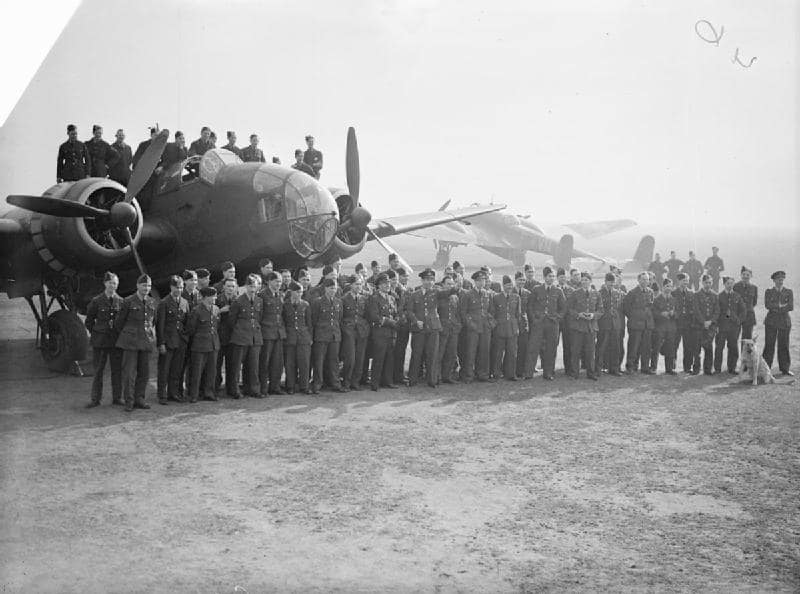
When the founder of Britain’s leading aviation magazine first laid eyes on the Royal Air Force’s newest bomber in 1936, he needed only five words. The fuselage was tall, deep and barely a yard wide, and it reminded him of a piece of luggage. The name stuck for the rest of the aircraft’s life: the Flying Suitcase.
The Handley Page Hampden was one of the aircraft that carried Britain into the Second World War — fast, nimble, and desperately, comically cramped. Its crews loved it and hated it in equal measure, and it fought from the very first night of the war.
Informations clés
- Aéronef: Handley Page HP.52 Hampden, RAF twin-engine medium bomber; first flew 1936
- Surnom: the “Flying Suitcase” — the fuselage was only about three feet wide
- Moteurs : two Bristol Pegasus radials; fast and agile, conceived as a “fighting bomber”
- Équipage: four, with almost no room to move and no way to swap positions in flight
- Service: from the first days of the war; later a torpedo bomber over the Arctic
- Construit: 1,430 — of which nearly half were lost on operations
A Yard-Wide War Machine
The Hampden was designed to be different: a bomber that flew like a fighter. Its wing was slim and beautifully tapered, giving it a high top speed and light, responsive controls that pilots adored. To keep it fast, Handley Page made the fuselage as narrow as they dared — and that is where the trouble started.
At three feet wide, the fuselage left the four-man crew wedged in single file, unable to move around, unable to swap places, freezing cold and with no facilities whatsoever on missions that could last many hours. One crewman’s description has become the definitive verdict on the aircraft.
First Into the Fire
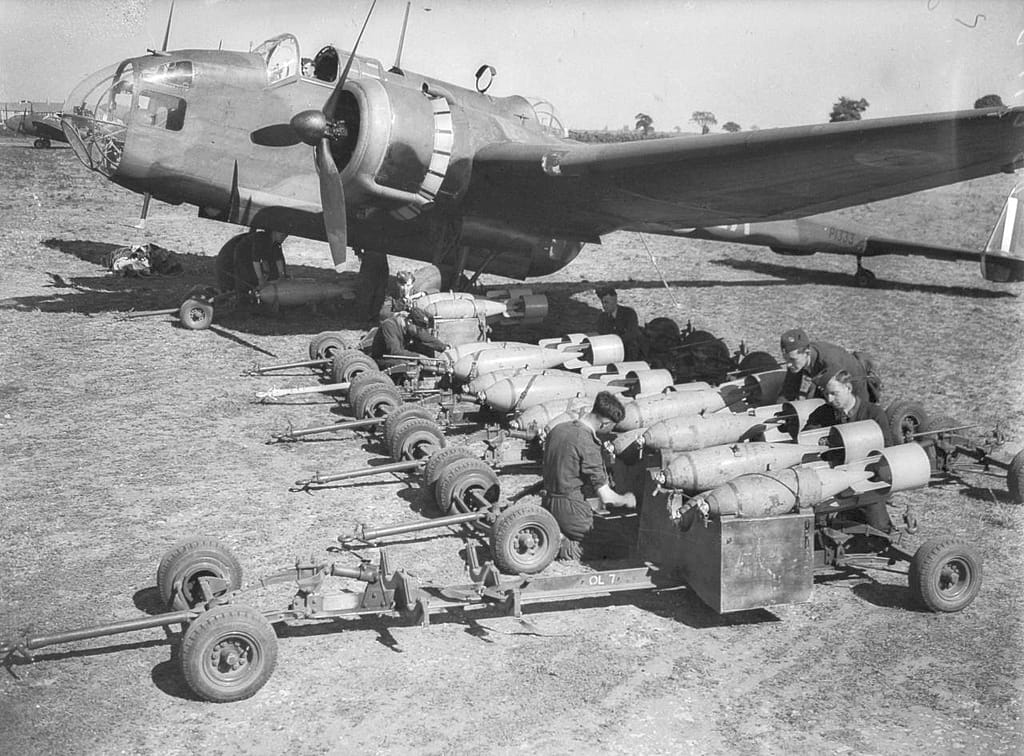
Whatever its discomforts, the Hampden went to war immediately. It flew armed reconnaissance from September 1939, and its crews soon discovered a brutal truth: with only a handful of light machine guns, the “fighting bomber” was hopelessly outgunned by German fighters in daylight. After heavy losses over Norway, Bomber Command sent it into the dark.
By night the Hampden earned its place in history. It laid mines in enemy waters, dropped the first British bombs on German soil, and took part in the first RAF raid on Berlin and the first thousand-bomber raid on Cologne. Two of its crewmen won the Victoria Cross — among them an eighteen-year-old wireless operator, John Hannah, who beat out a raging fire with his bare hands to save his aircraft.
The Suitcase Goes to Murmansk
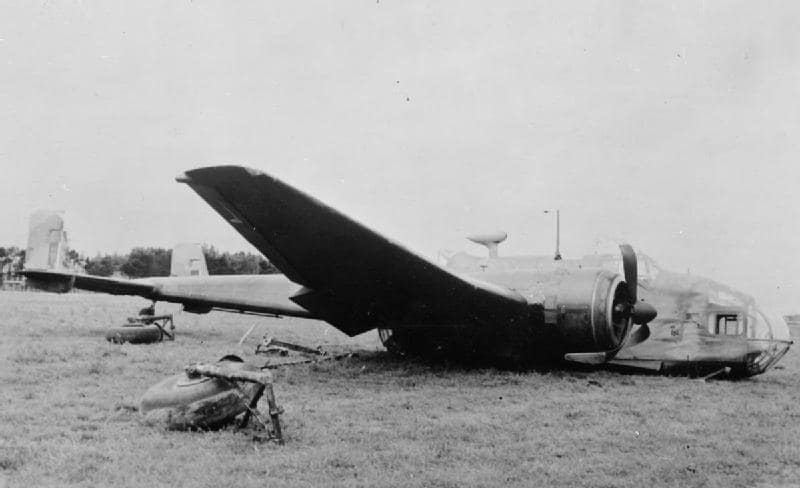
As bigger four-engined heavies like the Lancaster arrived, the Hampden was pushed out of Bomber Command. But it found a remarkable second act with Coastal Command as a torpedo bomber. In one extraordinary operation in 1942, thirty-two Hampdens flew more than two thousand miles from the Shetlands to northern Russia to help protect an Arctic convoy from the battleship Tirpitz — a punishing journey partly over enemy territory that cost eight aircraft before they even arrived.
The survivors were simply handed over to the Soviet Navy, which flew them on and gave them yet another nickname: the “balalaika,” after the odd-shaped Russian instrument. It was a fitting end for an aircraft that spent its whole life being teased for its shape.
Nearly half of all Hampdens built were lost on operations, and today not one remains airworthy. But the Flying Suitcase deserves better than a punchline. It was there at the very start, doing dangerous work in an aircraft that asked its young crews to fight a war while folded into a space narrower than a doorway — and, more often than not, to do it in the dark.
Sources: Wikipedia; Philip J. R. Moyes, The Handley Page Hampden; RAF Bomber Command Association; Imperial War Museums.
0 commentaire