
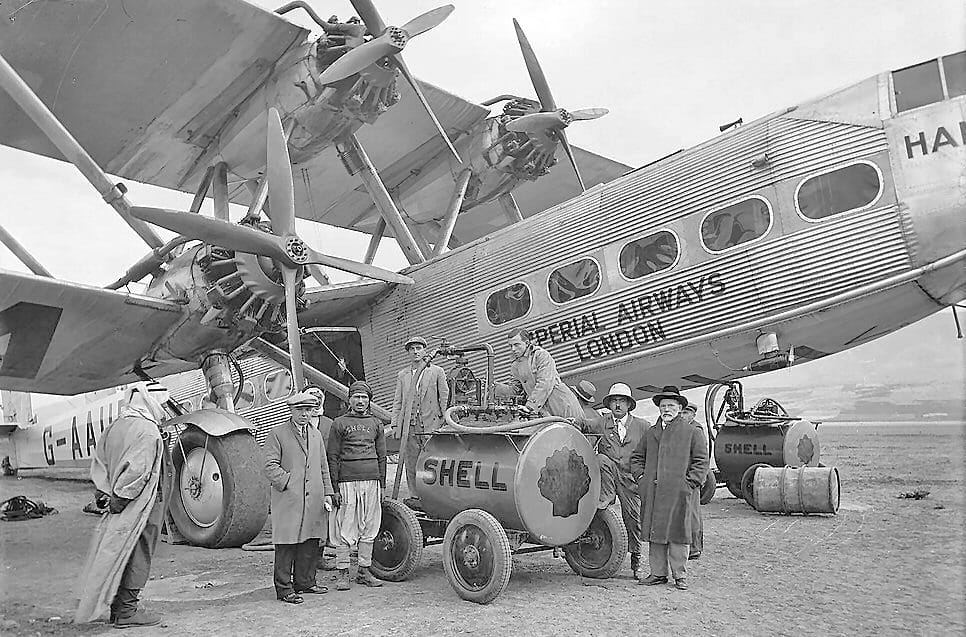
In the 1930s, the most civilised way to cross a continent was aboard a vast, slow, four-engined biplane that looked like it belonged to the age of the Wright Brothers, and travelled at roughly the speed of a modern express train. The Handley Page HP.42 was the flagship of Imperial Airways, the largest airliner in the world when it appeared, and quite possibly the most genteel aircraft that has ever flown.
It carried its passengers in Pullman-carriage luxury across the deserts of the Empire at a stately 100 miles an hour, and it did so for a decade without ever killing a single one of them. In an era when flying was genuinely dangerous, the HP.42 achieved something close to a miracle: it was both magnificent and completely, reassuringly safe.
Informations clés
| Aéronef | Handley Page HP.42 and HP.45 |
| Opérateur | Imperial Airways |
| Premier vol | 14 November 1930 (the prototype, Hannibal) |
| Configuration | Four-engine biplane, the largest airliner in the world at its debut |
| Moteurs | Four Bristol Jupiter radials |
| Cruise speed | About 100 mph |
| Passagers | Up to around 38, in Pullman-style comfort |
| Construit | 8, every one named beginning with the letter H |
| Safety | A decade in service without a single passenger death |
Luxury at the Speed of a Train
Imperial Airways was Britain's imperial airline, and its job was to knit together an empire that spanned the globe: London to Paris, Cairo to Karachi, across the Nile and the Arabian desert. For that it wanted comfort and reliability far more than speed, and Handley Page gave it exactly that. The HP.42 was enormous, festooned with struts and wires, and utterly unhurried.
Inside, though, it was sumptuous. Passengers sat in roomy, upholstered chairs in two separate cabins, were served proper hot meals on real china with silver cutlery by uniformed stewards, and could actually hear each other speak. There were eight of these aircraft, and every one carried a name beginning with H: Hannibal, Horsa, Hanno and Hadrian on the Eastern Empire routes; Heracles, Horatius, Hengist and Helena on the European runs.
The Perfect Safety Record
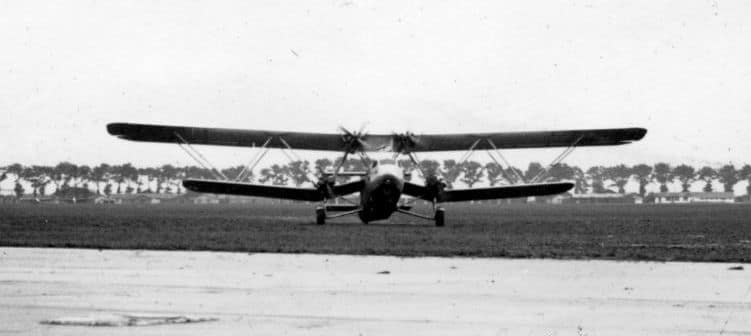
What truly sets the HP.42 apart is its record. Flying in the 1930s was a genuinely risky business; engines failed, weather was poorly understood, and navigation was primitive. And yet, across roughly ten years of civil service and millions of miles flown over some of the most hostile terrain on Earth, Imperial Airways never lost a single passenger aboard an HP.42.
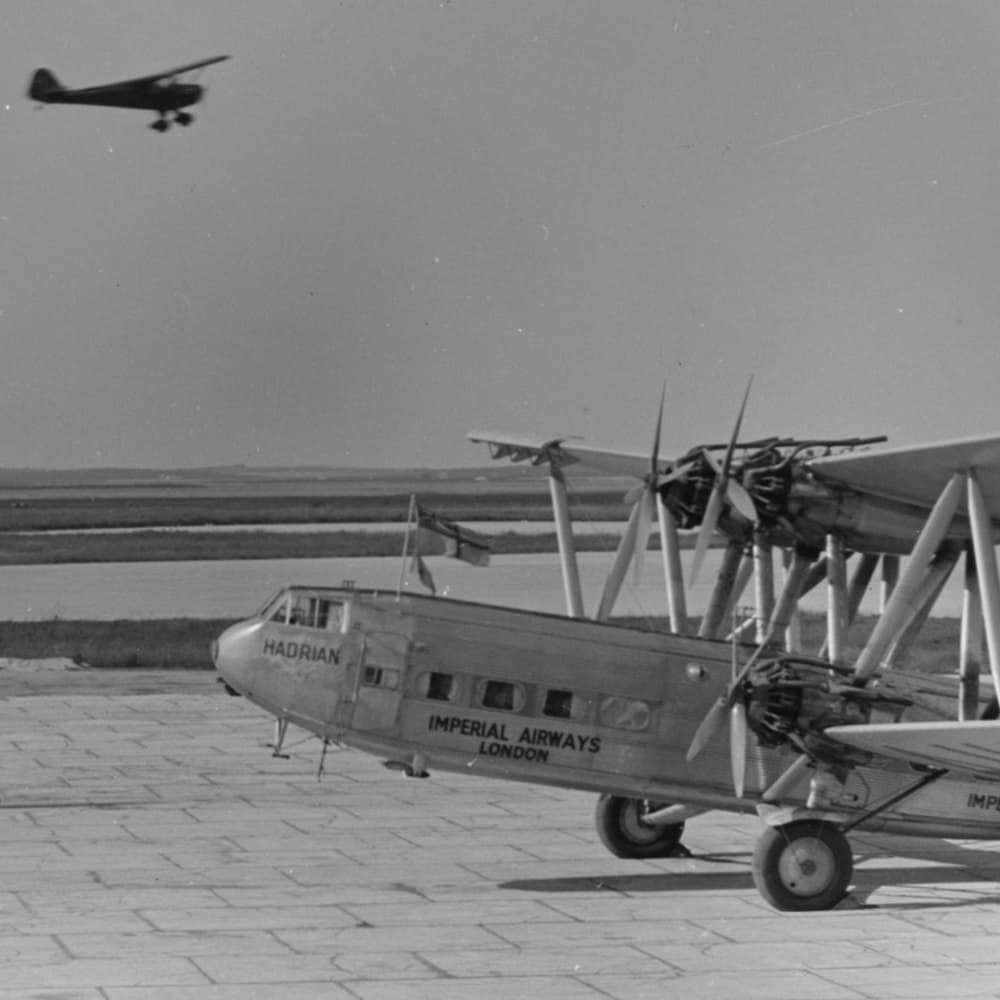
Some of that was down to the aircraft's gentle, forgiving flying characteristics and rugged construction. Some of it was down to the sheer conservatism of the whole operation: slow speeds, careful crews, generous margins. Whatever the mix, the result was an airliner that made the dangerous business of early flight feel as safe as a ride in a first-class railway carriage.
Gone Without a Trace
The HP.42 was already an anachronism by the late 1930s, a biplane in the emerging age of the sleek all-metal monoplane, and the coming of the Second World War finished it off. The whole fleet was pressed into RAF service, and one by one the aircraft were lost, wrecked in accidents, blown apart in a gale, worn out. By 1940 they were all gone, and not a single HP.42 survives anywhere in the world today.
That is a genuine loss, because there has never been anything else quite like it. The HP.42 was the last, grandest expression of an idea the jet age swept away: that getting there should be slow, comfortable, dignified, and above all safe. It never broke a speed record. It broke something better, the assumption that early flight had to be dangerous. For a decade of Empire, the great biplane simply carried everyone home.
Sources: Wikipedia; Airfix Workbench; PlaneHistoria; This Day in Aviation.


0 commentaire