
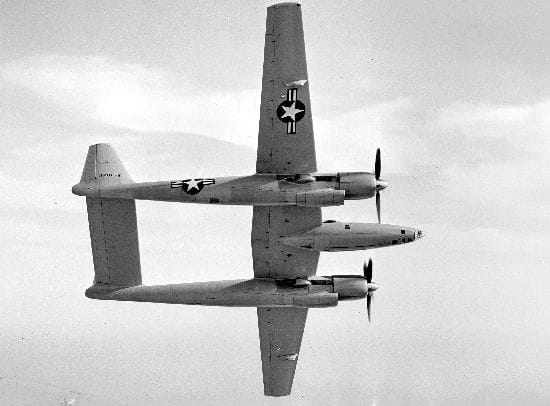
On the afternoon of 7 July 1946, the richest man in America climbed into an unproven silver aircraft and took off alone, against the advice of everyone around him. Just over an hour later, Howard Hughes was lying in the burning wreckage of a Beverly Hills living room, his chest crushed, his body scorched, his life hanging by a thread.
The aircraft was the Hughes XF-11, a sleek twin-boom spy plane he had staked his reputation on. Its maiden flight would nearly kill him — and change the rest of his life.
Informations clés
- Taper: Prototype photo-reconnaissance aircraft
- Fabricant: Hughes Aircraft Company, for the U.S. Army Air Forces
- Moteurs : two Pratt & Whitney R-4360 Wasp Major radials, ~3,000 hp each, driving contra-rotating propellers
- Équipage: 2
- Vol inaugural : 7 July 1946, flown by Howard Hughes himself
- Construit: 2 prototypes (an order for 100 was cancelled at war’s end)
- L'accident : right engine’s rear propeller reversed pitch; the aircraft went down in Beverly Hills
- Hughes’s injuries: severe burns, crushed chest, collapsed lung, multiple broken ribs — he survived
A plane the Army didn't really want
The XF-11 was a child of the war and of Hughes's relentless lobbying. Back in 1943, with the backing of Elliott Roosevelt, the aircraft was ordered over the loud objections of the Army's own experts — a hundred of them, on the strength of Hughes's promises. When the war ended, that order collapsed to just two prototypes.
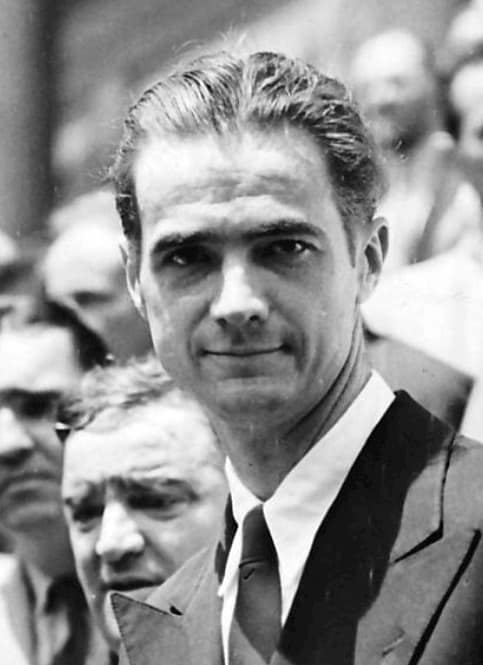
It was a big, beautiful machine: two enormous Pratt & Whitney Wasp Major radials, each swinging a set of contra-rotating propellers, mounted on a graceful twin-boom fuselage. On paper it would fly higher and farther than almost anything. Hughes, a genuinely gifted pilot, insisted on being the one to prove it.
Seventy-five minutes to disaster
He broke the plan almost immediately. The test called for a short, careful flight with the landing gear down. Instead Hughes retracted the gear, carried far more fuel than agreed, and stayed up. Then, more than an hour in, something failed deep in the right engine's propeller system.
A hydraulic leak caused the rear propeller on the right side to slip into reverse pitch. Suddenly one side of the aircraft was dragging like an anchor, hauling the nose around and dragging it down. Hughes, fighting for control, made the wrong call — he kept power on the failing side instead of the good one — and the aircraft kept sinking over the rooftops of Beverly Hills.
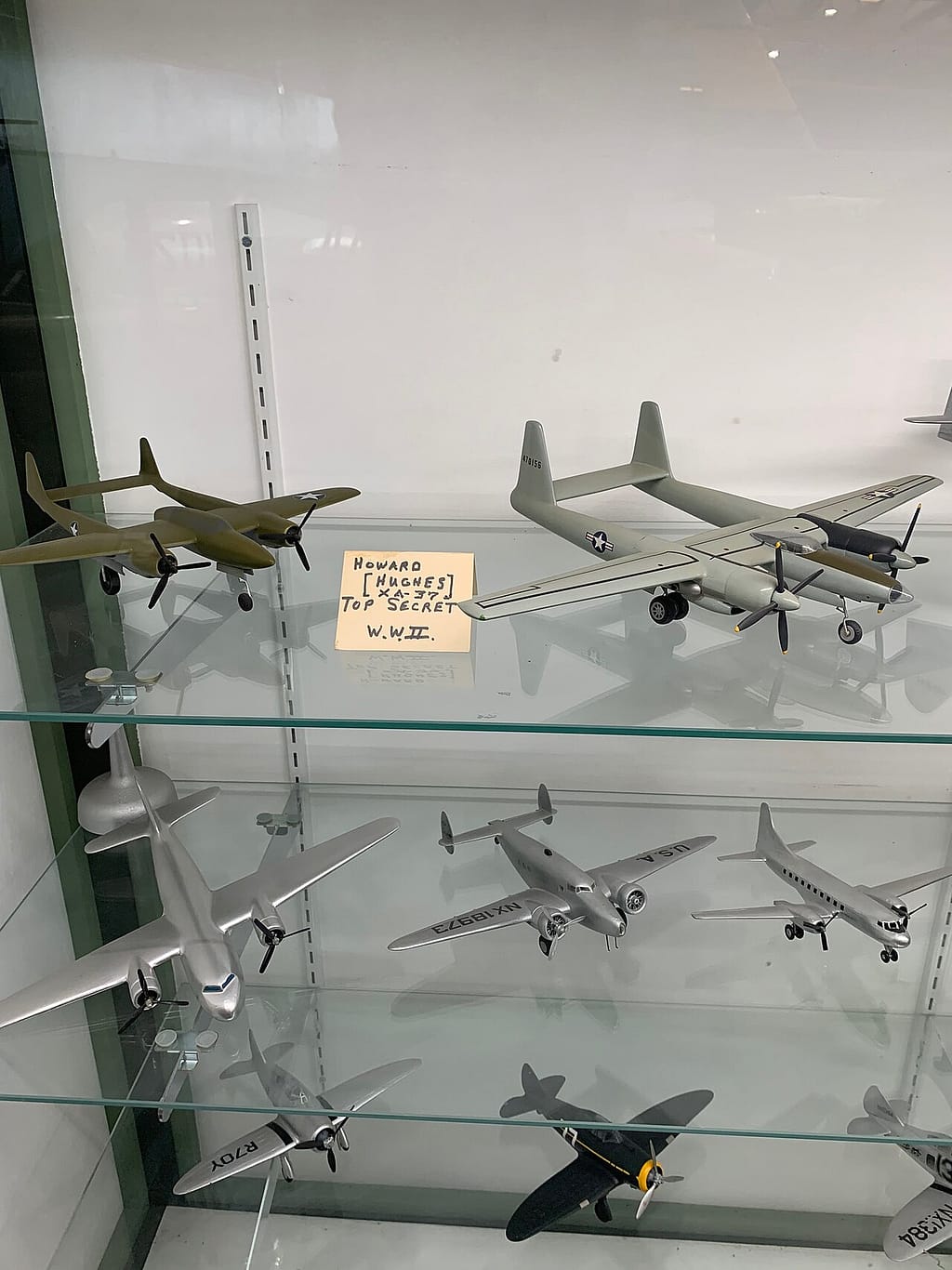
He tried to stretch his glide to the fairways of the Los Angeles Country Club and fell agonisingly short, clipping three houses. The aircraft tore through the neighbourhood and caught fire. That Hughes came out alive at all was down to a passing U.S. Marine, Sergeant William Lloyd Durkin, who dragged him from the flames.
The bed, the second plane, and the long shadow
Hughes should not have survived. Burns, a caved-in chest, a collapsed lung and a fistful of broken ribs kept him bedridden for months. Ever the engineer, he used the time to design himself a motorised, button-controlled hospital bed — a fussy, brilliant contraption often credited with influencing the adjustable beds hospitals use today. Less happily, the painkillers from those months would shadow him for the rest of his life.
The story has a quieter coda. A second XF-11, fitted with ordinary single propellers instead of the troublesome contra-rotating ones, flew without drama in April 1947. By then the world had moved on, and the programme was cancelled. The spy plane never entered service — but the flight that nearly destroyed it, and its creator, became one of aviation's most haunting near-misses.
Sources: Wikipedia; Bartlett & Steele, Empire: The Life, Legend and Madness of Howard Hughes; Air Force Historical Research Agency F-11 project file.
Articles similaires
Flying Pancake : le chasseur de la Marine qui n'a jamais volé
0 commentaire