
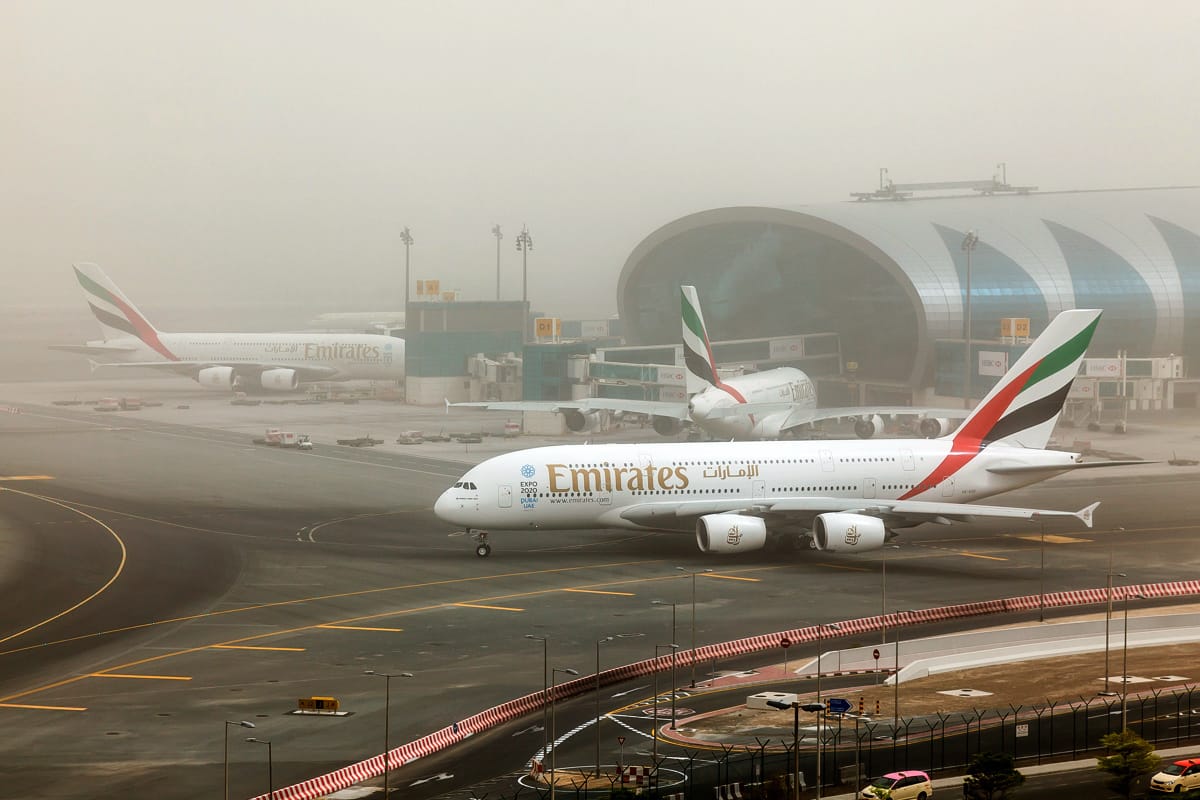
Last year the Middle East’s airlines made $7.2 billion. This year they are on track to lose $4.3 billion. That is an eleven-and-a-half-billion-dollar swing in twelve months, and it makes the Gulf the only major airline region on earth expected to finish 2026 in the red.
The war did that. But not in the way most people assume — the airports reopened months ago. What is bleeding the Gulf carriers now is quieter, more structural, and a lot harder to fix than a runway.
Informations clés
| 2025 result | $7.2 billion net profit, Middle East carriers |
| 2026 forecast | $4.3 billion net loss (IATA, June outlook) |
| Global picture | Industry net profit down from $45bn in 2025 to $23bn in 2026; margins 4.2% to 2.0% |
| Jet fuel | Forecast average $152 a barrel in 2026, against $90 in 2025 — up almost 70% |
| Fuel bill | Industry-wide, $252bn last year to a forecast $350bn; 31.4% of operating costs |
| Passenger demand | Middle East traffic down 13.9% year-on-year in June |
| Private jets | Gulf-originating business jet traffic down 46.5% since the war began |
How It Started
On 28 February 2026, the United States and Israel struck Iran. Iran hit back at US installations across the Gulf, and several civil airports took damage — Dubai, the busiest international airport in the world, along with Abu Dhabi, Kuwait and Bahrain. The UAE, Qatar, Bahrain and Kuwait shut their airspace outright. It reopened roughly a week later.
That week is over. The problem is that a large part of the aviation world has not come back.
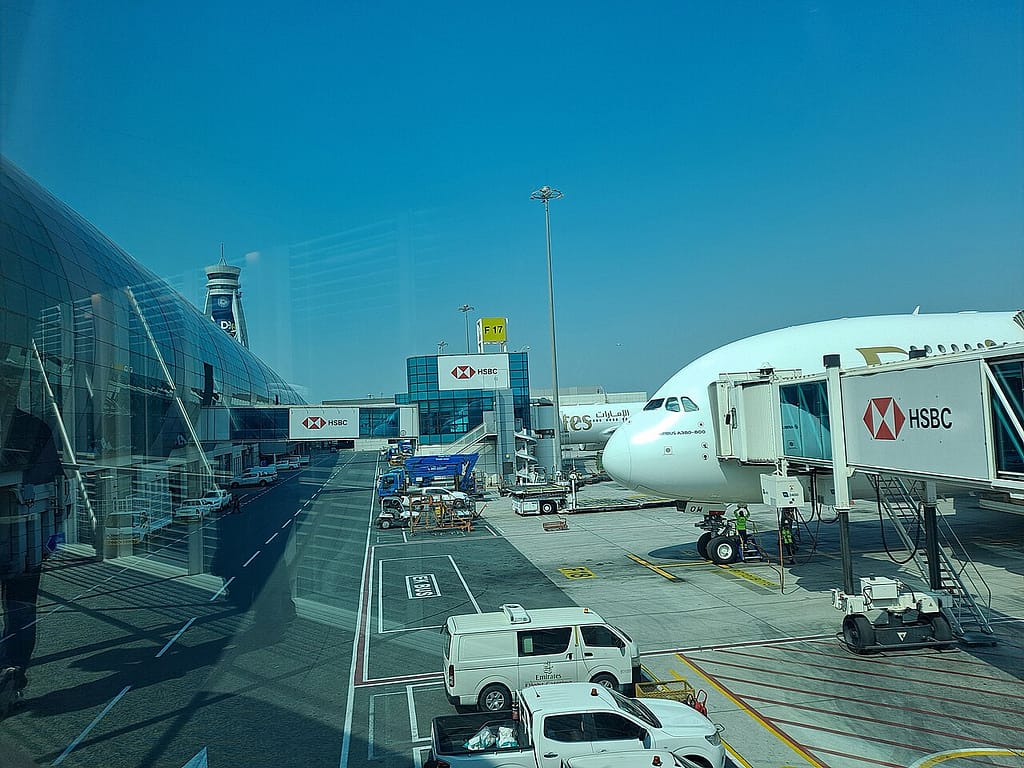
Emirates, Etihad and Qatar Airways are all flying again, but not at full stretch: Emirates president Tim Clark told the Financial Times in June that his aircraft were going out about three-quarters full. Meanwhile Air France is only now planning a late-August return. Lufthansa is aiming at September. British Airways, Cathay Pacific and Singapore Airlines are all looking at late October. Air Canada is not planning to be back before mid-January 2027. The European Union Aviation Safety Agency still advises operators to avoid the airspace of Bahrain, Kuwait, Qatar, the UAE and part of the Gulf of Oman until the end of August.
The Bridge Problem
Here is why that matters more in Dubai than it would in Denver. The Gulf carriers are not really point-to-point airlines. They are a bridge. The entire business model rests on funnelling enormous volumes of connecting passengers through one hub — Dubai, Doha, Abu Dhabi — and pushing them onward between Europe and Asia. Take away the volume and the maths stops working, no matter how good the product is.
The numbers show exactly that squeeze. IATA’s June data had Middle East passenger demand down 13.9 percent year-on-year. Over the same period, direct Europe-to-Asia traffic — the flights that skip the Gulf entirely — rose 11 percent. Passengers did not stop travelling. They stopped changing planes in the Gulf.
The routing penalty compounds it. Where airlines have to fly around disrupted airspace, they burn more fuel, run longer crew duty periods and get fewer hours out of each aircraft. Many now carry extra contingency fuel, which comes straight out of the payload they could have sold.
Fuel Is Doing the Rest
Even a carrier with perfect load factors would be struggling this year, because jet fuel has gone vertical. IATA expects an average of $152 a barrel in 2026 against $90 in 2025. The industry’s total fuel bill climbs from $252 billion to a forecast $350 billion, taking fuel from a quarter of operating costs to nearly a third.
Walsh also offered the single most legible number in the whole forecast: net profit per passenger is expected to fall to $4.50, half what it was last year. Across the industry, an airline now makes less on carrying you than it costs you to buy a coffee at the gate.
That pressure is not confined to the Gulf. Spirit Airlines ceased operations on 2 May. Air Baltic and Wizz Air are both restructuring under real financial strain. Thin-margin, fuel-exposed carriers are the first to go when the fuel line moves 70 percent.
Cargo Did Not Save Them
The obvious hedge would be freight, and it has not delivered. Middle East air cargo demand grew 5.6 percent year-on-year against a global 8.5 percent. Europe-to-Middle East cargo traffic sat 41.1 percent below the previous year. Gulf carriers move roughly 13 percent of the world’s air freight, and disruption to shipping through the Strait of Hormuz has genuinely pushed some urgent, high-value cargo into the air — but that is a spike, not a business plan.
The private jet market tells the same story in miniature. As of 10 August, business jet traffic originating in Gulf countries was down 46.5 percent since the war started, with Gulf-to-Europe flights off 41 percent.
Buying Back Confidence
Emirates has responded with something the industry has essentially never offered: travel insurance that still pays out if a war disrupts your trip. Conventional policies void cover in exactly that scenario, which is the whole reason nervous passengers stopped booking through Dubai. The airline has committed to getting stranded customers home even if that means buying them a seat on a competitor.
Dubai is pairing that with free hotel stays for long connections and complimentary packages for visitors. It is a straightforward bet: the hub only works if people believe they will get through it.
And there is one clear winner. Israel’s El Al has posted record profits, more than double last year’s, largely because international carriers have not come back and it faces almost no competition. Passengers have called the fares outrageous. They have also paid them.
The lasting damage may be none of the above. Once geopolitical risk gets written into airport valuations and investment models, it does not get written out again quickly. The airspace reopened in March. The risk premium is going to sit on the Gulf’s books for a lot longer than that.
Sources: IATA 2026 industry outlook and June traffic releases; Middle East Eye; Gulf News; Financial Times; EASA; WINGX; McKinsey.
0 commentaire