
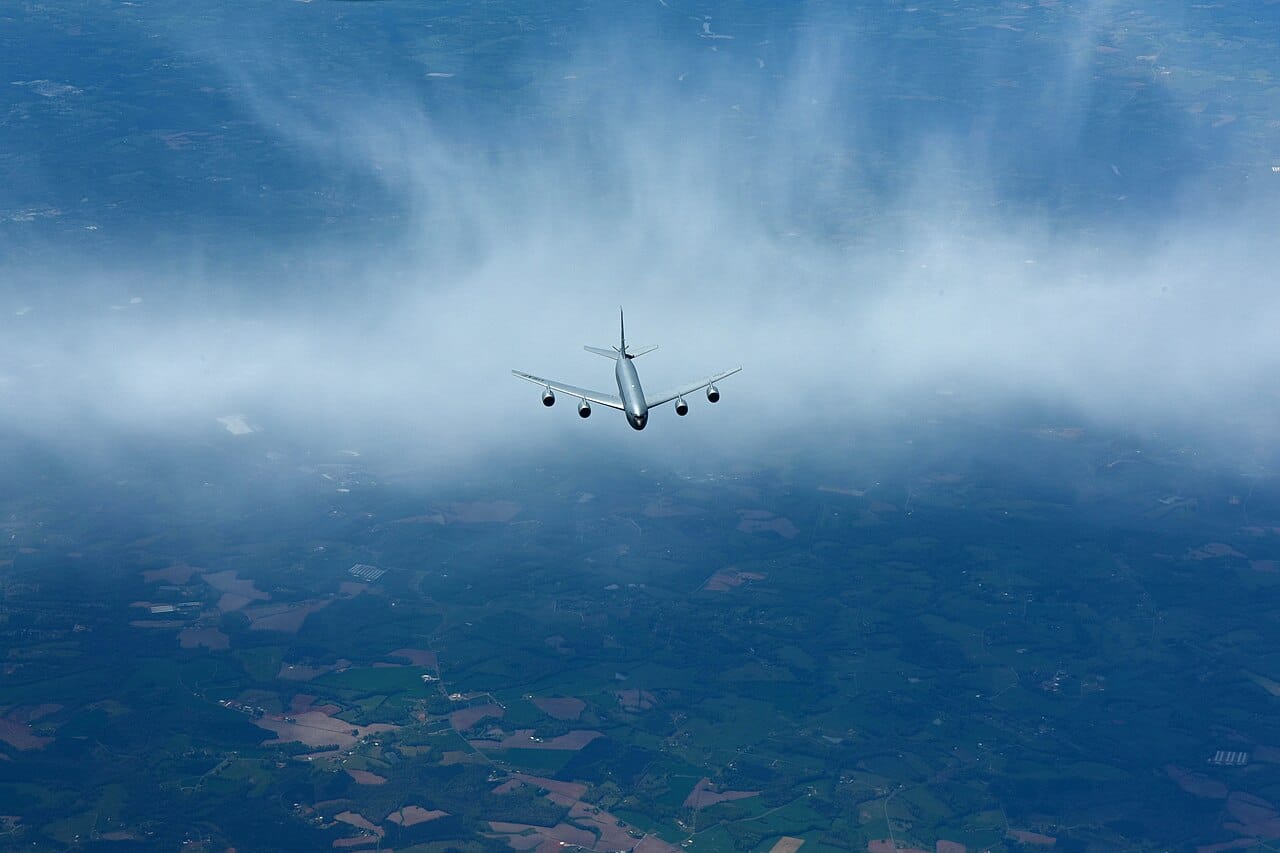
Look closely at the KC-135 that touched down at RAF Mildenhall on the afternoon of August 2 and something does not add up. The fuselage wears the serial 63-8017. The tail wears a different one: 63-8002. This is one airframe stitched together from two — a flying gas station that came home wearing a dead jet’s fin.
The story behind that mismatched tail is not a happy one. Back in March, 63-8017 was one of two Stratotankers that collided in the sky over western Iraq. The other tanker did not make it. This aircraft did — barely — and the fact that it flew again at all is a small monument to how far the U.S. Air Force will go to keep a sixty-eight-year-old jet in the fight.
Informations clés
- Aéronef: Boeing KC-135R Stratotanker, serial 63-8017
- Incident: Mid-air collision over western Iraq, 12 March 2026, during Operation Epic Fury
- The other jet: KC-135 callsign ZEUS 95 — lost with all six crew
- Damage: Upper vertical stabilizer torn away; landed at Tel Aviv Ben Gurion squawking emergency code 7700
- Repair: Replacement fin transplanted from 63-8002, a retired KC-135 pulled from storage
- Return to flight: Arrived RAF Mildenhall as REACH 564 on 2 Aug 2026, transiting home from Israel
- Service life: KC-135 in service since 1957; planned to fly until at least 2050
A Collision Over Western Iraq
On March 12, two KC-135s were working an Operation Epic Fury sortie — the sprawling U.S. air campaign tied to the fight with Iran — when they came together in mid-air. One of them, flying under the callsign ZEUS 95, went down near the Iraqi-Jordanian border. All six aboard were killed. U.S. Central Command confirmed the loss the next day and stated it was not the result of hostile or friendly fire.
The Pentagon later named the fallen crew: Maj. John A. Klinner, Capt. Ariana G. Savino and Tech. Sgt. Ashley B. Pruitt of the 6th Air Refueling Wing at MacDill Air Force Base; and Capt. Seth R. Koval, Capt. Curtis J. Angst and Tech. Sgt. Tyler H. Simmons of the 121st Air Refueling Wing at Rickenbacker in Ohio. It was one of the deadliest single losses of the entire campaign.
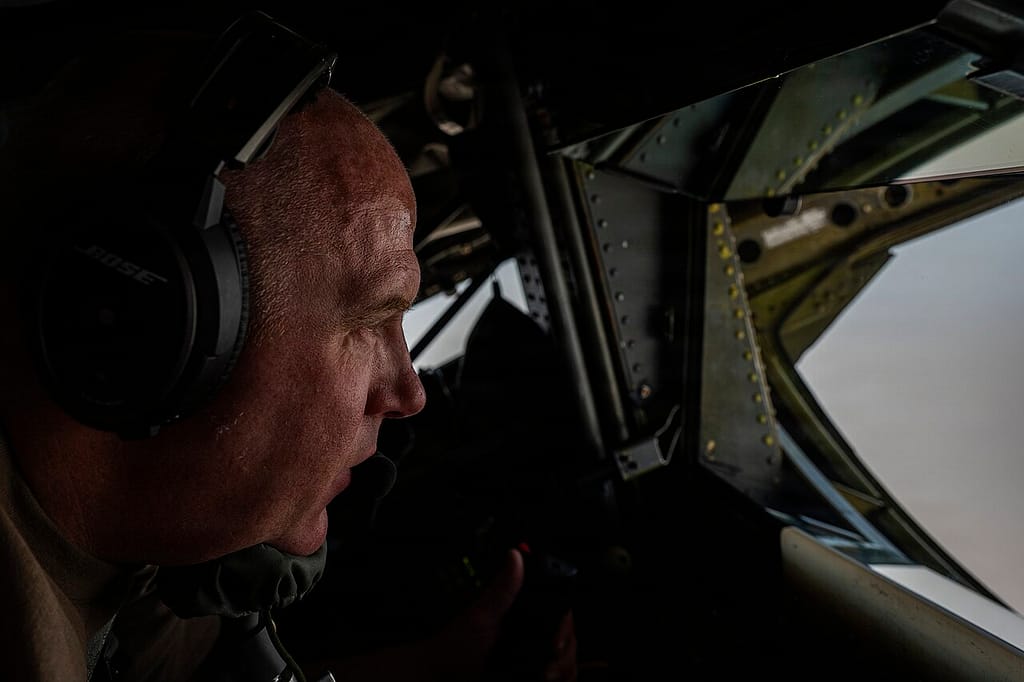
The second tanker, 63-8017, survived — but only just. The collision sheared away the upper half of its vertical stabilizer. With a chunk of its tail simply gone, the crew squawked 7700, the universal transponder code for an emergency, and nursed the crippled jet to Tel Aviv’s Ben Gurion International Airport, which has become a busy hub for American tankers during the conflict. It sat there for months, tail broken, going nowhere.
A Tail From a Retired Jet
You cannot exactly order a new vertical stabilizer for a jet Boeing stopped building in 1965. So the Air Force did the next best thing: it found a donor. The fin now bolted to 63-8017 came from 63-8002, another Stratotanker that had already been retired and put into storage. Engineers grafted the old jet’s tail onto the survivor, and the result is a genuine Frankenstein — an aircraft flying with two different serial numbers, one on the body and one on the fin.
On August 2 the repaired jet made its first flight since the accident, routing from Tel Aviv to RAF Mildenhall in England as REACH 564 on its way back to the United States. Photographers on the ground immediately clocked the mismatched serials.
More work is expected once the jet reaches home soil — not least a repaint to sort out the two-serial oddity, assuming the donor tail stays on permanently.
The Tanker That Refuses to Retire
That the Air Force would go to such lengths says everything about the KC-135. Despite entering service in 1957, the Stratotanker is still the most numerous refueling aircraft in American service, and it outlasted the much newer KC-10 Extender, which has already been retired. Current plans keep the type flying until at least 2050 — which means these airframes will be passing gas to fighters for close to a century.
Its replacement, the KC-46A Pegasus, has had a rocky introduction and is still not cleared to refuel every aircraft type. Until that is sorted, every airframe counts — and Operation Epic Fury has been brutal on the fleet, with several tankers also damaged on the ground by Iranian strikes on U.S. bases. In that context, cannibalizing a boneyard jet to save a battle-damaged one is not eccentric. It is arithmetic.
So 63-8017 flies on, a patchwork survivor of a collision that killed six of its own. The mismatched tail will probably be painted over soon enough. The reason it is there will not be forgotten quite so easily.
Sources: U.S. Central Command; Air & Space Forces Magazine; Defense News; The Aviationist; Havoc Aviation (@havoc_aviation).
0 commentaire