
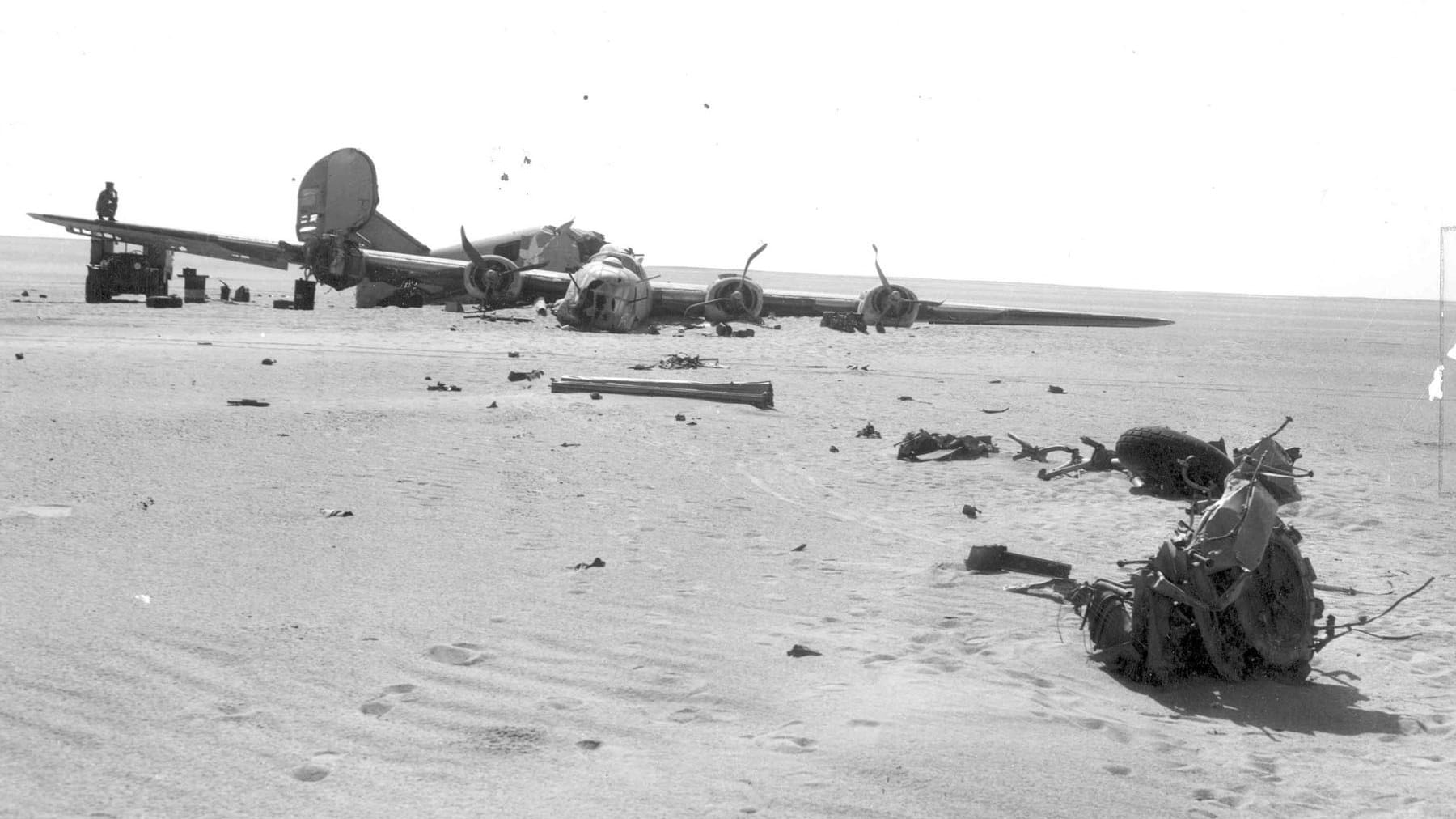
Le 27 février 1959, trois pétroliers britanniques traversaient en voiture une plaine de gravier au cœur du Sahara libyen, à des centaines de kilomètres de toute civilisation, lorsqu'une forme à double queue émergea de la chaleur aveuglante. C'était un bombardier lourd américain, brisé en deux juste derrière les ailes, gisant à l'endroit où il s'était posé sur le ventre. Aucune trace de pas n'était visible autour. Il n'y avait aucun corps à bord.
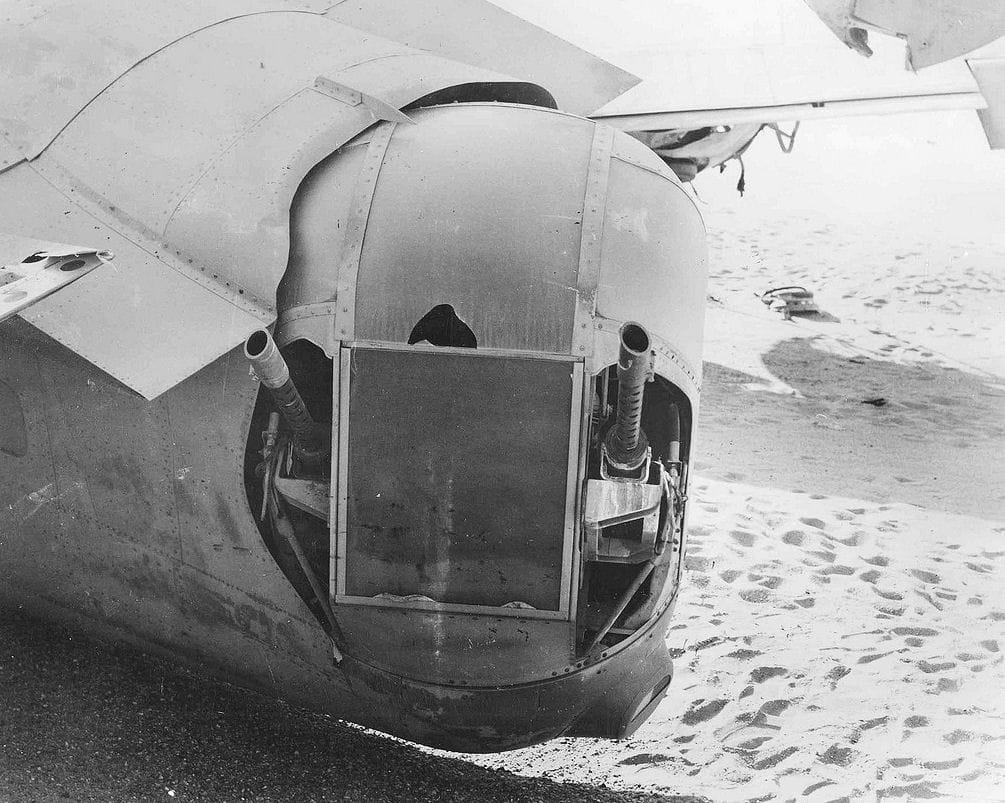
Lorsque les enquêteurs ont enfin pu pénétrer à bord, l'avion semblait figé dans le temps. Les mitrailleuses de calibre .50 fonctionnaient encore parfaitement. Une radio récupérée de l'épave et installée dans un C-47 marchait sans problème. Un thermos de thé, vieux de seize ans, était encore buvable.
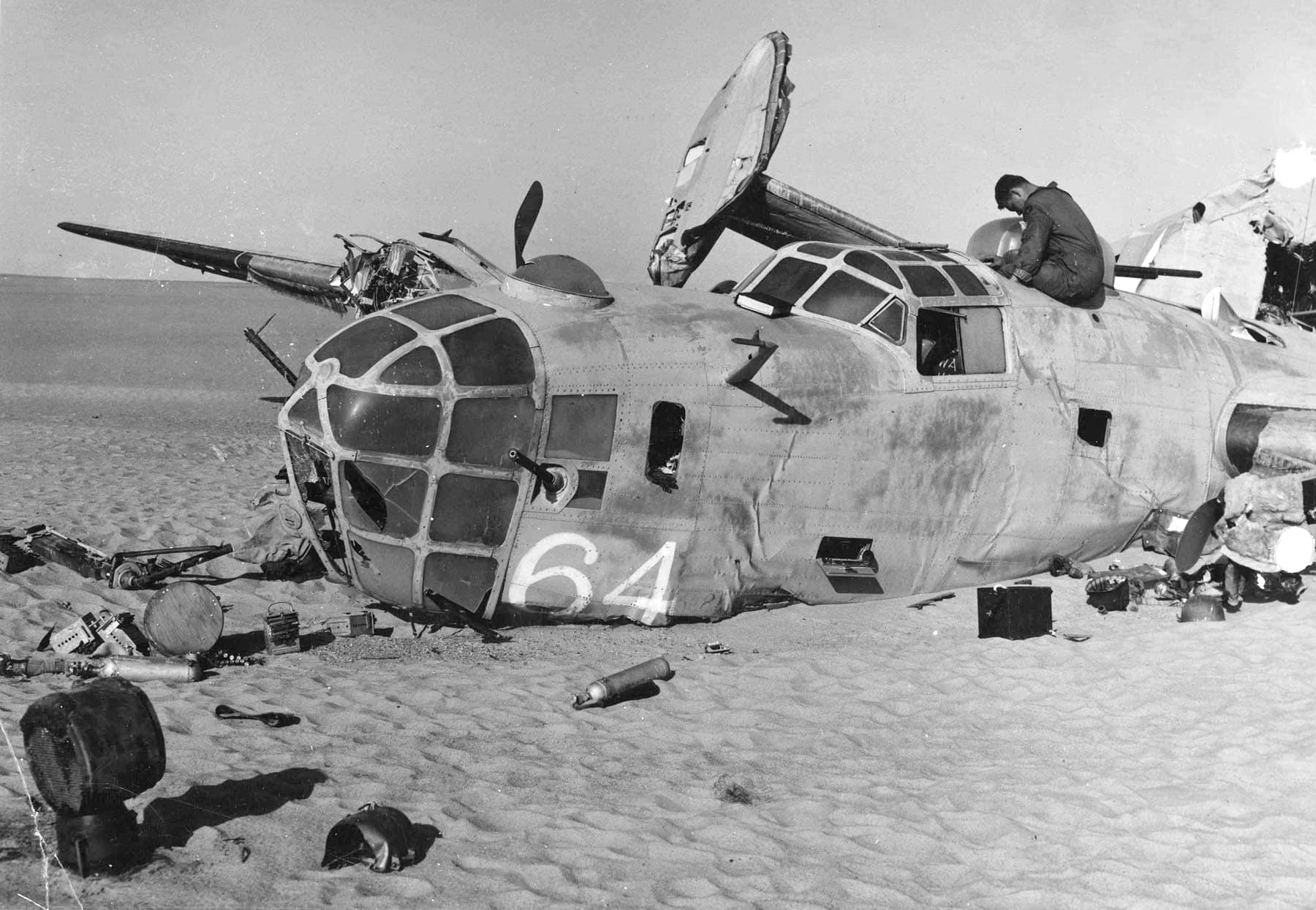
Le nom peint sur le nez se lisait Dame Be Good — un B-24D Liberator qui avait disparu avec neuf jeunes hommes dans la nuit du 4 avril 1943, lors de leur toute première mission de combat. Le désert avait gardé son secret pendant quinze ans. Et le plus dur restait à venir, 135 kilomètres plus au nord-ouest.
Informations clés : Lady Be Good
| Aéronef | Consolidated B-24D Liberator, numéro de série 41-24301 |
| Unité | 514e escadron de bombardement, 376e groupe de bombardement, Neuvième Force aérienne |
| Mission | Raid sur le port de Naples, 4 avril 1943 — le premier de l'équipage |
| Équipage | 9 — un tué lors du sauvetage, huit morts dans le désert |
| Lieu du crash | à environ 710 km (440 mi) à l'intérieur des terres, en bordure de la mer de sable de Calanscio |
| Trouvé | Repéré depuis les airs en 1958 ; atteint au sol en 1959 |
| Preuves clés | Le journal de poche du copilote Robert Toner, retrouvé en février 1960 |
| Aujourd'hui | Épave entreposée sur une base libyenne près de Tobrouk ; artefacts au Musée national de l’USAF |
Première mission, dans une tempête de sable
L'équipage était aussi novice que l'avion. Le pilote William Hatton et ses hommes étaient arrivés en Libye le 18 mars 1943 ; Dame Be Good Elle-même, baptisée du nom d'une chanson de George Gershwin, avait rejoint le 514e escadron de bombardement une semaine plus tard. L'après-midi du 4 avril, ils décollèrent de Soluch Field, près de Benghazi, dans le cadre d'un raid de 25 bombardiers sur le port de Naples.
Une tempête de sable a presque immédiatement perturbé la formation, et plusieurs bombardiers ont renoncé et ont fait demi-tour. Dame Be Good, L'un des derniers avions à décoller à 14 h 15, poursuivit seul sa route vers l'Italie. Au-dessus de Naples ce soir-là, la brume masquait la cible, et les archives qui nous sont parvenues laissent penser qu'aucun bombardement n'y fut effectué : les appareils participant au raid auraient soit touché une cible secondaire, soit largué leur cargaison en Méditerranée afin d'économiser du carburant pour le long voyage de retour.
Un roulement à deux réponses
Rentrant seuls à la base dans l'obscurité, l'équipage rencontra un problème qui, bien que paraissant anodin, prit toute son importance une fois compris. À 0 h 12, Hatton contacta par radio la station de radiogoniométrie de Benina pour obtenir un relèvement. On lui donna 330 degrés, une valeur parfaitement correcte. Cependant, l'antenne cadre unique de la station ne permettait pas de déterminer si le bombardier se trouvait au nord du terrain d'aviation, survolant la mer, ou déjà au sud, en direction du désert.
L'équipage, pour leur première mission de nuit, croyait survoler encore la Méditerranée. Ils passèrent directement au-dessus de Soluch – manquant les fusées éclairantes tirées pour attirer leur attention – et poursuivirent leur route vers le sud pendant deux heures, s'enfonçant toujours plus profondément dans le Sahara. Vers 2 heures du matin, le 5 avril, alors que les jauges de carburant tombaient en panne, les neuf hommes sautèrent en parachute dans l'obscurité qu'ils prirent pour de l'eau libre. Le carnet de poche de Toner, retrouvé dix-sept ans plus tard, consigna cette nuit en quelques traits de crayon.
“ John ” était le bombardier John Woravka. Son parachute ne s’ouvrit pas correctement et il mourut à l’atterrissage ; il fut le seul à échapper au drame. Les huit autres se retrouvèrent dans l’obscurité en tirant des coups de revolver et des fusées éclairantes, puis se rassemblèrent sur le sol désertique pour attendre l’aube.
Le bombardier vide, stabilisé par le pilotage automatique, continua sa course sur environ 26 kilomètres avant de s'écraser sur le ventre sur le gravier, glissant sur quelque 700 mètres et se brisant en deux. Un de ses moteurs tournait encore à l'impact. Personne ne le toucha pendant quinze ans.
Huit hommes, une demi-cantine
Les hommes croyaient avoir amerri près de la côte. En réalité, ils se trouvaient à environ 640 kilomètres (400 miles) à l'intérieur des terres. Ils se mirent en route vers le nord-ouest à pied, laissant derrière eux une traînée de flèches balisées avec des morceaux de parachute lestés de pierres, ainsi que des bottes et des gilets de sauvetage pointant vers des secours qui ne vinrent jamais.
À eux huit, ils disposaient d'une demi-gourde d'eau — rationnée, selon les termes de Toner, à “ 1 bouchon par jour ” — dans un désert où les températures de midi atteignaient environ 55 °C. Des spécialistes de la survie ont estimé par la suite que des hommes, dans ces conditions, pourraient parcourir entre 40 et 48 kilomètres. L'équipe de Hatton a parcouru environ 135 kilomètres en cinq jours.
Le 9 avril, cinq hommes – Hatton, Toner, le navigateur Dp Hays et les sergents Samuel Adams et Robert LaMotte – étaient à bout de forces. Les trois plus robustes, Guy Shelley, Harold Ripslinger et Vernon Moore, poursuivirent leur route vers le nord, à travers les dunes de 180 mètres de haut du désert de Calanscio, à la recherche de secours.
Toner continua d'écrire, en lignes de plus en plus courtes, pendant trois jours. La dernière entrée, datée du lundi 12 avril, se lit simplement ainsi : “ Pas d'aide pour l'instant, nuit très froide. ” De retour à Soluch, l'escadron avait depuis longtemps conclu que le bombardier avait disparu en mer ; les recherches s'étaient concentrées sur l'eau et n'avaient rien donné.
Trouvé par accident
Le désert a révélé l'histoire par fragments. En 1958, des équipages britanniques effectuant des relevés de prospection pétrolière pour la compagnie D'Arcy — qui allait bientôt être intégrée à BP — ont signalé le crash d'un avion dans le district de Kufra et ont transmis la position à la base aérienne de Wheelus. Aucun avion n'ayant été signalé dans la zone, personne ne s'est précipité ; l'épave a simplement été indiquée sur les cartes.
Puis vint la visite sur le terrain du 27 février 1959, lorsque le géomètre Gordon Bowerman et les géologues Donald Sheridan et John Martin arrivèrent sur les lieux. Bowerman écrivit à un ami qui commandait le Wheelus, lui fournissant la liste des noms des membres d'équipage trouvés sur leurs vêtements à l'intérieur du bombardier ; et soudain, un dossier d'équipage disparu vieux de seize ans fut rouvert.
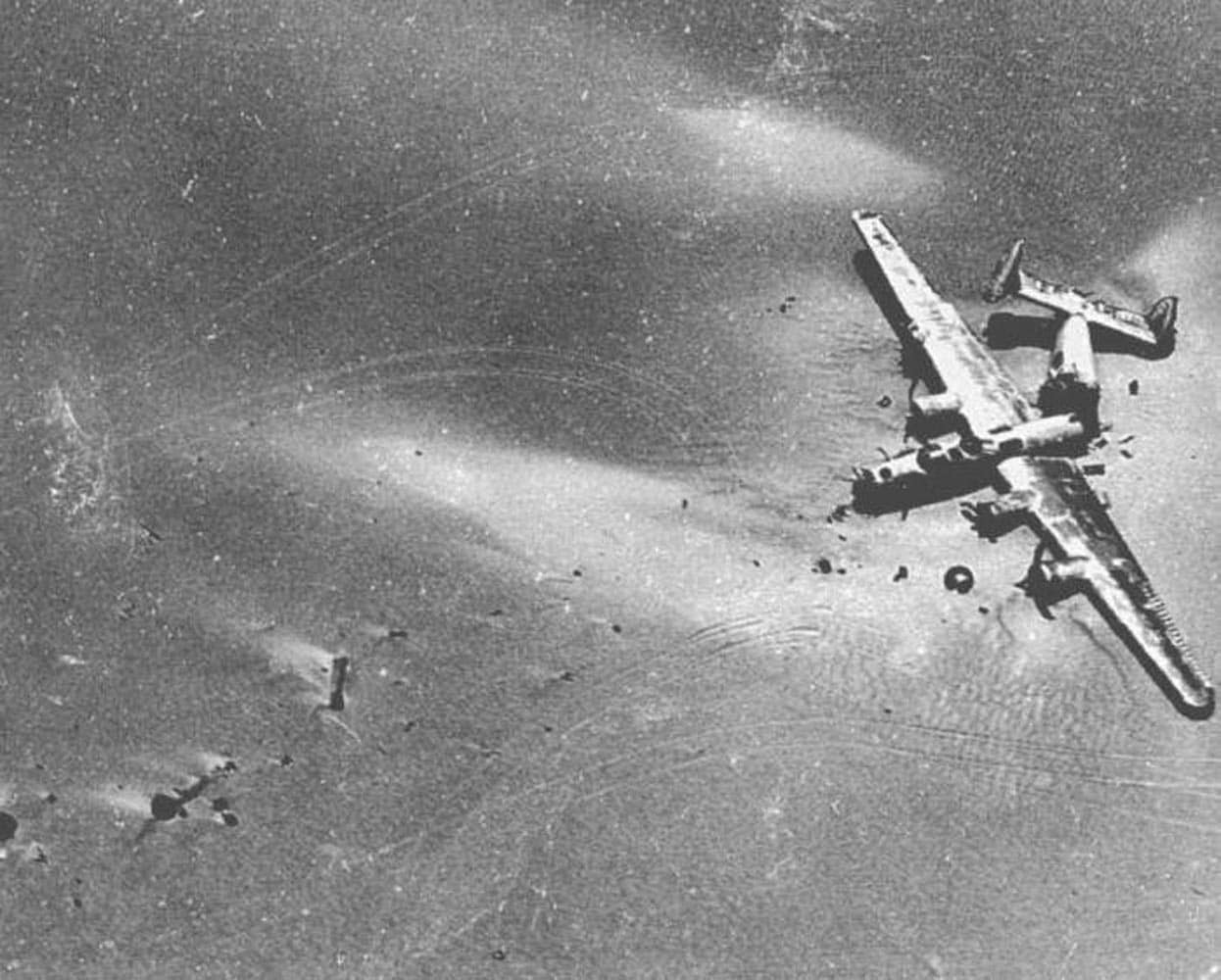
Les recherches terrestres et aériennes menées tout au long de l'année 1959 permirent de retrouver les balises de la piste de l'équipage, mais aucun membre de l'équipage. Elles durent finalement être abandonnées, le matériel ayant rendu l'âme sous l'effet de la chaleur. Puis, le 11 février 1960, une équipe de prospection de British Petroleum, explorant la mer de sable, découvrit cinq corps gisant côte à côte, entourés de gourdes, de lampes torches et de blousons de vol, ainsi que d'un petit carnet de poche.
Les notes de Toner ont stupéfié les enquêteurs. Huit hommes, presque sans eau, avaient parcouru une distance trois fois supérieure à ce que l'on croyait possible et avaient survécu pendant huit jours. Cette nouvelle a fait sensation. Vie Le magazine, ainsi que l'armée de terre et l'armée de l'air américaines, ont lancé une expédition conjointe, l'opération Climax, pour retrouver les quatre derniers hommes.
Shelley fut retrouvé en mai 1960 par des ouvriers pétroliers, à environ 34 kilomètres du groupe de cinq. Quelques jours plus tard, un hélicoptère repéra Ripslinger sur le flanc d'une dune, 42 kilomètres plus loin ; le mécanicien de bord avait parcouru plus de 160 kilomètres à pied avant sa chute. En août, Woravka fut retrouvé sous son parachute non ouvert, à quelques kilomètres seulement du point de largage.
Vernon Moore n'a jamais été officiellement retrouvé. Une patrouille de l'armée britannique dans le désert avait enterré des restes non identifiés dans la même zone en 1953, ignorant qu'une personne y était portée disparue ; les chercheurs soupçonnent, sans pouvoir le prouver, qu'il s'agissait de Moore.
La longue ombre de la dame
Une fois l'appareil identifié, l'armée américaine a pris une décision à la fois pragmatique et quelque peu troublante : elle a récupéré des pièces du bombardier parfaitement conservé et les a remises en service. Les équipages ont rapidement forgé une légende autour de ces pièces. Un C-54 équipé des émetteurs d'instruments du « Lady » aurait connu des problèmes d'hélice ; un C-47 ayant reçu son récepteur radio s'est abîmé en Méditerranée ; un Otter de l'armée américaine, transportant l'un de ses accoudoirs, s'est écrasé dans le golfe de Syrte – et, selon la légende, l'accoudoir figurait parmi les rares débris échoués sur le rivage.
Le reste de son existence fut plus paisible. En 1968, une équipe de la Royal Air Force spécialisée dans le désert récupéra un moteur et d'autres composants à des fins d'étude technique, et des collectionneurs de souvenirs dépouillèrent peu à peu la cellule au fil des décennies. En août 1994, le gouvernement libyen transféra les vestiges de l'épave sur une base militaire près de Tobrouk, où ils se trouvent encore aujourd'hui.
Morceaux de Dame Be Good — et le vitrail commémoratif de la chapelle de Wheelus — sont aujourd'hui conservés au Musée national de l'US Air Force. Le Musée de l'intendance de l'armée de terre conserve les objets du quotidien : montres, carte de survie, gourde, blouson de vol. Une montre-bracelet Elgin, retrouvée dans le désert, fonctionnait encore parfaitement lorsque des ingénieurs l'ont testée en 1968. Les hommes à qui elle appartenait n'avaient été victimes que d'un roulement à billes aux deux fonctions.
Sources : Wikipédia ; Musée de l’intendance de l’armée américaine ; Archives nationales américaines (The Unwritten Record) ; Musée national de l’US Air Force ; Damn Interesting
Questions connexes
Qu'était-ce que Lady Be Good ?
Le Lady Be Good était un bombardier B-24D Liberator de l'US Army Air Forces qui disparut avec neuf membres d'équipage le 4 avril 1943, lors de sa première mission de combat, un raid sur Naples. L'appareil survola sa base dans une tempête de sable et tomba en panne de carburant au-dessus du Sahara libyen. Son épave ne fut retrouvée qu'en 1958-1959.
Où a-t-on trouvé Lady Be Good ?
Le Lady Be Good a été découvert au cœur du Sahara libyen, à environ 710 kilomètres (440 miles) à l'intérieur des terres, en bordure du désert de Calanscio. Des équipes britanniques de prospection pétrolière ont repéré l'épave depuis les airs en 1958 et l'ont atteinte au sol en 1959. Elle était restée intacte dans le désert pendant une quinzaine d'années.
Qu'est-il arrivé à l'équipage du Lady Be Good ?
Les neuf membres d'équipage du Lady Be Good périrent. Croyant survoler encore la Méditerranée, ils sautèrent en parachute dans le désert lorsque le bombardier tomba à court de carburant. L'un d'eux mourut lors du saut ; les huit autres survécurent à l'atterrissage mais périrent en traversant le Sahara. Le journal intime du copilote Robert Toner, retrouvé en 1960, relate leur calvaire.
Quel type d'avion était le Lady Be Good ?
Le Lady Be Good était un Consolidated B-24D Liberator, numéro de série 41-24301, appartenant au 514e escadron de bombardement du 376e groupe de bombardement de la Neuvième Air Force. Le B-24, quadrimoteur, fut l'un des bombardiers américains les plus produits durant la Seconde Guerre mondiale. Quelques Liberator en état de vol subsistent aujourd'hui, comme celui qui a été restauré. B-24 Diamant Lil.
Comment le Lady Be Good a-t-il été conservé pendant quinze ans ?
L'air sec du désert a remarquablement bien préservé le Lady Be Good. Lorsque les enquêteurs l'ont atteint, les mitrailleuses de calibre .50 fonctionnaient encore, une radio récupérée était opérationnelle dans un autre appareil et un thermos de thé était encore buvable après seize ans. C'est grâce à cette conservation que les passionnés continuent de restaurer des appareils de guerre comme le Lady Be Good. PB4Y Privateer, un dérivé naval du B-24.
Pourquoi le Lady Be Good s'est-il écrasé ?
Le bombardier Lady Be Good s'est écrasé après avoir dépassé sa base de Soluch dans une tempête de sable et l'obscurité, dans la nuit du 4 avril 1943. L'équipage inexpérimenté, à sa première mission, a continué son vol au-dessus du désert, croyant survoler la mer, puis a sauté en parachute à court de carburant. Le bombardier vide a atterri sur le ventre et est resté introuvable pendant des années.
0 commentaire