
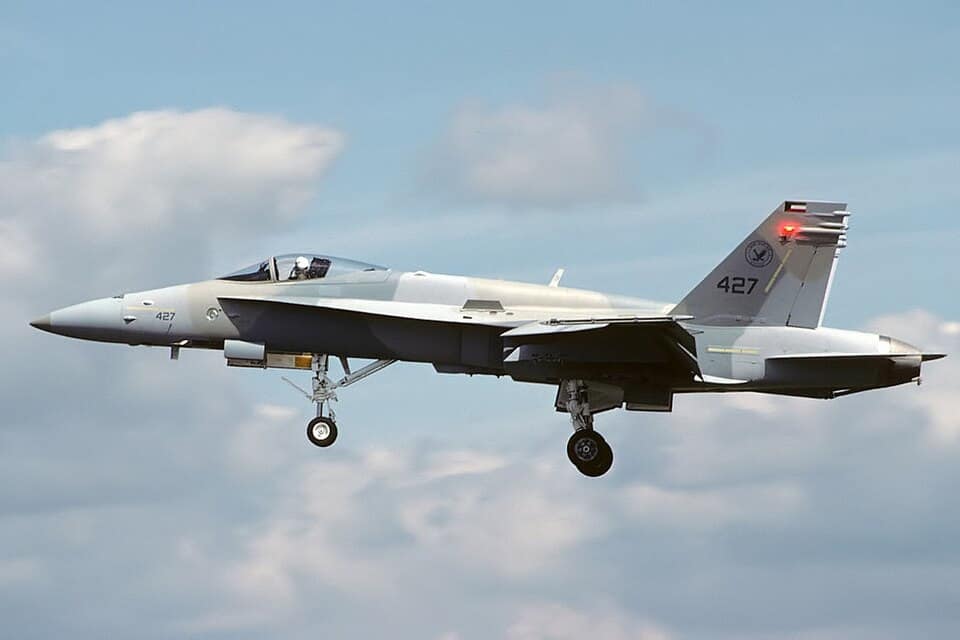
A Royal Malaysian Air Force technical delegation quietly visited Kuwait in June to discuss something that could reshape Southeast Asia's air power balance on a budget: buying Kuwait's surplus F/A-18C/D Hornets. The jets, replaced by Eurofighter Typhoons and F/A-18E/F Super Hornets in the Kuwait Air Force inventory, represent one of the few affordable paths for Malaysia to rebuild a credible fighter fleet without waiting a decade for new-build aircraft.
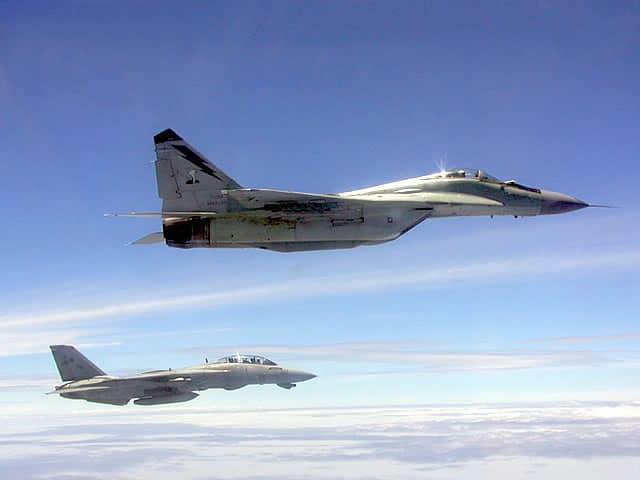
Malaysia's fighter situation is dire. The RMAF's fleet of MiG-29N Fulcrums — bought from Russia in the 1990s — has been effectively grounded for years due to spare parts shortages. The remaining F/A-18D Hornets (Malaysia already operates a small number) and ageing Hawk 208 light combat aircraft cannot cover the country's vast maritime territory alone. A second-hand Hornet deal with Kuwait could double Malaysia's operational fighter strength overnight.
The logic is simple: why spend $80 million per jet on new F-35 when proven, combat-ready Hornets are available at a fraction of the cost? Kuwait's aircraft were well-maintained, operated in a relatively benign environment, and still have significant airframe life remaining.
Informations clés
- Buyer: Royal Malaysian Air Force (RMAF/TUDM)
- Seller: Kuwait Air Force — transitioning to Eurofighter Typhoons and F/A-18E/F Super Hornets
- Aéronef: F/A-18C (single-seat) and F/A-18D (two-seat) Hornets
- Malaysia's current fleet: 8 F/A-18D Hornets, plus grounded MiG-29Ns and Hawk 208s
- Why second-hand: Fraction of new-build cost, immediate availability, existing RMAF Hornet experience
- Competition: Malaysia also considering Korean FA-50, Indian Tejas, and Swedish Gripen
The MiG-29 Graveyard
Malaysia's 18 MiG-29Ns arrived in 1995 as a prestige purchase — a way to signal that Kuala Lumpur could project power in the South China Sea. Three decades later, most are sitting in hangars. Russian spare parts became scarce after Western sanctions, and the maintenance burden of operating Russian and Western aircraft simultaneously proved unsustainable. The RMAF effectively operates a one-and-a-half-type fighter force: its eight F/A-18D Hornets and whatever Hawks can be generated on any given day.
For a country with 4,675 kilometres of coastline, two major coastlines (South China Sea and Strait of Malacca), and an exclusive economic zone overlapping with China's disputed claims, this is not enough.
Why Kuwait's Hornets Make Sense
Kuwait ordered 40 F/A-18C/D Hornets in 1988, with deliveries beginning in 1992 — shortly after the Gulf War demonstrated what American airpower could do. The aircraft served well but Kuwait has now committed to replacing them with 28 Eurofighter Typhoons and 28 F/A-18E/F Super Hornets. The Hornets are surplus — well-maintained, mid-life airframes with potential buyers across Asia and the Middle East.
For Malaysia, the attraction is threefold. First, the RMAF already operates Hornets and has the maintenance infrastructure, pilot training, and weapons inventory to absorb more. No new supply chain is needed. Second, used Hornets cost a fraction of new-build alternatives — potentially $15-25 million per jet versus $70-90 million for a new Gripen or FA-50 with weapons package. Third, they are available now, not in 2030.
The South China Sea Factor
Everything Malaysia does with its air force happens in the shadow of the South China Sea. Chinese Coast Guard vessels regularly operate near Malaysian waters around Luconia Shoals. Chinese military aircraft transit the area. Malaysia's response has been diplomatic restraint backed by minimal military capability — a posture that works only as long as nobody calls the bluff.
A doubled Hornet fleet, armed with Harpoon anti-ship missiles and JDAM precision bombs, would give the RMAF genuine maritime strike capability. It would not match China's air power, but it would raise the cost of any coercive action significantly. Sometimes the point is not to win the fight — it is to make the fight expensive enough that it never starts.
The Kuwait delegation visit is exploratory. No contract has been signed. But the fact that Malaysian fighter pilots and engineers are already walking around Kuwaiti hangars, inspecting airframes, and discussing logistics suggests this is more than window-shopping.
Sources: Alert 5, RMAF official statements, Kuwait Air Force, Jane's Defence
Questions connexes
Why do air forces buy second-hand fighter jets?
Air forces buy second-hand fighter jets because they deliver combat-ready capability at a fraction of new-build cost and are available almost immediately, avoiding the decade-long wait for new aircraft. Used jets from allies often retain significant airframe life. Denmark's transfer of retired F-16s to Argentina shows how surplus fighters keep serving worldwide.
What fighter jets does the Royal Malaysian Air Force operate?
The Royal Malaysian Air Force (RMAF/TUDM) operates eight F/A-18D Hornets, a fleet of Russian MiG-29N Fulcrums, and BAE Hawk 208 light combat aircraft. The MiG-29Ns, bought in 1995, have been largely grounded for years because of spare-parts shortages, leaving the small Hornet force as the effective backbone of Malaysia's fighter fleet.
Why were Malaysia's MiG-29 fighters grounded?
Malaysia's MiG-29N Fulcrums were effectively grounded because Russian spare parts grew scarce, especially after Western sanctions on Russia, and running Russian and Western jets side by side proved costly. Of the 18 MiG-29Ns bought in 1995 as a prestige purchase, most now sit in hangars rather than flying operational missions.
What is Kuwait replacing its F/A-18 Hornets with?
Kuwait is replacing its older F/A-18C/D Hornets with two newer types: the Eurofighter Typhoon and the Boeing F/A-18E/F Super Hornet. This fleet transition freed up Kuwait's legacy Hornets as surplus aircraft, which nations such as Malaysia evaluated buying to rebuild their own fighter strength affordably.
Did Malaysia buy Kuwait's F/A-18 Hornets?
No. Malaysia's Cabinet officially cancelled the planned purchase of Kuwait's retired F/A-18C/D Hornets on 6 February 2026. Although the second-hand deal could have roughly doubled Malaysia's operational fighter strength cheaply, it did not proceed, and Malaysia turned to alternatives such as the South Korean FA-50 to address its fighter shortfall.
What are the alternatives to buying used fighter jets for a small air force?
A small air force short on fighters can buy new light combat jets such as the Korean FA-50, India's Tejas, or the Swedish Gripen, or pursue barter and swap arrangements. India and Brazil's jet-for-jet barter talks show the creative deals nations use when budgets are tight.
0 commentaire