
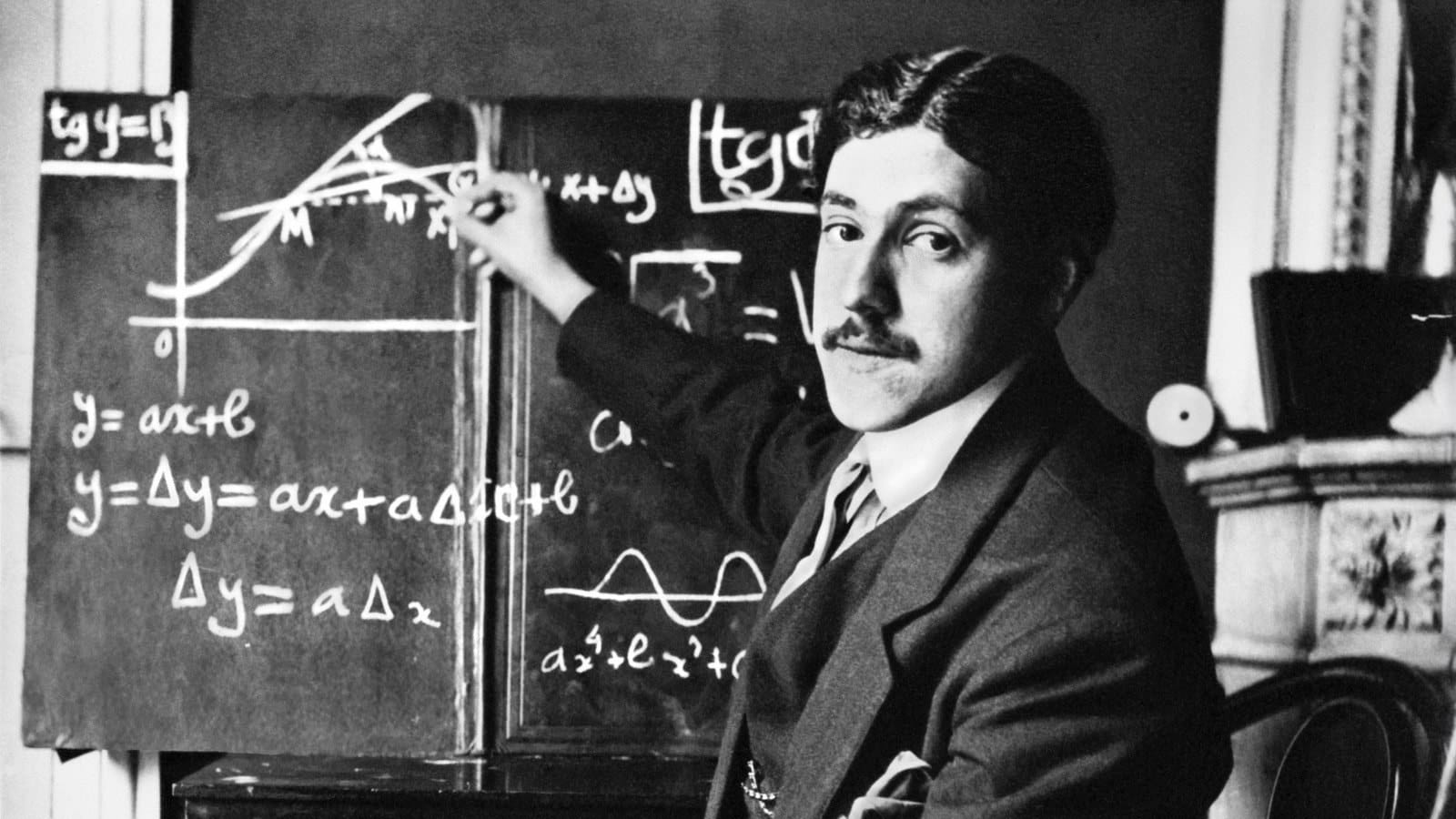
In August 1944, as Allied armies raced across France, a 52-year-old prisoner was put aboard a transport at Drancy bound for the Buchenwald concentration camp. The Vichy regime had already jailed him, together with his wife and children. Now the Nazis were deporting him. To spare himself, he had only to agree to put his considerable talents at the service of German aviation. He refused — and he kept refusing.
His name, then, was Marcel Bloch. The world remembers him by the name he took afterwards: Marcel Dassault. Today it is written on the flanks of every Rafale fighter and every Falcon business jet, and over the doors of the company that remains, nearly a century after he founded it, Europe's most stubbornly independent planemaker.
His life stretched from a Wright biplane circling the Eiffel Tower to the eve of the Rafale's first flight — ninety-four years that contain, in one man, almost the whole history of French aviation. This is the story behind the name.
Quick Facts: Marcel Dassault
| Né | Marcel Ferdinand Bloch, 22 January 1892, Paris |
| Décédé | 17 April 1986, aged 94 — honoured with a funeral at Les Invalides |
| First success | The Éclair propeller (1916), followed by the SEA IV fighter (1918) |
| Entreprise | Société des Avions Marcel Bloch (1930), today Dassault Aviation |
| Darkest chapter | Deported to Buchenwald in August 1944 for refusing to work for the Nazis |
| Le nom | His brother’s Resistance alias — a play on char d’assaut, “assault tank” |
| Landmark aircraft | MD.450 Ouragan, Mystère IV, Mirage III, Mirage IV, Falcon 20, Mirage 2000 |
| Héritage | The Rafale demonstrator flew on 4 July 1986, eleven weeks after his death |
A Boy, a Biplane and the Eiffel Tower
Marcel Bloch was born in Paris on 22 January 1892, the youngest of a doctor's four children. Electricity fascinated him first; then, one day in 1909, the sky above his schoolyard changed everything. The Comte de Lambert had taken off in a Wright biplane and steered it past the Eiffel Tower — a feat that stopped all of Paris in its tracks, a schoolboy included.
He would tell the story for the rest of his life, and it lost nothing in the retelling.
He trained at the Breguet electricity school, then graduated in 1913 from the École Supérieure d'Aéronautique. When the Great War came, the young engineer at the Chalais-Meudon aeronautical laboratory made his name with a propeller: the Éclair, or “lightning”, of 1916, whose efficient laminated design was adopted for French warplanes — including, by several accounts, the celebrated SPAD fighters.
With Henry Potez and Louis Coroller he then designed a two-seat fighter, the SEA IV of 1918. A large production order evaporated with the Armistice — the first of many lessons that in aviation, timing is destiny.
Bloch Builds, France Nationalises
Peace made aircraft unprofitable, so Bloch spent the 1920s in property development instead. What pulled him back was, once again, a spectacle above Paris: a lone American landing at Le Bourget in May 1927.
In 1930 he gathered a team and founded the Société des Avions Marcel Bloch. The decade that followed produced a family of all-metal Bloch aircraft — among them the MB.200 and MB.210 bombers and the stubby, tough MB.152 fighter.
Then politics intervened. In 1936 the Front Populaire government nationalised the French aircraft industry; Bloch's factories were folded into the state-owned SNCASO, where he was kept on as managing director, while a new company he created in December 1936 managed the licences on his designs. The entrepreneur had become, half against his will, a servant of the state.
When Germany invaded in 1940, Bloch fighters fought in the Battle of France — the MB.152 gave a good account of itself against a stronger enemy, but it was not enough. France fell, and for a Jewish industrialist who built warplanes, the Occupation left no safe ground to stand on.
The Prisoner Who Said No
The occupiers and their Vichy collaborators wanted Bloch's factories, his patents and his brain working for the Luftwaffe's war. He would not cooperate. For that refusal the Vichy government locked him up in Fort Montluc at Lyon — and, in a detail that still chills, imprisoned his wife and children with him.
From Montluc the path led through Drancy, the grim transit camp north of Paris, and finally, in August 1944 — with Liberation only months away — to Buchenwald. He was 52 years old. Fellow prisoners later testified that even inside the camp he refused offers to buy better treatment with his expertise.
He spent eight months in Buchenwald and left it a broken man in body: diphtheria contracted in the camp caused a paralysis that afflicted him from 1945 until 1953. His will, by every account, was untouched. He came home, looked at the ruins of French aviation, and started again.
A New Name for a New Life
The family chose to shed the name that the war had made a target. His elder brother, General Paul Bloch, had fought in the Resistance under an alias derived from char d'assaut — French for assault tank. Marcel adopted it: first as Bloch-Dassault in 1946, then, from 1949, simply Marcel Dassault. The new name honoured not a fresh start so much as the family's war — the one they had fought, and won, by refusing.
The reborn company wasted no time. On 28 February 1949 its MD.450 Ouragan — “Hurricane” — took to the air, becoming the first French-designed jet fighter to equip the French Air Force.
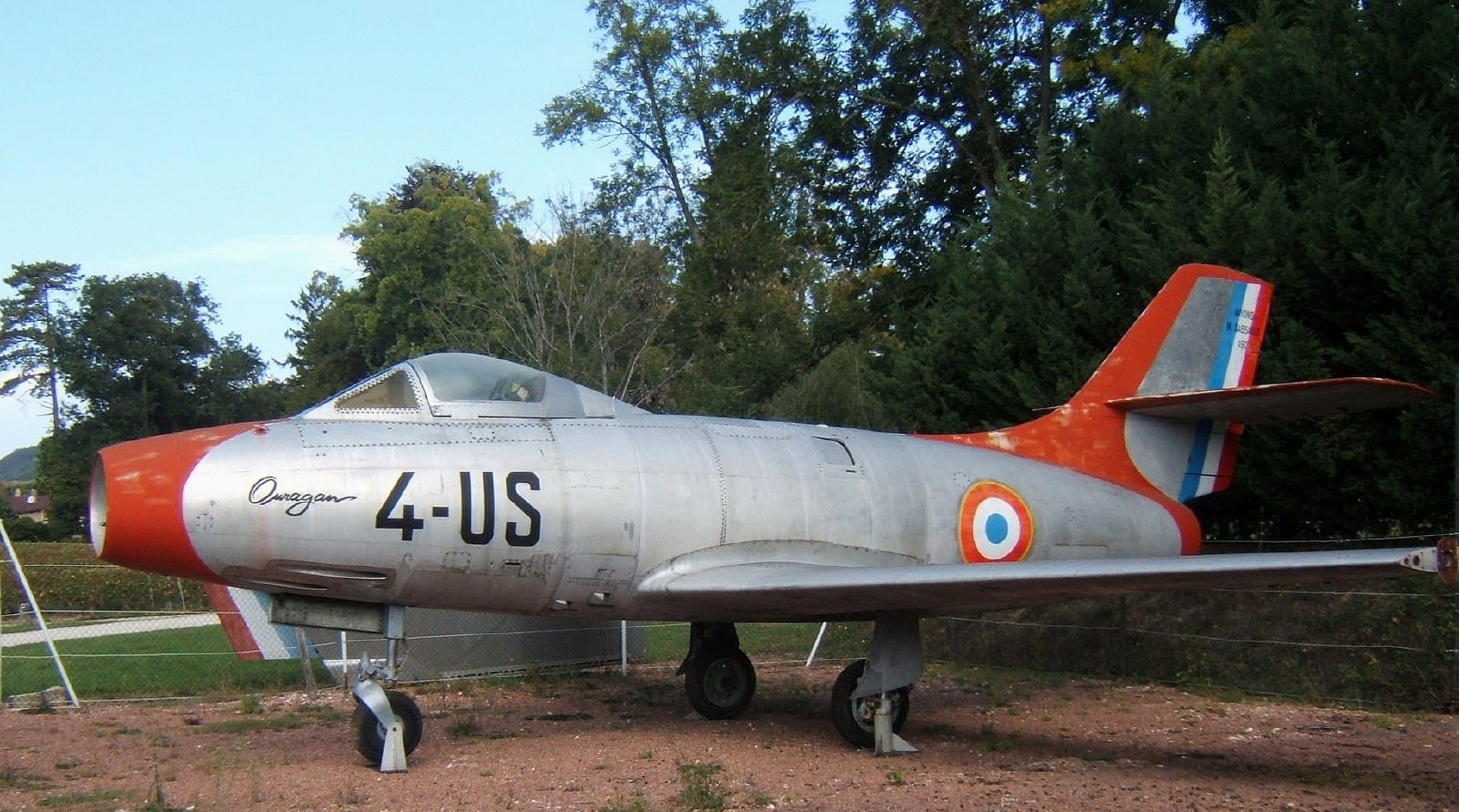
The Ouragan did something more important still: it sold abroad, to India and to Israel, opening the export markets that would sustain French military aviation for the rest of the century. A company barely five years out of the camps was already competing with the Anglo-Saxons.
Its successor sealed the reputation. The swept-wing Mystère IV was good enough that in 1954 the United States, through a NATO procurement programme, ordered 225 of them — American money buying French fighters, a decade after American soldiers had liberated their designer's country.
The Mirage Decades
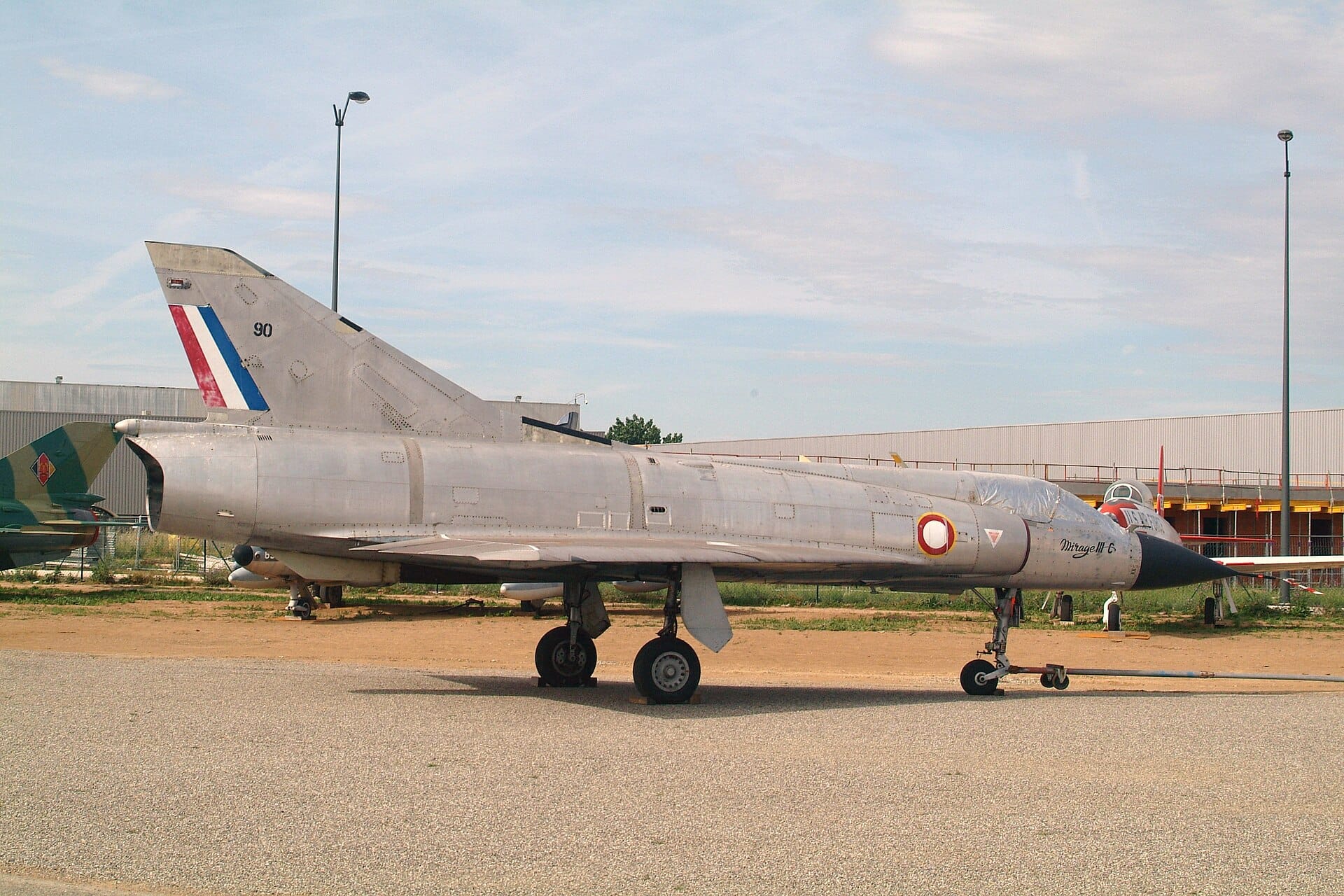
Then came the delta wing. The Mirage III, first flown in 1956, is widely credited as the first Western European aircraft to reach Mach 2 in level flight, in 1958. Israel's lightning victory in the Six-Day War of 1967, won in the opening hours by Mirage-led air strikes, turned the jet into a legend and its maker into a geopolitical force.
Roughly 1,400 Mirage III and derivative airframes were eventually built for air forces on five continents. The Mirage IV gave France the airborne arm of its independent nuclear deterrent from the 1960s. Dassault, the man, chose the names himself — and explained them with a storyteller's relish.
The civil side flourished too. The Mystère 20 business jet — the original Falcon — first flew in 1963, and it was an order from Pan Am that threw open the American market. Six decades later, Falcons such as the new 10X still carry the bloodline.
Dassault himself became one of France's richest men and one of its most recognisable eccentrics: owner of the magazine Jours de France, a film producer, a long-serving parliamentarian — deputy for the Oise, earlier a senator — and a holder of the Legion of Honour's Grand Cross, rarely seen without his trademark overcoat.
He never stopped working. In December 1985, aged 93, he was present as his company showed off the programme that would define its future: a sleek new delta-canard demonstrator called the Rafale — the “gust of wind”.
French television cameras captured the occasion at the company's works — the old man and the newest of his machines, eight decades after a Wright biplane over a schoolyard.
The Name on the Rafale
Marcel Dassault died in Paris on 17 April 1986, aged 94. The Republic gave him honours normally reserved for statesmen and soldiers: according to his company, his was the first funeral for a French industrialist ever celebrated at Les Invalides, under the dome where Napoleon lies.
Eleven weeks later, on 4 July 1986, the Rafale A demonstrator lifted off for the first time. He never saw it fly — yet every Rafale delivered since, from Cairo to New Delhi, carries his invented, defiant name into the sky. The company, still controlled by his family, remains the last of Europe's great planemakers to answer to a single household.
Questions connexes
Who was Marcel Dassault?
Marcel Dassault (1892–1986) was a French aviation pioneer, born Marcel Bloch, who founded the company known today as Dassault Aviation. Over a 94-year life he moved from early propeller design to fighters such as the Mirage and Rafale and to Falcon business jets. In 1944 he was deported to Buchenwald for refusing to build aircraft for Nazi Germany.
Why did Marcel Bloch change his name to Dassault?
Marcel Bloch adopted the surname Dassault after World War II. It came from his brother's French Resistance alias, a play on "char d'assaut," meaning assault tank. Bloch, who was Jewish, had survived deportation to Buchenwald, and the new name marked a fresh start. It is now written on every Rafale fighter and Falcon jet.
What did Marcel Dassault design first?
Marcel Bloch's first major success was the Éclair propeller of 1916, used on French military aircraft in World War I. He followed it with the SEA IV fighter in 1918. These early wins launched a career that would eventually produce France's most important postwar combat and business aircraft.
What aircraft did Dassault build?
Dassault built a long line of landmark aircraft, including the MD.450 Ouragan, Mystère IV, Mirage III, Mirage IV, Mirage 2000 and the Rafale, plus the Falcon 20 business jet. Founded in 1930 as Société des Avions Marcel Bloch, the firm remains Europe's most stubbornly independent planemaker.
When did Marcel Dassault die?
Marcel Dassault died on 17 April 1986, aged 94, and was honoured with a funeral at Les Invalides in Paris. Fittingly, the Rafale technology demonstrator made its first flight on 4 July 1986, just eleven weeks after his death, carrying forward the fighter lineage he had built.
Was Marcel Dassault sent to a concentration camp?
Yes. In August 1944 Marcel Bloch was deported to the Buchenwald concentration camp after refusing to place his aviation expertise at the service of German industry. The Vichy regime had already jailed him with his family. He survived, returned to France, and rebuilt his company under the new name Dassault.
What is Dassault Aviation known for today?
Dassault Aviation is known for the Rafale multirole fighter and the Falcon family of business jets, including the ultra-wide-cabin Falcon 10X. Founded by Marcel Dassault in 1930, it remains one of Europe's few independent combat-aircraft manufacturers, still run with the founder's fierce independence.
How long was Marcel Dassault's aviation career?
Marcel Dassault's career spanned roughly seven decades, from designing propellers in 1916 to the eve of the Rafale's first flight in 1986. His life stretched from watching a Wright biplane circle the Eiffel Tower to the dawn of France's modern fighter, mirroring the whole arc of early French aviation.
There are aviation fortunes built on luckier lives. There are few built on such an unbending one. Marcel Bloch was offered survival at the price of collaboration and turned it down; Marcel Dassault spent the four decades he won back building the aircraft that keep France sovereign in the air. The name on the Rafale is not just a brand. It is a refusal, remembered.
Sources: Dassault Aviation official biography of Marcel Dassault, Wikipedia, Encyclopaedia Britannica, Dassault Group historical timeline
0 commentaire