
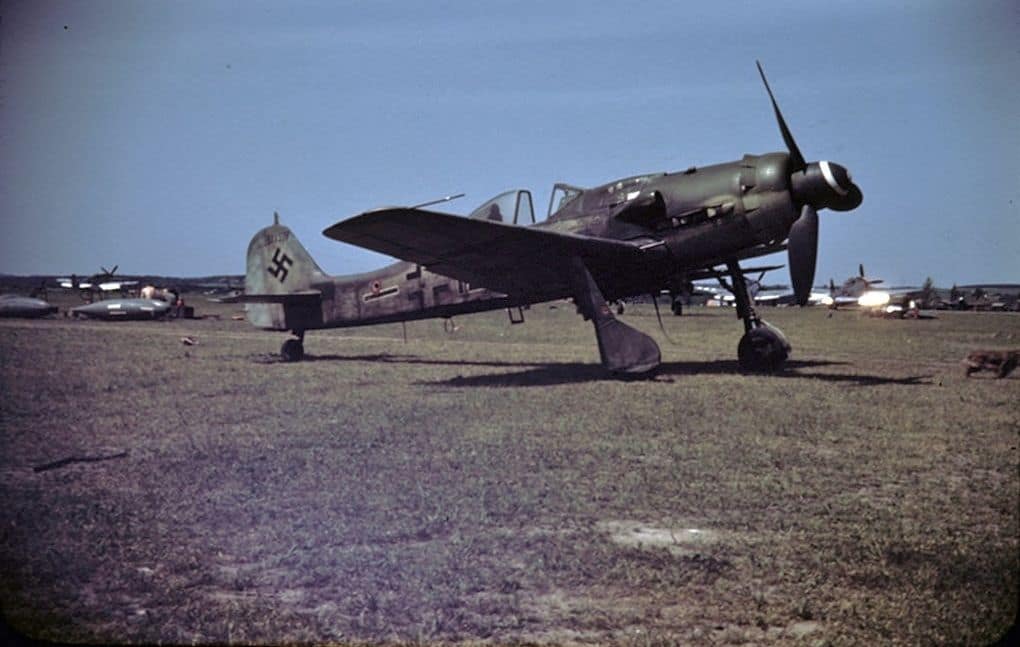
Before dawn on New Year’s Day 1945, while much of the Allied camp slept off its celebrations, hundreds of German fighters lifted off in near-total silence. No radios. Incomplete maps. Pilots who, in many cases, had been told only minutes earlier where they were going.
This was Operation Bodenplatte — “Baseplate” — the Luftwaffe’s largest single air operation of the war, and its most desperate. The plan was simple: hug the ground, cross the front at treetop height, and catch the Allied air forces parked wingtip to wingtip on their forward fields.
For a few violent hours it worked. Then the arithmetic turned monstrous. The Allies would replace their losses within a week. The Luftwaffe threw away something it could never replace.
Informations clés
| Date | 1 January 1945, New Year’s Day |
| Objectif | Surprise dawn strike on Allied airfields in Belgium, the Netherlands and France |
| Scale | Roughly 850–900 aircraft — mostly Fw 190s and Bf 109s, plus a handful of Me 262 jets |
| Airfields hit | About 17 |
| Allied losses | Estimates range widely; a careful modern count is ~305 destroyed, ~190 damaged — nearly all on the ground |
| German losses | Around 270–300 aircraft and, critically, ~140–150 experienced pilots killed |
| Secrecy | So tight that some German flak units were not told — and fired on their own aircraft |
| Résultat | A tactical surprise, a strategic catastrophe for the Luftwaffe |
A Cornered Air Force Rolls the Dice
By the winter of 1944–45 the Luftwaffe was a shadow of itself. German factories were still turning out aircraft, but the force was starved of fuel and, above all, of trained pilots. Bodenplatte was conceived to support the Ardennes offensive — the Battle of the Bulge — using fighters held back from defending the Reich.
Meant to open on 16 December, it was postponed again and again by weather until 1 January, the first day judged fit to fly.
A Secret So Tight It Bled
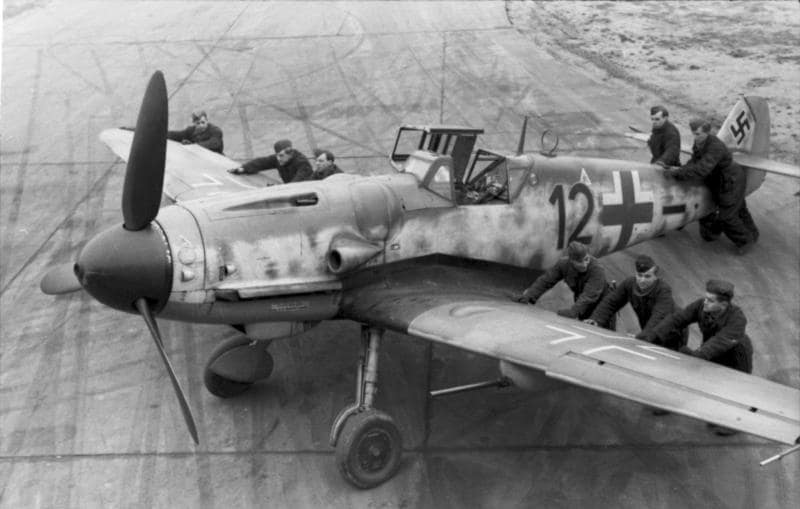
Surprise was everything, so the planners smothered the operation in secrecy: strict radio silence, deliberately incomplete maps, and orders forbidding most commanders to brief their pilots until moments before takeoff. Many airmen never fully grasped what they were doing.
Worse, not all German flak crews were let in on the plan. Flight paths crossed heavily defended rocket-launch zones, and roughly a quarter of the attacking units lost aircraft to their own anti-aircraft fire before they ever reached a target.
A historian’s overview of the operation and its cost.
The Dawn Attack on the Airfields
From around eight in the morning, wave after wave of Fw 190s et Bf 109s — with a few Moi 262 jets — swept across some seventeen Allied airfields. Fires raced through tightly packed Spitfires, Typhoons et Mustangs.
Yet the execution was ragged. Allied observers repeatedly noted the poor marksmanship of the strafing pilots, and later analysis found that only a third of the German units struck on time and with genuine surprise.
Why It Failed Where It Mattered
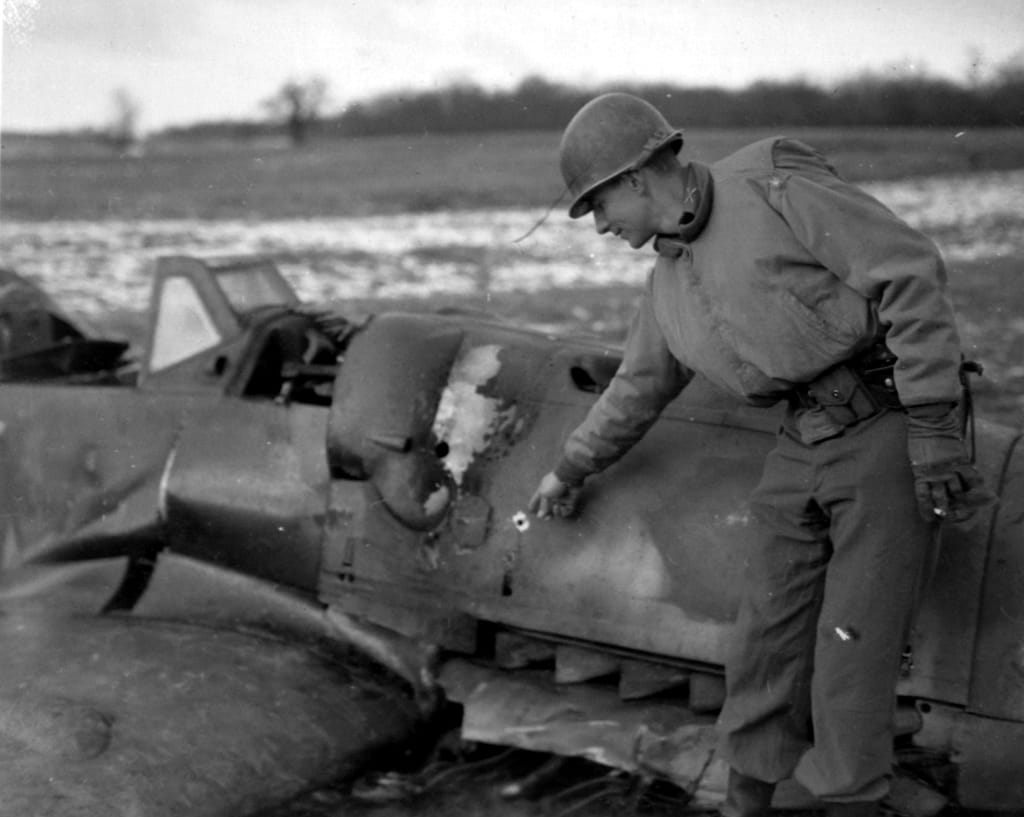
Measured in burned aircraft, Bodenplatte looked like a victory — somewhere between roughly 250 and 500 Allied machines destroyed, with the most careful modern count around 305 destroyed and 190 damaged. But almost all were parked and empty; Allied aircrew losses were slight, and replacements flew in within days.
The Germans, by contrast, lost on the order of 270 to 300 aircraft and, the wound that would not heal, some 140 to 150 experienced pilots killed and dozens more captured — including irreplaceable formation leaders.
A minute-by-minute reconstruction of the dawn strikes.
The End of the Luftwaffe as a Sword
Bodenplatte was the last large-scale offensive the Luftwaffe ever mounted. It weakened the German fighter arm past any hope of recovery. In the war’s final months the Jagdwaffe could no longer seriously contest the skies over the Rhine or the invasion of Germany.
The great gamble had spent the Luftwaffe’s last reserve of skill and leadership in a single sunrise — and bought almost nothing with it.
The jet attacks and the finale of Bodenplatte.
Sources: Wikipedia (Operation Bodenplatte); Danny S. Parker, To Win the Winter Sky (1998); Werner Girbig, Six Months to Oblivion (1975).
0 commentaire