
Informations clés
| Nationalité | Français 🇫🇷 |
| Victoires aériennes | 75 (official) — possibly 127 total |
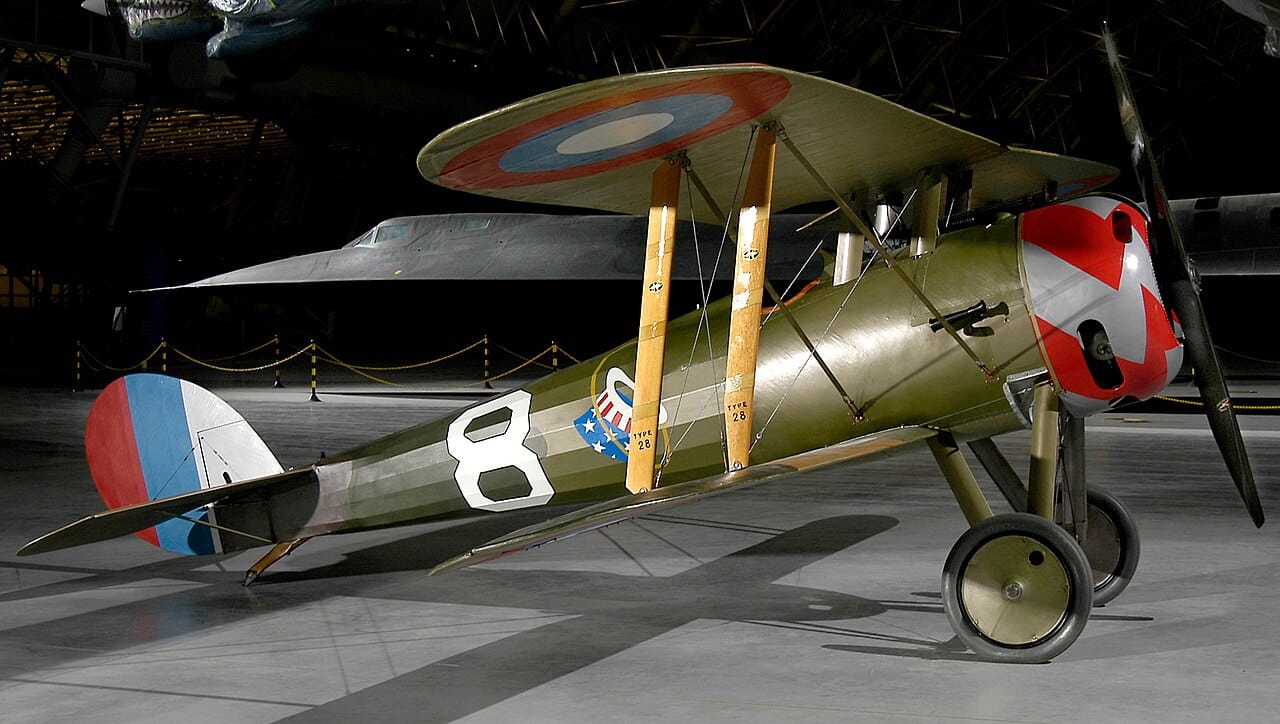
| Avions en vol | SPAD VII, SPAD XIII |
| Guerres | Première Guerre mondiale |
| Né / Décédé | 27 Mar 1894 – 18 Jun 1953 (age 59) |
| Unité | Escadrille N103 "Les Cigognes" |
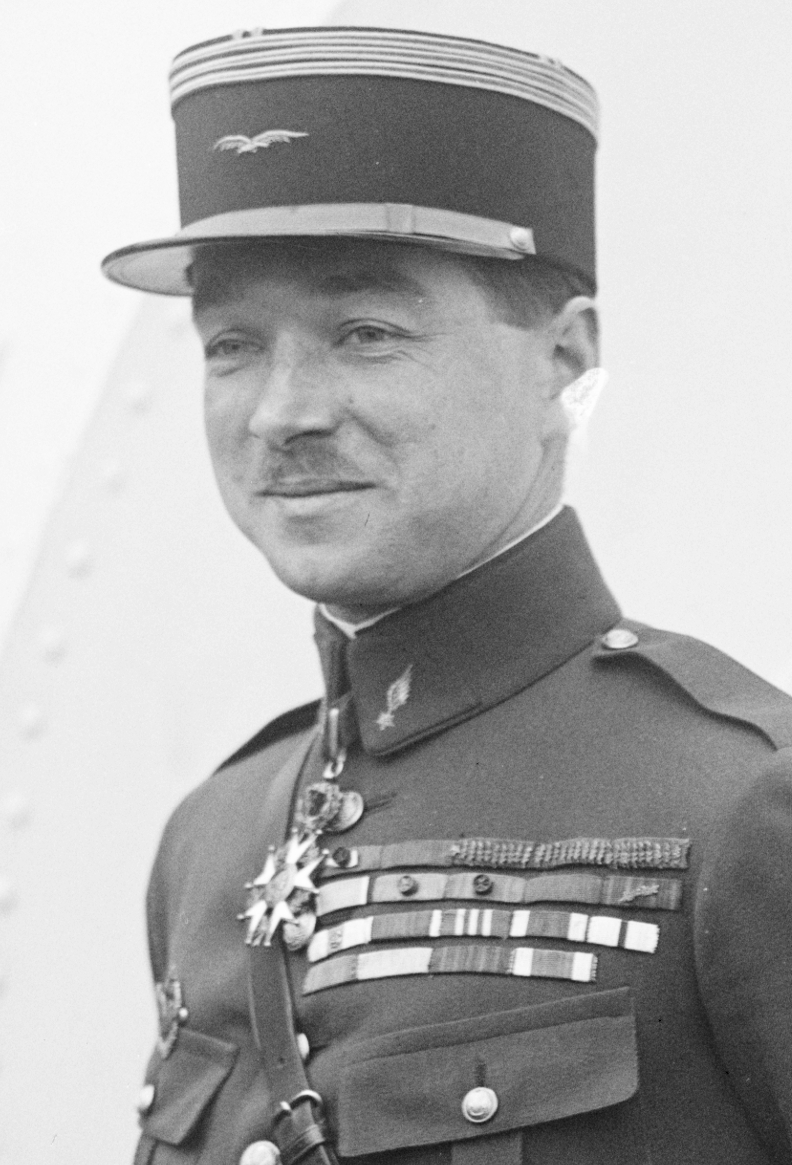
The greatest Allied ace of the First World War is not a household name. He survived the war, lived to old age, and never died in a blaze of glory — which may explain why history remembers his rivals more vividly. But in terms of sheer, cold-blooded aerial efficiency, no Allied pilot ever approached René Fonck. Not even close.
The Accountant of the Air
Born in 1894 in Saulcy-sur-Meurthe, France, René Paul Fonck came from a practical, working-class background. He trained as a civil engineer before the war, and he brought an engineer's systematic precision to aerial combat. He was not a reckless daredevil like Ball or a mystic figure like Guynemer — he was calculating, methodical, and utterly ruthless in his efficiency.
Where other aces might fire 300 rounds to down an enemy, Fonck regularly dispatched opponents with as few as five. Where others sought glory in head-on charges, Fonck studied his targets, identified vulnerabilities, positioned himself perfectly, and fired a single precise burst. He described aerial combat the way a hunter describes stalking game — patience, positioning, and one clean kill.
75 Confirmed Kills — and Perhaps More
Fonck finished the war with 75 officially confirmed aerial victories — the highest total of any Allied pilot in WWI. Many historians believe his actual count was considerably higher; Fonck was notoriously difficult about claiming kills without multiple witnesses, and many probable victories simply went uncredited.
His most extraordinary achievement came on September 26, 1918, when he shot down six German aircraft in a single day — six, verified, undeniable. In the morning sortie, he dispatched three in less than a minute. The Germans began to regard him as some kind of supernatural threat. His colleagues in the Storks squadron admired and slightly feared him — he was not warm or charismatic, but in the air he was untouchable.
The Survivor
Unlike almost every other ace in this series, Fonck survived. He never suffered a serious combat wound; his aircraft was never shot down. He achieved what every fighter pilot dreams of and almost none manage — mastery so complete that the war simply could not kill him. He retired from combat as the most decorated French aviator of WWI, with the Médaille Militaire, the Légion d'honneur, and a dozen other honours.
After the war, he attempted a transatlantic flight in 1926 — two years before Lindbergh — but his overloaded aircraft crashed on takeoff. He survived that too. He died in Paris in 1953 at age 59, the last of the great WWI aces to go.
Unbeatable, Unforgettable — If Underrated
History favours the romantic over the clinical, and Fonck was relentlessly clinical. But numbers do not lie. Seventy-five confirmed kills, zero losses in combat, and a reputation among his enemies as the most dangerous pilot in the Allied air forces. In aviation, that record speaks for itself — even when the man behind it chose not to.
“I put my bullets in the bull's-eye. Any who says otherwise does not understand aerial combat.”
— René Fonck — Ace of AcesWatch: René Fonck Documentary
Questions connexes
Who was René Fonck?
René Fonck was a French fighter pilot and the highest-scoring Allied ace of the First World War, with 75 official victories and possibly as many as 127 in total. A former engineer, he brought cold, systematic precision to aerial combat and survived the war, unlike many rivals.
How many victories did René Fonck have?
Fonck was officially credited with 75 aerial victories, the most of any Allied pilot in the First World War, and claimed a true total as high as 127. His tally exceeded even that of Britain's top ace, Edward Mannock.
What aircraft did René Fonck fly?
Fonck flew the French SPAD VII and SPAD XIII fighters with Escadrille N103, the famous "Les Cigognes" (The Storks) squadron. He was renowned for downing enemy aircraft with very few rounds, a mark of his methodical marksmanship.
Why is René Fonck not as famous as the Red Baron?
Fonck survived the war and lived to old age rather than dying spectacularly in combat, which dimmed his legend. Yet as the deadliest Allied ace, his record outstripped more celebrated pilots, including Britain's Edward Mannock.
Who was the top Allied ace of World War I?
René Fonck of France was the top Allied ace of the First World War, with 75 confirmed victories. Flying the SPAD with the elite "Les Cigognes" squadron, he outscored every other Allied pilot in the conflict.
What was Les Cigognes squadron?
"Les Cigognes" (The Storks) was an elite French fighter group of the First World War whose escadrilles produced many of France's leading aces. René Fonck flew with Escadrille N103 of this storied unit, whose pilots were among the most feared airmen of the war.


0 commentaire