
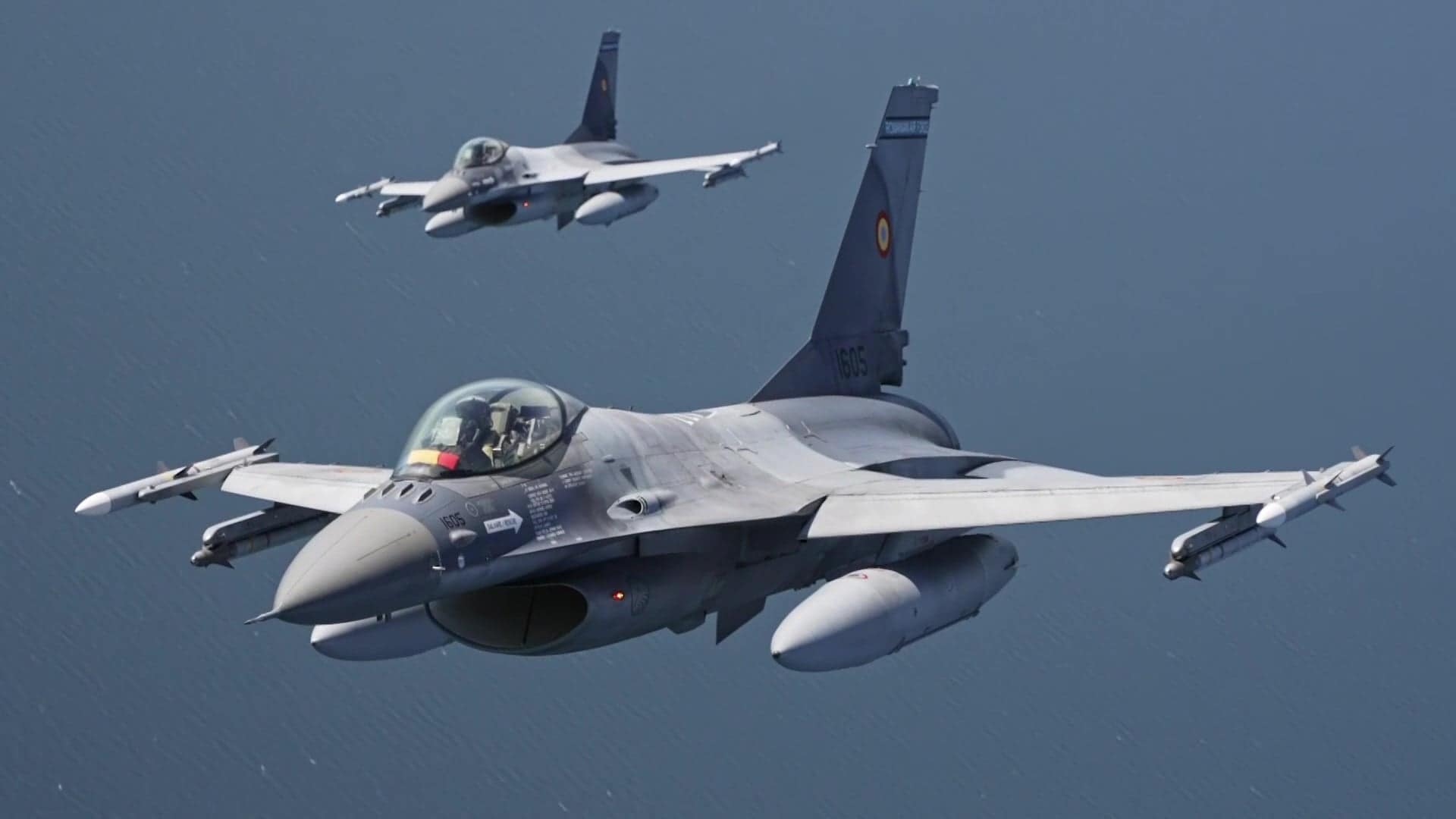
Every drone story from NATO’s eastern flank this summer has ended the same way: something falls out of the sky. On 20 August 2026, Romania rewrote the script. This time the target was not overhead. It was in the water, drifting toward a gas platform packed with several hundred workers, and the thing that killed it was a fighter jet’s cannon.
At 06:28 local time, a merchant ship radioed in a maritime drone loitering a few hundred metres from the Neptun Deep works, out in the Black Sea some 80 nautical miles east of Constanța. Inside Romania’s exclusive economic zone. Loaded with explosives. And nobody was quite sure whose it was.
Informations clés
- Quoi: A Romanian Air Force F-16 destroyed an explosive-laden maritime drone (unmanned surface vessel) using its onboard cannon
- When / where: 20 August 2026, Black Sea, roughly 80 nautical miles east of Constanța, near the Neptun Deep gas field, inside Romania’s exclusive economic zone
- Déclenchement: A commercial ship reported the drifting drone at 06:28 local, a few hundred metres from a platform holding several hundred workers
- Firsts: First cannon rounds ever fired by a Romanian fighter, and the first time Romanian jets engaged a maritime drone
- Origine: Ukraine confirmed via a direct channel that the drone was not theirs; President Dan blamed Russia; the builder was not formally named
- Command: Romania’s defence ministry set up a crisis cell and took operational command from NATO to authorise the kill
A race against the clock, 80 miles out
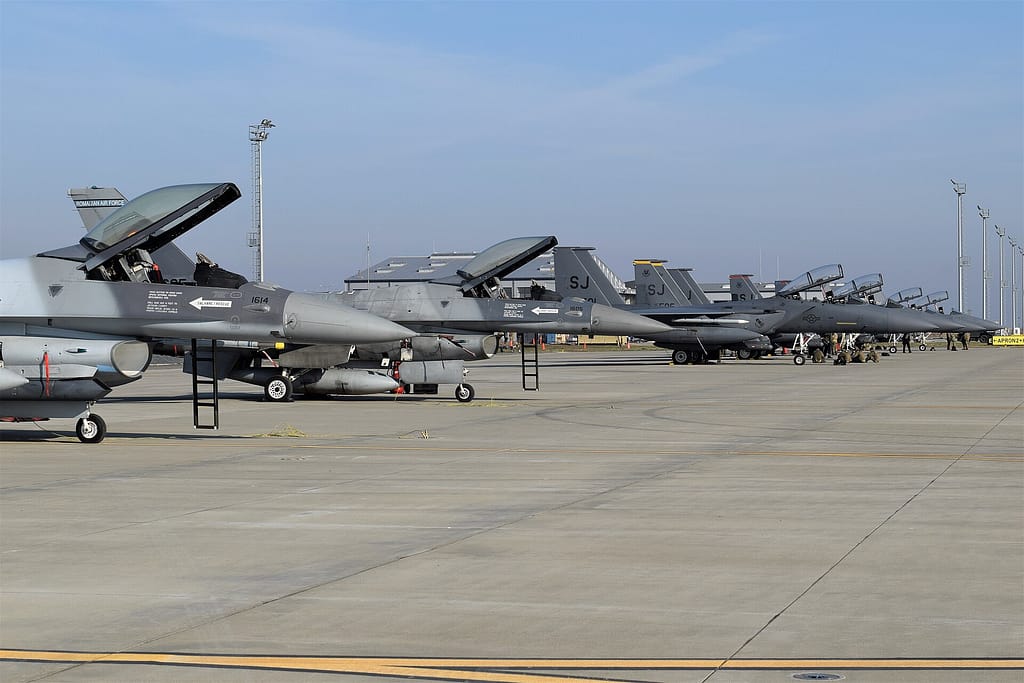
What happened next was fast and unusually decisive for an alliance that has spent months debating whether it is even allowed to shoot. Romania’s defence ministry stood up a crisis cell, then did something telling: it asked NATO to hand operational command of the response back to the Romanian military. Bucharest wanted to pull the trigger on its own authority, and it did.
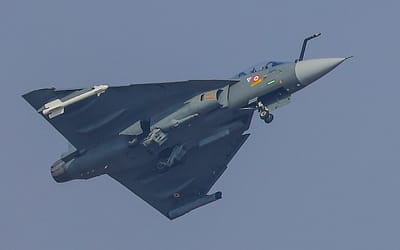
Two F-16s launched from quick-reaction alert with clearance to fire. One rolled in on the little surface craft and hosed it with its internal 20mm cannon. Target hit. Drone destroyed. A Coast Guard vessel carrying a Navy explosive-ordnance-disposal team went out to pick over whatever was left.
Interim defence minister Radu Miruță confirmed the kill before lunchtime, and the detail that jumps out is the weapon. Not a missile. A gun.
Why the Romanian F-16 used a gun
Strafing is the hardest trick in the fast-jet playbook, and against a small, low, bobbing sea drone it is genuinely brutal: you are diving a 500-knot aircraft at a target the size of a jet-ski, in one pass, over water that wrecks your depth perception. It is also exactly the right call. An air-to-air missile against a drifting boat is a half-million-dollar answer to a five-figure problem, and a missile that misses keeps flying. A cannon burst does not.
It was a first, too. Romanian outlets noted this was the first time Romanian aircraft had ever fired their onboard cannons in anger, and the first time they had engaged a maritime drone at all. The first Romanian F-16 sea-drone kill on record, and it came off the trigger, not a warhead.
Not Ukraine’s. So whose?
Here is where it gets pointed. Earlier Romanian incidents involved wayward Ukrainian drones knocked off course by jamming, so Bucharest checked. Through a direct line recently opened with Kyiv, Ukraine confirmed the drone was not theirs. Romania has not formally named a builder. President Nicușor Dan did not bother with the diplomatic hedge.
He also congratulated the pilots and the Coast Guard, calling it a race against time to protect the platform crews. Neptun Deep is not a random patch of sea. Operated by OMV Petrom and Romgaz, it is the project meant to turn Romania into the European Union’s largest gas producer when it comes online in 2027. An explosive drone parked next to it is a message.
The Black Sea is the new front line
And it was not an isolated one. On 11 August, Romanian navy divers blew up two drifting Gerbera-type drones near the same field. On 16 August, a disposal team fished a drone wing out of the water 83 miles offshore. Even the morning of the F-16 gun run had a second act: hours earlier, an aerial drone crossed near Galați and crashed near Grindu, scrambling Spanish F-18s and a Romanian IAR-330 helicopter.
That Spanish jet is not incidental. Days earlier, a Spanish F-18 flying NATO air policing over Romania scored the alliance’s first drone kill above the country, part of a pattern that also produced a shootdown over Latvia in mid-August. The map keeps widening: land, air, and now the sea.
For Romania, the lesson of 20 August is simpler. It took national command, put two jets over the water, and settled a drifting bomb with a gun before it could reach a platform full of people. No committee. No hand-wringing. Just a Falcon, a cannon, and a very bad morning for whoever sent the drone.
Sources: Bild, AeroTime, Romania Insider (citing MApN), Reuters, Balkan Insight, Romanian Ministry of National Defence.
0 commentaire