
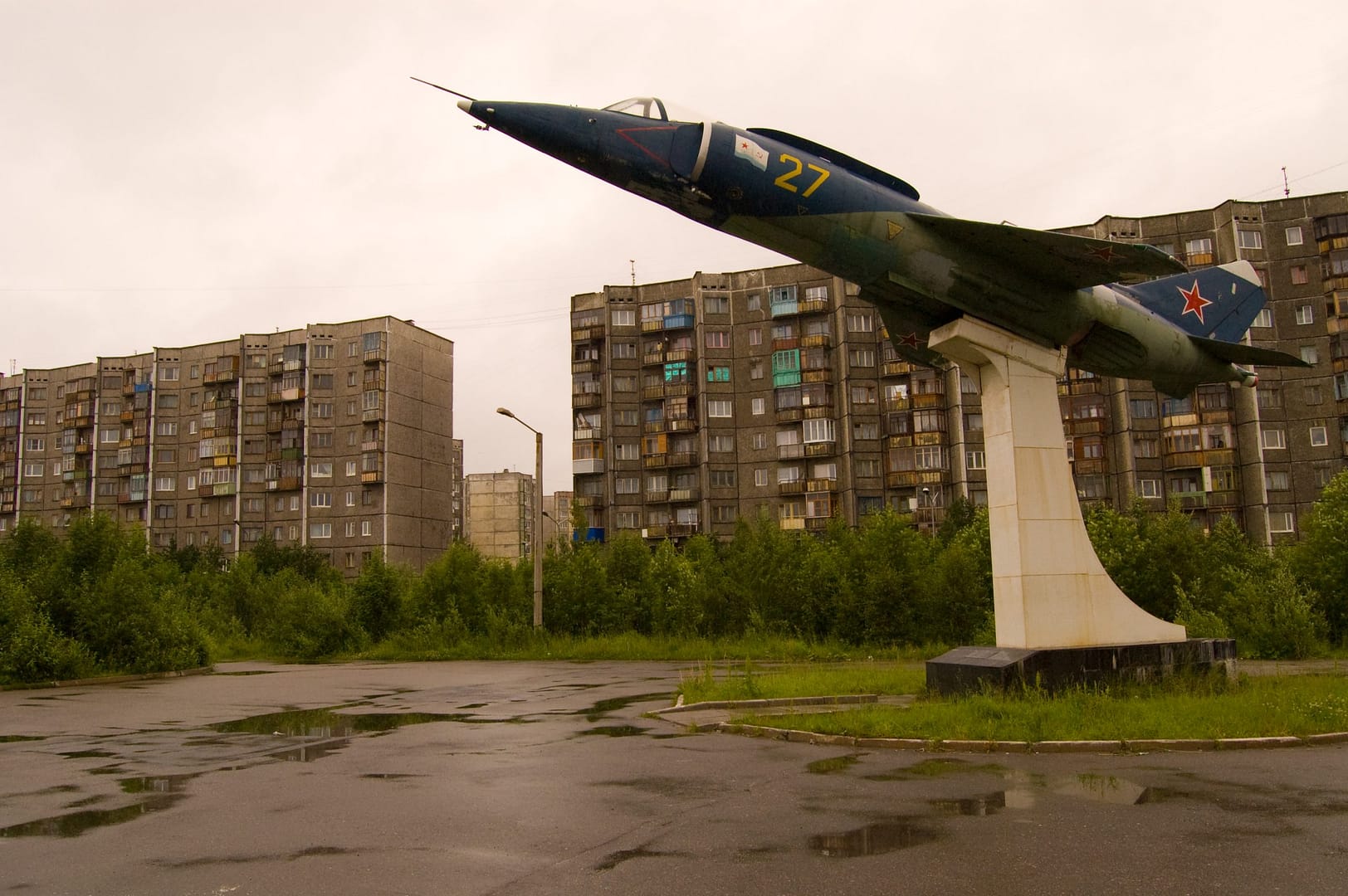
On paper, the Yakovlev Yak-38 looked like Moscow’s answer to the Harrier: a jet that could rise straight off a deck with no catapult, hover, and land vertically. In practice it was one of the most compromised combat aircraft of the Cold War.
The Soviet Navy needed a fixed-wing aircraft for its new Kiev-class ships, which had angled decks but no catapults or arrester gear. The Yak-38 filled that gap — and flew almost nowhere else.
The trouble was baked into the airframe. Instead of the Harrier’s elegant single-engine solution, Yakovlev used three engines, leaving the Forger short of fuel, short of payload, and desperately sensitive to heat.
Informations clés
| Taper | VTOL carrier fighter — the Soviet Navy’s only operational fixed-wing jet |
| NATO name | Forger |
| Moteurs | Three: one vectoring cruise/lift engine plus two dedicated lift jets behind the cockpit |
| Ships | Kiev-class “aviation cruisers” (no catapults) |
| Premier vol | 1971; in service 1976–1991 |
| Caractéristique principale | An automatic ejection seat that fired itself in a bad transition |
| Construit | About 230 |
| Weaknesses | Very short range, small payload, poor performance in heat |
Why the USSR Wanted a Jump Jet
The Kiev-class ships were classified as “heavy aviation cruisers,” not carriers, and they lacked catapults and wires. That left only helicopters or vertical-takeoff jets. Drawing on its experimental Yak-36, Yakovlev built a purpose-made naval machine capped at just under the speed of sound.
The Three-Engine Compromise
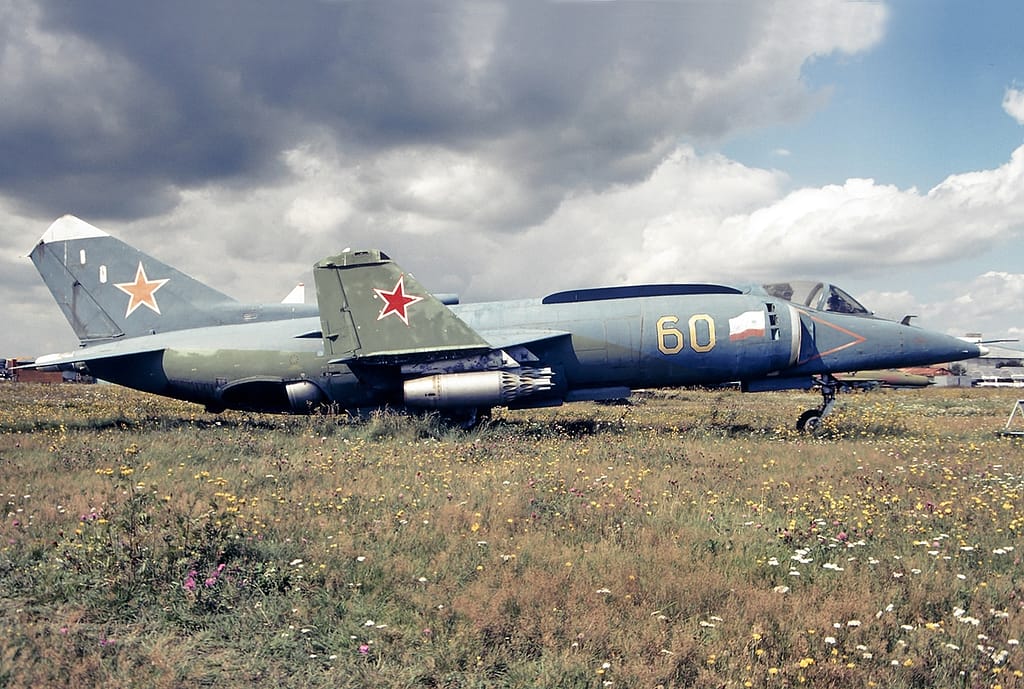
The Forger’s defining feature was its powerplant. A single vectoring engine in the rear handled cruise and part of the lift, while two smaller jets stood almost upright behind the cockpit and fired only during takeoff and landing. A computer blended the thrust to balance the jet in the hover.
It worked — but the lift jets were dead weight the moment the aircraft was airborne, adding weight, drag and failure modes for no benefit in flight.
The Soviet Union’s first VTOL fighter, explained.
The Ejection Seat That Fired Itself
The Yak-38 carried what is widely cited as the first automatic ejection system on a fixed-wing fighter. If a lift engine failed or the aircraft rolled past sixty degrees during the critical transition, the seat fired on its own, with no input from the pilot. Given how unforgiving the vertical regime was, it almost certainly saved lives.
Crippled by Range, Heat and Load
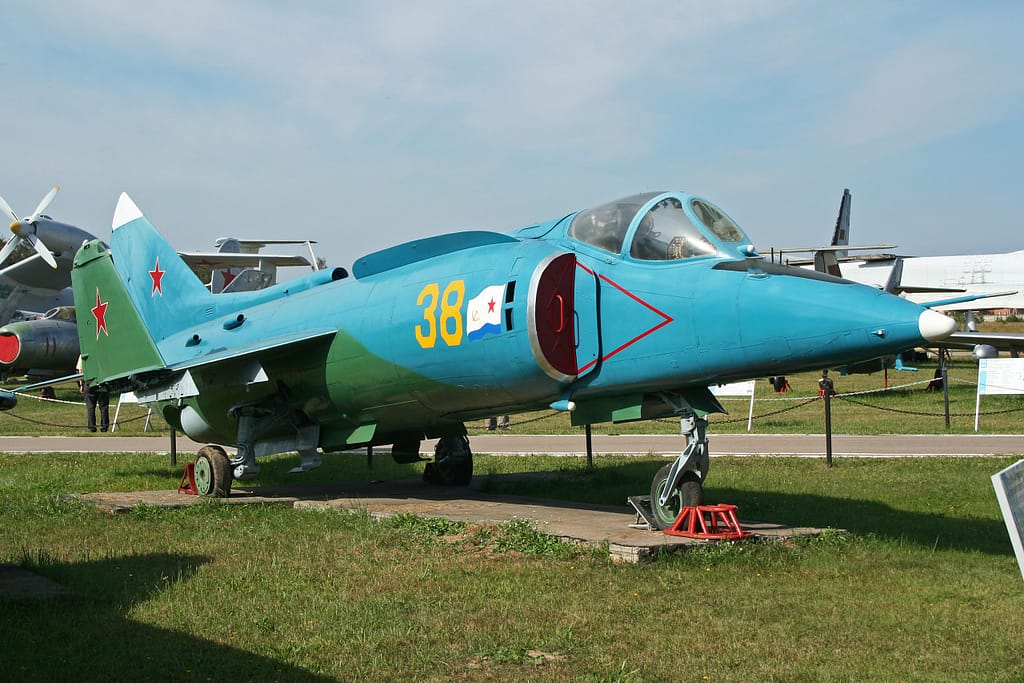
The Forger’s numbers were brutal. It was one of the shortest-ranged fighters of its era, and hot-and-high conditions sapped the lift engines badly. During a 1980 trial deployment to Afghanistan, the jets could reportedly lift only a token pair of small bombs and flew mostly in the cool of early morning, to little effect.
A critical look at the Forger’s limitations.
Forger Versus Harrier
Both jets solved the same problem, but the Harrier did it with one engine and four vectoring nozzles — giving it far better range, load and combat flexibility, plus dogfighting tricks the Forger never had. Where the Harrier fought in the Falklands and served for decades, the Forger stayed close to its ships.
Retirement and the Yak-141 Legacy
The Yak-38 was withdrawn as the Soviet Union collapsed in 1991. Its intended supersonic successor, the Yak-141, was cancelled when the money ran out. Yet the lessons of the Soviet lift-plus-vectoring layout are often linked to the later F-35B — giving the humble Forger an outsized place in the story of vertical flight.
The Yak-38 among history’s troubled VTOL designs.
Sources: Wikipedia (Yakovlev Yak-38); MilitaryFactory.com. Figures for range and Afghanistan trials vary by source and are given as reported.
0 commentaire