
Picture the Philippine Sea at mid-morning on 19 June 1944. The water is glassy, the horizon hazed with heat, and 25,000 feet up a Grumman Hellcat pilot is watching a stain spread across the sky to the west. It is not weather. It is aircraft — dozens, then scores, then hundreds of Japanese planes climbing toward the greatest concentration of American naval power ever assembled.
By nightfall, American aviators had a name for what they had just done. One of them, back in his ready room, reached for the language of a Missouri hunting trip. The Great Marianas Turkey Shoot was born — a nickname so vivid it has outlived almost everyone who was there.
- Dates: 19–20 June 1944, Philippine Sea, west of the Mariana Islands
- US Task Force 58 under Vice Admiral Marc Mitscher: 15 carriers and roughly 900 aircraft
- Vice Admiral Jisaburo Ozawa: nine carriers and about 450 carrier aircraft, plus some 300 land-based planes
- On 19 June alone the Japanese lost more than 350 aircraft; the US lost around 30 that day
- Across the battle Japan lost an estimated 550–645 aircraft to about 123 American losses
- US submarines Albacore and Cavalla sank the fleet carriers Taiho and Shokaku on 19 June
Why the Trap Was Already Sprung
The battle grew out of Saipan. In June 1944 the US Fifth Fleet arrived off the Marianas to seize islands just 1,300 miles from the Japanese Home Islands. Screening the invasion was Vice Admiral Marc Mitscher’s Task Force 58 — 15 fleet and light carriers carrying roughly 900 aircraft.
Vice Admiral Jisaburo Ozawa sortied to meet them with nine carriers and about 450 aircraft, banking on help from perhaps 300 land-based planes. On paper it was a fight. In practice, Japan had already lost the thing that mattered most. Years of attrition had bled away its irreplaceable veteran aircrews, and the young pilots now filling the cockpits were, in too many cases, flying their first real battle.
Radar, Hellcats, and a Plate of Cookies
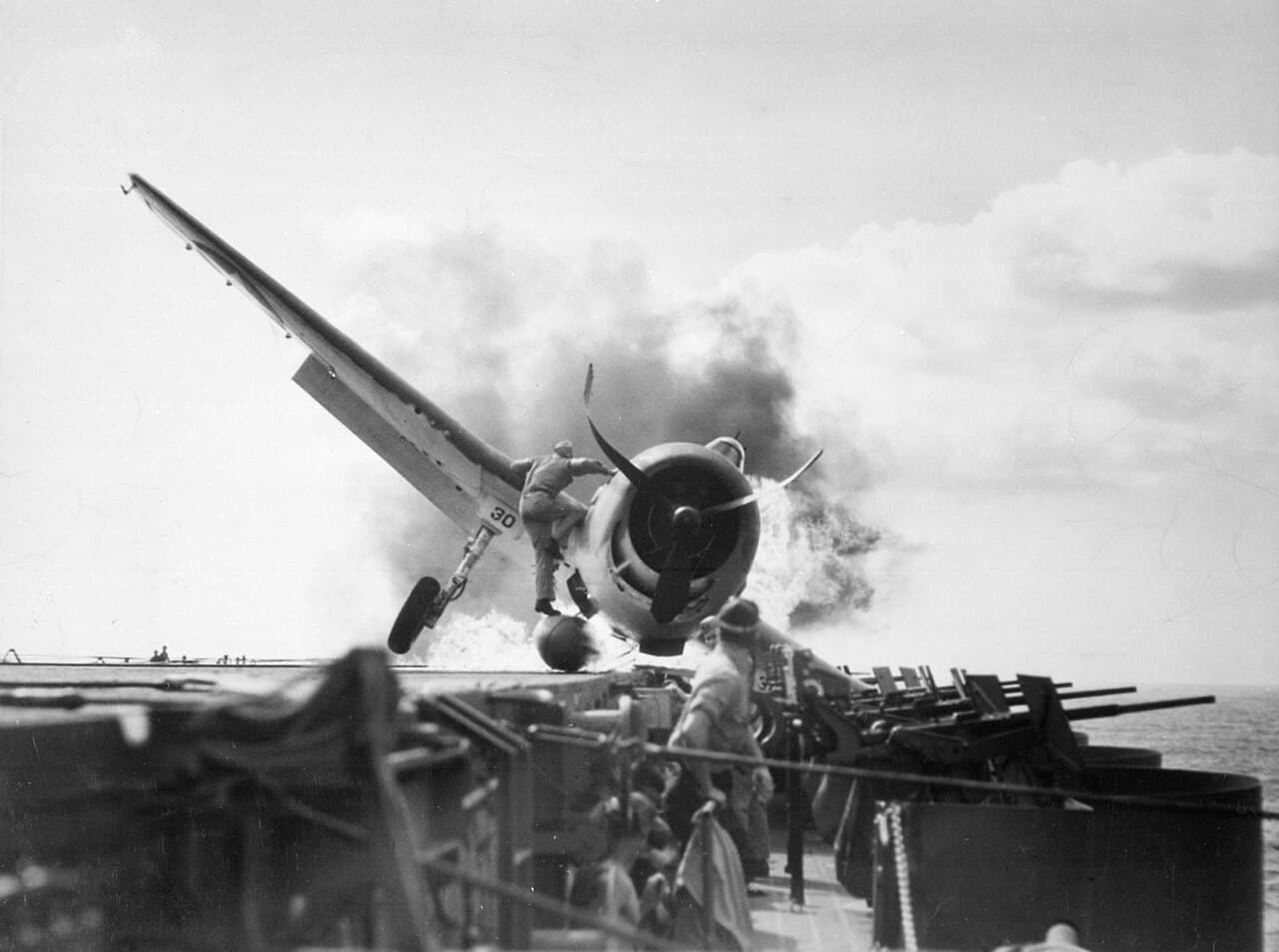
The Americans held every card. Shipboard radar picked up Ozawa’s raids far out, and fighter-direction officers vectored Hellcats to exactly the right patch of sky, at the right altitude, minutes before the Japanese arrived. The F6F Hellcat itself was built for this work: rugged, heavily armored, fast in a dive, and carrying six .50-caliber machine guns.
The result was less a dogfight than a harvest. Lieutenant Alex Vraciu of VF-16, flying from USS Lexington, tore into a formation of dive-bombers and shot down six of them in roughly eight minutes. Commander David McCampbell of Air Group 15, off USS Essex, claimed seven kills across the day. Even the antiaircraft gunners had an edge few pilots knew about: proximity-fuze shells that no longer needed a direct hit to shred an incoming plane.
The Lopsided Ledger
The arithmetic of 19 June is almost hard to believe. The Japanese lost more than 350 aircraft that first day. Task Force 58 lost around 30, and its ships came through with little more than a bomb hit on the battleship South Dakota, which never left formation.
The disaster ran deeper than the air battle. While Ozawa’s planes were being scythed down, the US submarines Albacore and Cavalla slipped inside his screen and put torpedoes into two of his best fleet carriers. Taiho, Ozawa’s brand-new flagship, and the Pearl Harbor veteran Shokaku both went to the bottom before the sun set.
The Night Mitscher Turned On the Lights
The second day belonged to the Americans on the attack. Late on 20 June, scouting aircraft finally pinned down Ozawa’s fleet some 275 miles away. It was almost too far and far too late in the day, but Mitscher launched anyway — roughly 226 aircraft racing west into a lowering sun. They sank the carrier Hiyo and damaged others, then turned for home into full darkness, tanks draining.
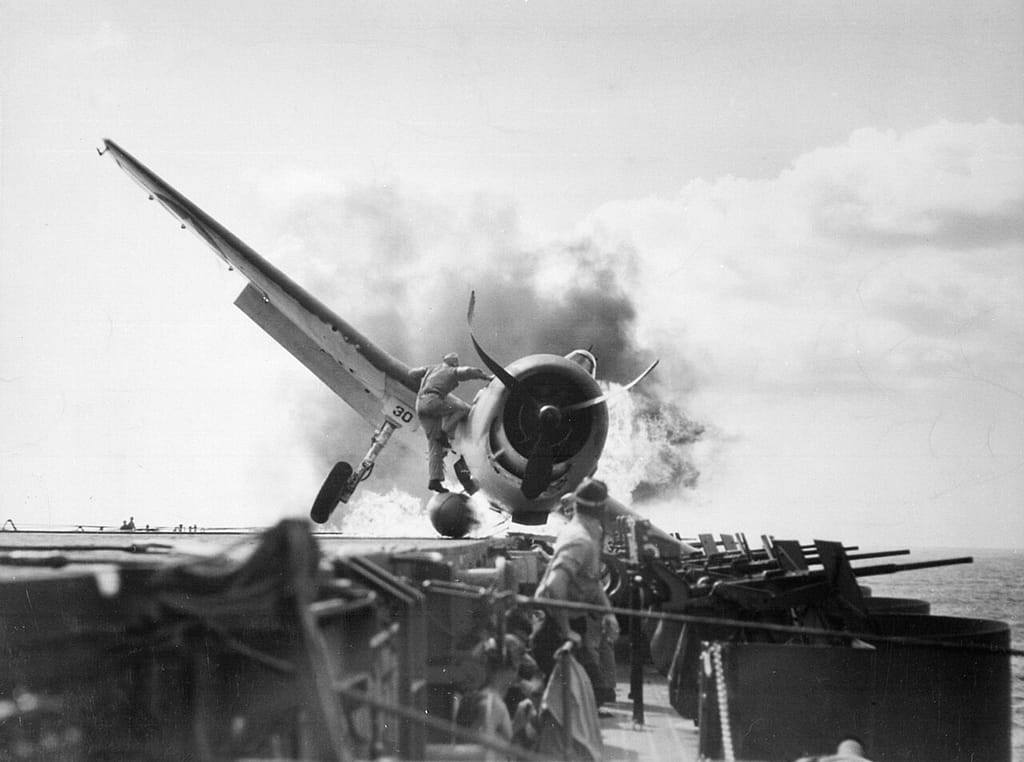
What happened next became legend. Rather than let his aviators grope for a blacked-out fleet, Mitscher ordered the task force to turn on its lights — searchlights stabbing upward, star shells bursting overhead, decks glowing in defiance of every rule about lurking submarines. About 80 aircraft still ditched or crashed as their fuel ran out, but because destroyers combed the black water for days, the human cost stayed mercifully low.
The Wound That Never Healed
Across the two days Japan lost somewhere between 550 and 645 aircraft against about 123 American losses — and, worse for Tokyo, the aircrews who might one day have replaced them. The Imperial Japanese Navy’s carrier air arm, the force that had opened the war at Pearl Harbor, was finished as an offensive weapon. Four months later at Leyte Gulf, Japan’s once-mighty carriers would be reduced to bait.
The name, though, is what endures. It is faintly unfair to the men in the falling aircraft, most of them brave and badly outmatched. But it captured something true about that sky over the Marianas — a day when training, technology and radar converged so completely that a generation of American pilots looked up at the swarm and, incredibly, saw an easy afternoon’s shooting.
Sources: Wikipedia (Battle of the Philippine Sea); Navy Times / Aviation History (John W. Lambert); USNI Naval History.
0 Comments