
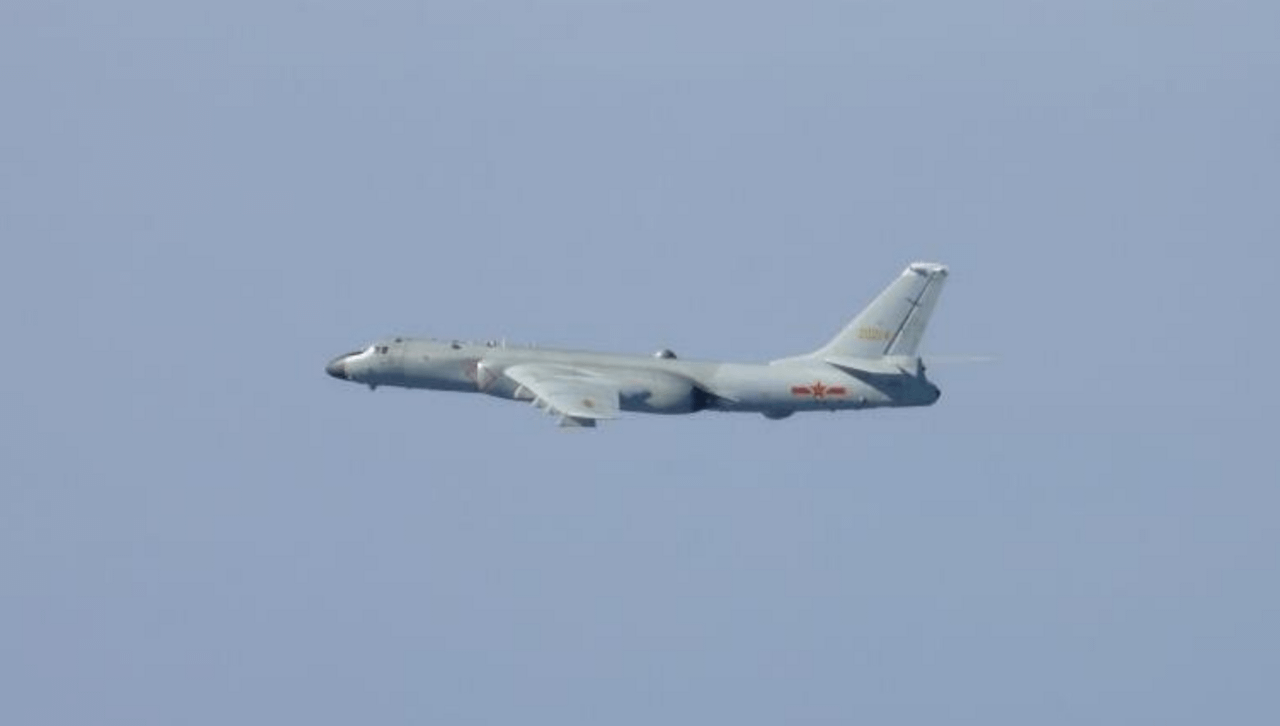
Chinese state television does not show its most sensitive hardware by accident. So when the final episode of the CCTV documentary Zhisheng ("Victory") aired on August 4, 2026, one sequence was clearly meant to be seen: an H-6N bomber lumbering along with a single enormous missile slung under its belly, flanked by two J-20 stealth fighters.
The missile is the JL-1, sometimes rendered Jinglei-1 — "thunderclap." It is an air-launched ballistic missile, and its public debut in this strike scenario is a deliberate message about how China intends to reach targets far out to sea.
Quick Facts
- Aircraft: Xian H-6N — the aerial-refuelable, missile-carrying variant of the H-6 bomber
- Weapon: JL-1 (Jinglei-1, "thunderclap") air-launched ballistic missile
- Escort: Two Chengdu J-20 stealth fighters
- Source: CCTV documentary "Zhisheng" (Victory), final episode aired Aug 4, 2026
- Occasion: 99th anniversary of the PLA's founding
- Missile origin: First shown publicly at the September 2025 Victory Day parade; believed to derive from the DF-21 ballistic missile
One missile, carried differently
Most weapons under a bomber hang in clusters from the wings. This one does not. The JL-1 rides alone on the centreline, semi-recessed under the fuselage, because it is simply too large to carry any other way. It is understood to be an air-launched relative of the DF-21 medium-range ballistic missile — a weapon built to be dropped, ignited, and lofted on a steep, fast, hard-to-intercept trajectory.
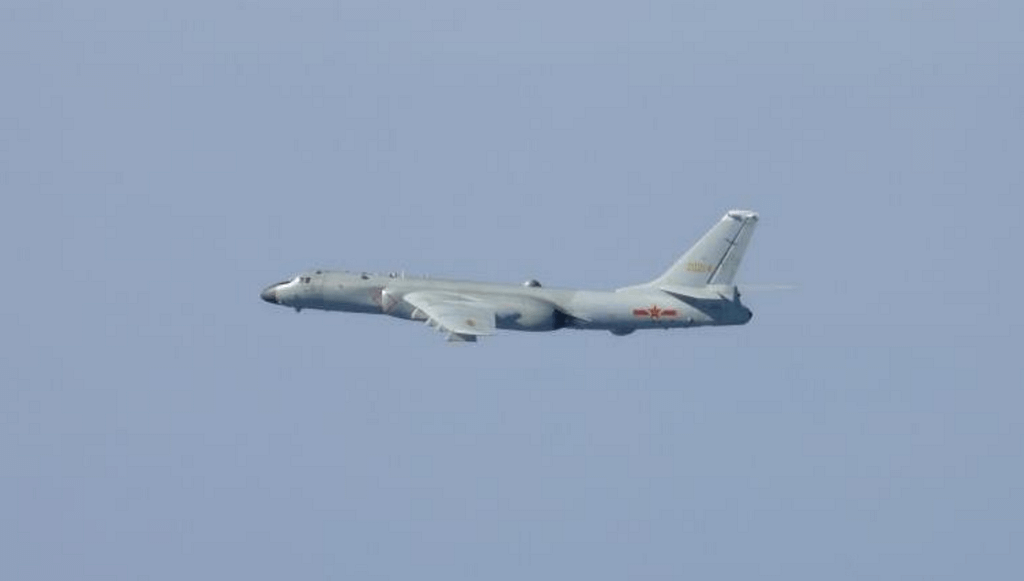
The H-6N is the only aircraft in the Chinese inventory built to carry it. Unlike earlier H-6 models, the H-6N has an aerial-refuelling probe and a recessed belly specifically shaped for a large centreline store. In other words, the bomber and the missile were designed for each other.
Why the escort matters
The two J-20s in the footage are not decoration. A lone, subsonic bomber carrying a strategic missile is a priceless, vulnerable target; pairing it with stealth fighters is exactly how you would try to push such a weapon within launch range of a defended fleet. The documentary framed the sequence around joint strikes on a large naval formation — the kind of carrier group China plans against most carefully.
That anti-ship reading is significant. A ballistic missile fired from an aircraft already hundreds of kilometres out to sea stretches the range at which China can threaten warships, and it does so from a direction and altitude that complicate any defence. It is the airborne leg of a much larger reach-out-and-touch strategy.
A parade weapon goes operational
The JL-1 was first paraded through Beijing in September 2025, one element of a display meant to show a maturing nuclear and conventional force. Showing it again now — airborne, escorted, and aimed at a fleet — moves it from parade float to plausible tool. State media timing rarely lies about intent.
None of this is a live test, and the exact performance of the JL-1 remains outside the public record. But the picture Beijing chose to broadcast is unambiguous: a bomber, a very large missile, and the stealth fighters meant to walk it into range.
Sources: Global Times; The War Zone; The Aviationist; Federation of American Scientists; Military Watch.

0 Comments