
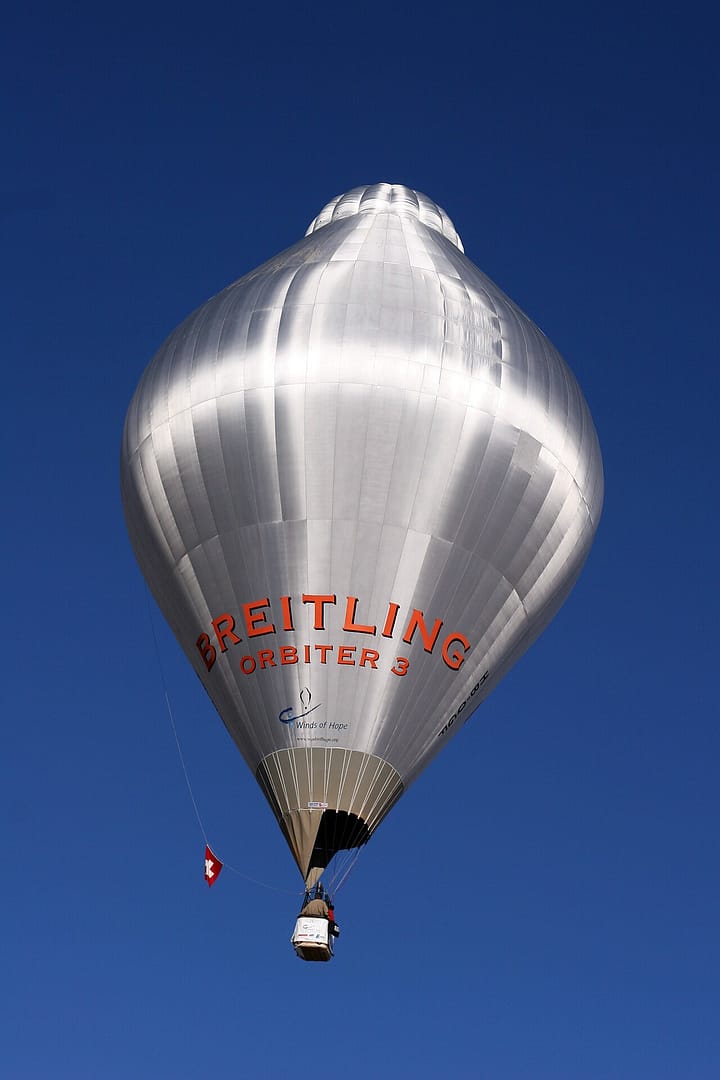
On 21 March 1999, two exhausted men brought a towering silver balloon down onto the Egyptian desert and stepped into the history books. Bertrand Piccard and Brian Jones had just done what pioneers had tried and failed to do for decades: fly all the way around the world, non-stop, in a balloon. No engine. No fuel to steer by. Just the winds of the planet and their nerve.
Their craft was Breitling Orbiter 3, and their journey, nearly twenty days adrift over oceans and continents, claimed what was often called the last great prize in aviation.
Quick Facts: Breitling Orbiter 3
- Feat: First non-stop round-the-world balloon flight
- Equipaggio: Bertrand Piccard (Switzerland) and Brian Jones (Britain)
- Nome: Château-d’Oex, Switzerland, 1 March 1999
- Atterrato: Egyptian desert, 21 March 1999
- Durata: 19 days, 21 hours, 55 minutes
- Distanza: Around 45,700 km (28,400 miles)
The last great prize
Orbiter 3 was a Rozïere balloon, a clever hybrid that combines a cell of helium with a hot-air envelope, letting the crew ride day and night without burning through their fuel too quickly. From the Swiss Alps the winds carried them out over Europe, down across Africa, over Asia and the Pacific, and finally home across the Atlantic. Bertrand Piccard came from a dynasty of explorers: his grandfather Auguste was the first man to reach the stratosphere by balloon, and his father Jacques dived to the deepest point in the ocean.
Down to the last drop
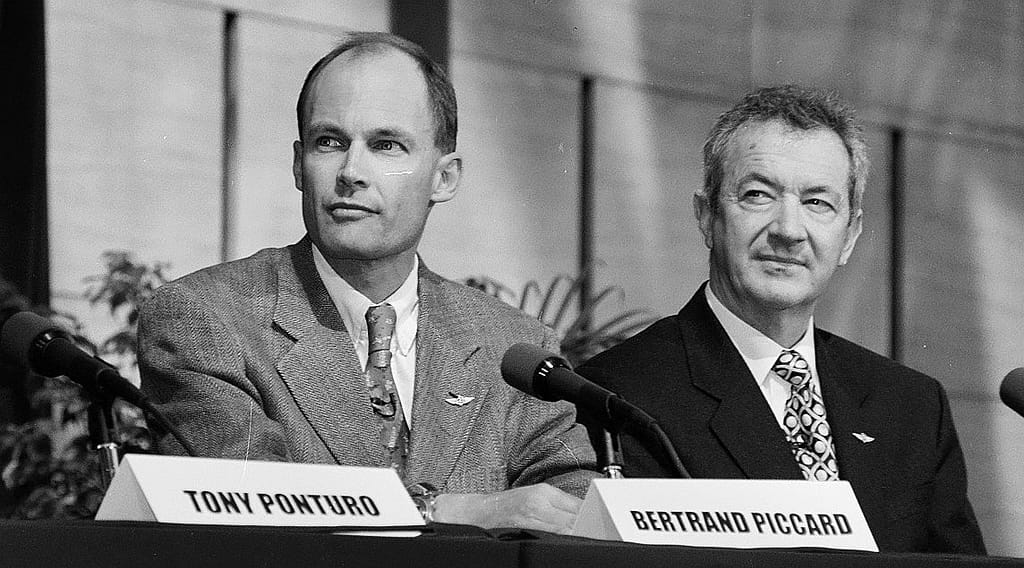
It was desperately close. The six burners that kept the balloon warm ran on propane carried in cylinders along the gondola, and by the final days the crew was nursing their dwindling supply across the Atlantic. They had begun with nearly four tonnes of propane; when they touched down in Egypt, barely 40 kilograms remained. After two earlier failed attempts, in 1997 and 1998, the margin between triumph and coming up short had never been thinner.
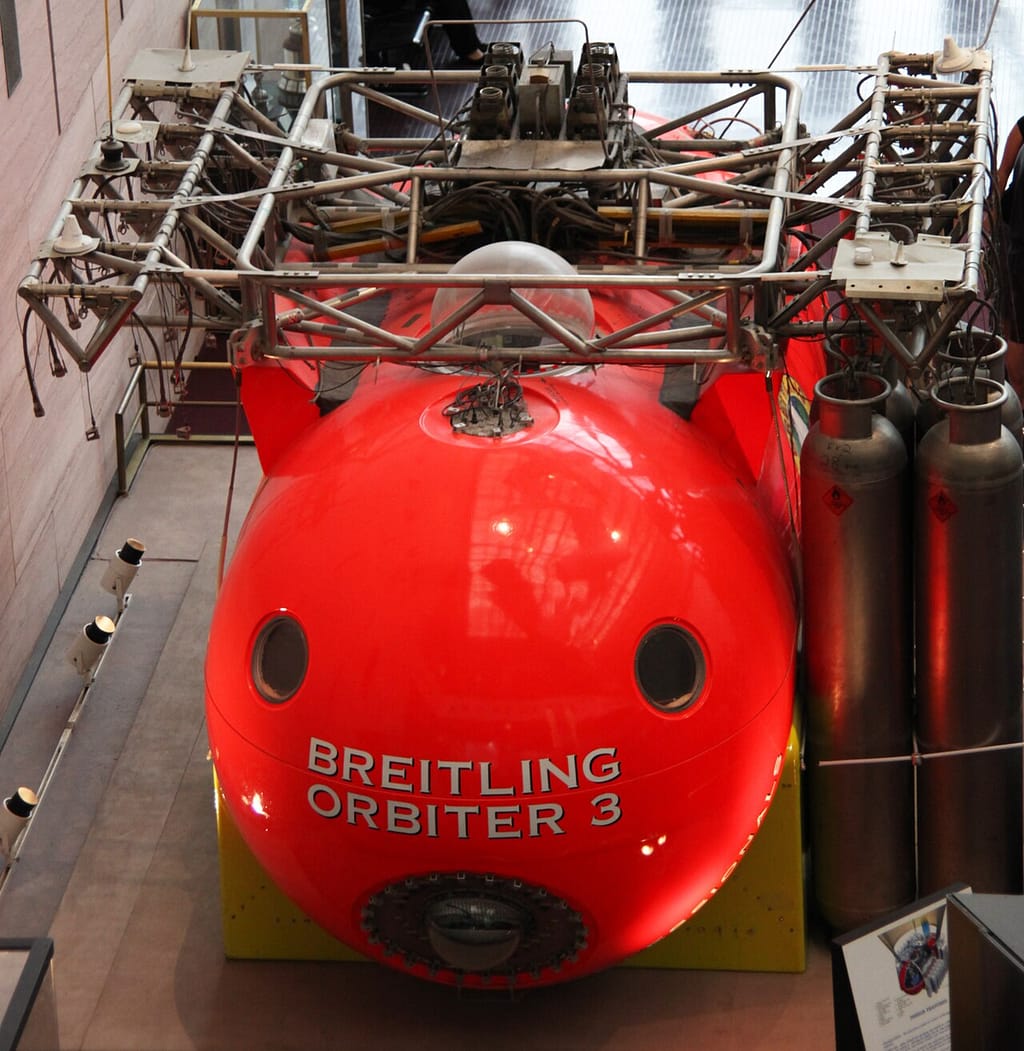
Bertrand Piccard on the adventuring spirit that later carried him around the world again, this time in a solar-powered aircraft.
From wind to sunlight
Piccard was not finished with circling the globe. In 2016 he did it again in Solar Impulse, an aircraft that flew day and night on nothing but sunlight, closing a remarkable personal arc from balloon to solar plane. The little Orbiter 3 gondola now rests in the Smithsonian in Washington, a reminder that even in the age of jets, one of aviation’s greatest adventures was won by two men, a bag of gas, and the patience to let the whole world turn beneath them.
Sources: Fédération Aéronautique Internationale, Smithsonian National Air and Space Museum, bertrandpiccard.com, Wikipedia.
0 Commenti