
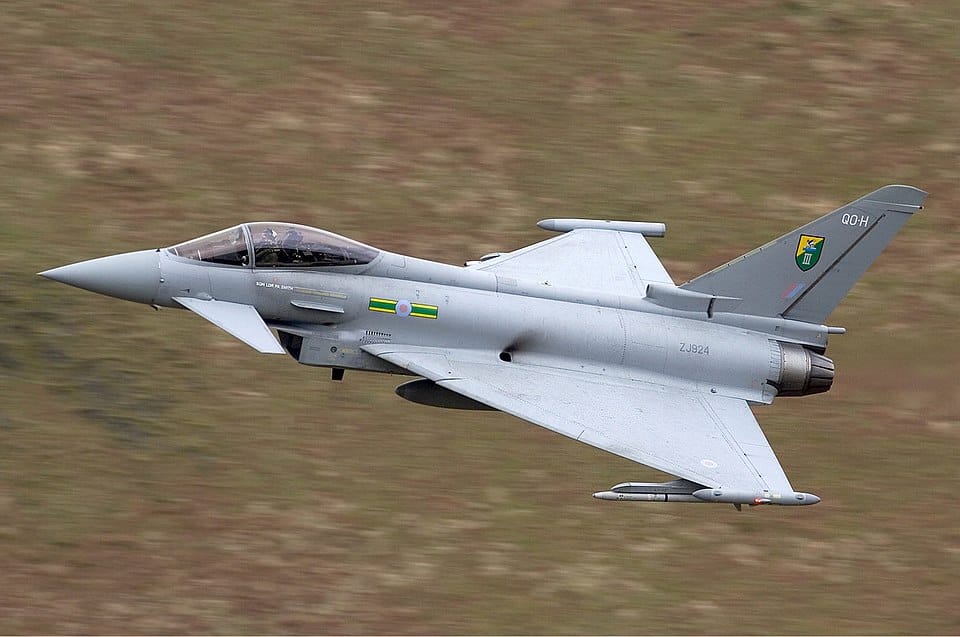
Programma Eurofighter Typhoon Aerodynamic Modification Kit (AMK)
Partner Eurofighter GmbH, NETMA (NATO Eurofighter and Tornado Management Agency)
Key Changes Leading-edge root extensions (LERX), fuselage strakes, enlarged flaperons
Lift Increase +25% wing lift at combat-relevant speeds
Primary Benefit Tighter sustained turns, better low-speed nose-pointing, expanded weapons carriage
Customer Nations Germany, Spain, Italy, United Kingdom (plus export operators)
Stato Contract signed, integration underway

The Eurofighter Typhoon just got a second life. Eurofighter GmbH and NETMA have signed a contract for the Aerodynamic Modification Kit — a physical redesign of the jet's airframe that adds leading-edge root extensions, fuselage strakes, and enlarged flaperons. The result: 25% more wing lift, tighter sustained turns, and a fighter that can point its nose where it needs to far more aggressively than before.
This isn't a software patch or a sensor upgrade. This is metal. New surfaces bolted onto the airframe that change how the aircraft moves through the sky. In an era where upgrades usually mean new screens in the cockpit, the AMK is refreshingly physical — a reminder that aerodynamics still win dogfights.
The timing matters. With the Global Combat Air Programme (GCAP) still a decade from operational service, NATO's European air forces need their Typhoons to stay competitive against rapidly evolving threats. The AMK buys them exactly that — a bridge to the sixth-generation future without retiring a proven airframe.
What the Kit Actually Changes
The leading-edge root extensions — or LERX — are the centrepiece. These are small wing-like surfaces added where the wing meets the fuselage. They generate powerful vortices at high angles of attack, energising airflow over the wing and delaying the stall. The effect is dramatic: the Typhoon can pull harder, sustain tighter turns, and maintain control at speeds and attitudes that would have previously pushed it to its limits.
Fuselage strakes run along the lower body of the jet, adding stability and further improving vortex generation. The enlarged flaperons — hybrid surfaces that act as both flaps and ailerons — give the pilot more roll authority and better low-speed handling. Together, these modifications don't just improve one flight regime. They expand the entire envelope.
For the pilot, the difference will be felt immediately. Tighter instantaneous turn rates mean getting a missile solution faster in a within-visual-range fight. Better low-speed nose-pointing means the Typhoon can track a target through aggressive manoeuvres that would have bled too much energy before. And the improved lift means heavier weapons loads without sacrificing agility — a critical factor as European air forces integrate longer-range missiles like the Meteor and future strike weapons.

Why Now — and Why It Matters
The Typhoon entered service in 2003. It was designed as a Cold War interceptor, optimised for beyond-visual-range combat against Soviet bombers and fighters. Over two decades, it has proven far more versatile than that — flying air policing missions from the Baltic to the Falklands, dropping precision munitions over Libya, and standing alert across NATO's eastern flank.
But the threat has evolved. Russian Su-35s carry longer-range missiles. China's J-20 is proliferating. Fifth-generation stealth fighters are becoming the baseline, not the exception. The Typhoon's avionics have kept pace — the Captor-E AESA radar is world-class — but its aerodynamic performance has remained frozen since the original design. The AMK changes that equation.
The contract also signals something broader: Europe is serious about keeping its existing fighters relevant. Not every problem requires a brand-new aircraft. Sometimes the smartest investment is making what you have significantly better — faster, cheaper, and with less risk than starting from scratch.
The "Super Typhoon" Takes Shape
Defence analysts have already dubbed the modified variant the "Super Typhoon" — a nod to the Super Hornet, which similarly transformed the F/A-18 through aerodynamic and structural changes rather than a clean-sheet redesign. The comparison is apt. Like the Super Hornet, the AMK-equipped Typhoon will look subtly different on the ramp but fly like a meaningfully different aircraft in combat.
Integration is expected alongside other upgrades in the Typhoon's Long-Term Evolution (LTE) roadmap, including the Captor-E radar, Praetorian DASS defensive suite improvements, and new weapons like the SPEAR 3 standoff missile. The combination of better aerodynamics, better sensors, and better weapons creates a compound effect — each upgrade multiplying the value of the others.
For the roughly 570 Typhoons in service across Europe and beyond, the AMK means decades more relevance. Not as a stopgap. Not as a compromise. As a genuine threat to anything flying in contested airspace. The Super Typhoon isn't just an upgrade — it's a statement that fourth-generation fighters aren't done yet. Not even close.
Sources: Eurofighter GmbH, Defence Post, Jane's Defence Weekly, NATO Eurofighter and Tornado Management Agency
Domande correlate
Cos'è l'Eurofighter Typhoon?
The Eurofighter Typhoon is a twin-engine multirole fighter operated by Germany, Spain, Italy, the United Kingdom and several export customers. Developed by a European consortium, it serves as a front-line air-superiority and strike aircraft. It is now receiving a major airframe upgrade called the Aerodynamic Modification Kit to improve its performance.
What is the Eurofighter Aerodynamic Modification Kit?
The Aerodynamic Modification Kit, or AMK, is a physical redesign of the Eurofighter Typhoon's airframe. It adds leading-edge root extensions, fuselage strakes and enlarged flaperons, increasing wing lift by about 25% at combat-relevant speeds. The result is tighter sustained turns, better low-speed nose-pointing and expanded weapons-carriage capacity.
Which countries fly the Eurofighter Typhoon?
The four core nations are Germany, Spain, Italy and the United Kingdom, which jointly developed the Typhoon, along with a number of export operators worldwide. All stand to benefit from the AMK upgrade, which is managed through NETMA, the NATO Eurofighter and Tornado Management Agency.
Why upgrade the Eurofighter instead of building a new fighter?
Upgrading extends the value of a proven fleet at lower cost and risk than a clean-sheet design, and the timing matters given that Europe's next-generation FCAS fighter has run into trouble. The AMK keeps the Typhoon competitive while sixth-generation programmes mature.
What does the AMK do for the Typhoon's performance?
By raising wing lift roughly 25% at combat speeds, the AMK gives the Typhoon tighter sustained turns and improved low-speed handling, both valuable in close-in air combat. It also expands the jet's weapons-carriage options. These gains fit the long arc of fighter development covered in our storia dell'aviazione militare.
0 Commenti