
| Informazioni rapide | |
|---|---|
| Evento | Italy blocks US military aircraft from using NAS Sigonella for Iran-bound strike missions |
| Data | Late March 2026 |
| Base | Naval Air Station Sigonella, Sicily |
| Motivo | US failed to notify Italy in advance; bilateral agreements require prior consultation for strike operations |
| Italian PM | Giorgia Meloni — called US partnership “solid” despite the dispute |
| Other NATO Allies | Spain also blocked all Iran-linked flights through its airspace |
| Operazione | Furia epica (in corso dal 28 febbraio 2026) |

The bombers were already airborne when the phone rang in Rome. Several US military aircraft — bound for missions tied to Operation Epic Fury — had filed flight plans through Naval Air Station Sigonella, the sprawling American installation on Sicily’s eastern coast. Italy’s chief of defence staff contacted the defence minister with a blunt message: Washington had not asked permission. And without it, the aircraft could not land.
Rome said no. The jets were turned away. And with that single decision, a crack appeared in the Atlantic alliance that no amount of diplomatic language can easily seal.
The incident, first reported in late March 2026, marks one of the most significant disagreements between the United States and a NATO ally since the Iraq War. Italy — home to more American military installations than any other European country — blocked US combat-related flights from using its territory for strikes against Iran, citing a violation of bilateral agreements that require advance notification and consultation.
A Base Built on Trust
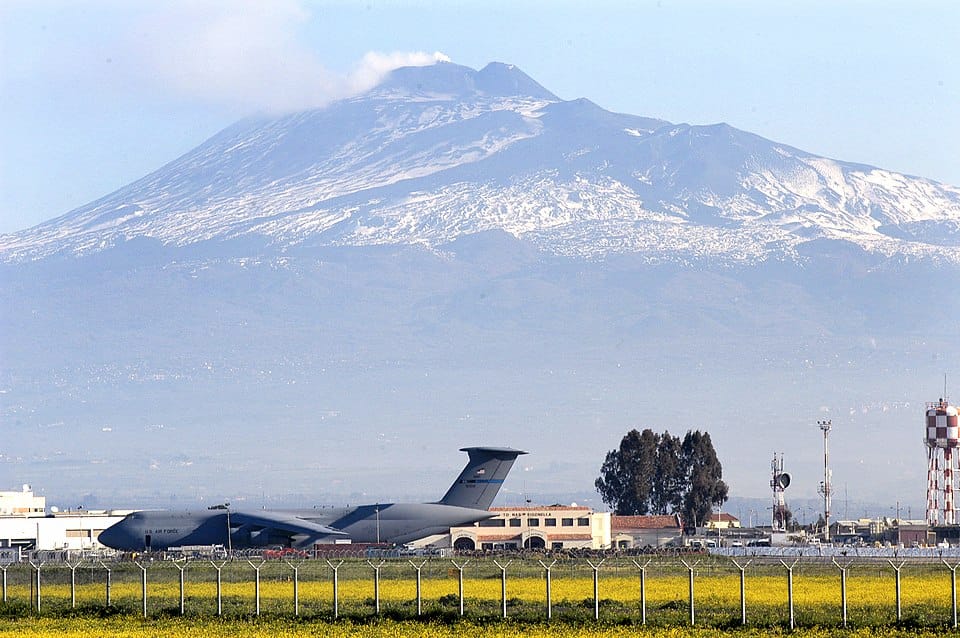
NAS Sigonella sits in the shadow of Mount Etna, about 10 kilometres southwest of Catania. It is the US Navy’s most important logistics hub in the Mediterranean — a place where cargo planes, patrol aircraft, and surveillance drones have operated with few restrictions for decades. Longstanding agreements between Washington and Rome allow routine American military operations from Italian bases without high-level political approval.
But those agreements have limits. Logistics and routine operations are one thing. Flying strike missions against a sovereign nation that Italy is not at war with is something else entirely. Italy’s parliament never authorised the use of Italian territory for offensive operations against Iran, and under Italian law, that distinction matters.
What made the episode particularly sharp was the timing. The United States did not request approval before the aircraft departed. Only after the jets were airborne did American officials inform Rome — effectively presenting Italy with a fait accompli. Italy refused to accept it.

Spain Follows Suit
Italy was not alone. Spain confirmed it had blocked all flights connected to the Iran war from transiting its airspace — a move that further complicates logistics for a campaign already stretching American supply lines across multiple continents. Together, the two Mediterranean allies effectively closed off the southern European corridor that US forces have relied on for decades.
The implications are significant. Without Sigonella, American aircraft heading to the Middle East from European bases must reroute — burning more fuel, adding flight hours, and reducing the sortie rate that sustains an air campaign. For tanker and transport aircraft in particular, Sicily’s central Mediterranean position has been irreplaceable since the Cold War.
Other NATO allies are watching closely. Germany, which hosts Ramstein Air Base — the nerve centre of US Air Forces in Europe — has not publicly restricted American operations, but political pressure is mounting across the continent as the war in Iran stretches into its second month.
Diplomacy Under Strain
Italian Prime Minister Giorgia Meloni moved quickly to contain the fallout. In public remarks, she stressed that the US-Italy partnership remained “solid” and that the Sigonella decision was a procedural matter — not a political rupture. Behind the scenes, the message was more direct: allies deserve to be consulted, not informed after the fact.
The dispute echoes a pattern familiar from 2003, when France, Germany, and Turkey all refused to support or facilitate the invasion of Iraq. Then, as now, the question was not whether America could fight alone — it can — but whether fighting without allied support makes the mission harder, costlier, and lonelier than it needs to be.
Cosa succederà dopo?
For now, US operations continue from bases in the Gulf, Diego Garcia, and carrier strike groups in the Arabian Sea. The loss of Sigonella is an inconvenience, not a crisis. But it signals something deeper: even among America’s closest European partners, the appetite for supporting a major air war in the Middle East has limits.
Italy remains a NATO ally, a host to thousands of American service members, and a country whose own military flies American-made F-35. None of that changes because of one base-access dispute. But the image of US jets being turned away from a runway they have used freely for generations is not one that fades easily — on either side of the Atlantic.
Sources: Defense News, The Washington Post, Newsweek, Stars and Stripes, Decode39
Domande correlate
Why did Italy block US warplanes from Sigonella?
Italy blocked U.S. combat aircraft from using Naval Air Station Sigonella for Iran-bound strike missions in late March 2026 because Washington failed to give advance notice. Bilateral agreements require prior consultation before strike operations are flown from Italian soil, and Rome said that step was skipped.
What is NAS Sigonella?
Naval Air Station Sigonella is a major U.S. installation on Sicily's eastern coast, about 10 km southwest of Catania near Mount Etna. For decades it has been the U.S. Navy's most important logistics hub in the Mediterranean, handling cargo, patrol and surveillance flights.
Did other NATO allies restrict US flights against Iran?
Yes. Alongside Italy's block at Sigonella, Spain barred all Iran-linked flights through its airspace. The moves marked some of the most significant friction between the U.S. and NATO allies over a military campaign in years, set against the wider air war over Iran.
Can the US fly any mission it wants from Italian bases?
No. Longstanding agreements let U.S. forces conduct routine logistics and operations from Italian bases without high-level approval, but strike missions against a sovereign nation fall outside that. Those require advance notification and political consultation with Rome.
What is Operation Epic Fury?
Operation Epic Fury is the U.S.-led air campaign against Iran that began on February 28, 2026. It is the same campaign that produced the primo abbattimento in combattimento da parte degli Stati Uniti in 23 anni and prompted allies to weigh how far to support strikes from their territory.
0 Commenti