
Quick Facts: OA-1K Crash
- Aircraft: OA-1K Skyraider II (Block 1)
- Date: 23 October 2025
- Location: Field on the outskirts of Oklahoma City, Oklahoma (training flight from Will Rogers ANG Base)
- Cause: Pilot actuated fuel shutoff valve instead of fuselage tank valve
- Key detail: The two valves are 5 inches apart on the cockpit panel
- Cost: $17.9 million (total loss)
- Injuries: None — both crew walked away after a forced landing
Five Inches Between Flying and Falling
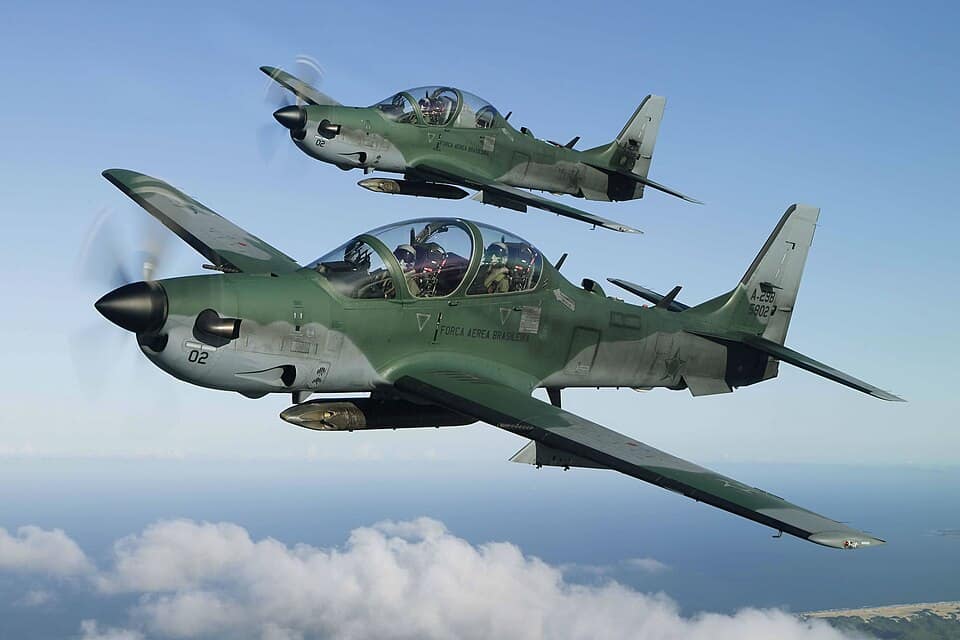
The Skyraider II — AFSOC's turboprop armed overwatch platform, built by L3Harris on the Air Tractor AT-802 cropduster airframe — has a cockpit panel where the fuel shutoff crank sits just five inches from the fuselage tank valve lever. One is a red rotating crank, the other a silver pull lever — and on Block 1 aircraft the panel sits partially obscured behind a larger power lever. On this flight, told to open the tank valve, the trainee twisted the fuel shutoff crank instead. The engine quit. In a single-engine turboprop at low altitude, that is not an inconvenience — it is an emergency. The pilot noticed his mistake about 20 seconds later and reopened the valve, but the engine did not recover in time. About two minutes after the emergency began, the crew crash-landed the OA-1K in an empty field on the outskirts of Oklahoma City, clipping road signs and utility poles on the way down.The accident investigation board report, released on 26 June 2026, noted the proximity of the two fuel controls and the partially obscured panel — but stopped short of citing the layout as a cause, pointing instead to the pilot's error, task saturation, communications problems and ineffective prioritisation by the crew.
A CRM Case Study
The investigation board found multiple contributing factors beyond the valve confusion. The pilot was an experienced U-28 aviator with more than 2,300 flight hours, but had only around 37 hours in the OA-1K — and just three in the Block 1 variant. The instructor pilot, seated in the same aircraft, was working around communications problems the trainee never reported — the student had been struggling to hear him since takeoff. Crew Resource Management doctrine exists precisely for moments like this: when a single error at high workload cascades into an unrecoverable situation. The board's report notes the cockpit layout but stops short of citing it as a cause — the findings centre on human factors, from task saturation to the communication breakdown between the two pilots.The OA-1K's Future
The Skyraider II programme continues despite the loss. AFSOC has received a small initial batch of OA-1Ks for armed overwatch — the mission of providing close air support and intelligence in permissive environments where sending an F-35 would be overkill. The concept calls for a low-cost, propeller-driven platform that can loiter for hours and deliver precision munitions at a fraction of the cost-per-flight-hour of a fast jet. Losing one of a small fleet to a preventable cockpit design issue is a setback, not a programme-killer. But it is a reminder that the most dangerous moment in any aircraft is not combat — it is the moment a tired pilot reaches for the wrong switch, and nobody catches it in time.Sources: AFSOC Accident Investigation Board Report, Air & Space Forces Magazine, The War Zone, Defense News

0 Commenti