
To drop bombs on Tripoli for twelve minutes, the U.S. Air Force flew for thirteen hours. Not because the target was far in a straight line — it was a routine Mediterranean hop from bases in England — but because almost every ally in between refused to let the aircraft cross their airspace. So on the night of 14 April 1986, two dozen F-111s turned west, flew out into the Atlantic, and took the long way round an entire continent to reach Colonel Gaddafi.
Operation El Dorado Canyon was America’s answer to a terrorist bombing in Berlin — and one of the longest combat missions ever flown up to that point.
Quick Facts
| Operation | El Dorado Canyon, the U.S. air strike on Libya |
| Night of | 14–15 April 1986 |
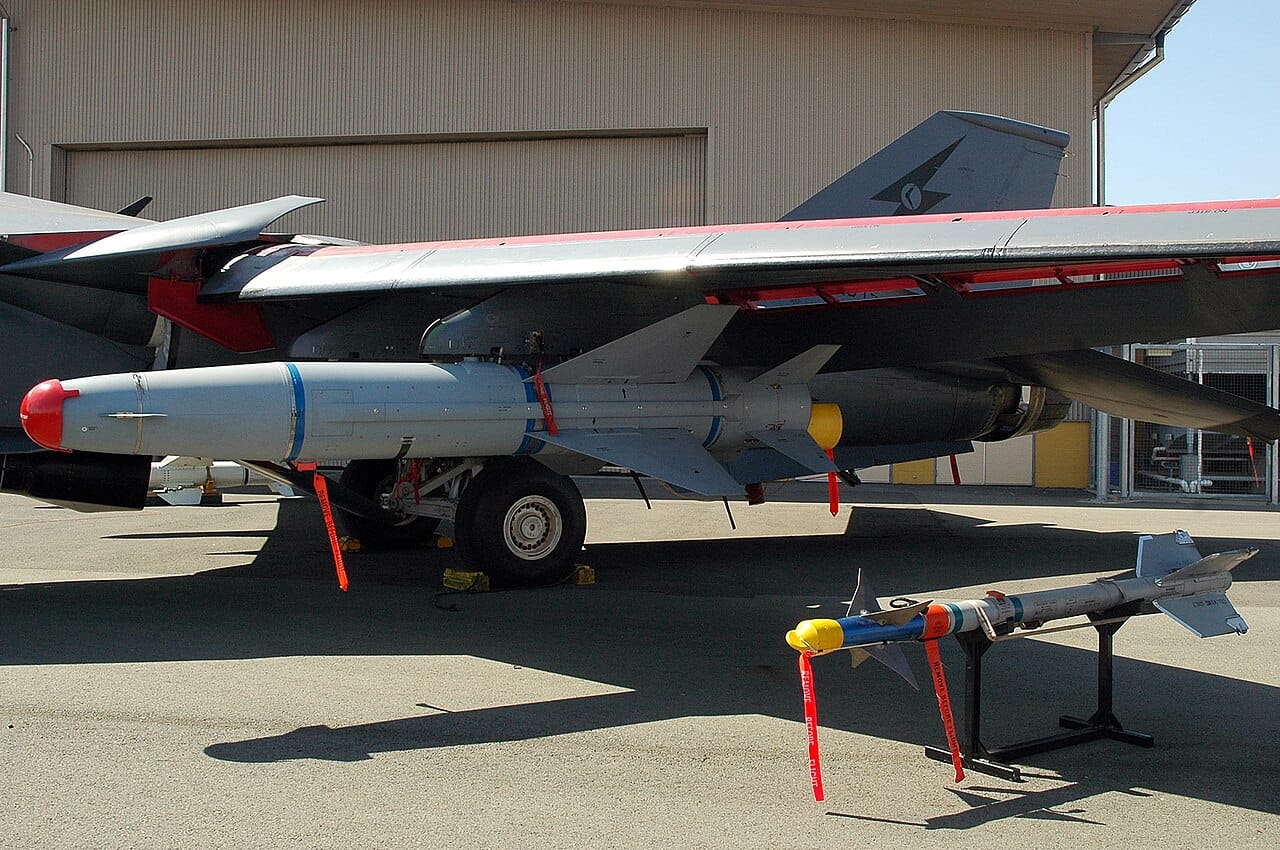
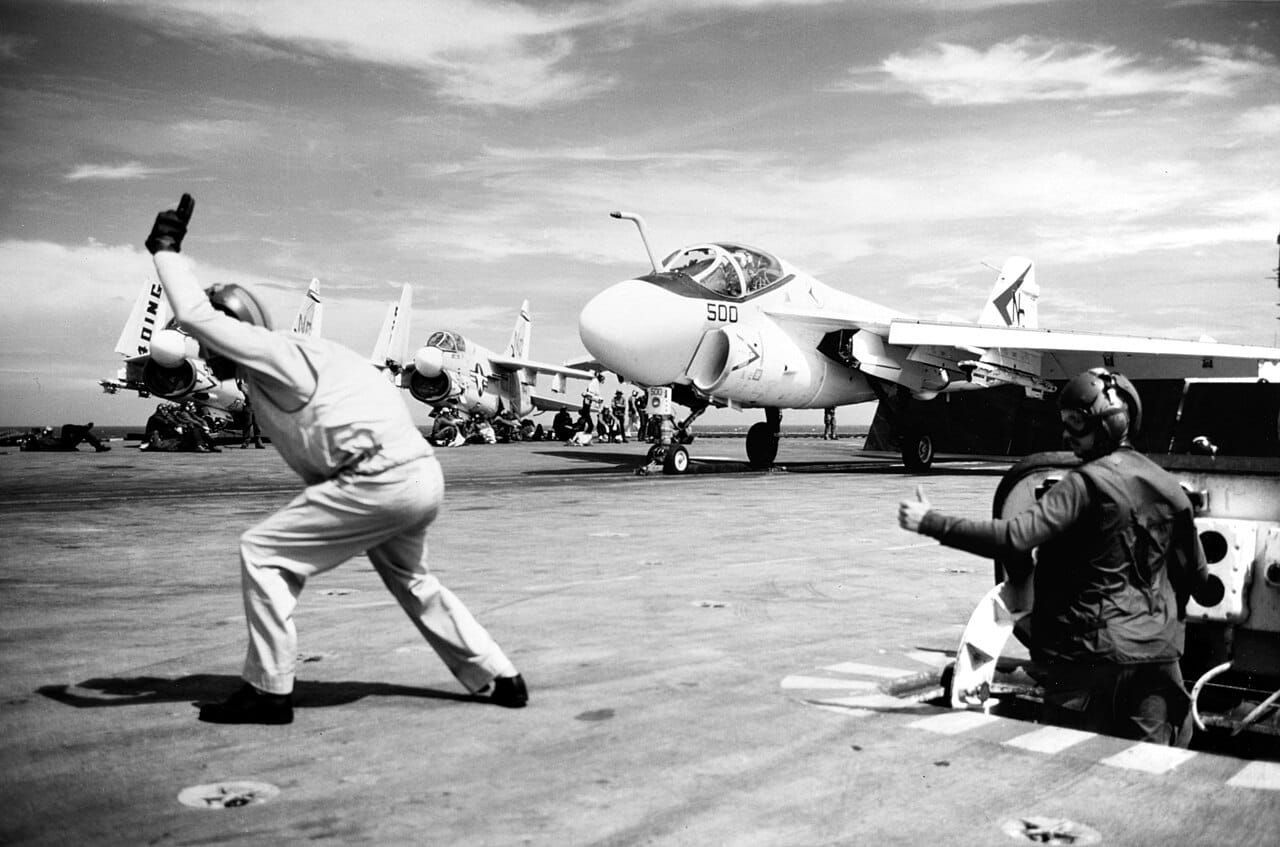
| Strike force | 24 F-111Fs from RAF Lakenheath and 5 EF-111A jammers from Upper Heyford, with Navy A-6s from USS America and USS Coral Sea |
| The detour | France, Spain and Italy denied overflight; the F-111s routed around Iberia, roughly 10,000 km round trip with repeated refuelling |
| Targets | Bab al-Azizia barracks and Tripoli sites; Benina airfield and the Jamahiriyah barracks at Benghazi |
| Loss | One F-111F, callsign Karma 52; its crew, Capts. Fernando Ribas-Dominicci and Paul Lorence, were killed |
Everyone Said No
The politics were almost as difficult as the flying. In the spring of 1986 much of Europe wanted no part of an American strike on Libya, and France, Spain and Italy all refused permission for the bombers to cross their territory. That single diplomatic fact reshaped the entire mission: instead of a short run across the Mediterranean, the Lakenheath F-111s had to fly west out of England, down the Atlantic, around the Iberian Peninsula, and through the Strait of Gibraltar before turning east for Libya.
The U.S. Navy carried the other half of the raid from two carriers already in the Mediterranean, striking Benghazi while the Air Force hit Tripoli.
Thirteen Hours for Twelve Minutes
The outbound leg alone demanded four aerial refuellings from a fleet of KC-10 and KC-135 tankers, in radio silence, at night. Ahead of the bombers, EF-111 Raven jammers blinded Libyan radar. When the F-111s finally arrived over Tripoli they had perhaps twelve minutes to find their targets, release, and turn for the long haul home. Precision was punishing at that range and after that long in the cockpit, and not every bomb hit cleanly.
President Reagan went on television the same night to explain why he had ordered it.

Reagan’s full address to the nation on the night of the raid.
Karma 52
The mission was not free. One F-111F, callsign Karma 52, went down over the Gulf of Sidra; its two-man crew, Captains Fernando Ribas-Dominicci and Paul Lorence, were killed. They were the only American losses of the operation, a reminder that behind the political theatre were aircrew flying a thirteen-hour night mission into defended airspace with no room for error.
A documentary account of the planning and execution of the Libya raid.
What It Signalled
El Dorado Canyon was, in effect, the first time an American president used air power on live television to answer an act of terrorism, and Reagan framed it in exactly those terms.
Its material effect on Gaddafi was debatable; he survived, and Libyan-sponsored terror did not stop overnight. But as a demonstration of reach — of a willingness to fly around a continent to put bombs on a specific compound — it was unmistakable, and it made the F-111, an aircraft once written off as a costly failure, into a symbol of American long-range strike.
A closer analysis of the raid and the twelve minutes over Libya.
Sources: The Aviationist; U.S. Air Force Historical Support Division; Ronald Reagan Presidential Library.
Related Questions
What was Operation El Dorado Canyon?
El Dorado Canyon was the US air strike on Libya on the night of 14–15 April 1986, ordered by President Reagan after a terrorist bombing in Berlin. F-111 bombers from Britain and US Navy aircraft struck targets in Tripoli and Benghazi in one of the longest combat missions flown to that point.
Why did the F-111s fly around Europe to reach Libya?
France, Spain and Italy refused permission to cross their airspace, so the Lakenheath F-111s flew west out of England, down the Atlantic, around the Iberian Peninsula and through the Strait of Gibraltar — a round trip of roughly 10,000 km requiring repeated aerial refuelling.
When did Operation El Dorado Canyon take place?
The raid was flown on the night of 14–15 April 1986. To bomb Tripoli for about twelve minutes, the F-111s flew roughly thirteen hours, because almost every European ally refused overflight rights and forced a detour around the continent.
What aircraft flew in El Dorado Canyon?
The strike used 24 F-111F bombers from RAF Lakenheath and five EF-111A jamming aircraft from Upper Heyford, supported by US Navy A-6 attack jets from the carriers USS America and USS Coral Sea. Targets included the Bab al-Azizia barracks and Benina airfield.
Did the US lose any aircraft in the Libya raid?
Yes. One F-111F, callsign Karma 52, was lost, and its two crewmen — Captains Fernando Ribas-Dominicci and Paul Lorence — were killed. It was the only aircraft lost during the operation.
Had the US clashed with Libya before 1986?
Yes. US Navy F-14 Tomcats had shot down Libyan fighters over the Gulf of Sidra during confrontations with Gaddafi's forces in the 1980s, part of a series of clashes that preceded the 1986 El Dorado Canyon raid.
What are other examples of extremely long bombing raids?
Long-range raids are a recurring feat of air power — from the 1943 low-level attack on the Ploiești oil refineries, flown some 3,700 km without fighter escort, to modern intercontinental bomber missions launched from the continental United States.
0 Commenti