
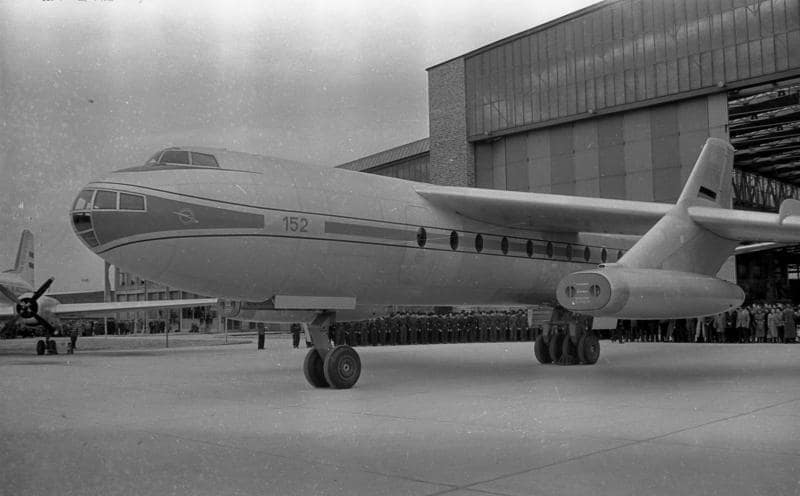
On 30 April 1958, a gleaming four-engined jet was rolled out of a hangar in Dresden to great fanfare. It was called the 152, and it was meant to announce East Germany’s arrival as a builder of modern airliners — a socialist answer to the Comet and the Caravelle, designed and made behind the Iron Curtain. Ten months later it lay in a field, and with it went an entire nation’s aviation industry.
The Baade 152 was the first jet airliner ever developed in Germany. It was also, by the sober judgement of history, one of the worst. Its story is a study in what happens when politics, a converted bomber, and inexperience meet at the leading edge of a new technology.
Informazioni rapide
- Aeromobili: Baade 152 (Dresden 152) — the first jet airliner developed in Germany
- Costruttore: VEB Flugzeugwerke Dresden, East Germany
- Primo volo: 4 December 1958 (prototype V1/I)
- Incidente: 4 March 1959, second flight, near Ottendorf-Okrilla — all four crew killed
- Motori: prototype flew on Soviet Tumansky RD-9; production planned around the indigenous Pirna 014
- Costruito: three airworthy prototypes; only two ever flew
- Destino: programme dissolved February 1961; all airframes scrapped
Baade’s long road home
The aircraft carried the name of Brunolf Baade, a Junkers engineer since 1936 who had worked on the Ju 88 and the pioneering Ju 287 forward-swept-wing bomber. After 1945 the Soviet Union swept up German aerospace talent, Baade among them, and set them to work. The team designed a jet bomber, the EF 150, which lost out to a superior Soviet aircraft — but the design work did not go to waste.
When the engineers were allowed back to East Germany in the mid-1950s, Baade turned that abandoned bomber into the basis for a jetliner. The 152’s lineage showed: a glazed navigator’s nose, and a bicycle undercarriage tucked along the fuselage centreline with little outrigger wheels near the wingtips — the same arrangement as the American Boeing B-47 Stratojet.
A bomber wearing an airliner’s clothes
Converting a bomber into a passenger aircraft is rarely a good idea, and the 152 showed why. The bicycle undercarriage meant the jet could not rotate cleanly on take-off and demanded great precision to land. The wing sat high and broad, robbing the cabin of headroom and cruising efficiency, while the space beneath the floor was swallowed by the landing gear.
The engines were a problem too. The first prototype actually flew on four Soviet Tumansky RD-9 turbojets; the intended production engine was the home-grown Pirna 014, a powerplant rooted in wartime technology with modest thrust and thirsty fuel consumption. It was, in short, a difficult aircraft built on shaky foundations.
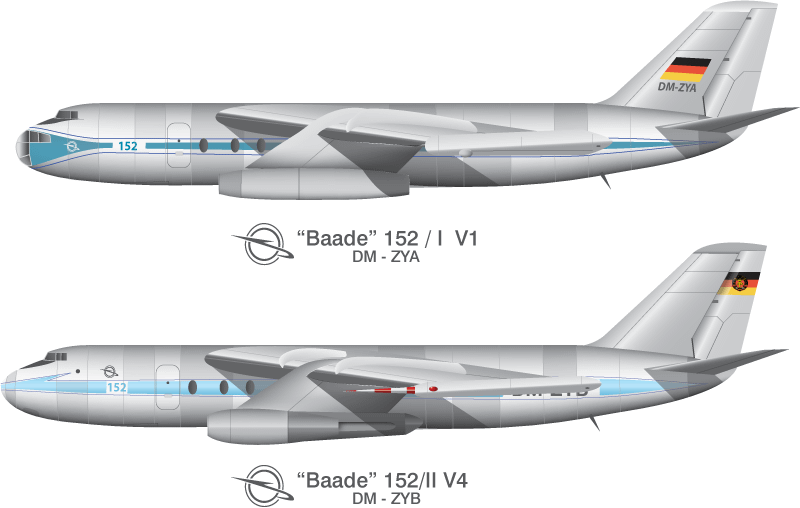
Thirty-five minutes, then disaster
The maiden flight came on 4 December 1958 and lasted a promising 35 minutes. The second flight, on 4 March 1959, did not end well. During a rapid descent back toward Dresden the aircraft went down near Ottendorf-Okrilla, killing the captain, Willi Lehmann, and all four crew aboard.
What caused it was never properly established. One theory holds that the crew, new to jets, misjudged the slow spool-up of the engines and let the aircraft stall. The reasons were never fully investigated, and the findings of the limited inquiry were only made public in 1990. A serious fuel-system fault — the supply cutting out during a steep descent — was later discovered on the aircraft; whether it doomed the first prototype remains an open question.
The industry that died with it
Testing limped on with a second prototype, and at one point around 20 aircraft were in various stages of construction for East Germany’s state airline. Then the politics closed in. On 28 February 1961 the East German government ordered the dissolution of its entire aeronautical industry — a decision heavily shaped by Moscow, which was promoting its own Tupolev Tu-124 and had lost interest in buying or supporting the 152.
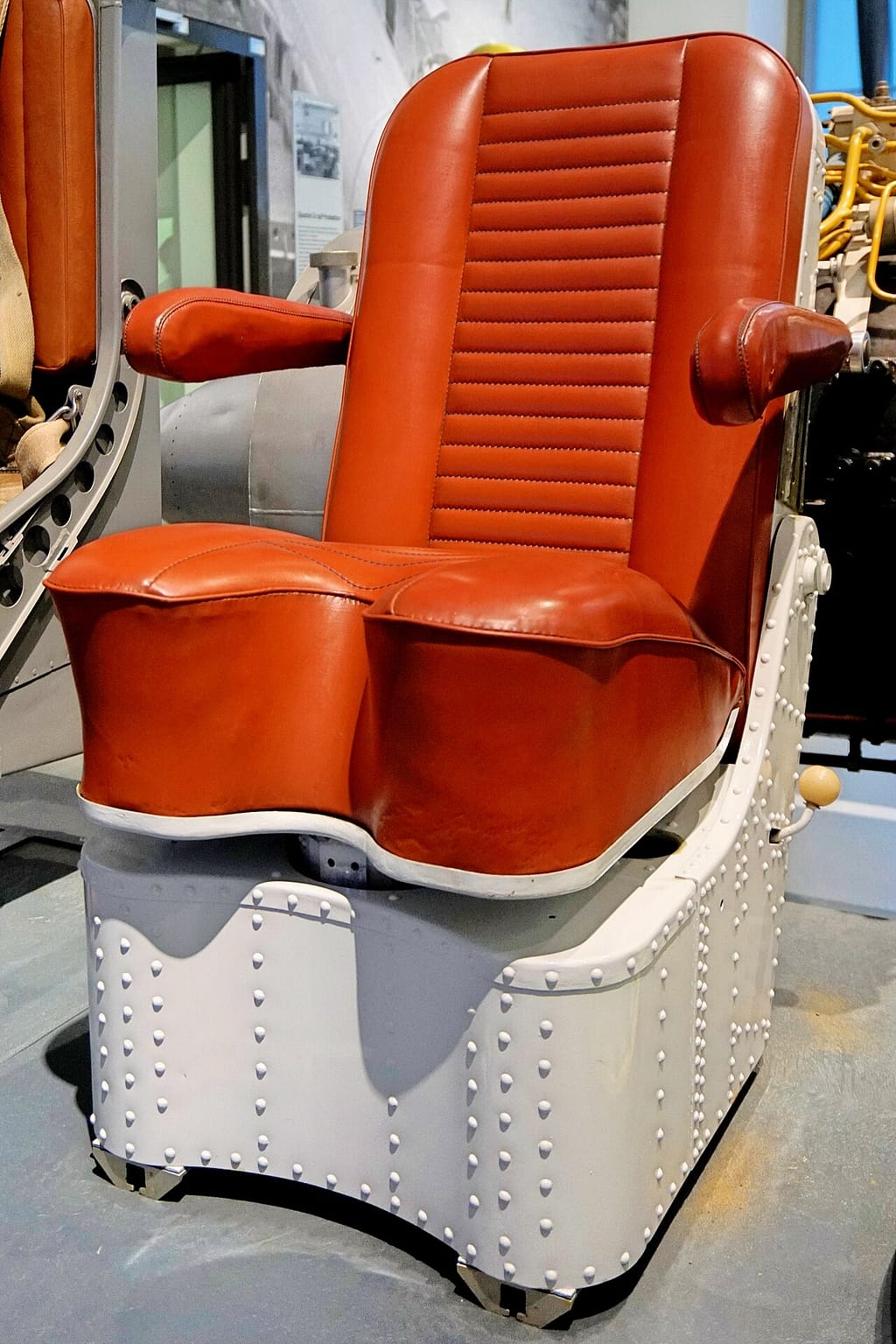
Every airframe was broken up. In a final, faintly absurd twist, the 30 completed Pirna 014 engines left without an aircraft were repurposed to power minesweepers of the East German navy. A single fuselage was later rescued for restoration in the 1990s — the last physical trace of the jet that was supposed to make East Germany an aviation power, and instead ended it.
Sources: Wikipedia; Flight International (1959); Hush-Kit Aviation; Air & Space Magazine; Vintage Aviation News.
0 Commenti