
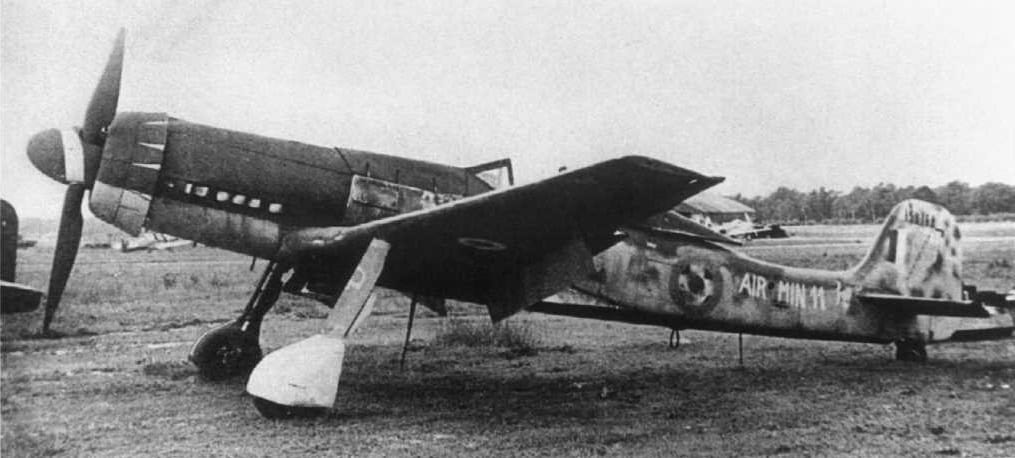
Somewhere over Germany in the last winter of the war, four P-51 Mustangs slid in behind a lone, unfamiliar fighter and prepared to pounce. The pilot did not turn to dogfight. He pushed the throttle to the stop, triggered a chemical boost that shoved extra horsepower into his engine, and simply pulled away — leaving four of the best fighters in the world behind. The man at the controls was not a combat ace. He was the aircraft’s chief designer, Kurt Tank.
The aircraft was the Focke-Wulf Ta 152, the last and finest of Germany’s piston-engined fighters. It arrived too late and in too few numbers to change anything — but in the right hands, at the right altitude, almost nothing could catch it.
Informazioni rapide
- Aeromobili: Focke-Wulf Ta 152H high-altitude fighter
- Designer: Kurt Tank — the “Ta” prefix honours him
- Motore: Junkers Jumo 213E with MW 50 and GM-1 boost
- Velocità massima: around 470 mph (760 km/h) at ~44,000 ft with boost
- Armamento: one 30 mm MK 108 through the propeller hub, two 20 mm MG 151
- Costruito: fewer than 70, October 1944 to February 1945
- Later Tank designs: Argentina’s Pulqui II jet, India’s HF-24 Marut
The last of the great piston fighters
The Ta 152 grew out of the superb Fw 190, refined into a specialist high-altitude interceptor. The “Ta” in its name was an honour: German practice tied a type to its manufacturer, but Focke-Wulf’s technical director Kurt Tank had earned a personal designation. The definitive Ta 152H stretched the wings for thin air and fitted the Junkers Jumo 213E, a supercharged inline engine fed by two boost systems — MW 50 water-methanol down low and GM-1 nitrous up high.
The result was startling. With boost engaged the Ta 152H could reach roughly 470 mph at around 44,000 feet, an altitude where escorting Mustangs and Thunderbolts wheezed and the German fighter still had energy to spare. It carried a 30 mm cannon firing through the propeller hub and a pair of 20 mm guns in the wing roots.
The day the designer showed them
The most famous Ta 152 story needs no combat report. Ferrying an early Ta 152H from Focke-Wulf’s base at Langenhagen to the factory at Cottbus, Kurt Tank was warned by the control tower that four P-51D Mustangs were closing fast behind him. Rather than fight, Tank firewalled the throttle, engaged the water-methanol boost, and outran them cleanly.
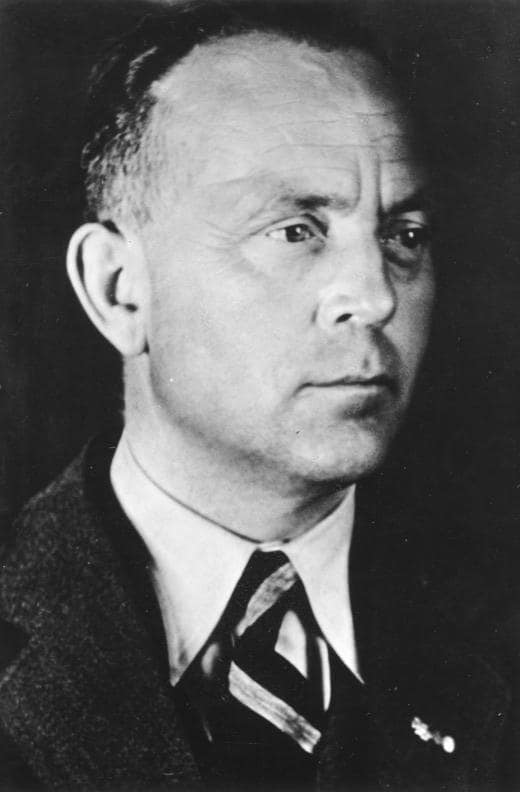
The baffled American pilots reported the encounter — and it was among the first hints the Allies had that the Luftwaffe had fielded a propeller-driven fighter that could simply run away from a Mustang. That the man flying it had also designed it only sharpened the point.
Too few, too late
For all its brilliance, the Ta 152 was a footnote in the air war. Fewer than 70 were completed between October 1944 and February 1945, and they reached only a handful of units, chiefly the fighter wing tasked with protecting Germany’s vulnerable jet airfields. There were simply not enough, flown by too few experienced pilots, in a sky the Allies already owned. A single Ta 152 survives today, preserved by the Smithsonian.
The designer’s second and third acts
Kurt Tank’s career did not end in 1945. Recruited to Argentina, he led the design of the Pulqui II, one of the first jet fighters built in South America. When Perón fell, Tank moved again — this time to India, where he headed the team that created the HAL HF-24 Marut, the first jet combat aircraft designed and built in India.
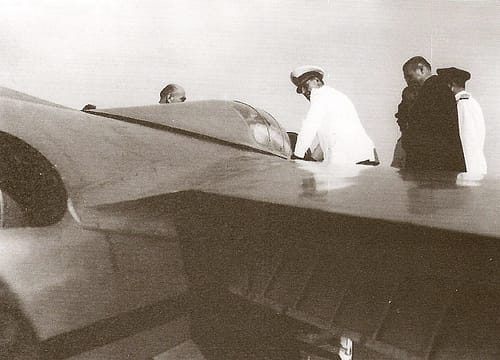
Few engineers leave a mark on three continents. Fewer still climb into their own creations and outfly the enemy’s best. The Ta 152 never got the war it was built for — but the story of the designer who left four Mustangs standing has outlived every one of them.
Sources: Smithsonian National Air and Space Museum; HistoryNet; Eric Brown, “Wings of the Luftwaffe”; historyofwar.org; Wikipedia.
0 Commenti