
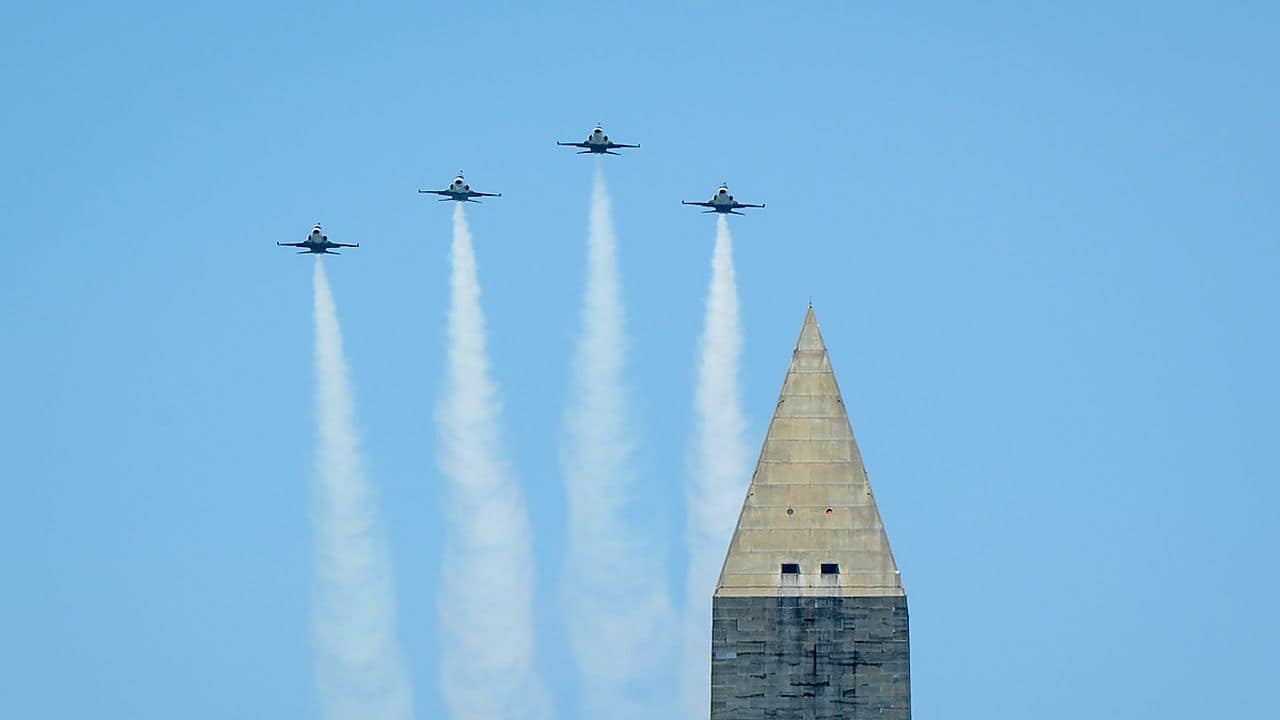
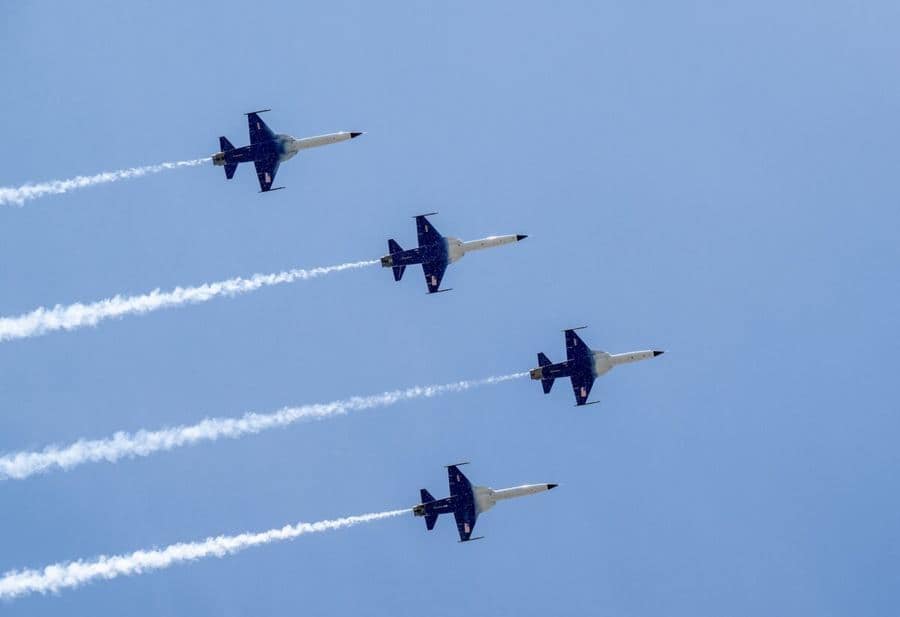
The thermometer read over 100 degrees Fahrenheit, the crowd on the National Mall had been baking since morning, and somewhere above the haze four F-5 Tigers were pulling into formation. One of them was flown by the administrator of NASA himself. It was 1:14 p.m. on July 4, 2026 — and America’s 250th birthday party was about to spend the next nine hours in the sky.
What followed was, by aircraft count and sheer ambition, one of the largest flying displays ever staged over an American city: every branch of the armed services plus NASA and the Coast Guard, wave after wave, from parachute teams to a three-bomber formation to a brand-new Air Force One. Even the thunderstorm that finally chased everyone off the Mall couldn’t quite end it — a lone B-1 came back after dark to light its afterburners over the fireworks.
Quick Facts: Salute to America Flyover
| Data | July 4, 2026 — America’s 250th Independence Day |
| Posizione | National Mall, Washington, D.C. |
| Durata | More than nine hours of scheduled flying (1:14 p.m. to after 10 p.m.) |
| Participants | US Air Force, Navy, Marine Corps, Army, Coast Guard, NASA |
| Highlights | Tri-bomber formation (B-52, B-1B, B-2), Thunderbirds’ first demonstration over the capital, Blue Angels, new VC-25B Air Force One with F-22 escort |
| Weather | 100°F+ heat; evening thunderstorms cut several acts |
A Fleet Review in the Sky
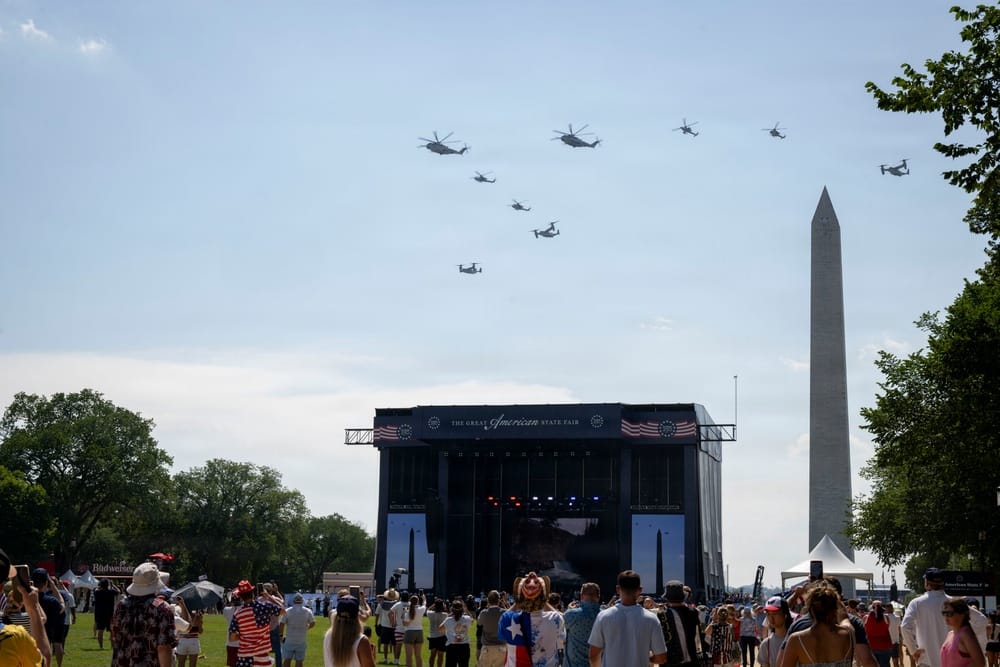
The program opened gently — four privately owned F-5 Tiger IIs, one of them provided and flown by NASA administrator Jared Isaacman, followed by jets from NASA’s own fleet, including an F-15D and an F/A-18B wearing a special stars-and-stripes 250th anniversary livery. Then the services took turns. Coast Guard Dolphins and Jayhawks. The Army’s Golden Knights and the Navy’s Leap Frogs parachuting down onto the Mall itself. An eight-ship Army helicopter formation of Apaches, Black Hawks and Chinooks.
The Air Force sent its “heavies” first — a C-17, a KC-135, a KC-46 and a C-5 Galaxy — before a special-operations wave out of Cannon Air Force Base: two AC-130J Ghostrider gunships, two CV-22 Ospreys and a pair of OA-1K Skyraider IIs, the crop-duster-turned-attack-aircraft that has spent the past week in headlines for less festive reasons.
The Marines brought ten helicopters, then Hercules tankers and Hornets. The Navy answered with Seahawks, a P-8 Poseidon and Super Hornets that looped over the Mall as a warm-up for the main events. Even the presidential helicopters of Marine Helicopter Squadron One made a pass.
Three Bombers, One Pass
At around 6 p.m. came the sight aviation photographers had camped out all day for: all three of the US Air Force’s strategic bombers — the B-52 Stratofortress, the B-1B Lancer and the B-2 Spirit — sweeping over the National Mall together in a single formation. Three generations of American deterrence, more than 70 years of design history, in one frame with the Washington Monument.
Then it was the Thunderbirds’ moment. The team has performed around the world since 1953, but the capital’s heavily restricted airspace had always kept their show away from the monuments — until a special waiver for the semiquincentennial. Eight red, white and blue F-16Cs flew what their commander described beforehand as “the majority of our show” — the first Thunderbirds demonstration ever performed over the nation’s capital.
The New Air Force One — and the Storm
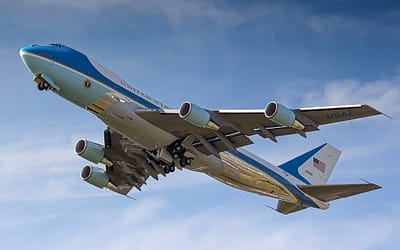
Just after 7 p.m., the newest aircraft in the presidential fleet made its public Washington debut: the VC-25B — the former Qatari Boeing 747-8 that flew its first mission as Air Force One only days earlier — thundered over the Mall with four F-22 Raptors on its wing.
By then, though, the sky had other plans. Thunderstorms building over the city forced an evacuation of the Mall even as the big Boeing passed overhead. The planned stealth-aircraft flyover, the F-22’s afterburner passes and the Golden Knights’ twilight jump were all cancelled. For a celebration built around nine hours of flying, it was a frustrating final act — but the organisers got one more card to play.
When the Mall reopened at 9:45 p.m., a lone B-1B Lancer returned in the dark and lit its afterburners over the fireworks. If you have to end a nine-hour airshow early, that is the way to do it.
Why It Mattered
Flyovers are usually punctuation — thirty seconds of noise over a stadium. This was something else: a deliberate, day-long portrait of American military aviation, staged over the one stretch of airspace where almost none of these aircraft are ever allowed to fly. For the crowds who stuck it out through the heat and the lightning, it was a once-in-a-generation inventory of everything from parachutes to stealth bombers.
The footage below captures the day’s biggest moments — the new Air Force One, the bombers, and the fighters that closed the show.
Sources: Stars and Stripes, AeroTime, Air & Space Forces Magazine, Washington Post, DVIDS, NASA
Domande correlate
What was the Salute to America flyover?
The Salute to America flyover was a massive military aerial display over Washington, D.C., on 4 July 2026, marking America's 250th Independence Day. Staged over the National Mall, it featured more than nine hours of scheduled flying by every branch of the armed services plus NASA and the Coast Guard, by aircraft count one of the largest flying displays ever over an American city.
When was the July 4 2026 military flyover in Washington?
The flyover took place on 4 July 2026, America's 250th Independence Day, over the National Mall in Washington, D.C. Flying began at 1:14 p.m. with four F-5 Tigers, one flown by the administrator of NASA, and was scheduled to run for more than nine hours, though evening thunderstorms cut some of it short.
What aircraft flew over the National Mall on July 4 2026?
The display spanned nearly every type in the U.S. inventory: F-5 Tigers, Army parachute teams and an eight-ship helicopter formation of Apaches, Black Hawks and Chinooks; Air Force heavies including the C-17, KC-135, KC-46 and C-5 Galaxy; special-operations AC-130J Ghostriders and CV-22 Ospreys; Navy Super Hornets and P-8s; and the Thunderbirds' largest-ever demonstration over the capital.
Did weather affect the July 4 2026 flyover?
Yes. Thunderstorms building over Washington forced an evacuation of the National Mall just as the new Air Force One passed overhead around 7 p.m. The planned stealth-aircraft flyover, the F-22's afterburner passes and the Golden Knights' twilight jump were all cancelled. Undeterred, a lone B-1 bomber returned after dark to light its afterburners over the fireworks.
What is the VC-25B Air Force One?
The VC-25B is the newest presidential aircraft, a converted Boeing 747-8 that began life as a Qatari jet before being rebuilt as Air Force One. It made its public Washington debut during the 4 July 2026 flyover, thundering over the National Mall with four F-22 Raptors on its wing, only days after flying its first mission in the presidential role.
How did the July 4 2026 aerial display unfold?
The show opened at 1:14 p.m. on 4 July 2026 with four F-5 Tigers, one piloted by NASA's administrator. Waves of aircraft followed for hours, parachute teams, Army helicopters, Air Force and Marine heavies, Navy jets and the Thunderbirds, before evening thunderstorms forced the Mall's evacuation and cancelled the finale's stealth and afterburner passes.
0 Commenti