
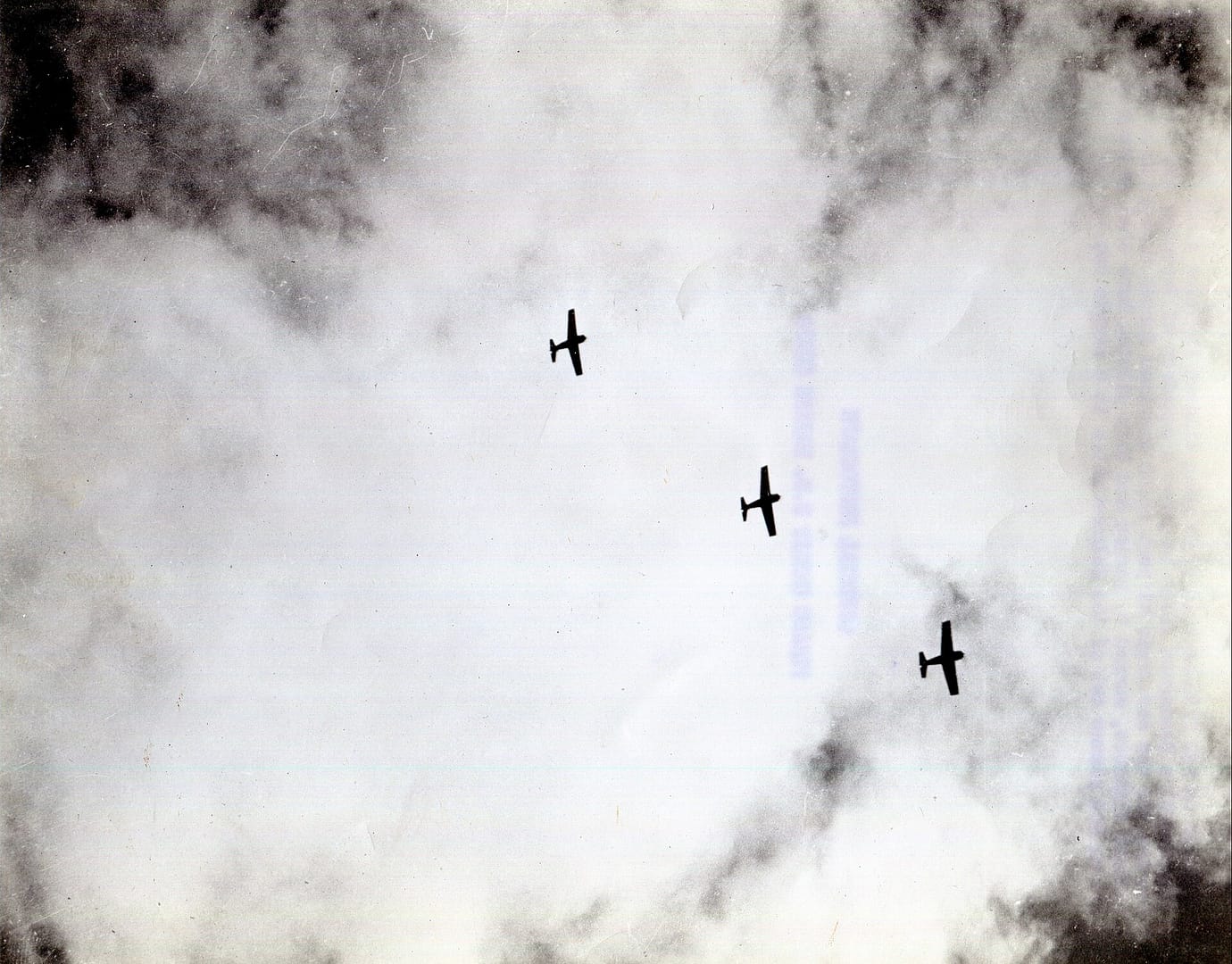
Picture a single dirt runway hacked out of a jungle, ringed by palm stumps and bomb craters, with a handful of battered fighters parked in the mud. Every day it was bombed. Some nights it was shelled by battleships. And from it, a scratch force of Marine, Navy and Army pilots held the line that turned the Pacific War.
They called themselves the Cactus Air Force — and for a few desperate months in 1942, they were all that stood between Guadalcanal and the Japanese advance.
Informazioni rapide
| Nome | Cactus Air Force (“Cactus” = Allied code name for Guadalcanal) |
| Base | Henderson Field, Guadalcanal |
| Arrived | August 20, 1942 (VMF-223 Wildcats, VMSB-232 Dauntlesses) |
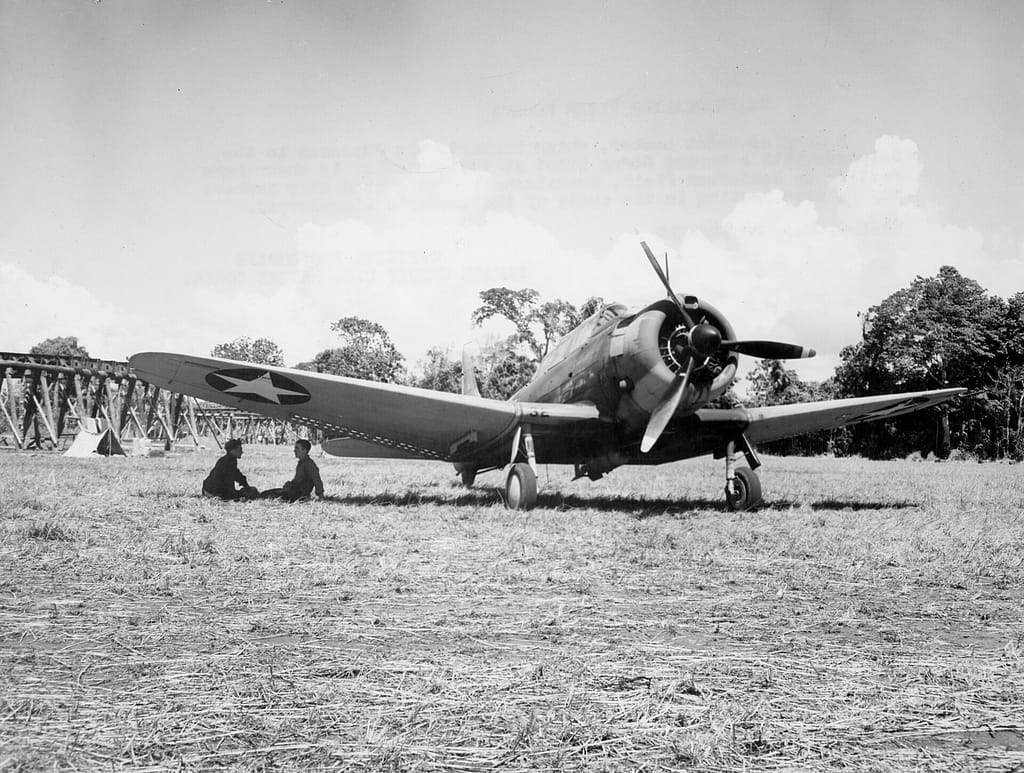
| Aeromobili | F4F Wildcat fighters, SBD Dauntless dive bombers |
| Top ace | Joe Foss, 26 victories, Medal of Honor |
| Campagna | August 1942 - February 1943 |
A field named for a dead man
The airstrip had been started by the Japanese and captured by U.S. Marines in the August 7, 1942 landings. The Americans finished it and named it Henderson Field, after Major Lofton Henderson, a Marine dive-bomber pilot killed at Midway. On August 20, the first aircraft arrived: nineteen Grumman F4F Wildcats of squadron VMF-223, led by Major John L. Smith, and a dozen SBD Dauntless dive bombers, flown in off the escort carrier USS Long Island.
That ragtag collection — soon joined by Navy and Army Air Forces aircraft — became the Cactus Air Force, named for the island’s radio call sign. It was never large. It was rarely rested. And it was almost never at full strength.
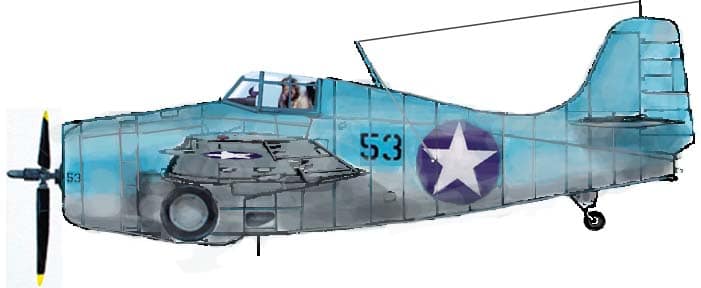
What made the job survivable was the aircraft. The Wildcat was slower and less nimble than Japan’s superb A6M Zero, but it was a brawler: self-sealing fuel tanks, armour plate, and six heavy .50-calibre machine guns. A Wildcat could take hits that would tear a Zero apart, and its pilots learned to fight as a team rather than duel one-on-one.
Living under the guns
Conditions on Cactus were miserable. Pilots and ground crews lived in mud, ran short of food, fuel and spare parts, and fought off malaria as well as the enemy. Japanese bombers came almost daily, and a lone night raider the men nicknamed “Washing Machine Charlie” kept everyone awake.
The worst came on the night of October 13-14, 1942, when the Japanese battleships Kongō and Haruna stood off the coast and fired close to 900 heavy shells directly onto the airfield. The bombardment cratered the runway, destroyed aircraft and killed men. And yet, by the next morning, crews had filled the holes, patched together flyable aircraft from wrecks, and put fighters back into the air.
The aces of Cactus
The pressure created legends. Captain Joe Foss, who led a flight of Wildcats in VMF-121 that became known as “Foss’s Flying Circus,” shot down 26 Japanese aircraft over the island — tying Eddie Rickenbacker’s American record from the First World War — and received the Medal of Honor. Marion Carl of VMF-223, a cool tactician, was credited with 18.5 victories. Their squadron commander, John L. Smith, added 19.
Numbers like those came at a cost. Squadrons that arrived twenty aircraft strong were sometimes reduced to a handful of flyable machines within weeks, and pilots flew until they dropped from exhaustion or fever.
Why it mattered
As long as the Cactus Air Force could fly, Japanese ships could not safely approach Guadalcanal by day, and the island could not be retaken. That single muddy strip anchored the whole campaign. When Guadalcanal was finally secured in February 1943, it marked the first major reversal of Japanese expansion in the Pacific — and the shoestring flyers of Henderson Field had made it possible.
Sources: Naval History and Heritage Command, HistoryNet, War History Online, Joe Foss Medal of Honor citation, Wikipedia.
0 Commenti