
Informazioni rapide
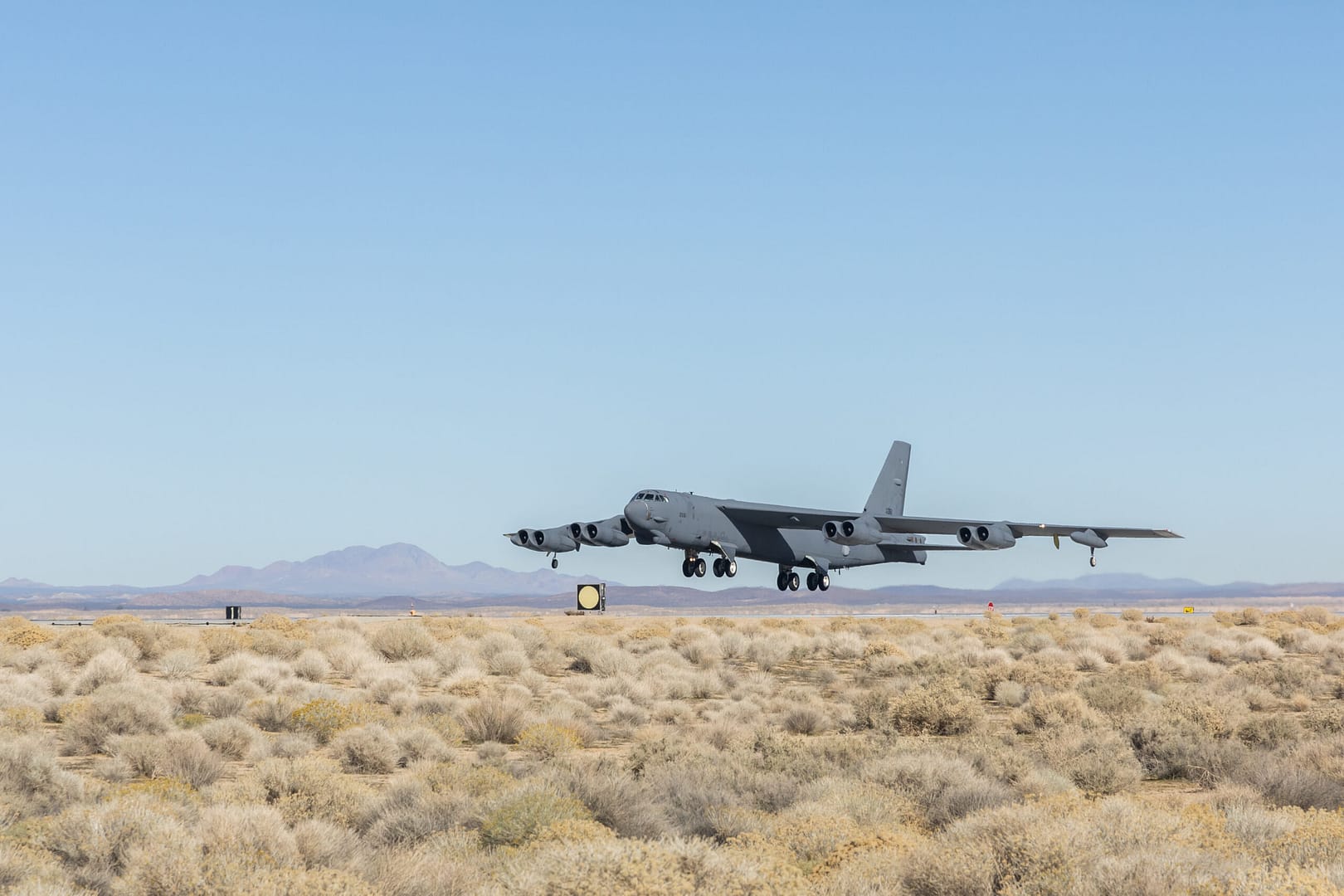
Aeromobili: B-52H Stratofortress, tail number 60-0061 (call sign Torch 11)
Unità: 412th Test Wing, Edwards Air Force Base, California
Data: 15 June 2026
Missione: AN/APQ-188 AESA radar modernisation test sortie
Vittime: All 8 crew killed (3 Active-Duty, 2 Boeing contractors, 2 other contractors, 1 civilian)
Operations resumed: Airfield 18 June, flight test/TPS 22 June
Fleet status: No grounding of remaining 75 B-52Hs
"The B-52 is an extraordinarily forgiving aircraft, but it demands respect. When something goes wrong at those speeds and altitudes, the crew has seconds to react. The fact that Edwards resumed operations so quickly speaks to the professionalism of the wing and the rigour of the investigation process."
Col. (Ret.) Russ Bartlett — Former B-52 Instructor Pilot, USAF
Quello che è successo
Aircraft 60-0061 had arrived at Edwards in December 2025 after receiving an upgraded AN/APQ-188 active electronically scanned array (AESA) radar at Boeing's San Antonio facility. The new radar is the centrepiece of the B-52's Radar Modernisation Programme, replacing the decades-old mechanical AN/APQ-166. On the morning of 15 June, the bomber took off for a routine test sortie. Immediately after getting airborne, something went catastrophically wrong. The aircraft crashed and was engulfed in flames. The deputy commander of the 412th Test Wing, Col. James Hayes, said it was "immediately clear" the crash was not survivable. Early data obtained by PBS showed the aircraft plunged at nearly a mile per minute before impact. Investigators are focusing on the takeoff phase — specifically engines and controllability.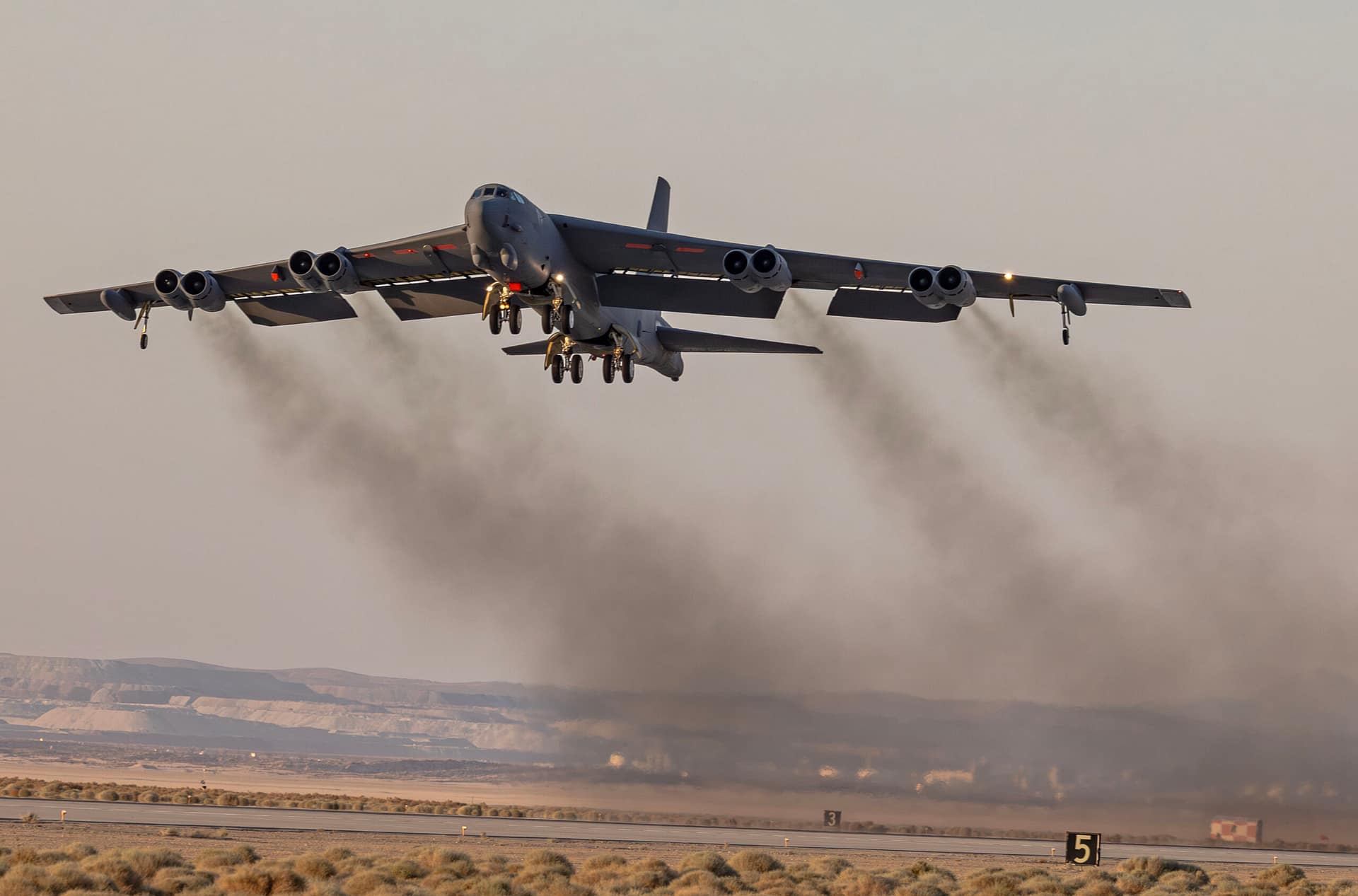
The Crew
Eight people died aboard Torch 11 — a mix that reflects the unique nature of flight test. Two were Boeing contractors: Col. Gregory Watson (retired, 53), a weapon systems officer, and retired Lt. Col. Miles Middleton (50), a pilot. Two were active-duty pilots: Maj. Robert Dee (40) and Maj. Brad Hovey (35). Lt. Col. Gabriel Estrella (40) and Maj. Alexander Davis (34) were weapon systems officers. Jeromy Smith (32) was an Air Force civilian flight test engineer. Christopher Rischar (41) was a JT4 contractor flight test engineer. Their remains were flown to Dover Air Force Base on 19 June for identification and funeral preparation. More than 700 people gathered at the Edwards chapel on 17 June, lighting candles in honour of the crew. The 307th Bomb Wing at Barksdale set up a memorial with eight candles, a standing display of white flowers, and a B-52 crew helmet.Why It Matters Beyond Edwards
The crash happened during the most ambitious B-52 modernisation effort in the bomber's seven-decade history. The AESA radar upgrade is only one piece — the Air Force is also preparing to re-engine the entire fleet with Rolls-Royce F130 turbofans, replacing the eight original Pratt & Whitney TF33s on each aircraft, which will create the new B-52J designation. Stars and Stripes reported that the Air Force intends to press ahead with the modernisation programme despite the crash. The service needs the upgraded bomber to remain viable through the 2050s as a standoff weapons carrier alongside the B-21 Raider. The last fatal B-52 crash was in 1994 at Fairchild Air Force Base, when a B-52H stalled during an airshow practice. Before that, Mather Air Force Base in 1982 — nine killed. The Edwards loss is a painful reminder that test flying remains among the most dangerous work in aviation, even when the aircraft is 65 years old.Domande correlate
What happened in the Edwards B-52 crash?
A B-52H Stratofortress crashed during a routine training mission near Edwards Air Force Base in California. The aircraft was assigned to the 419th Flight Test Squadron. All crew members on board were killed, making it the deadliest B-52 accident in decades.
How old is the B-52 fleet?
The B-52H models currently in service were built between 1960 and 1962, making them over 60 years old. Despite their age, the airframes have been extensively upgraded and are expected to remain in service until at least the 2050s — a total lifespan approaching 100 years.
Why does the USAF still fly such old aircraft?
The B-52 remains in service because its airframe is structurally sound, its operating costs are relatively low, and it excels in its primary role as a standoff weapons platform. Modern upgrades — new engines (Rolls-Royce F130), radar, and communications — keep it tactically relevant without the cost of building a new bomber fleet.
When did Edwards resume flight operations?
Edwards resumed B-52 flight operations after completing an initial safety stand-down and preliminary investigation. The Air Force conducted a thorough review of maintenance records, crew procedures, and flight data before clearing the fleet to return to flying status.
Post correlati
Sources: Air & Space Forces Magazine, PBS, Stars and Stripes, U.S. Air Force
0 Commenti