

Informazioni rapide
- Evento: First French Air and Space Force Hellfire missile launch
- Data: Announced April 8, 2026
- Missile: AGM-114 Hellfire
- Produttore: Lockheed Martin / Northrop Grumman
- Significato: Expands French precision strike capability and US interoperability
Why the Hellfire Matters
The AGM-114 Hellfire has been the West's workhorse precision munition for decades. Originally designed as an anti-tank missile for the AH-64 Apache helicopter, it evolved into a multi-role weapon fired from drones, fixed-wing aircraft, ground vehicles, and even naval vessels. The MQ-9 Reaper's entire combat identity is built around the Hellfire. The missile that killed al-Qaeda leader Ayman al-Zawahiri in 2022 was a modified Hellfire variant — the R9X, which uses pop-out blades instead of an explosive warhead. France has long relied on its own domestically produced munitions. The MBDA family of missiles — including the Scalp cruise missile and the AASM Hammer guided bomb — gives France a credible independent strike capability. But these weapons are expensive, and integrating American munitions like the Hellfire opens up a vast global supply chain, lower unit costs, and seamless interoperability with NATO allies who already use the same systems. The decision to adopt the Hellfire is as much industrial as it is military. France is signaling that in the new European security environment, sovereignty in weapons production may matter less than having enough precision munitions to fight with.Europe's Precision Gap
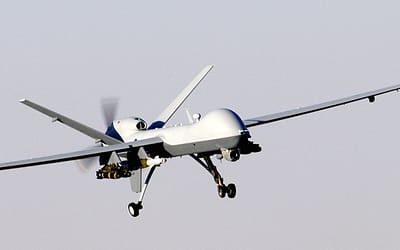
The war in Ukraine exposed a brutal truth: European nations do not have enough precision-guided munitions. Stockpiles that were supposed to last months were depleted in weeks once deliveries to Kyiv began. Production lines that had been scaled down during the peace dividend years could not ramp up fast enough to meet demand. France's Hellfire adoption is one answer to that problem. By qualifying its aircraft to fire American munitions, France gains access to production capacity that dwarfs anything in Europe. Lockheed Martin and Northrop Grumman produce Hellfires in quantities that European missile makers cannot match. The test also has implications for French drone operations. As France expands its fleet of armed MQ-9 Reapers — which it operates under the designation Block 5 — the Hellfire becomes a natural fit. French Reapers conducting operations in the Sahel or the Mediterranean can now carry the same weapon that American and British Reapers use, simplifying logistics and enabling closer coalition operations.A Signal to Allies and Adversaries
France has always walked a careful line between strategic autonomy and alliance integration. President Macron has repeatedly called for European defense independence. But the reality of modern warfare — where munition consumption rates far exceed production capacity — is forcing even the most sovereignty-minded European powers to accept that interoperability is not optional. One Hellfire test does not rewrite French defense policy. But it does mark a shift in direction. When the next crisis comes, French aircraft will be able to fire the same weapons as their American, British, and Australian counterparts. In a coalition fight, that matters more than any amount of strategic rhetoric. Sources: French Ministry of the Armed Forces, Army Recognition, Defense NewsDomande correlate
What is the AGM-114 Hellfire missile?
The AGM-114 Hellfire is an American precision-strike missile originally designed as an anti-tank weapon for the AH-64 Apache helicopter. It evolved into a multi-role munition fired from drones, fixed-wing aircraft, ground vehicles, and naval vessels, and has been the West's workhorse precision weapon since the 1980s. The MQ-9 Reaper's entire combat identity is built around it.
What was the Hellfire R9X variant?
The R9X is a modified Hellfire that replaces the explosive warhead with six pop-out blades, destroying a target through kinetic force while minimizing collateral damage. It was the weapon used to kill al-Qaeda leader Ayman al-Zawahiri in 2022, demonstrating how the Hellfire family has been adapted for precise, low-collateral strikes.
Why did France adopt the Hellfire missile?
On April 8, 2026, the French Air and Space Force conducted its first-ever Hellfire launch from a fixed-wing aircraft, signaling a strategic pivot toward interoperability with American systems and renewed investment in precision strike. France has long relied on its domestic MBDA munitions, so adopting the US-made Hellfire marks a notable shift for a continent worried about its ability to defend itself.
What aircraft can fire the Hellfire missile?
The Hellfire is fired from a wide range of platforms: attack helicopters like the AH-64 Apache, drones such as the MQ-9 Reaper, fixed-wing aircraft, ground vehicles, and even naval vessels. Europe is expanding precision-strike options across its rotary fleet too, as seen in the Tiger attack helicopter's latest upgrade.
What is the MQ-9 Reaper's connection to the Hellfire?
The MQ-9 Reaper's entire combat identity is built around the Hellfire missile, which lets the drone conduct precise strikes against ground targets. Armed drones reshaped modern warfare, a path opened by the Reaper's predecessor — the MQ-1 Predator, the drone that refuses to stay retired.


0 Commenti