
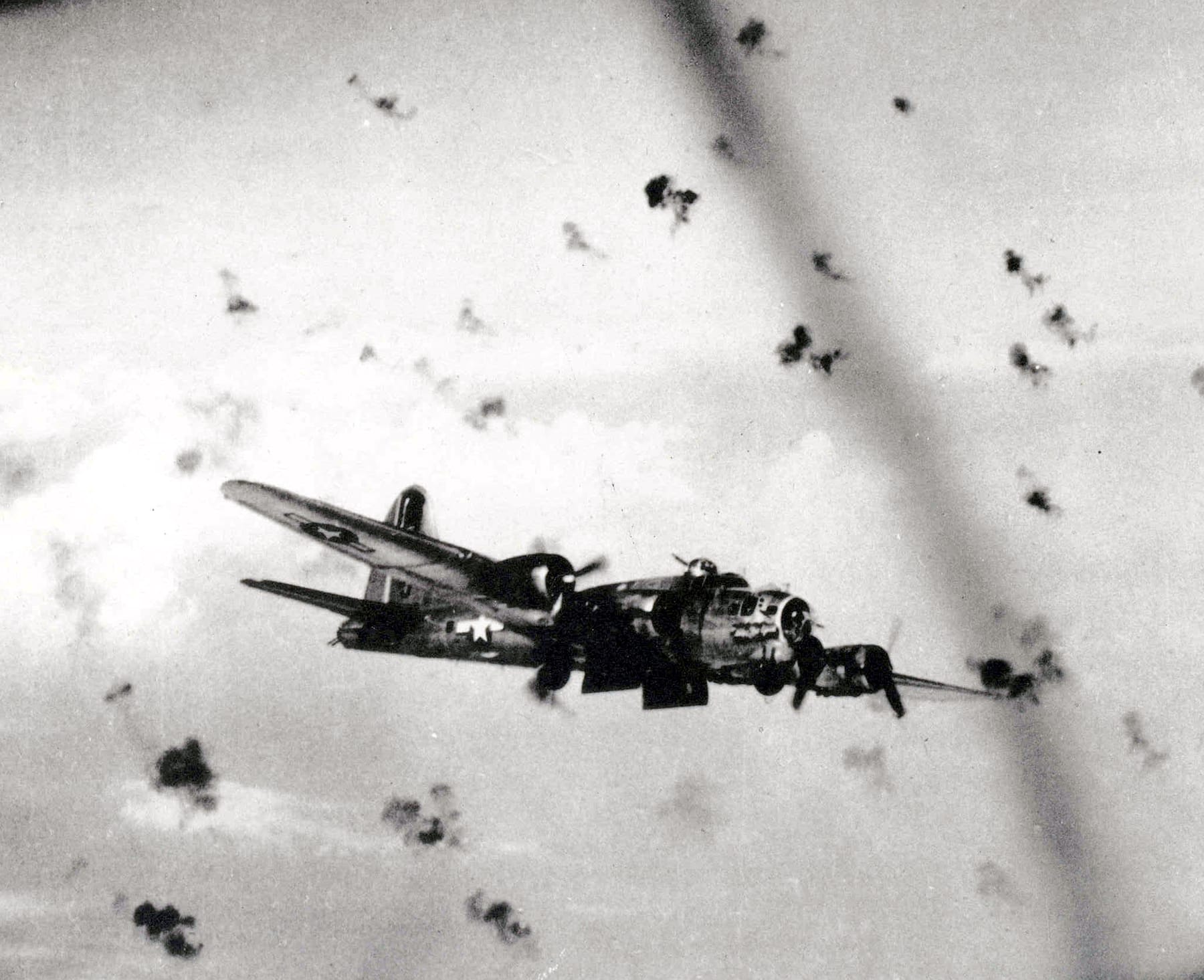
Sei miglia sopra Budapest l'aria era di quaranta gradi sotto zero e il cielo intorno alla Fortezza Volante chiamata Mizpah Si era trasformato in un muro di fumo nero e fiamme arancioni. Era il 14 luglio 1944 e la contraerea sulla capitale ungherese era di quel tipo di fuoco che spingeva i mitraglieri a terra a percorrere metodicamente la formazione, casella per casella, sfidando i bombardieri a mantenere la posizione.
Il Primo Tenente Ewald Swanson aveva appena sentito il suo B-17 sollevarsi da terra mentre le bombe si staccavano, quando un proiettile da 88 mm colpì il muso del suo aereo ed esplose. In un singolo lampo bianco, il bombardiere, il navigatore, il plexiglas, il pannello strumenti e gran parte della fusoliera anteriore cessarono semplicemente di esistere. Dove prima c'era la cabina di pilotaggio, ora c'era aria aperta che sfrecciava a 320 chilometri all'ora.
Secondo ogni legge dell'aerodinamica, Mizpah should have rolled over and fallen four miles into the burning city. Instead she kept flying — long enough for the men still alive behind the bomb bay to clip on their parachutes and jump. This is the story of the headless Flying Fortress, and of the airmen who refused to ride her down.
Informazioni rapide
- Aeromobili: B-17G-35-BO Mizpah, numero di serie 42-32109, 840° Squadrone Bombardieri, 483° Gruppo Bombardieri
- Data e obiettivo: 14 luglio 1944, scalo di smistamento a Budapest, Ungheria (Quindicesima Forza Aerea, proveniente dall'Italia)
- Il successo: Un colpo di contraerea da 88 mm colpì direttamente il muso, uccidendo all'istante il navigatore e il bombardiere e distruggendo l'intera sezione anteriore.
- Pilota: Il primo tenente Ewald A. Swanson, che ha tenuto fermo il relitto per circa dieci minuti
- Risultato: Otto uomini sopravvissero come prigionieri di guerra; due furono uccisi; tutti i sopravvissuti furono liberati il 30 aprile 1945.
- Documentato da: Rapporto sull'equipaggio disperso n. 6901, con dichiarazioni giurate di testimoni oculari di altri equipaggi della formazione.
Una gita per il latte trasformatasi in un massacro
The 483rd Bomb Group had been in combat barely three months, flying out of Tortorella in southern Italy. On the morning of 14 July 1944 some sixty Fortresses lifted off to strike the rail yards feeding the German war machine through Budapest. The target mattered — troops, oil and equipment all funnelled through those tracks.
L'Ungheria, tuttavia, era circondata da batterie antiaeree e la contraerea quel giorno fu micidiale. Molto prima che raggiungessero il punto di mira, i fori si aprivano attraverso Mizpah’s tail and wings. The combat box held formation anyway, because a B-17 on the bomb run could not jink or weave; it had to fly straight and level and trust the man beside it.
Poi, negli ultimi secondi della corsa, il bombardiere sottotenente Kenneth Dudley ha azionato il meccanismo di caricamento. È stato in quell'istante che il proiettile è arrivato a destinazione.
La storia del B-17 "Mizpah", senza testa, ricostruita con fotografie d'epoca (FlakAlley).
Il guscio che ha cancellato la cabina di pilotaggio
Il proiettile da 88 mm colpì in pieno il muso ed esplose. Dudley e il navigatore, il sottotenente Joseph Henderson, morirono sul colpo. L'esplosione strappò l'intera sezione del muso sopra il parabrezza, lasciando i due piloti a fissare il cielo aperto con il vento che lacerava le loro maschere d'ossigeno.
Gli uomini che volavano accanto assistettero all'accaduto, e le loro successive dichiarazioni giurate nel Rapporto sull'equipaggio aereo disperso n. 6901 sono tra le testimonianze più vivide della guerra. Uno di loro, volando direttamente di fronte Mizpah, descrisse il momento in cui la Fortezza fu decapitata.
Goodwin counted the parachutes as they came: “five good chutes and one tattered chute.” A second airman, ball-turret gunner S/Sgt. Charles L. Stoll Jr., remembered the same horror from a different angle.
Volare una fortezza a mano
È qui che nasce la leggenda del B-17. Con il pannello strumenti distrutto e la cloche in frantumi, Swanson non avrebbe dovuto avere più nulla con cui volare. Ma la Fortezza era famosa soprattutto per una qualità: la stabilità. Pesante, con le sue ampie ali e indulgente, voleva continuare a volare anche quando il suo equipaggio faceva fatica a tenerla ferma.
According to the histories of the 483rd Bomb Group, the pilot, co-pilot 2nd Lt. Paul Berndt and flight engineer Frank Gramenzi kept the airplane under control for some ten minutes — long enough to drag clear of the worst of the flak and put open countryside beneath them. Some accounts describe the surviving crew hauling on the exposed cables by hand to answer what Swanson needed up front.
Un secondo proiettile ha messo fuori uso un motore. Mizpah Rimase indietro rispetto alla formazione, perdendo velocità e quota. Swanson mantenne la sua quota per il tempo necessario.
Una seconda versione dello stesso incidente, basata sui documenti del 483° Bomb Group (The Military Channel).
“Bail out”
Once friendly ground — or at least open ground — was below them, Swanson gave the order. One after another the survivors went out: the radio operator George Simonelli, gunners Kelley, Hish, Tucker and Bell, the engineer Gramenzi. Eight men in all cleared the dying aircraft.
Swanson rimase ai comandi fino all'ultimo secondo possibile. Quando finalmente si lanciò, il paracadute si impigliò nella lamiera lacerata del muso frantumato e si strappò. Precipitò per quasi sei chilometri, riprendendo conoscenza solo pochi istanti prima di schiantarsi tra le cime degli alberi vicino a quello che si rivelò essere un campo di prigionia. Si ruppe una gamba; i medici tedeschi gli salvarono la vita.
Tutti e otto i sopravvissuti furono fatti prigionieri. Furono detenuti fino a quando le forze statunitensi liberarono il loro campo il 30 aprile 1945. Swanson in seguito raggiunse il grado di tenente colonnello e visse fino al 2009.
Non è l'unica fortezza senza testa
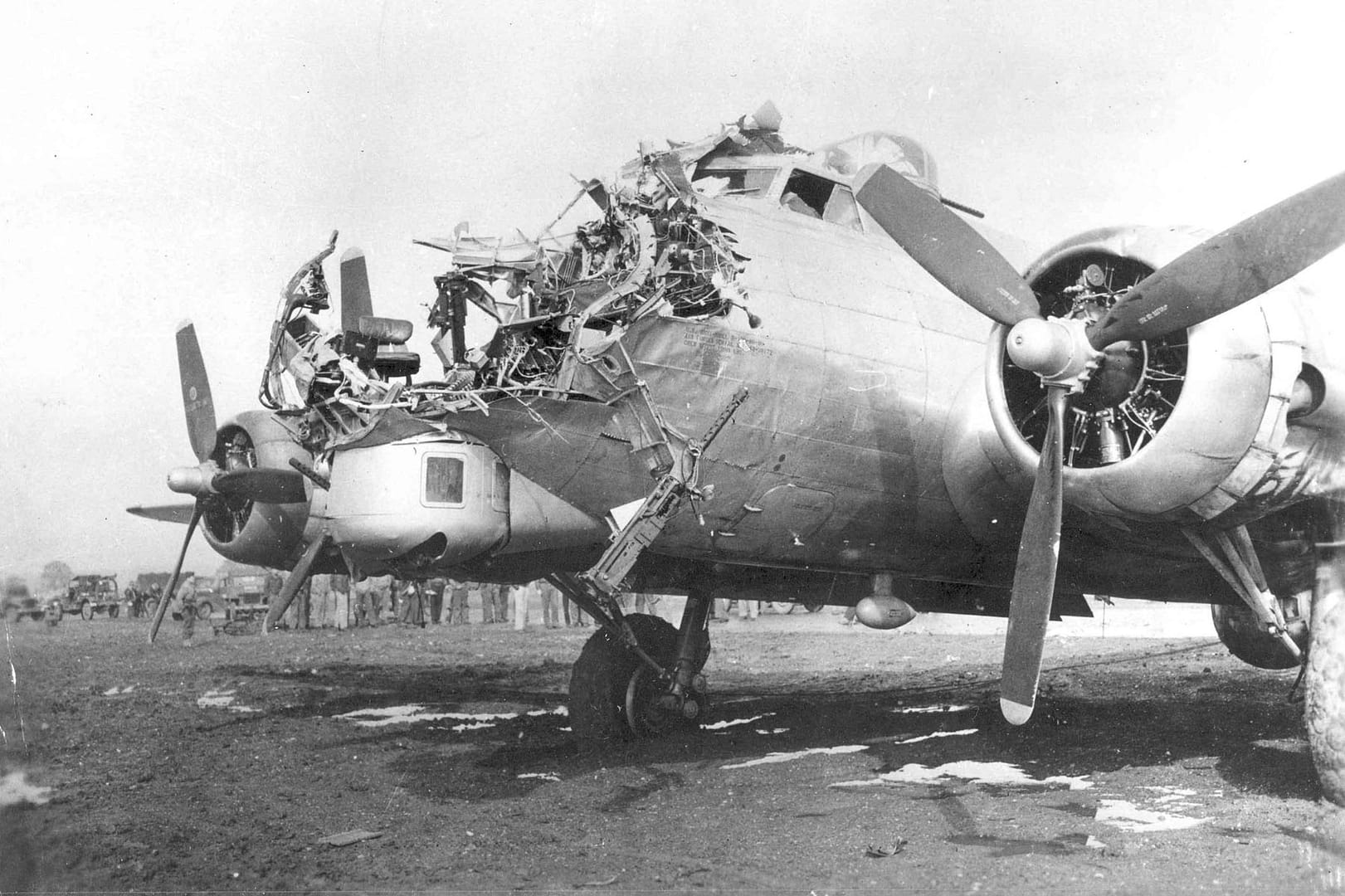
The story of a nose-less B-17 is so astonishing that several incidents have blurred together over the decades, and it is worth keeping them straight. The most famous photograph — the one that ran in American newspapers in October 1944 — is not Mizpah affatto.
Quell'immagine mostra il B-17G 43-38172 del 398° Bomb Group, pilotato dal Primo Tenente Lawrence DeLancey, dopo che un proiettile da 88 mm gli ha strappato il muso sopra Colonia il 15 ottobre 1944. DeLancey non ordinò ai suoi uomini di evacuare; invece, lui e il navigatore Ray LeDoux riportarono il relitto in Inghilterra e lo fecero atterrare. L'unico uomo rimasto ucciso fu il sergente maggiore George Abbott, addetto al controllo del traffico aereo.
Both stories are true, and both turn on the same astonishing fact: a four-engined bomber, gutted at the front, that simply would not stop flying. Where Swanson’s headless Mizpah bought her crew the seconds they needed to jump, DeLancey’s carried his crew home. A separate and even older legend, the B-17 Tutto americano, involved a mid-air collision that nearly severed the tail — a different aircraft, a different kind of miracle entirely.
Perché il Forte poteva fare l'impossibile
Ciò che accomuna questi episodi è l'ingegneria. La Boeing costruì il B-17 con un'ala generosa, una coda massiccia per la stabilità ad alta quota e una struttura che distribuiva i carichi in modo così efficace che l'aereo poteva perdere sezioni enormi e rimanere comunque in volo. I piloti si fidavano di lui proprio perché volava dritto quando tutto il resto era andato storto.
For the men of the Mighty Eighth and the Fifteenth Air Forces, that trust was not abstract. It was the difference between a death plunge and ten more minutes — ten minutes in which a doomed bomber could become a platform stable enough to step off of, and live.
A note on sourcing: the photograph of a headless Fortress most often shared online as “the” headless B-17 is in fact DeLancey’s 398th BG aircraft. Period captions of an unidentified 463rd Bomb Group Fortress that held formation while survivors bailed out describe a similar event, but that particular aircraft and crew have not been positively identified in the records consulted here. The named, fully documented case of a headless B-17 whose crew bailed out is Swanson’s Mizpah, recorded in Missing Air Crew Report 6901.
Sources: Missing Air Crew Report 6901 (eyewitness statements, via b17flyingfortress.de); American Air Museum in Britain (aircraft 42-32109 and 43-38172); 398th Bomb Group Memorial Association (Allen Ostrom, “It Was a Fortress Coming Home”); National Museum of the United States Air Force; World War Wings.
Domande correlate
Cos'era il Mizpah, il "B-17 senza testa"?
Il Mizpah era un B-17G Flying Fortress (matricola 42-32109) del 483° Bomb Group che, il 14 luglio 1944, vide la sua sezione anteriore completamente distrutta da una raffica diretta di un cannone antiaereo da 88 mm sopra Budapest. L'esplosione uccise all'istante il navigatore e il bombardiere, ma il bombardiere continuò a volare abbastanza a lungo da permettere ai superstiti di lanciarsi con il paracadute.
Che fine ha fatto il B-17 Mizpah sopra Budapest?
Durante una missione di bombardamento sui piazzali ferroviari di Budapest il 14 luglio 1944, un proiettile antiaereo da 88 mm colpì il muso del Mizpah ed esplose, strappando la sezione anteriore sopra il parabrezza. Il pilota, il tenente Ewald Swanson, mantenne stabile l'aereo danneggiato per circa dieci minuti, permettendo all'equipaggio superstite di lanciarsi con il paracadute.
Chi era il pilota del B-17 Mizpah senza testa?
Il pilota era il tenente Ewald A. Swanson, che riuscì a tenere stabile il bombardiere distrutto e senza muso per circa dieci minuti, dando agli uomini dietro la stiva bombe il tempo di agganciare i paracadute e mettersi in salvo.
Quanti membri dell'equipaggio sono sopravvissuti all'incidente della Mizpah?
Otto uomini sopravvissero e furono fatti prigionieri di guerra, mentre due membri dell'equipaggio, il navigatore sottotenente Joseph Henderson e il bombardiere sottotenente Kenneth Dudley, furono uccisi dall'esplosione della contraerea. I superstiti furono liberati il 30 aprile 1945.
Come è documentata la storia del B-17 Mizpah senza testa?
L'incidente è documentato nel Rapporto sull'equipaggio disperso n. 6901, che include dichiarazioni giurate di testimoni oculari di altri equipaggi che volavano nella formazione quel giorno, conferendo alla straordinaria storia una forte credibilità documentaria.
Perché i bombardieri B-17 non riuscivano a eludere la contraerea durante una missione di bombardamento?
Durante l'ultima fase di bombardamento, un B-17 doveva volare in linea retta e livellato affinché il bombardiere potesse mirare con precisione; non poteva permettersi manovre evasive o scoordinate. Questo rendeva la stiva, compatta e compatta, estremamente vulnerabile al fuoco antiaereo, come accadde al Mizpah sopra Budapest.
0 Commenti