

Fifteen minutes past midnight, 26 September 1983. In a command bunker called Serpukhov-15, south-west of Moscow, Lieutenant Colonel Stanislav Petrov is settled into the commander’s chair for a night shift he was not originally scheduled to work. In front of him: the readouts of Oko, the Soviet Union’s brand-new satellite early-warning system, watching the missile fields of the American Midwest from 40,000 kilometres out. It has been a quiet autumn night. Then every siren in the room goes off at once.
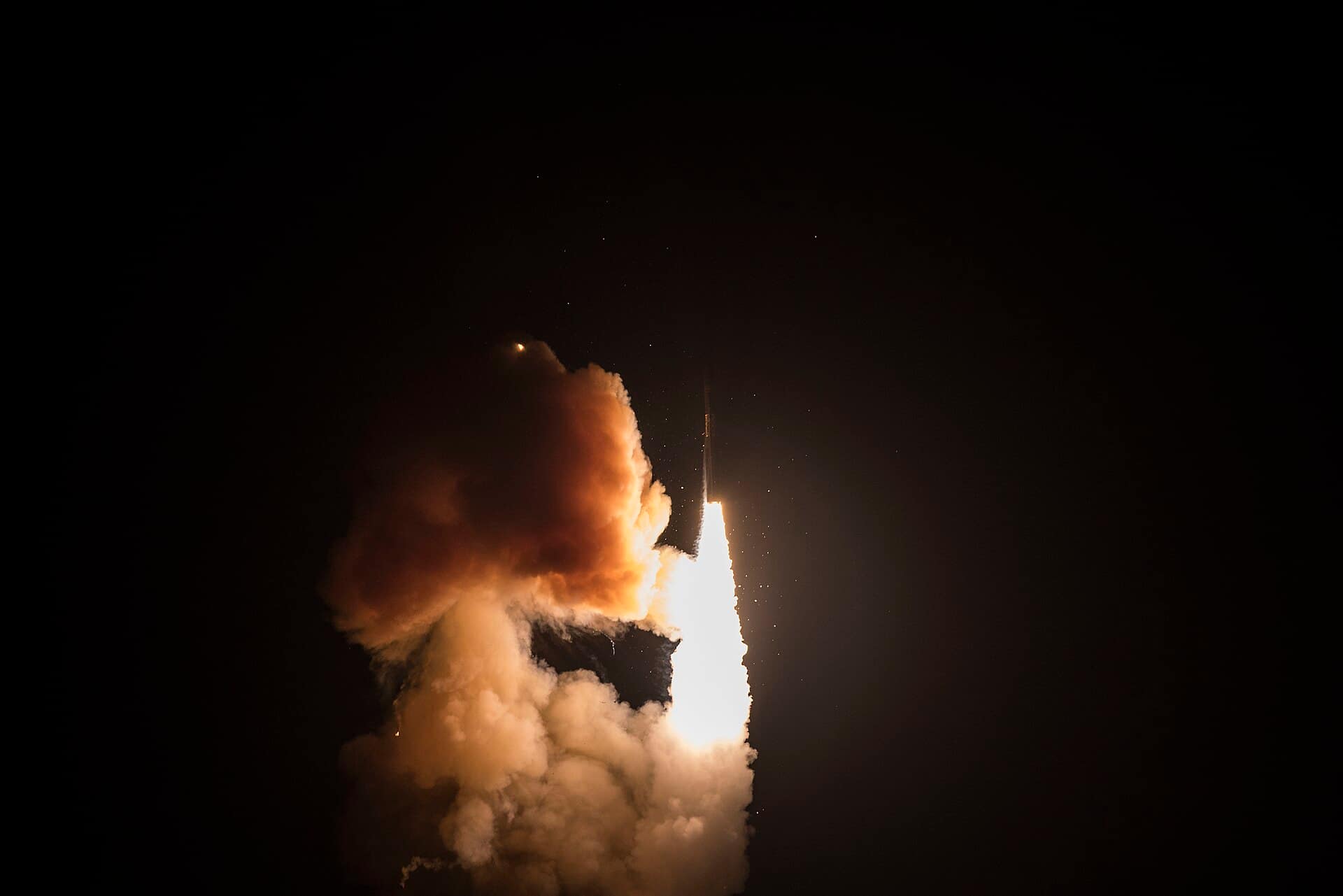
Sopra di lui, uno schermo retroilluminato mostra una singola parola rossa: LANCIO. Il sistema segnala il lancio di un missile balistico intercontinentale Minuteman dalla base aerea di Malmstrom, nel Montana, e indica un livello di affidabilità massimo. Petrov avrebbe descritto quel momento molte volte nel corso della sua vita, sempre allo stesso modo: la sirena ululante, lo schermo rosso e il suo corpo che si rifiuta di muoversi.
He had, by the machine’s arithmetic, about half an hour of missile flight time. Whatever he passed up the chain in the next few minutes would land on desks where men were already primed to believe the worst. What Petrov did instead of the obvious thing is why he is remembered — and why the rest of that night deserves to be reconstructed carefully, minute by minute.
Brevi cenni: Il falso allarme nucleare del 1983
| Data e ora | 26 settembre 1983, poco dopo le 00:15 ora di Mosca |
| Posto | Centro di comando per l'allerta precoce Serpukhov-15, a sud-ovest di Mosca |
| Sistema | Oko (“Eye”) — US-K satellites in high Molniya orbits watching US missile fields |
| L'allarme | Uno, poi un totale di cinque lanci di missili balistici intercontinentali Minuteman segnalati dalla base aerea di Malmstrom, nel Montana. |
| L'ufficiale di servizio | Il tenente colonnello Stanislav Petrov, 44 anni, ingegnere di formazione |
| causa effettiva | La luce solare riflessa dalle nuvole ad alta quota viene scambiata per pennacchi di gas di scarico. |
| La sua chiamata | Reported a system malfunction — and waited 23 minutes to learn he was right |
| pubblici da allora | 1998, attraverso le memorie del suo ex comandante Yuri Votintsev |
L'occhio sopra l'orizzonte
Oko existed to solve a geometry problem. Ground radars cannot see over the curve of the Earth; against missiles fired from the continental United States, they would give the Soviet leadership perhaps 10 to 15 minutes of warning. The US-K satellites bought more time by watching from above — parked in highly elliptical Molniya orbits, staring at the edge of the Earth so that a rising booster’s exhaust plume would appear in silhouette against the black of space rather than against the bright, cluttered background of the planet itself.
It was clever engineering, and in September 1983 it was also very new — the system had been declared operational only the year before. Petrov, one of its senior analysts, knew both of those facts intimately. He had helped write the procedures he was now supposed to follow.
The procedure was simple. His job that night was to validate the alert and report it upward — to men with far less time and far less technical context than he had. Decades later, he was blunt about what those first seconds felt like.
Cinque missili
The system did not stop at one. Within minutes it reported a second launch from the same base, then a third, a fourth, a fifth. The status display escalated from “launch” to “missile strike”. The computers, checking their own work through every layer of validation built into them, kept insisting the data was good. Five Minuteman ICBMs — each carrying warheads measured in hundreds of kilotons — would take roughly 30 minutes to fly the 8,000-plus kilometres (about 5,000 miles) to Soviet territory.
The arithmetic of retaliation ran backwards from impact. Soviet doctrine needed a launch decision from the leadership with enough margin to get its own missiles out of their silos. Every minute Petrov spent thinking was a minute subtracted from Yuri Andropov’s.
He had perhaps 15 minutes before the incoming warheads — if they existed — would cross the radar horizon and become visible to ground stations. Fifteen minutes in which the only evidence was the word of a one-year-old satellite system, and the only counter-evidence was its newness. He later admitted the responsibility sat on him physically.
La decisione
Petrov’s reasoning, as he reconstructed it afterwards, was a chain of engineering doubts rather than a flash of intuition. The satellite constellation was new and, in his own estimation, not yet fully trustworthy. The ground radars — a completely independent sensor chain — were seeing nothing. And the attack itself made no strategic sense: a real American first strike would be an avalanche designed to destroy Soviet missiles on the ground, not a five-missile gesture that would guarantee retaliation. “When people start a war, they don’t start it with only five missiles,” he told the Washington Post in 1999.
Against all of that stood the machine’s own certainty, repeated five times. Petrov picked up the phone to the duty officer at headquarters and reported a system malfunction. Then he sat with the possibility that he was wrong — that the warheads were already over the pole. “I had a funny feeling in my gut,” he said later. He waited.
The investigation that followed found the cause within months: sunlight glancing off high-altitude clouds, at a rare seasonal geometry near the autumn equinox, had mimicked booster plumes precisely in the satellite’s field of view. The constellation’s designers added a cross-check against a geostationary satellite to prevent a recurrence. The system had performed exactly as built. That was the problem.
L'autunno peggiore possibile
È il contesto a rendere quella notte terrificante, anziché semplicemente interessante. Tre settimane prima, il 1° settembre 1983, un Sukhoi Su-15 sovietico aveva abbattuto il volo 007 della Korean Air Lines vicino a Sachalin, uccidendo tutte le 269 persone a bordo, dopo che la difesa aerea aveva scambiato il Boeing 747, che vagava senza meta, per un aereo da ricognizione americano. Il Cremlino, sotto la guida di Yuri Andropov, stava conducendo l'Operazione RYaN, un programma di intelligence basato sul presupposto che la NATO potesse star preparando un vero e proprio attacco preventivo a sorpresa.
Six weeks after Petrov’s shift, NATO’s Able Archer 83 command exercise — rehearsing the procedures for nuclear release — would push parts of the Soviet apparatus to a state of alarm historians still debate. Into that season of institutional paranoia, imagine a formal report from Serpukhov-15: five American ICBMs, inbound, confidence maximum. Petrov himself never claimed to know what would have followed. He only pointed out that the men above him had less time, less data and less reason to doubt the machine than he did.
Né premiato né punito
There was no medal. Petrov was questioned intensively, and while he was not formally punished, he was reprimanded over gaps in his combat log from the night — paperwork he had declined to falsify after the fact, since regulations forbade writing it up later. The false alarm was buried as a state secret. He left the service in 1984, worked as an engineer at the institute that had designed the system, and eventually retired to a flat in Fryazino, outside Moscow, caring for his ill wife.
The world found out by accident. In 1998 the memoirs of his former commander, Colonel General Yuri Votintsev, revealed the episode; journalists eventually found Petrov himself, baffled by the attention. Honours arrived late and from odd directions: an award at the United Nations, the Dresden Peace Prize in 2013, a Danish-made documentary — The Man Who Saved the World — in 2014. He kept insisting, in interview after interview, that he had simply been the right man on the right shift: an engineer who distrusted his own machine for sound engineering reasons.

Stanislav Petrov died on 19 May 2017, aged 77. Characteristically, his death went unreported for months, until a German filmmaker telephoned to wish him a happy birthday and learned the news from his son. The obituaries, when they finally came, all reached for the same title the documentary had used. Petrov had always waved it off — he did not consider himself a hero, and said so plainly to anyone who asked.
The engineering lesson of 26 September 1983 has not aged a day. Early-warning systems fail in ways their designers cannot fully anticipate, and they fail with maximum confidence. The only circuit breaker that worked that night was a human being with the technical depth to doubt his own tools and the nerve to act on the doubt — with roughly a quarter of an hour to do it. Every proposal to shorten decision timelines, or to hand them to automation, has to answer for that night.
Fonti: BBC (intervista del 2013); Washington Post (David Hoffman, 1999); NPR; RFE/RL; Museo Nucleare / Fondazione per il Patrimonio Atomico; Wikipedia.
Domande correlate
Chi era Stanislav Petrov?
Stanislav Petrov era un tenente colonnello delle Forze di difesa aerea sovietiche che, il 26 settembre 1983, era di turno al bunker di allerta precoce Serpukhov-15 quando il sistema satellitare Oko segnalò erroneamente un attacco missilistico nucleare statunitense. Ritenendo l'allarme un malfunzionamento, si rifiutò di segnalarlo ai superiori come un vero attacco: una decisione che, secondo molti, contribuì a scongiurare una guerra nucleare.
Cosa fece Stanislav Petrov nel 1983?
Il 26 settembre 1983, il sistema di allerta precoce sovietico Oko segnalò il lancio, prima di un missile e poi di cinque missili intercontinentali statunitensi Minuteman, dal Montana. Petrov ritenne che un vero e proprio attacco preventivo americano avrebbe coinvolto ben più di cinque missili e classificò l'allarme come un malfunzionamento del sistema piuttosto che come un attacco. La sua valutazione si rivelò corretta quando nessun missile arrivò a destinazione.
Quali furono le cause del falso allarme nucleare sovietico del 1983?
Gli investigatori hanno ricondotto il falso allarme alla luce solare che si rifletteva sulle nuvole ad alta quota, in una rara configurazione stagionale in prossimità dell'equinozio d'autunno, e che i satelliti Oko avevano scambiato per le scie infrarosse dei missili in fase di lancio. Il sistema aveva funzionato esattamente come previsto: questo era il problema. Gli ingegneri hanno poi aggiunto un controllo incrociato con un satellite geostazionario per evitare che l'errore si ripetesse.
Perché il falso allarme del 1983 fu così pericoloso?
Il contesto rendeva la situazione terrificante. Solo tre settimane prima un caccia sovietico aveva abbattuto il volo 007 della Korean Air Lines, uccidendo 269 persone, e il Cremlino stava conducendo l'Operazione RYaN partendo dal presupposto che la NATO potesse lanciare un attacco preventivo a sorpresa. Settimane dopo, l'esercitazione NATO Able Archer 83 aumentò ulteriormente le tensioni, nell'ambito di una serie di eventi della Guerra Fredda. quasi disastri nucleari.
Stanislav Petrov è stato premiato per aver impedito una guerra nucleare?
No. All'epoca non esisteva ancora una medaglia. Petrov fu interrogato a lungo e, pur non essendo formalmente punito, ricevette un rimprovero per le lacune nel suo registro di combattimento di quella notte, documenti che si rifiutò di falsificare in seguito. L'incidente fu insabbiato come segreto di stato e lui lasciò il servizio nel 1984. Il suo ruolo divenne di dominio pubblico solo decenni dopo.
Si è mai più verificato un falso allarme nucleare?
Sì. I sistemi di allerta precoce hanno prodotto diversi falsi allarmi pericolosi. Nel 1995 Incidente missilistico norvegese, Nel 1983, un razzo scientifico venne scambiato per un missile lanciato da un sottomarino, attivando brevemente l'apparato di comando nucleare russo sotto la presidenza di Eltsin. Come nel 1983, il disastro fu evitato perché gli operatori umani misero in discussione le informazioni fornite dalle macchine.

0 Commenti